Most passengers never notice them. Strakes sit quietly on the fuselage, wings, or engine nacelles of an aircraft, small enough to blend into the airframe entirely, yet they carry out work that keeps an aircraft controllable in exactly the moments when control matters most.
A Small Fin with an Outsized Job
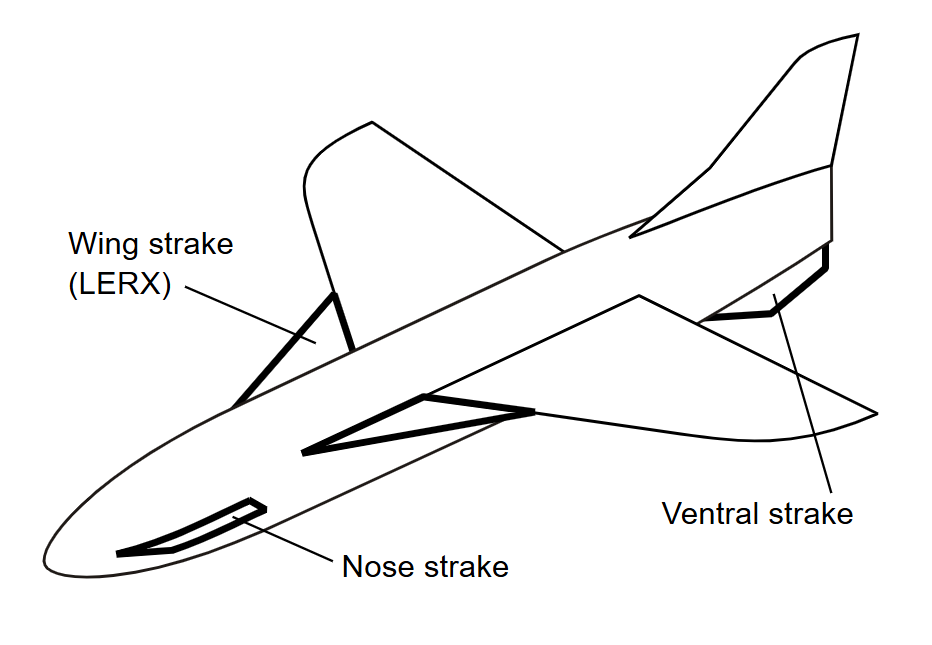
A strake is a fixed aerodynamic surface, typically longer than it is wide, mounted to shape the airflow moving across the aircraft. It generally does one of two things, it acts as a vortex generator channeling air in a specific direction, or it provides a simple stabilizing effect on its own. That length-to-width ratio is what separates a strake from a winglet at a glance, even though both are built to manage airflow in similar ways.
How Strakes Actually Control Airflow
The vortex-generating role is where strakes do their most technical work. Positioned ahead of a lifting surface, a strake produces a concentrated vortex that energizes the boundary layer, delaying flow separation and reducing the abruptness of a stall at high angles of attack. On fighter jets, this principle scales up into leading edge extensions, strakes engineered specifically to intensify vortex generation along the wing root and improve maneuverability during aggressive flight.
Keeping the Tail Doing Its Job
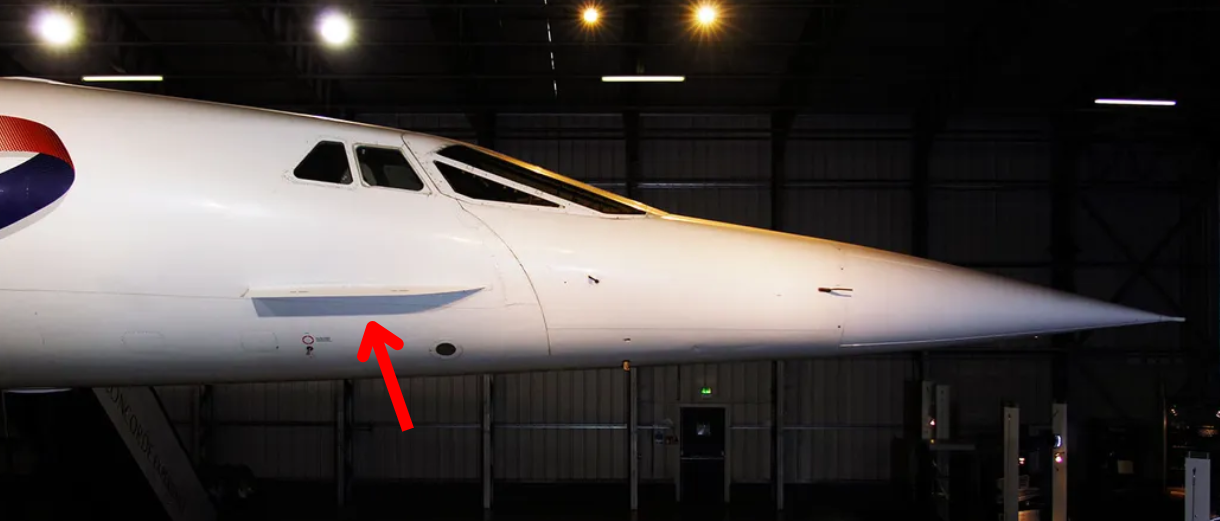
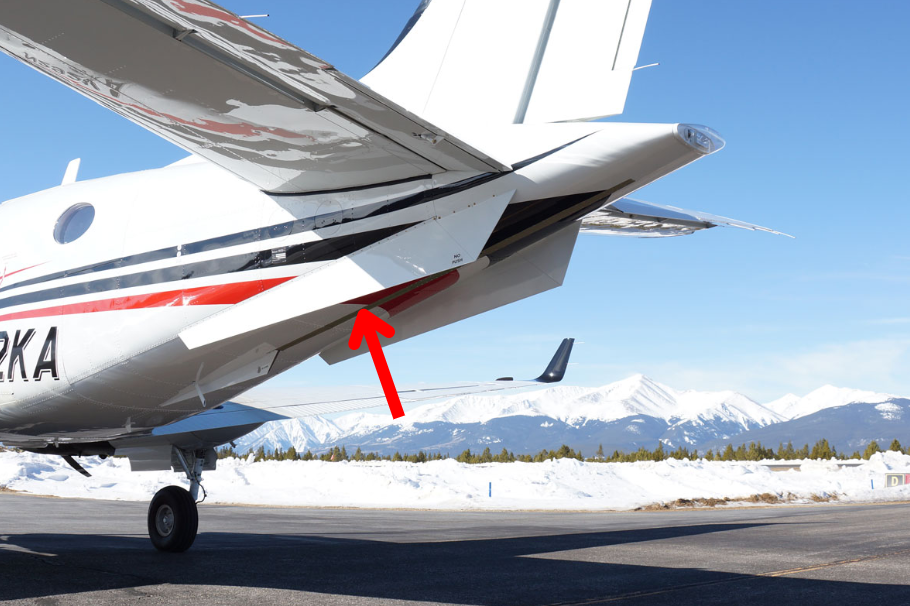
Strakes placed near the rear fuselage or empennage solve a different problem. At high angles of attack, the fuselage or wing wake can shield the vertical tail fin from clean airflow, reducing its effectiveness exactly when stability matters most. Dorsal or ventral strakes positioned under or along the rear fuselage restore that stability by generating additional side force. This is not a new idea. Even Concorde carried small nose strakes for this exact reason, added to improve the aircraft's directional stability at speed, and shortly after the P-51 Mustang's D variant introduced its bubble canopy, engineers added a dorsal fillet to the front of the vertical stabilizer specifically to strengthen the tail structure and improve stability in yaw, a fix still recognizable in strake design decades later.
Where Passengers Can Actually See Them
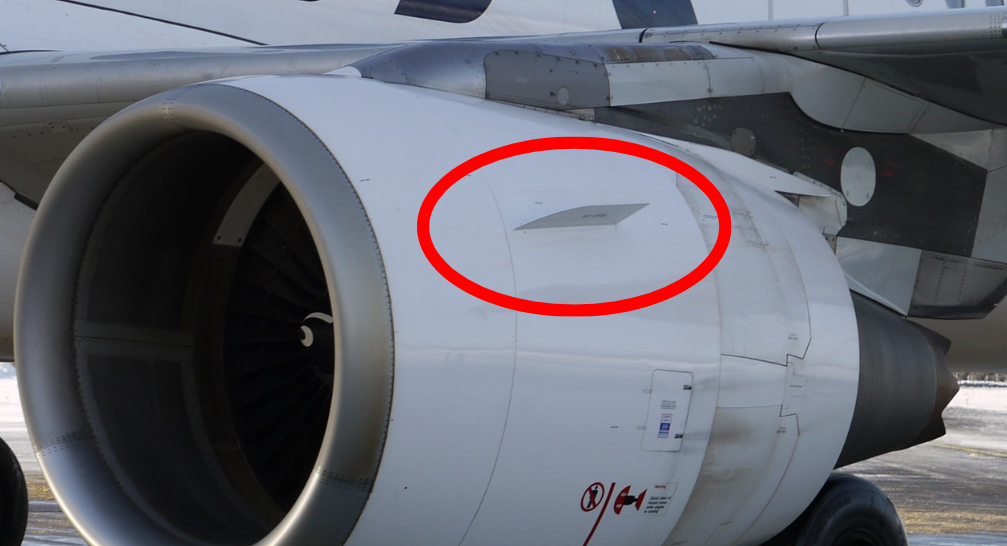
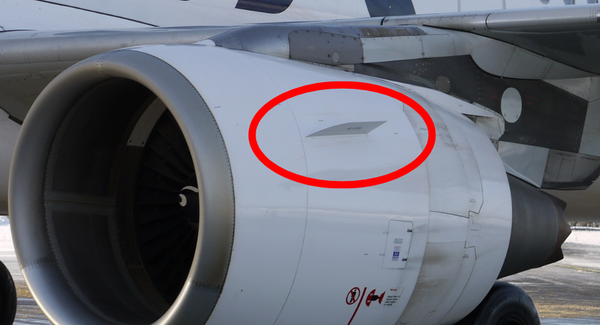
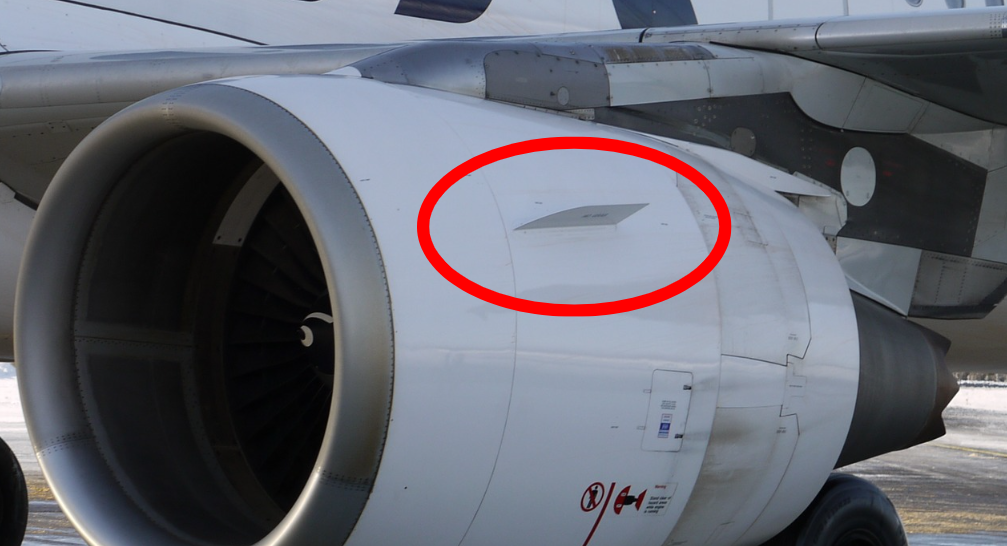
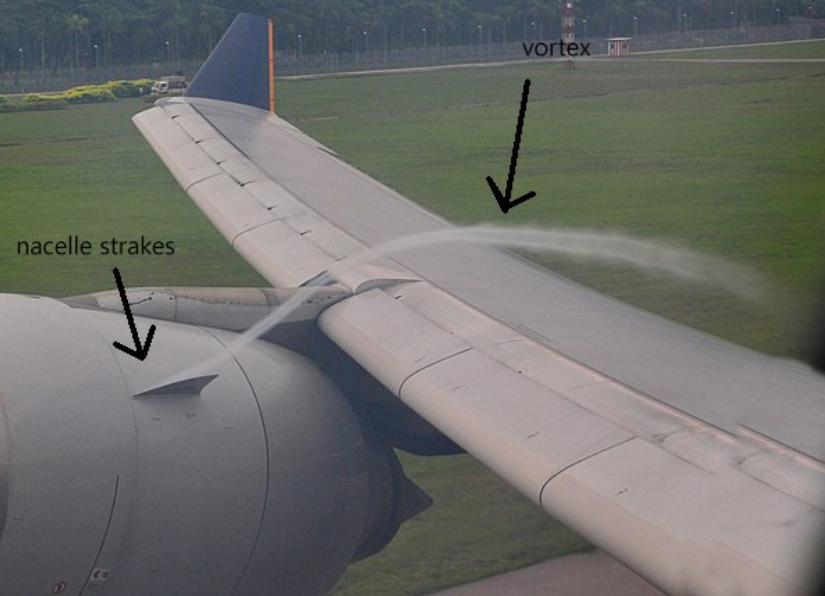
The most visible strakes on a modern airliner sit on the engine nacelles. On wide-body aircraft such as the Boeing 777 and Airbus A380, strakes mounted on the inboard side of each nacelle prevent turbulent airflow, or aerodynamic burble, from the large engine housings blanking out the wing's inboard leading edge during takeoff and landing. In sufficiently humid conditions, water vapor condenses inside the low-pressure vortices these strakes generate, producing visible ribbons of cloud trailing off the nacelle, clearly seen from a window seat near the wing during takeoff or landing.
Strakes vs. Winglets: Not the Same Thing
Strakes and winglets are often confused, but the two serve different roles. Winglets are wingtip-specific devices, generally wider than they are long, oriented vertically to reduce induced drag. Strakes appear across multiple locations, including the nose, wings, and nacelles, and are typically shaped as elongated, horizontal fins rather than upright ones. An aircraft can carry both simultaneously, each addressing a separate aerodynamic requirement.
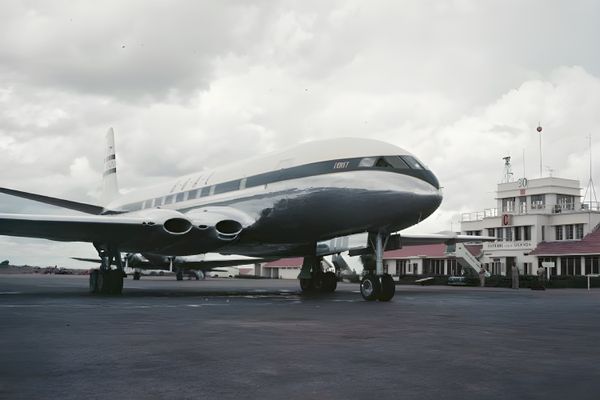
The Shape of Disaster: The Plane That Kept Falling Apart Mid-Air
Built to Last, But Inspected Often
Because strakes remain exposed to continuous dynamic loads and environmental wear, maintenance programs treat them as more than cosmetic fittings. Technicians routinely inspect strakes for erosion, surface cracking, or composite delamination that could disrupt local airflow, alongside checks on mounting hardware and bonded joints for signs of loosening or corrosion. Metallic strakes in particular require closer attention to corrosion control, given their greater exposure to contamination and environmental damage over an aircraft's service life.
Strakes rarely draw attention, and that is largely the point. Whether preventing a stall, protecting the tail's authority in yaw, or simply keeping airflow clean across an engine nacelle, they represent a category of aerospace engineering built to be effective precisely by staying unnoticed
United Airlines Takes Delivery of First Aircraft Powered by Pratt & Whitney's GTF Advantage Engine » Ryanair Demands NATS Chief Resign After Second Air Traffic Control Failure in Two Weeks » Breeze Airways Presses FAA to Block Legacy Carriers From Acquiring Spirit's Vacated Slots »

Comments (0)
Add Your Comment
TAGS
INFORMATIONAL Airbus Boeing Strakes Aerodynamics Winglet Fins Fuselage NacellesRECENTLY PUBLISHED
 UAE Suspends Iranian Airline Flights to Comply With US Sanctions, Triggering Retaliatory Airspace Ban From Tehran
The UAE has halted all Iranian carrier operations to comply with reimposed US sanctions, prompting Iran to bar Emirati airlines from its airspace.
NEWS
READ MORE »
UAE Suspends Iranian Airline Flights to Comply With US Sanctions, Triggering Retaliatory Airspace Ban From Tehran
The UAE has halted all Iranian carrier operations to comply with reimposed US sanctions, prompting Iran to bar Emirati airlines from its airspace.
NEWS
READ MORE »
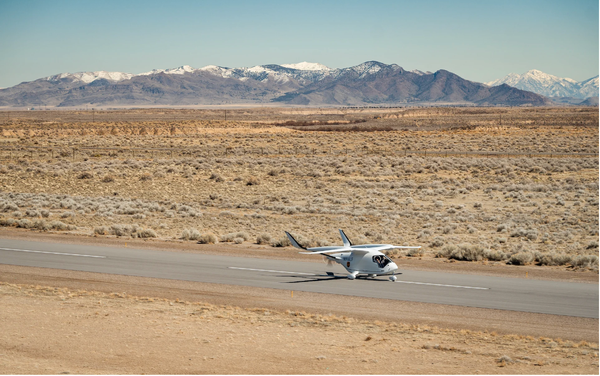 BETA Technologies Begins Electric Aircraft Operations in North Carolina to Support Rural Healthcare Access
BETA Technologies launches its ALIA CTOL electric aircraft in North Carolina under a FAA program aimed at improving rural healthcare logistics.
NEWS
READ MORE »
BETA Technologies Begins Electric Aircraft Operations in North Carolina to Support Rural Healthcare Access
BETA Technologies launches its ALIA CTOL electric aircraft in North Carolina under a FAA program aimed at improving rural healthcare logistics.
NEWS
READ MORE »
 Ryanair Pilot Sent Hijack Code Before Turning Flight FR7073 Back to Porto
A Ryanair captain transmitted the 7500 hijack squawk code before diverting flight FR7073 back to Porto, prompting an emergency response.
NEWS
READ MORE »
Ryanair Pilot Sent Hijack Code Before Turning Flight FR7073 Back to Porto
A Ryanair captain transmitted the 7500 hijack squawk code before diverting flight FR7073 back to Porto, prompting an emergency response.
NEWS
READ MORE »
More than just headlines.
Get unlimited ad-free access to in-depth aviation news, premium stories, and exclusive insights other sites don't cover.
- Ad-free browsing on AeroXplorer
- Unlimited access to premium and exclusive articles
- Higher photo upload limits & commissions on sales
- Free access to Jetstream Magazine on higher tiers
- Ad-free browsing
- Sell aviation photos with 60% commission
- First week free!
- Everything in Basic+
- Unlimited premium articles
- Sell aviation photos with 70% commission
- Free Digital subscription to Jetstream Magazine
- First week free!
- Everything in Basic+ and Pro
- Sell aviaiton photos with 80% commission
- Early access to exclusive stories
- Free Digital+Print subscription to Jetstream Magazine