
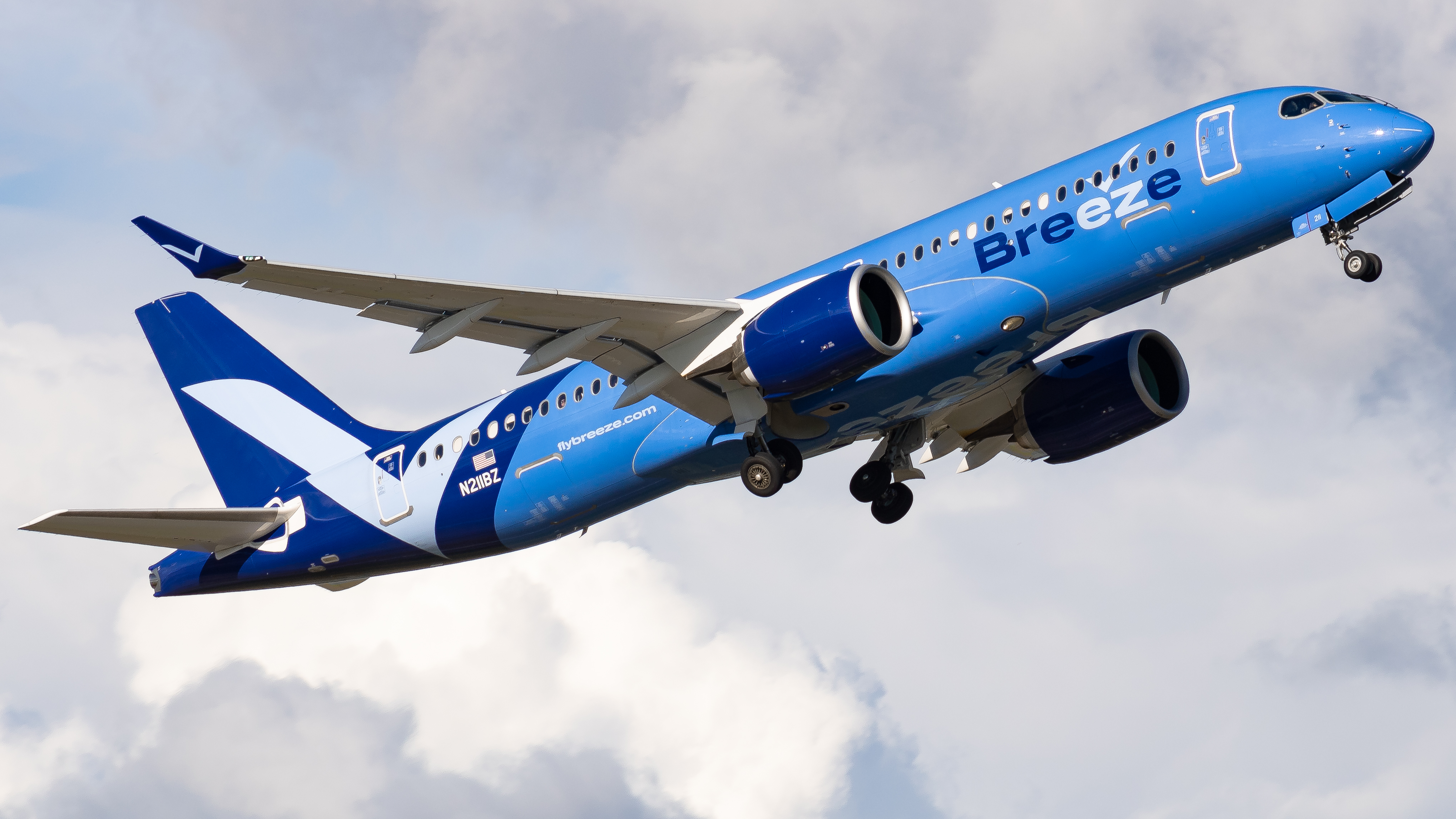
Breeze Airways has formally petitioned the US Federal Aviation Administration to prevent the country's largest network carriers from acquiring slots and gate assignments left behind by Spirit Airlines, escalating a fight over the remains of the collapsed ultra-low-cost operator.
The David Neeleman-founded carrier argues that allowing American Airlines, Delta Air Lines, or United Airlines to absorb Spirit's operating rights at slot-controlled and schedule-facilitated airports would concentrate market power further and harm consumers who depend on lower fares from smaller competitors.
The Petition
Breeze filed its request as the industry weighs the fate of Spirit's holdings following the Florida-based carrier's second bankruptcy and subsequent shutdown. The airline is asking regulators to reserve those slots for low-cost and new-entrant operators rather than permit them to flow to the "Big Three" incumbents that already dominate large swaths of the domestic system.
At issue are operating authorities at capacity-constrained airports including New York's LaGuardia and John F. Kennedy International, Washington's Reagan National, and Chicago O'Hare. These slots represent some of the most valuable real estate in US aviation, and Spirit had used them to challenge legacy carriers on price across dense business and leisure markets.
Breeze contends that redistribution to legacy carriers would extinguish the discount competition Spirit provided, effectively rewarding the largest airlines with the assets of a fallen rival. The Utah-based airline instead wants the FAA to prioritize carriers that would maintain price pressure on incumbents.

Industry Backdrop
Spirit's demise marked the end of one of the most disruptive forces in US commercial aviation over the past two decades. The airline had spent years reshaping domestic fare structures with unbundled pricing and high-density cabin configurations before a failed merger attempt with JetBlue Airways, and later with Frontier Airlines, left it without a strategic lifeline.
The carrier's exit removes a significant volume of low-fare capacity from the domestic market. Industry analysts have warned that without intervention, the vacuum could translate to higher average fares in markets where Spirit maintained a meaningful presence.
Breeze, which launched operations in 2021, has positioned itself as a point-to-point operator targeting underserved secondary markets. While its network model differs from Spirit's, the airline argues it and peers such as Frontier, Allegiant Air, Sun Country Airlines, and Avelo Airlines represent the natural successors to Spirit's competitive role.

Analysis: How Spirit Airlines Changed Airline Pricing, then Paid the Price
Slot Policy Precedent
The FAA has previously imposed conditions on slot transfers to preserve competition. Following past mergers and bankruptcies, regulators have at times required divestitures of slots to new entrants or limited carriers with dominant positions from acquiring additional operating authorities at constrained airports.
Breeze's petition draws on that precedent, urging the agency to apply similar reasoning to Spirit's holdings. The airline argues that a market-based auction open to all carriers would inevitably favor the legacy operators given their capital resources, foreclosing meaningful participation by smaller competitors.
Legacy carriers have historically defended slot acquisitions as necessary to serve customer demand and to support connecting hub operations. American, Delta, and United each maintain substantial operations at the affected airports and would benefit from incremental capacity at facilities where growth is otherwise capped.
What Breeze Wants
Breeze is asking the FAA to formally bar the three largest US network carriers from bidding on or otherwise acquiring the Spirit slots. The petition seeks to have those authorities allocated among low-cost carriers and new entrants through a process designed to maximize competitive benefit.
Breeze also wants the agency to consider gate access at airports where Spirit held preferential-use agreements, arguing that slots alone are insufficient to enable a successor carrier to replicate the competitive pressure Spirit exerted.
The airline framed the request as consistent with longstanding US aviation policy favoring competition, particularly at airports where slot controls exist precisely because demand exceeds available capacity.

Regulatory and Political Stakes
The FAA now faces a decision with implications extending well beyond Spirit's former routes. Any policy the agency adopts will influence how future carrier failures are handled and could shape the competitive structure of US domestic aviation for years.
The Department of Justice, which blocked the JetBlue-Spirit merger in 2024 on antitrust grounds, has historically shared concerns about legacy carrier consolidation. That prior stance gives Breeze's argument additional weight, though slot allocation ultimately rests with the FAA rather than DOJ.
Congressional interest is also likely. Lawmakers representing districts that lost Spirit service have already pressed regulators for answers about the airline's collapse and the fate of its assets. A high-profile fight over slot redistribution would draw additional scrutiny from members concerned about airfares and rural connectivity.
Looking Ahead
The FAA has not indicated a timeline for ruling on Breeze's petition. Slots at affected airports typically must be operated at prescribed minimum utilization rates to avoid forfeiture, meaning any prolonged uncertainty over ownership could result in operational disruptions or automatic reallocation under existing use-it-or-lose-it rules.
For Breeze, the outcome represents both an opportunity and a test of the FAA's willingness to intervene in the market to preserve competition. For legacy carriers, the petition threatens to close off a rare chance to expand at their most constrained airports.
Whichever way regulators decide, the resolution will define what remains of the ultra-low-cost segment that Spirit spent two decades building, and determine whether the discount competition US travelers came to expect survives the airline's collapse.
Power Bank Fire Linked to Former KLM CEO Forces Curacao Flight to Turn Back » How Jet Access Is Building a New Model for Private Aircraft Maintenance » Why Do Pilots Turn Off Cabin Lights During Takeoff and Landing? The Real Safety Reason Explained »

Comments (0)
Add Your Comment
TAGS
NEWS Breeze Airways FAA Spirit Airlines Airport Slots Legacy Carriers Airline Competition Slot Allocation Regulatory Policy Aviation News Low-Cost CarriersRECENTLY PUBLISHED
 UAE Suspends Iranian Airline Flights to Comply With US Sanctions, Triggering Retaliatory Airspace Ban From Tehran
The UAE has halted all Iranian carrier operations to comply with reimposed US sanctions, prompting Iran to bar Emirati airlines from its airspace.
NEWS
READ MORE »
UAE Suspends Iranian Airline Flights to Comply With US Sanctions, Triggering Retaliatory Airspace Ban From Tehran
The UAE has halted all Iranian carrier operations to comply with reimposed US sanctions, prompting Iran to bar Emirati airlines from its airspace.
NEWS
READ MORE »
 What Are Strakes? The Aerodynamic Fins Attached on an Aircraft's Fuselage
A look at how aircraft strakes quietly shape airflow, improve stability, and enhance aerodynamic performance.
INFORMATIONAL
READ MORE »
What Are Strakes? The Aerodynamic Fins Attached on an Aircraft's Fuselage
A look at how aircraft strakes quietly shape airflow, improve stability, and enhance aerodynamic performance.
INFORMATIONAL
READ MORE »
 BETA Technologies Begins Electric Aircraft Operations in North Carolina to Support Rural Healthcare Access
BETA Technologies launches its ALIA CTOL electric aircraft in North Carolina under a FAA program aimed at improving rural healthcare logistics.
NEWS
READ MORE »
BETA Technologies Begins Electric Aircraft Operations in North Carolina to Support Rural Healthcare Access
BETA Technologies launches its ALIA CTOL electric aircraft in North Carolina under a FAA program aimed at improving rural healthcare logistics.
NEWS
READ MORE »
More than just headlines.
Get unlimited ad-free access to in-depth aviation news, premium stories, and exclusive insights other sites don't cover.
- Ad-free browsing on AeroXplorer
- Unlimited access to premium and exclusive articles
- Higher photo upload limits & commissions on sales
- Free access to Jetstream Magazine on higher tiers
- Ad-free browsing
- Sell aviation photos with 60% commission
- First week free!
- Everything in Basic+
- Unlimited premium articles
- Sell aviation photos with 70% commission
- Free Digital subscription to Jetstream Magazine
- First week free!
- Everything in Basic+ and Pro
- Sell aviaiton photos with 80% commission
- Early access to exclusive stories
- Free Digital+Print subscription to Jetstream Magazine