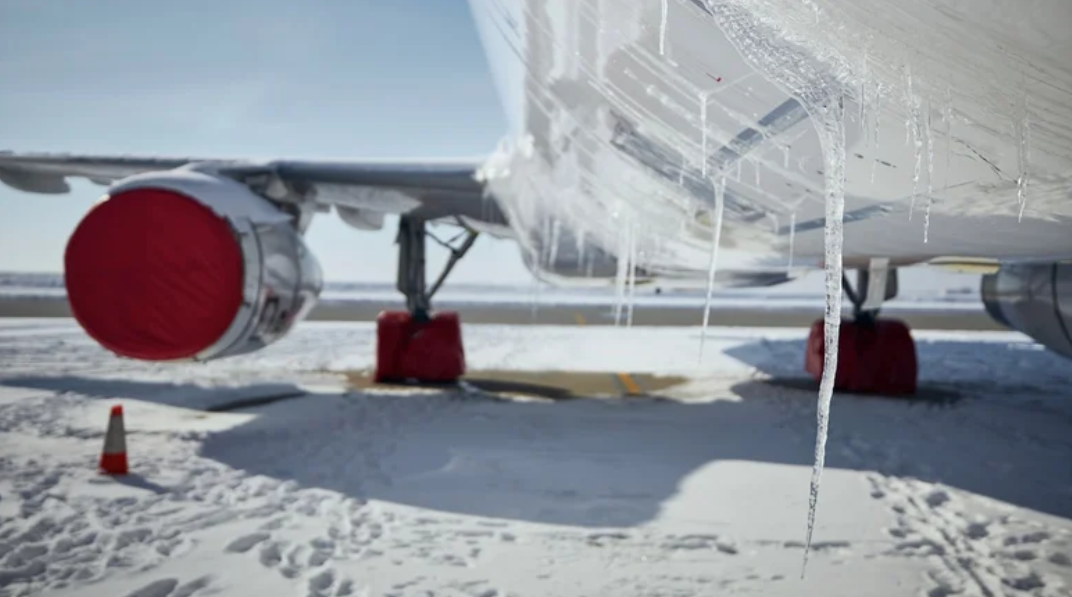
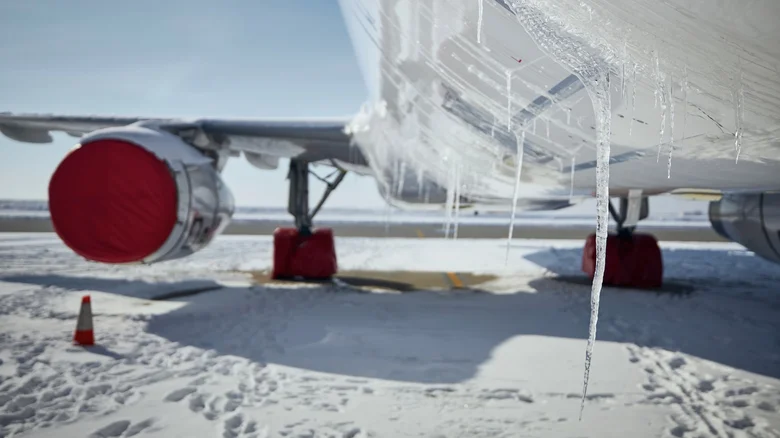
It does not take much for Ice to form on an aircraft. Only visible moisture and a surface at or below freezing are needed, and water droplets lock solid the instant they contact the airframe. Two conditions, both common at altitude, combine to create one of the oldest and most persistent threats in aviation.
What Ice Actually Does to a Wing
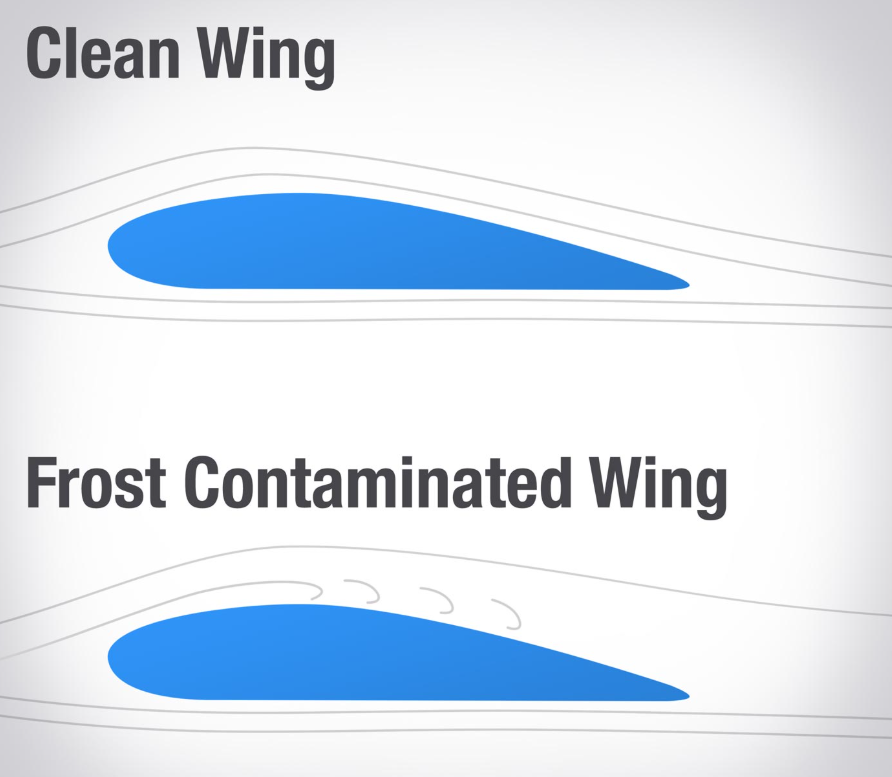
Wings function because of their shape, and ice compromises that shape. Once it builds up on a leading edge, it disrupts the smooth airflow the wing depends on, reducing lift while increasing drag simultaneously. Ice roughness alone can increase drag by up to 50% on a wing's leading edge and upper surface, a figure that can roughly double once accumulation becomes thicker and more irregular. In terms of overall outcome, ice can reduce lift by up to 30% and increase drag by up to 40%, figures substantial enough to push an aircraft toward an unexpected stall.
The Danger Extends Beyond the Wings
Ice does not stop at the airfoils. It adds weight, can shift the center of gravity, and when it forms unevenly on a propeller or control surface, the imbalance produces vibration and a considerably harder aircraft to control. A blocked pitot tube causes the airspeed indicator to display false readings, a failure that has already contributed to real accidents. Engines are not spared either: ice can obstruct an intake and starve it of airflow, and in severe cases this results in power loss or a full flameout mid-flight. Notably, engines can ice up even in relatively warm conditions. Carburetor icing has been recorded in air as warm as 25°C, since pressure drops inside the carburetor cool the air enough to freeze moisture regardless of the outside temperature.
Four Kinds of Ice, Four Different Problems
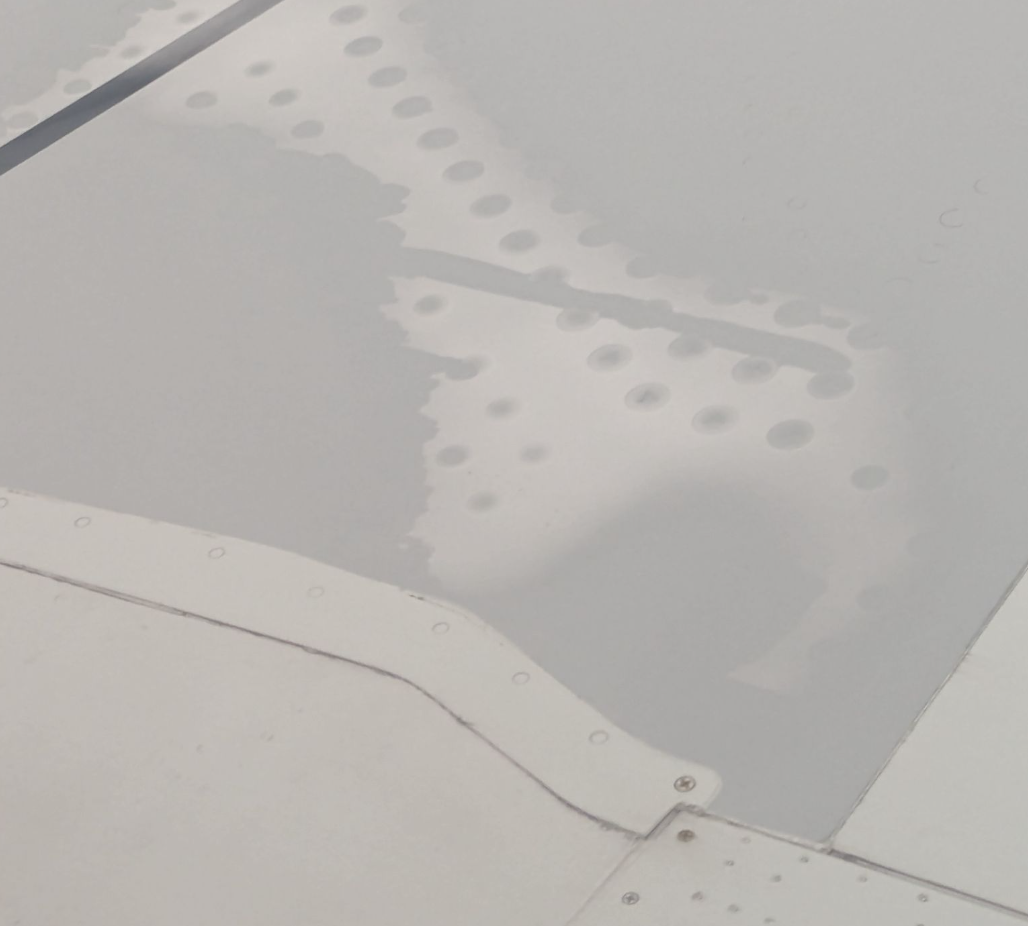
Not all ice behaves the same way. Clear ice forms in freezing rain, spreading into a smooth, heavy, tenacious sheet that is difficult to see and harder to remove. Rime ice results from tiny supercooled droplets freezing on contact in stratiform clouds, leaving a rough, milky coating that accumulates quickly on leading edges. Mixed ice combines both, pairing clear ice's weight with rime ice's drag penalty. Frost, the least visually dramatic of the four, can still prevent a wing from generating sufficient lift to achieve a normal takeoff speed.
Stopping Ice Before It Starts
Anti-icing exists to prevent all of this from occurring, distinct from de-icing, which only removes ice that has already formed. Most large jets rely on thermal anti-icing: hot bleed air drawn from the engine's compressor is routed through piccolo tubes running along the wing and tail leading edges, keeping surfaces above freezing so water evaporates on contact rather than adhering. Some systems operate fully evaporative, eliminating every drop, while others run wet, allowing water to trail backward, which introduces its own risk of refreezing further aft as runback ice.
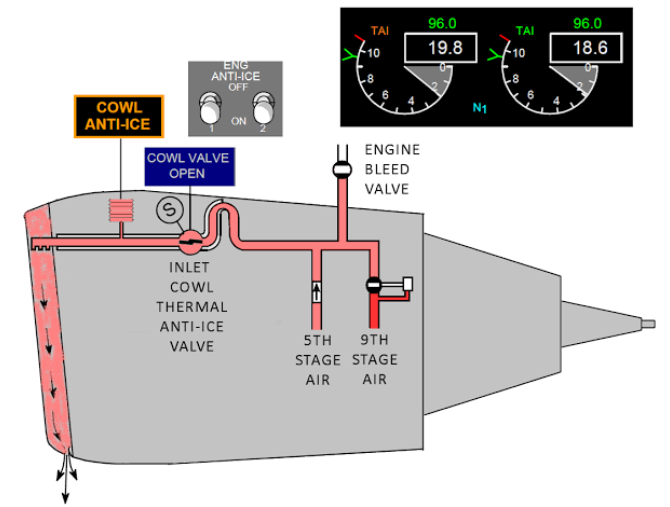
Smaller components require a different approach. Pitot tubes, angle-of-attack sensors, and static ports use electric heating elements instead, since bleed air is impractical for components of that size. The Boeing 787 extends this further, embedding electro-thermal heating coils directly into its composite wings, a system Boeing states operates on roughly half the energy of a traditional bleed-air setup. On aircraft without sufficient power margin for either approach, weeping wing systems pump glycol-based fluid through a mesh in the leading edges, lowering the freezing point of any water that lands there.

How AI Quietly Became the Backbone of Today’s Aviation Industry
Timing Is Everything
None of this technology functions effectively if activated too late. Crews are trained to engage anti-icing before entering icing conditions, typically once temperatures drop to 10°C or below with visible moisture present, because activating the system after ice has already formed converts the task into de-icing, a slower and less effective process. Even certified systems have limits. Insufficient heat, a failed valve, or a malfunctioning pump can leave an aircraft exposed, and the appropriate response in that circumstance is not to continue but to climb, descend, or divert out of the icing layer entirely.
Ice has not become any less dangerous since the earliest days of flight. What has changed is how well-prepared modern aircraft can remain, which is ultimately the entire purpose of the technology
A Laptop Caught Fire at 35,000 Feet. This Device Kept the Flight Going » Power Bank Fire Linked to Former KLM CEO Forces Curacao Flight to Turn Back » Why Is Turbulence Getting Worse, and Is It Actually Dangerous? »

Comments (0)
Add Your Comment
TAGS
INFORMATIONAL Ice Aircraft Wings Aerofoil Airfoil Anti-Ice De-Ice Bleed Air Boeing AirbusRECENTLY PUBLISHED
 UAE Suspends Iranian Airline Flights to Comply With US Sanctions, Triggering Retaliatory Airspace Ban From Tehran
The UAE has halted all Iranian carrier operations to comply with reimposed US sanctions, prompting Iran to bar Emirati airlines from its airspace.
NEWS
READ MORE »
UAE Suspends Iranian Airline Flights to Comply With US Sanctions, Triggering Retaliatory Airspace Ban From Tehran
The UAE has halted all Iranian carrier operations to comply with reimposed US sanctions, prompting Iran to bar Emirati airlines from its airspace.
NEWS
READ MORE »
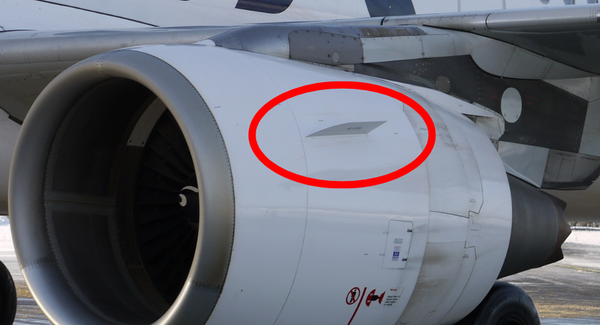 What Are Strakes? The Aerodynamic Fins Attached on an Aircraft's Fuselage
A look at how aircraft strakes quietly shape airflow, improve stability, and enhance aerodynamic performance.
INFORMATIONAL
READ MORE »
What Are Strakes? The Aerodynamic Fins Attached on an Aircraft's Fuselage
A look at how aircraft strakes quietly shape airflow, improve stability, and enhance aerodynamic performance.
INFORMATIONAL
READ MORE »
 BETA Technologies Begins Electric Aircraft Operations in North Carolina to Support Rural Healthcare Access
BETA Technologies launches its ALIA CTOL electric aircraft in North Carolina under a FAA program aimed at improving rural healthcare logistics.
NEWS
READ MORE »
BETA Technologies Begins Electric Aircraft Operations in North Carolina to Support Rural Healthcare Access
BETA Technologies launches its ALIA CTOL electric aircraft in North Carolina under a FAA program aimed at improving rural healthcare logistics.
NEWS
READ MORE »
More than just headlines.
Get unlimited ad-free access to in-depth aviation news, premium stories, and exclusive insights other sites don't cover.
- Ad-free browsing on AeroXplorer
- Unlimited access to premium and exclusive articles
- Higher photo upload limits & commissions on sales
- Free access to Jetstream Magazine on higher tiers
- Ad-free browsing
- Sell aviation photos with 60% commission
- First week free!
- Everything in Basic+
- Unlimited premium articles
- Sell aviation photos with 70% commission
- Free Digital subscription to Jetstream Magazine
- First week free!
- Everything in Basic+ and Pro
- Sell aviaiton photos with 80% commission
- Early access to exclusive stories
- Free Digital+Print subscription to Jetstream Magazine