
The ongoing Western sanctions on Russia's aviation industry have devastated the country's aviation sector. Sanctions prevent Russian carriers from procuring new parts to maintain their fleets of both Western-built and Russian aircraft fleets.
Such a roadblock means Russian airlines have had to get creative to keep their planes flying. The lack of new spare parts and proper maintenance checks has made flying with Russian carriers much more dangerous.
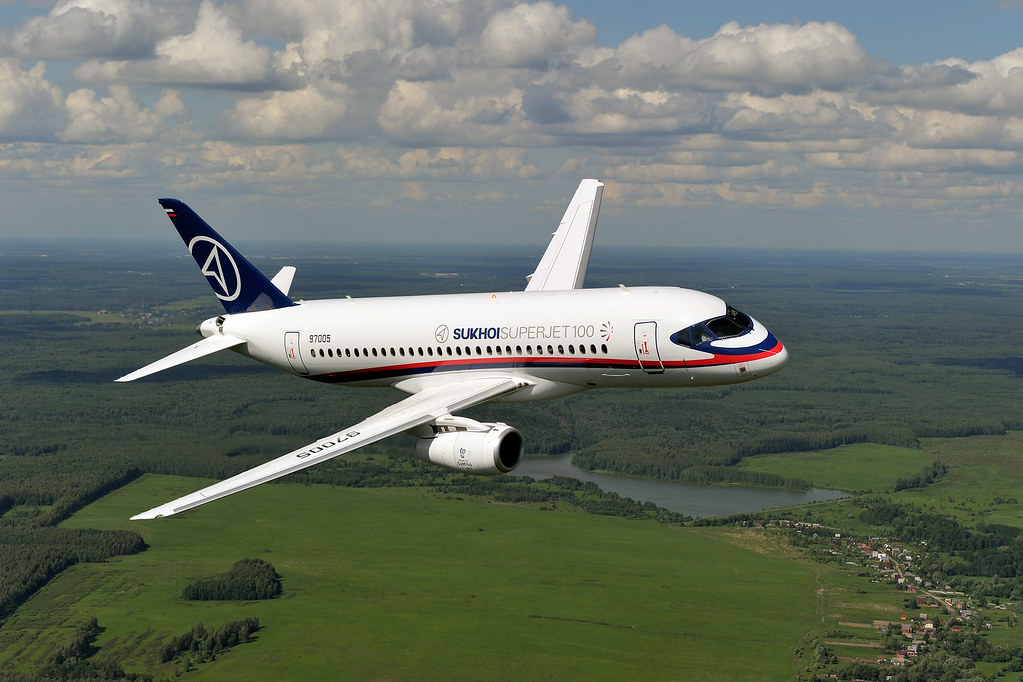
This unfortunate reality has been further underscored by a recent crash involving a Sukhoi Superjet 100 related to parts issues.
Superjet Crash
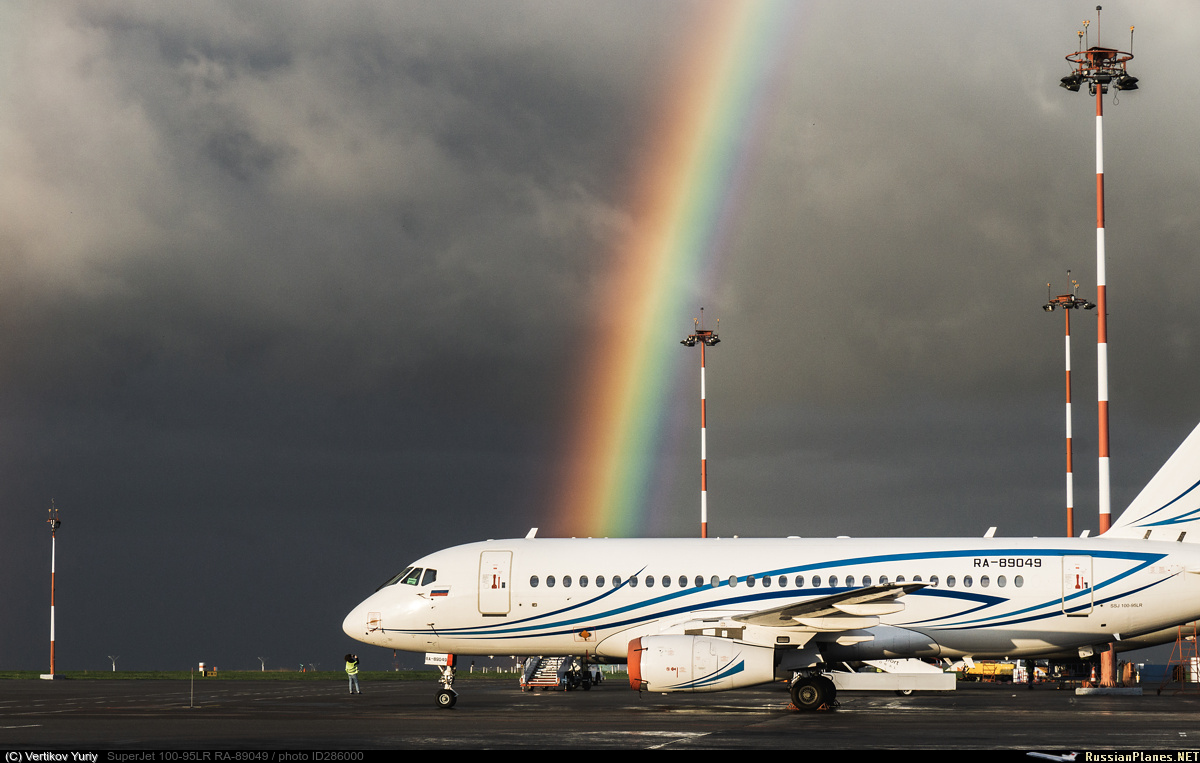
On July 12th, a Sukhoi Superjet 100 crashed in the Kolomensky district of the Moscow region. Gazpromavia operated the aircraft, which had taken off from Tretyakovo Airport seven minutes earlier.
The 9.6-year-old Superjet registered RA-89049 plane was on a short flight to Moscow's Vnukovo Airport (VKO) when it disappeared from radars around 3 p.m. local time.

Reportedly, the plane was doing a test flight following a maintenance check. It had been at Tretyakovo Airport since May 3rd and was due to continue to Vnukovo for more testing or other checks before entering service again.
No passengers were onboard the aircraft when it went down. Sadly, all three pilots perished as the aircraft exploded upon impact. Local media reports that the pilots had sent SOS signals and made several circles to burn fuel before trying to land. The exact cause of the crash is an ongoing investigation.
According to Ch-aviation, the ill-fated aircraft was originally equipped with French SaM146 engines. However, it has been reported that when the Superjet was doing its test flight, it had recently been fitted with Russian-built PD-8 engines.
These engines were being developed to replace the SaM146 engines, which Russia and France jointly produced.

Developing the PD-8 engines would further decrease Russian dependence on Western economies for aircraft parts. The country has become more focused on producing domestically manufactured parts for its planes as it has become impossible to source them from the West.
Sanction Struggles
The Gazpromavia Superjet crash is the third such tragedy involving this aircraft type. Sukhoi unveiled its Superjet in 2008, and the aircraft has seen limited use outside Russia. Due to reliability issues, Mexican carrier Interjet operated a small fleet of these planes before deciding to ground them.
In 2012, a Superjet crashed during a demonstration flight in Indonesia, killing 45 people. In 2019, 41 people lost their lives when an Aeroflot example crash-landed at Moscow Sheremetyevo Airport.
The Gazpromavia crash has been attributed to parts issues. Given that the plane had just exited a comprehensive maintenance period and was on a test flight, many have quickly concluded that faulty parts were the culprit behind the crash.
Sanctions continue to affect Russian civil aviation. In July, S7 Airlines, Russia's biggest private airline, announced it would decommission its Airbus A320neo family aircraft fleet.
As expected, Western sanctions have made it impossible to repair and maintain the Airbus' Pratt & Whitney engines manufactured in the United States.
Furthermore, the Pratt & Whitney PW1100G engines used on the Airbus A320neo family have been facing a massive recall on engines built between Q4 2015 and Q3 2021. If S7's A320neo engines had those same issues, they would not have been able to fix them.
Since they were imposed, sanctions have played a huge part in Russian aircraft issues. Unfortunately, this incident involving the SSJ-100 was another example.
Cabin Fumes Send Delta Passengers To Hospital, Force Flight To Divert To Honolulu » Why Is Turbulence Getting Worse, and Is It Actually Dangerous? » Frontier Airlines to Introduce First-Class Seating in 2027, Departing From Ultra-Low-Cost Roots »

Comments (0)
Add Your Comment
TAGS
NEWS russia plane crashsukhoi superjetrussia sanctionsputinsukhoi superjet plane crashrussian aviationrussia airplane issuesRECENTLY PUBLISHED
 UAE Suspends Iranian Airline Flights to Comply With US Sanctions, Triggering Retaliatory Airspace Ban From Tehran
The UAE has halted all Iranian carrier operations to comply with reimposed US sanctions, prompting Iran to bar Emirati airlines from its airspace.
NEWS
READ MORE »
UAE Suspends Iranian Airline Flights to Comply With US Sanctions, Triggering Retaliatory Airspace Ban From Tehran
The UAE has halted all Iranian carrier operations to comply with reimposed US sanctions, prompting Iran to bar Emirati airlines from its airspace.
NEWS
READ MORE »
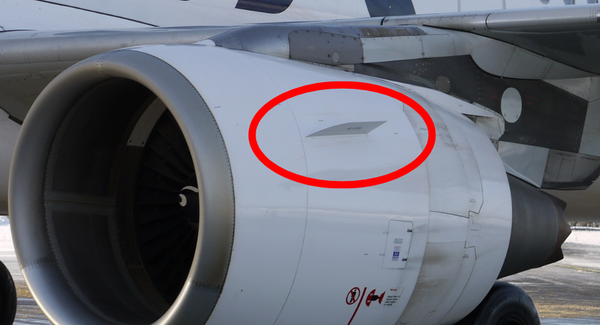 What Are Strakes? The Aerodynamic Fins Attached on an Aircraft's Fuselage
A look at how aircraft strakes quietly shape airflow, improve stability, and enhance aerodynamic performance.
INFORMATIONAL
READ MORE »
What Are Strakes? The Aerodynamic Fins Attached on an Aircraft's Fuselage
A look at how aircraft strakes quietly shape airflow, improve stability, and enhance aerodynamic performance.
INFORMATIONAL
READ MORE »
 BETA Technologies Begins Electric Aircraft Operations in North Carolina to Support Rural Healthcare Access
BETA Technologies launches its ALIA CTOL electric aircraft in North Carolina under a FAA program aimed at improving rural healthcare logistics.
NEWS
READ MORE »
BETA Technologies Begins Electric Aircraft Operations in North Carolina to Support Rural Healthcare Access
BETA Technologies launches its ALIA CTOL electric aircraft in North Carolina under a FAA program aimed at improving rural healthcare logistics.
NEWS
READ MORE »
More than just headlines.
Get unlimited ad-free access to in-depth aviation news, premium stories, and exclusive insights other sites don't cover.
- Ad-free browsing on AeroXplorer
- Unlimited access to premium and exclusive articles
- Higher photo upload limits & commissions on sales
- Free access to Jetstream Magazine on higher tiers
- Ad-free browsing
- Sell aviation photos with 60% commission
- First week free!
- Everything in Basic+
- Unlimited premium articles
- Sell aviation photos with 70% commission
- Free Digital subscription to Jetstream Magazine
- First week free!
- Everything in Basic+ and Pro
- Sell aviaiton photos with 80% commission
- Early access to exclusive stories
- Free Digital+Print subscription to Jetstream Magazine