Originally published in Jetstream Magazine by Sanghyun Kim.
The hum of engines echoed through Baghdad’s Saddam International Airport as families waved goodbye under the harsh fluorescent lights. Among the 99 passengers boarding Korean Air Flight 858 that morning in 1987, few could imagine their journey would end as one of aviation’s darkest mysteries.
November 29, 1987, started as any other travel day for passengers at Saddam International Airport (now Baghdad International Airport) in Baghdad, Iraq. At the gate, 99 passengers were boarding Korean Air Flight 858, a journey bound for Seoul, South Korea, with scheduled stops in Abu Dhabi, UAE, and Bangkok, Thailand.
Of the 99 passengers and 20 crew on this 16-year-old Boeing 707, most were Koreans returning home from work overseas, including 55 employees of the Hyundai construction and engineering company. Other notable passengers included Seoul’s consul general in Baghdad and his wife, two Japanese nationals who were father and daughter, an Indian national, and a Lebanese national.
After flying from Baghdad to Abu Dhabi without any issues, nine crew members and six passengers disembarked. After 11 additional passengers boarded, the flight departed on its second leg to Bangkok. There were now 104 passengers and 11 crew members on board.

Only Way Out: Private Aviation in a Region at War
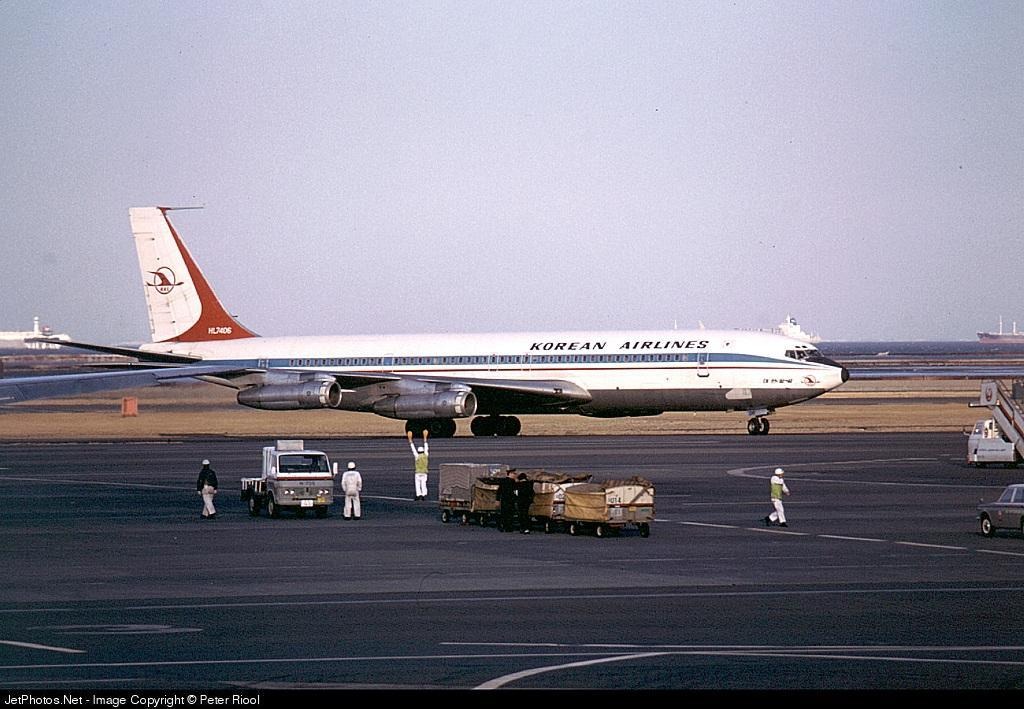
| Aircraft Type | Boeing 707-3B5C |
| Line Number | 648 |
| MSN | 20522/855 |
| Registration | HL7406 |
| Built | June 21, 1971 |
| Delivered New to Korean Air | August 11, 1971 |
| Engines | P&W JT3D-3B |
| Config | C/Y 171 |
| Total Airframe Hours | 36,047 |
| Cycles | 19,941 |
| Notes | Operated Inaugural KE001/002 Flight from Seoul to Tokyo to Honolulu to Los Angeles |
The Airplane with a Past
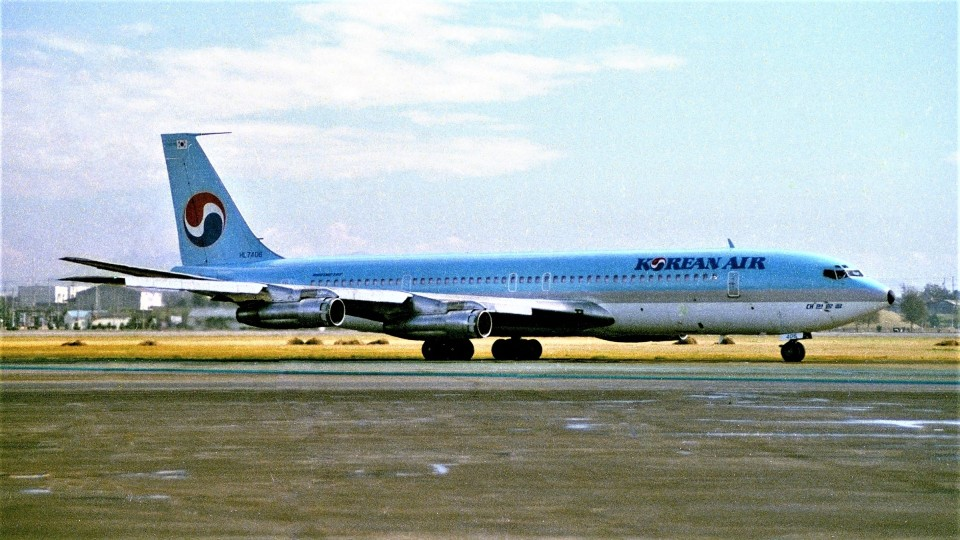
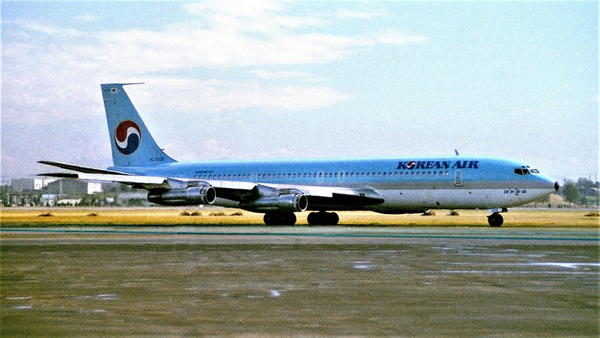
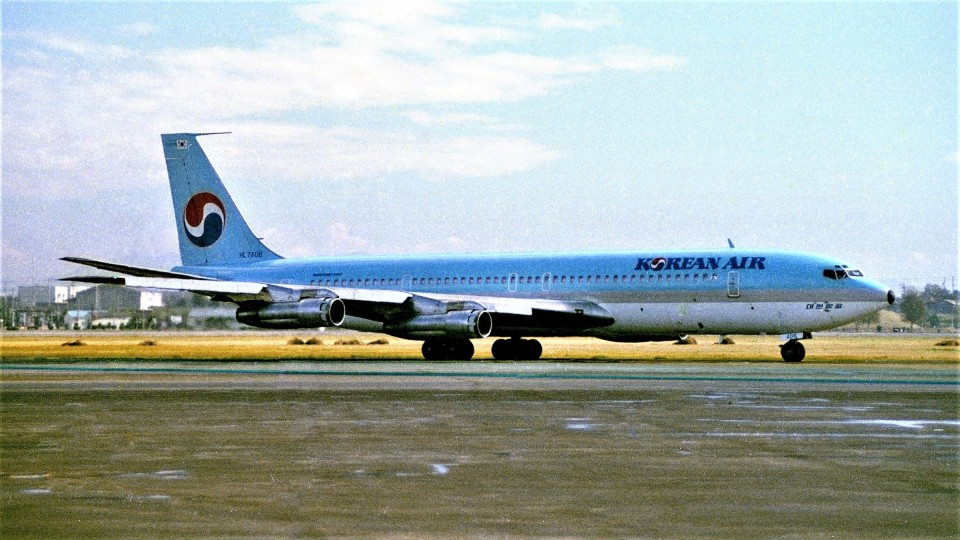
This particular airframe, registered HL7406, had an elaborate history in Korea. Between 1980 and 1982, the aircraft was used as the first official presidential aircraft in South Korea. Its brief presidential service ended when the government transitioned to newer aircraft acquired by Korean Air. HL7406 was then repainted to Korean Air’s new light blue livery featuring the symbolic 'Taeguk' on the tail, along with a special decal promoting the 1988 Seoul Olympics.
HL7406 was the first new aircraft that Korean Air had ordered from Boeing. Before HL7406, Korean Air operated two Boeing 720s it acquired second-hand from Eastern Air Lines, and leased a single Boeing 707 freighter to operate cargo routes.
Maintenance History
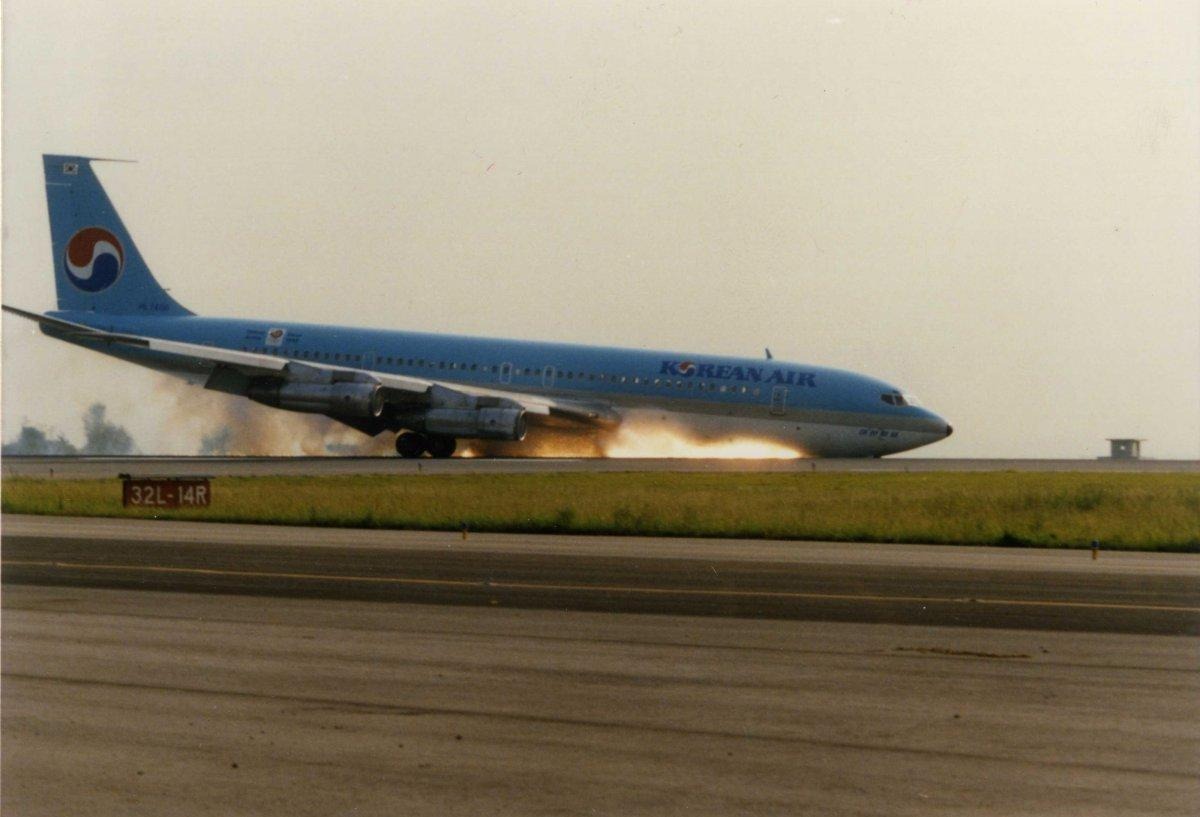
Up until this point, HL7406 had experienced two incidents. On September 13, 1977, the nose gear failed to deploy during landing at Seoul-Gimpo International Airport due to a hydraulic issue, resulting in a partial belly landing. Ten years later, on September 2, 1987, the aircraft experienced the same nose gear issue while approaching the same airport, resulting in another belly landing. After its repair, the aircraft returned to operation, with its first destination being Baghdad. Flight 858 was the returning flight of this first trip.
A Routine Flight That Never Landed
Among the passengers who disembarked at the aircraft's first stop in Baghdad were two Japanese nationals, who were connecting to a Gulf Air flight to Bahrain. These two passengers would soon become the most infamous terrorists in Korean history.
The aircraft's second flight — from Baghdad to Bangkok — began as a normal flight. Just 45 minutes before landing in Bangkok, at around 05:05 UTC, the pilots were ready to begin their descent.
"We expect to arrive in Bangkok on time. Time and location normal," they transmitted to air traffic control.
Tragically, this was their final radio message to air traffic control.
Shortly after, air traffic controllers at Bangkok Airport lost all communication with Flight 858. The flight disappeared above the Andaman Sea.
At Seoul-Gimpo International Airport, anticipation turned into devastation when families and friends were informed that the flight had disappeared before even reaching its stopover in Bangkok.
More than 300 distraught relatives set up a vigil through the night. Candles flickered as families clutched photos and whispered prayers. Another vigil was set at an airport hotel where airline officials kept families informed of the search. The loss of Flight 858 shocked the country, especially since there had been no aviation accidents involving South Korea since the shootdown of Korean Air Flight 007 four years ago in 1983.
Thailand launched a search-and-rescue operation right away. It was soon joined by Burma (now Myanmar) and India, along with the Republic of Korea (South Korea).
Initially, it was believed there had been a mechanical failure, as the aircraft had just returned from the maintenance hangar. However, on December 1 — two days after the incident — the arrest and death of the two Japanese passengers who boarded Flight 858 shifted the case in a wholly different direction.
The Investigation
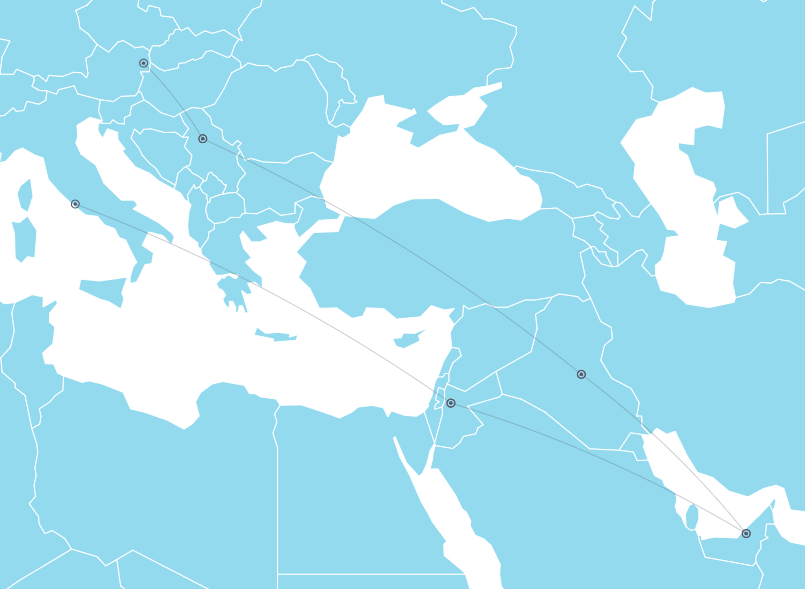
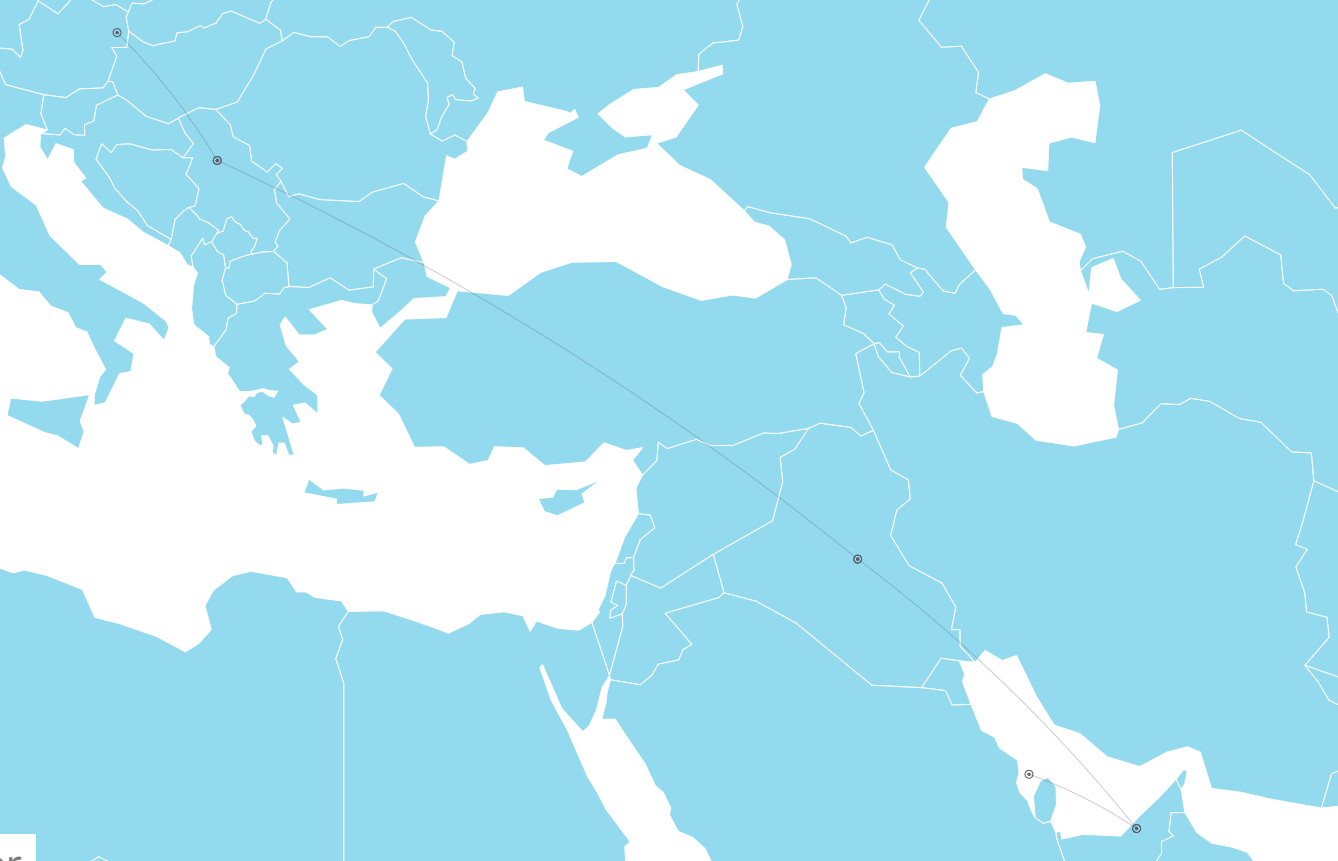
Immediately after the disappearance of KAL858, South Korean authorities strongly suspected the North Koreans. These allegations were based on the strange behavior of the two Japanese passengers in the days leading up to the flight. When booking their tickets, the Japanese passengers wrote their first names, unlike typical Japanese travelers who identify themselves by their last names. They also had a questionable itinerary: Vienna-Belgrade-Baghdad-Abu Dhabi-Bahrain, despite a much simpler itinerary being available. Furthermore, authorities noted that they checked out of their Bahrain hotel early after being questioned about KAL858’s disappearance.
With heightened suspicions, the South Korean embassy in Bahrain contacted the Japanese embassy to check the passports that the two Japanese passengers had used when boarding the flight. When it was discovered that the passports were fake, the Bahraini authorities apprehended the two Japanese passengers at the airport, just as they were checking in for their flight to Amman. A Japanese embassy staff member stalled their departure, claiming that the woman's passport was false, necessitating her return to Japan on a Japanese airline for further investigation. The man, hearing this, urged the woman to commit suicide to avoid identification. They both attempted suicide by ingesting cyanide concealed in cigarettes; the woman survived as authorities hindered her attempt, while the man died from the poison.
The South Korean government sent a special envoy to Bahrain to request the extradition of the suspects. This was because suicide by cyanide was a common method used by North Korean agents. The Bahraini authorities agreed to hand over the woman and the body of the man, and a formal investigation by the South Korean government was initiated. The suspects were then transported to South Korea on a chartered Korean Air DC-10.
It was discovered that the terrorists had left a radio-timer bomb in the overhead compartment near their seats, 7B and 7C, configured to explode nine hours after it was set. Just 45 minutes before landing in Bangkok, the timer struck zero.
A Confession That Shook Two Koreas
After being transported to South Korea, the woman, identified as 25-year-old Mayumi Hachiya, was questioned extensively. Since her cover as a Japanese national had been blown, she tried to act Chinese, even writing Chinese. However, National Intelligence Service (NIS) agents used baiting techniques to verify her Korean origin.
For example, when a detective working the case told his colleagues in Korean that she was lying, she contested in Chinese, saying, “I did not lie,” affirming that she could indeed understand Korean. The investigators also joked in Korean, which made her laugh, and cursed the Kim family in front of her to provoke a reaction. When asked about television brands in Japan, she accidentally gave a North Korean television brand as an answer. She also incorrectly stated that the driver’s side is on the left in Japan.
As a way to convince her to open up, NIS agents took Hachiya on a tour of Seoul. By showing true images of South Korea, agents hoped she would realize that her view of South Korea as a failed, corrupt capitalist nation was a lie and that she had been exploited as a tool for North Korean terrorism. Agents also caught her off guard by using soft interrogation tactics, a stark contrast to the torture and violence she expected.
At around 5 PM on December 23, 1987, 25 days after the bombing of KAL858, Mayumi Hachiya spoke Korean for the first time, “Forgive me. I am sorry.” She voluntarily gave further confessions in Korean thereafter.
The Bombers
Mayumi Hachiya’s real name was Kim Hyun-Hui, and she was a 25-year-old North Korean agent. The man, Shinichi Hachiya, was identified as Kim Sung-il, a 70-year-old North Korean agent who devised the plot. They were both special agents of the Intelligence Department of the Central Committee of the North Korean Workers’ Party.


How AI Quietly Became the Backbone of Today’s Aviation Industry
Born on January 27, 1962, Kim Hyun-Hui's father was a North Korean diplomat. She lived the high life in the North Korean society. She spent part of her childhood in Cuba, where her father was working at the North Korean embassy, and returned to North Korea, where she attended high school. After graduating, she enrolled in Pyongyang University of Foreign Studies, where she majored in Japanese. She excelled in her class, which the Central Party noted. She was summoned by the Party to become a special agent, training undercover as a Japanese woman.
Shortly after, she was suddenly summoned back to North Korea alone. She initially thought she was to infiltrate Japan and start a spy operation. However, the government had a wildly different idea.
Two months before the bombing, Kim Hyun-Hui and Kim Sung-il were assigned a top-secret mission in Pyongyang to destroy a South Korean airliner. North Korea sought to disrupt the 1988 Seoul Olympics, which would showcase South Korea's rapid development.

On November 12, 17 days before the bombing, the agents left Pyongyang Sunan Airport at 8:30 AM on an Air Koryo flight to Moscow. After arriving at Moscow the same day at 6 PM, they left for Budapest on an Aeroflot flight at midnight, arriving early the next morning. The agents stayed at the house of a North Korean guide officer for six days and left for Vienna by car on November 18. After crossing the Austrian border, the guide officer gave them forged Japanese passports with false exit stamps. From then on, the agents traveled under their false Japanese identities.
The agents checked into room 603 at the Hotel Am Parkring Vienna on November 18. In Vienna, they visited an Austrian Airlines office to buy their plane tickets. They also bought tickets at an Alitalia office for Abu Dhabi to Rome (via Amman) as their escape route.
On November 23, six days before the bombing, the agents left Vienna for Belgrade on an Austrian Airlines flight. In the evening of the 27th, two days before the bombing, they received a time bomb disguised as a Japanese Panasonic radio, along with liquid explosives hidden inside a liquor bottle. These were delivered by two North Korean guidance officers who came to Belgrade from Vienna by train.
On November 28, the night of the bombing, the agents left Belgrade for Baghdad on an Iraqi Airways flight, arriving at 8:30 PM. After waiting for nearly three hours at a transit lounge, Kim Sung-il set the timer on the bomb to detonate nine hours later. They then boarded Korean Air Flight 858 and stored their luggage — along with the explosives — in the compartments above their seats 7B and 7C. Flight 858 departed Baghdad at 11:30 PM, arriving at Abu Dhabi the next day at 3:30 AM. The agents disembarked without their carry-on luggage.
KAL858 continued its journey towards Bangkok, but tragically exploded when the bomb detonated after the nine-hour timer had gone off.
After disembarking in Abu Dhabi, the agents, now bombers, encountered unexpected visa complications, prompting an airport employee to ask for their onward tickets. Since their itinerary already looked suspicious — they were flying back in the direction they had just come from — they abandoned their escape route to Rome, electing to fly to Bahrain instead. They departed Abu Dhabi for Bahrain on Gulf Air Flight 003, arriving later the same day. After checking into their hotel, they tried to buy tickets to Rome, but since it was a Sunday, airline offices were closed. The next day, they tried to buy tickets for later that day, but flights were fully booked. They eventually bought tickets for Tuesday, December 1.
As the bombers returned to the hotel, an employee from the South Korean embassy, acting on intelligence gathered earlier, visited their hotel room. The employee greeted the bombers, telling them that they were extremely fortunate to have disembarked the flight before it took off for Bangkok. The employee also asked about their travel plans before leaving abruptly.
This made the bombers increasingly paranoid. The next morning, they checked out of their hotel early and proceeded to Bahrain International Airport, where a Japanese embassy employee discovered that their identities were false. This is when the agents attempted to commit suicide, and Kim Hyun-Hui was taken in for questioning.
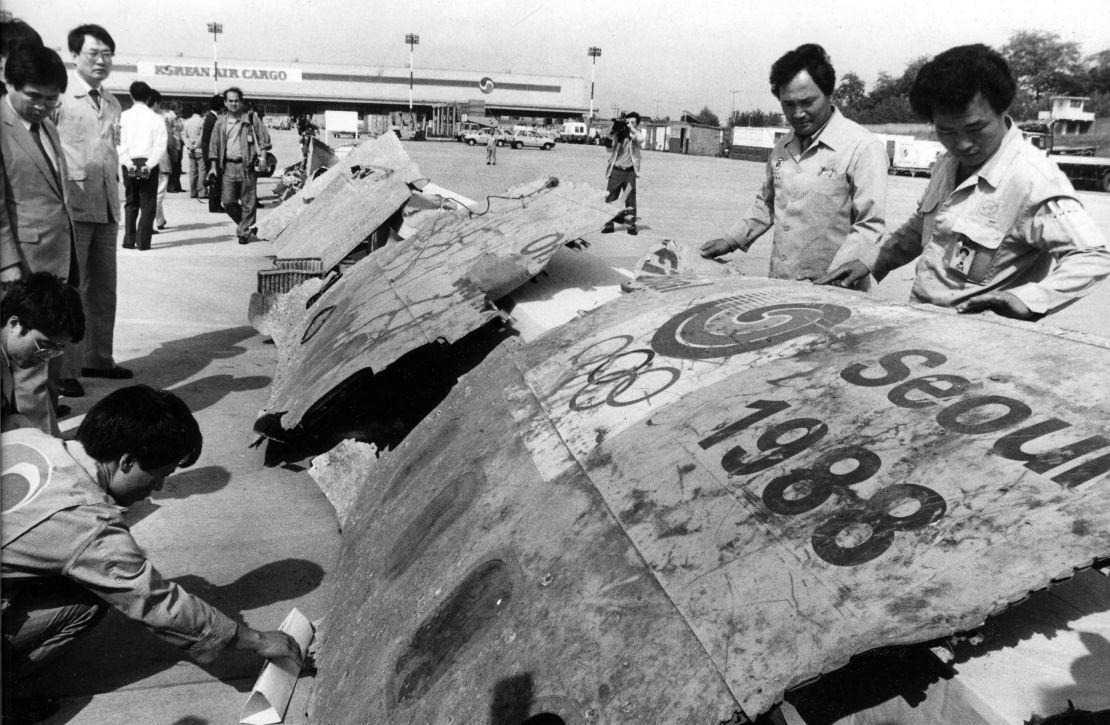
The partial wreckage of KAL858. Source: Yonhap News Agency
The investigators concluded that the purpose of this bombing was to disrupt the upcoming presidential elections and deter countries from participating in the 1988 Summer Olympics in Seoul. This attack was carried out in sequence with other attempts by North Korea to destabilize the South Korean government. These include the Rangoon bombing in 1983 and the Gimpo International Airport bombing in 1986, which occurred six days before the 1986 Asian Games hosted by Seoul.
The Aftermath
Kim Hyun-Hui was sentenced to death, but was later pardoned by the government so they could obtain classified information about North Korea. It is believed that her family and relatives who remained in North Korea were all sent to labor camps and expelled from the Pyongyang Capital Area.
Kim wrote two books about her life in the early 1990s and offered more than $600,000 in reparations to victims’ families. She is currently living under the protection of the National Intelligence Service of South Korea. She married an ex-agent of the National Intelligence Service, with whom she has two children.
As the bombing occurred near the presidential election, the ruling party was able to use the bombing to win the election by promptly pursuing punishment and widely broadcasting the capture of the terrorist. Kim Hyun-Hui was transported to South Korea on December 15, one day before the presidential election. The Korean War still affected most South Koreans at the time, and such news made a good impression on the public. In the end, with the unification of the opposing party's candidates falling through, the ruling party was able to continue running the regime.
The remains of Flight 858 were never fully recovered, and the government showed little interest in the swift recovery of the remains. This led to conspiracy theories that the operation was staged by the ruling party of the South Korean government. These allegations are still debated to this day.
In 2019, MBC, a South Korean broadcast company, found debris that is believed to be the fuselage of Flight 858. Despite being 32 years after the bombing, the fuselage was found to be intact, suggesting that the 707 did not plunge violently into the ocean, but rather made a failed emergency landing in the sea.
On November 27, 2020, MBC announced that the South Korean government had agreed with the Myanmar government to send investigators to the debris site. However, due to the Myanmar coup d'état that occurred on February 1, 2021, the investigation was halted. MBC uploaded a video emphasizing the importance of a re-investigation last December.
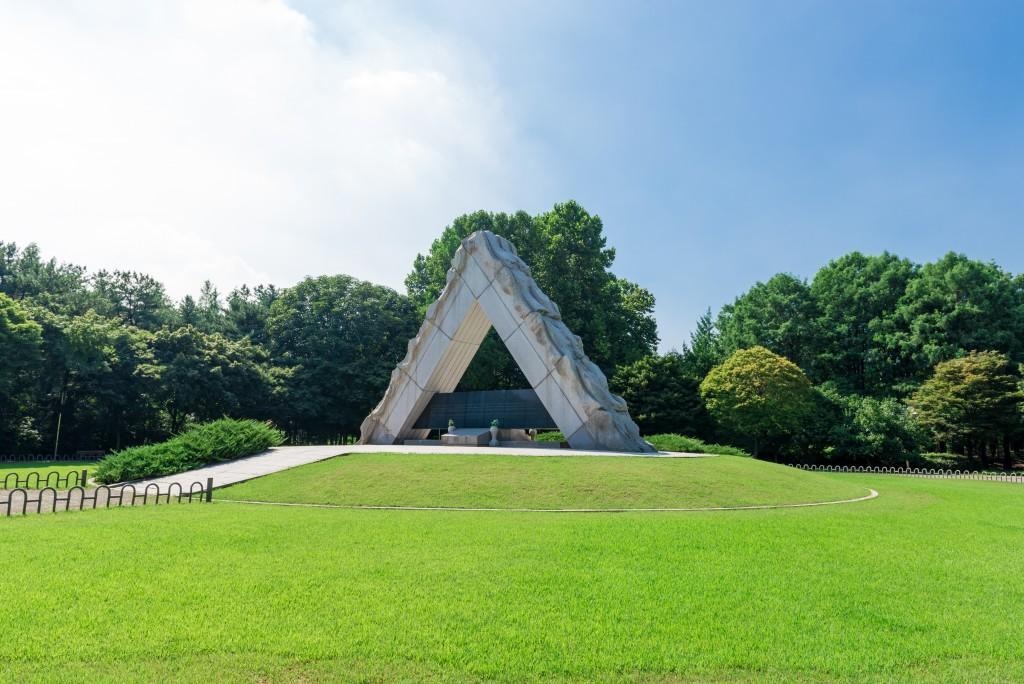
A memorial for the victims of Flight 858 is located in Yangjae Citizen Forest, Seoul, South Korea. Thirty-eight years later, the story of Flight 858 continues to echo, reminding the world that beneath every act of political aggression lie human lives, families, and dreams cut short, all bound by a shared hope that such a tragedy never happens again.
This content is only available with an AeroXplorer+ subscription.
US State Department Warns of Threats to Airlines and Airports in Saudi Arabia Following Deadly Houthi Attacks » Frontier Airlines Flight Attendant Restrains Passenger Who Lunged for Cabin Door During Atlanta Jet Bridge Delay » Debris Field Discovered in Search for Missing Air Ambulance Carrying Six People »
Comments (1)
 Betty Goss
Received email to unlock article. But it did not work. It was supposed to be my "one article free per month", and was about the Korean plane that was evidently downed KAL858. So I am very disappointed that your system did not work for me.
Betty Goss
Received email to unlock article. But it did not work. It was supposed to be my "one article free per month", and was about the Korean plane that was evidently downed KAL858. So I am very disappointed that your system did not work for me.
Add Your Comment
TAGS
STORIES Korean Air KAL858 Terrorism Travel History Jetstream MagazineRECENTLY PUBLISHED
 Southwest Airlines Blames Brief System Outage for Boarding Delays and Checked Bag Disruptions
Southwest Airlines confirms a brief technology outage disrupted boarding and checked bag operations, forcing gate agents to process travelers manually.
NEWS
READ MORE »
Southwest Airlines Blames Brief System Outage for Boarding Delays and Checked Bag Disruptions
Southwest Airlines confirms a brief technology outage disrupted boarding and checked bag operations, forcing gate agents to process travelers manually.
NEWS
READ MORE »
 Southwest Airlines Considers Boeing 787 Order for Long-Haul International Expansion
Southwest Airlines is evaluating the Boeing 787 Dreamliner as it explores a shift into long-haul international flying, sources tell Reuters.
NEWS
READ MORE »
Southwest Airlines Considers Boeing 787 Order for Long-Haul International Expansion
Southwest Airlines is evaluating the Boeing 787 Dreamliner as it explores a shift into long-haul international flying, sources tell Reuters.
NEWS
READ MORE »
 Delta Passenger Arrested After Allegedly Stealing Airport Tug
A Delta Air Lines passenger faces charges after allegedly stealing a ground service tug at a California airport and driving it onto a runway.
NEWS
READ MORE »
Delta Passenger Arrested After Allegedly Stealing Airport Tug
A Delta Air Lines passenger faces charges after allegedly stealing a ground service tug at a California airport and driving it onto a runway.
NEWS
READ MORE »
More than just headlines.
Get unlimited ad-free access to in-depth aviation news, premium stories, and exclusive insights other sites don't cover.
- Ad-free browsing on AeroXplorer
- Unlimited access to premium and exclusive articles
- Higher photo upload limits & commissions on sales
- Free access to Jetstream Magazine on higher tiers
- Ad-free browsing
- Sell aviation photos with 60% commission
- First week free!
- Everything in Basic+
- Unlimited premium articles
- Sell aviation photos with 70% commission
- Free Digital subscription to Jetstream Magazine
- First week free!
- Everything in Basic+ and Pro
- Sell aviaiton photos with 80% commission
- Early access to exclusive stories
- Free Digital+Print subscription to Jetstream Magazine