
Originally published in Jetstream Magazine by Hadi Ahmad.
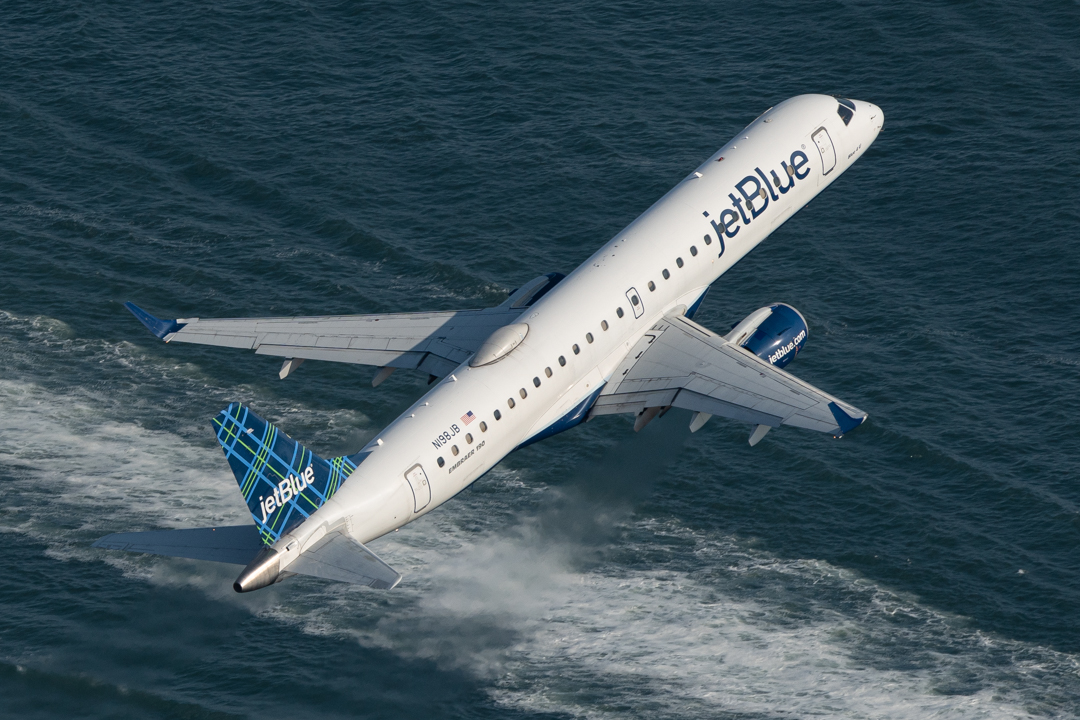
On September 9, 2025, after nearly two decades of service, JetBlue Airways brought an end to an era with the retirement of its Embraer E190 fleet. The milestone was marked with a special farewell flight, JetBlue flight 190, a symbolic nod to the aircraft's model number. The aircraft departed from New York's John F. Kennedy International Airport (JFK), JetBlue's largest hub, and made its last landing at Boston Logan International Airport (BOS), the carrier's second major base. Though the E190 no longer flies under the JetBlue banner, its legacy endures as a defining part of the carrier's growth and identity.
The Origins of the E190
The Embraer 190 was one of two initial variants in Embraer’s popular “E-Jet” family, launched at the 1999 Paris Air Show. It was designed as a stretched version of the E-Jet family’s base model, the Embraer 170. Compared to the 170, the Embraer 190 sported larger wings, larger horizontal stabilizers, more powerful engines, and more capacity.

On February 11, 2000 — just months after Embraer announced the launch of its E190 program — JetBlue Airways operated its first commercial flights from New York-JFK to Fort Lauderdale (FLL) and Buffalo (BUF). At the time, the carrier operated only a handful of Airbus A320s, mirroring Southwest Airlines in its low-cost, single-type fleet model. However, JetBlue wanted to distinguish itself in an increasingly competitive market.
Back in 2000, in-flight entertainment came in the form of seatback screens offering live DirecTV channels, with the ability to listen to Sirius XM. Such amenities were unprecedented for a low-cost airline, especially in the United States. JetBlue went against this norm by offering these to all passengers, even in economy class.
While JetBlue initially launched with 150-seater Airbus A320s, these aircraft soon proved inefficient for serving less-demanded routes. The airline needed a smaller aircraft that would not only suit these markets but also provide a comfortable passenger experience. Thus, in 2003, JetBlue became the launch customer for the Embraer 190, ordering 100 of the type. The first airframe was delivered to JetBlue in September of the following year.

Like most regional jets at the time, JetBlue's E190 was configured to seat 100 passengers in an all-economy-class configuration. However, what set the aircraft apart from a typical Boeing 737 or Airbus A320-family plane was its cabin layout. Unlike the standard 3-3 configuration seen in most narrowbody aircraft coach cabins, the E190 — along with its other E-Jet siblings — had a 2-2 configuration. This meant that all seats on board were either at the window or in the aisle. Although this was a result of the E190's thinner fuselage — a factor outside the airline's control — it was still a popular perk of the jet, as no passenger ever had to endure the discomfort of a middle seat.
Despite the Embraer 190 being a regional jet, it had a similar seating capacity to some mainline aircraft while simultaneously offering a more comfortable experience. Unlike most American regional jets at the time, JetBlue's E190s were fitted with DirecTV entertainment screens at every seat. The airline remained one of only two airlines worldwide to ever have inflight entertainment screens on regional jets, the other being Air Canada.
Early Challenges
JetBlue debuted the Embraer 190 during a rather tumultuous period for the airline. As its first E190s were being delivered, the carrier was experiencing significant losses stemming from surging fuel prices and increased competition from other airlines. By the fourth quarter of 2005, JetBlue’s financial situation was only getting worse: it lost $42.4 million, enough to make it unprofitable for the entire year. This marked the airline's first-ever quarterly loss.
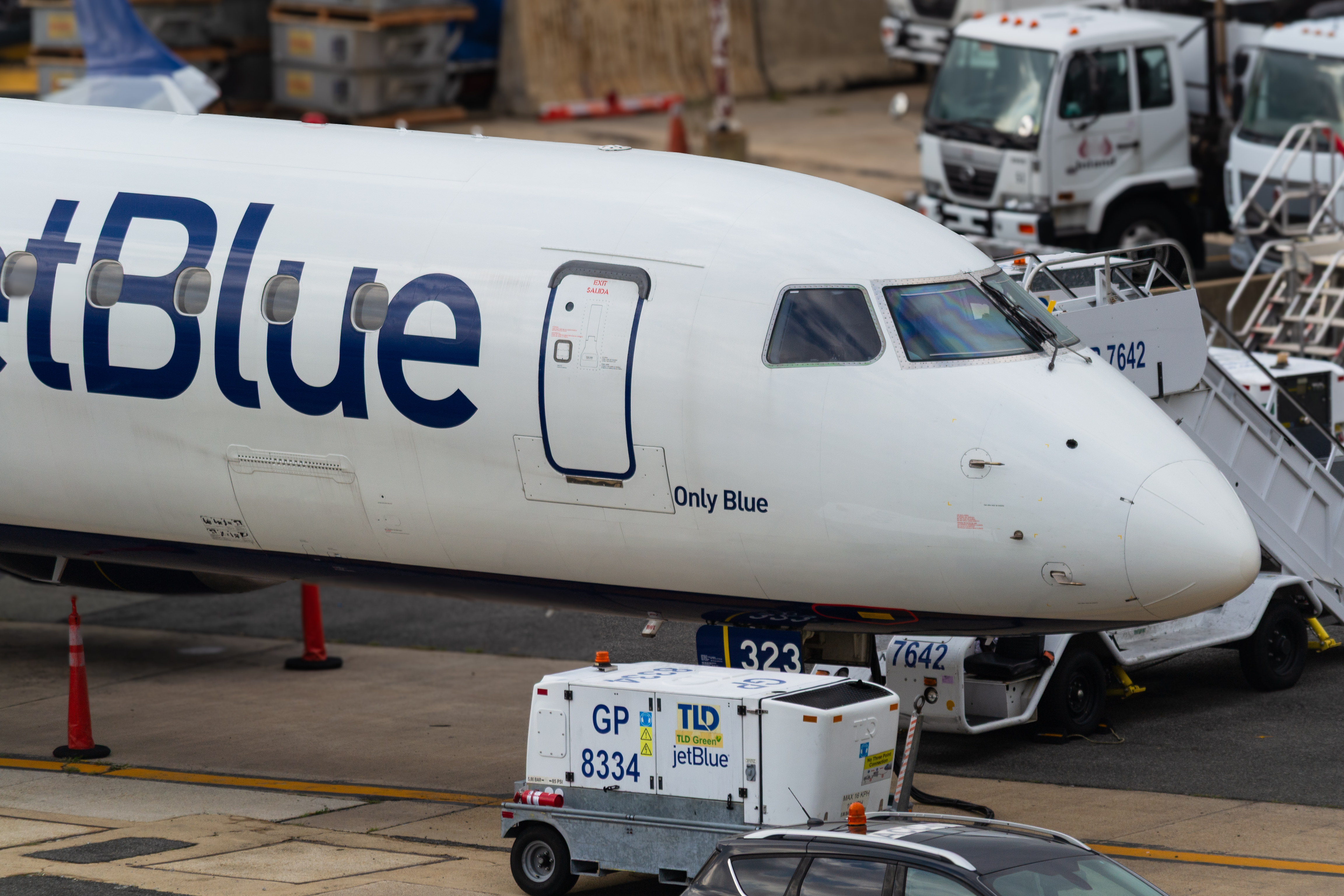
JetBlue’s management soon devised a plan to curtail losses and regain profitability, part of which involved deferring some E190 deliveries and selling five A320s. This explains why the carrier’s Embraer 190s were delivered over such a long period of time – from 2005 to 2013. Financial losses also prevented the airline from exercising its full purchase rights for 100 E190s, leaving it with a peak fleet of just 63 aircraft.
| Year | 2005 | 2006 | 2007 | 2008 | 2009 | 2010 | 2011 | 2012 | 2013 | TOTAL |
| E190s Delivered | 7 | 16 | 7 | 7 | 6 | 4 | 5 | 4 | 7 | 63 |
By 2007, JetBlue’s woes were far from over. On top of extensive flight disruptions due to winter storms that year, the airline experienced various teething issues with the Embraer 190s. It was during this year that JetBlue grounded some of these aircraft to address various software problems and incorrect instrument readings. However, such issues were short-lived — in fact, such avionics issues were common with the E-Jet family aircraft in its early stages. To rectify these issues, JetBlue sent two E190 aircraft at a time to Embraer’s primary maintenance facility in Nashville, Tennessee, while the rest remained grounded. In the meantime, it contracted with regional airlines like ExpressJet to temporarily cover various E190 routes. ExpressJet operated four Embraer 145s on behalf of JetBlue on routes like Boston-Buffalo, Boston-Washington Dulles, New York-Columbus, and New York-Richmond.
| JetBlue Routes Covered by ExpressJet |
| Boston, MA (BOS) - Buffalo, NY (BUF) |
| Boston, MA (BOS) - Washington Dulles, VA (IAD) |
| New York, NY (JFK) - Columbus, OH (CMH) |
| New York (JFK) - Richmond, VA (RIC) |
These minor issues were resolved in due time, and the E190 continued playing an important role for JetBlue in the years that followed. The jet was instrumental in growing JetBlue's presence in New York and Boston, as it was perfect for so-called “thin” routes that had lower demand. Thus, JetBlue was able to support regional markets that otherwise did not have the facilities or demand to support larger A320s.
Some examples include Nantucket and Martha’s Vineyard, Massachusetts, whose short runways and small aprons could only support aircraft as large as the E190 at the time.

Aside: The most recent example of JetBlue's "thin-route" strategy can be seen with Presque Isle, Maine (PQI), an airport whose commercial air service is subsidized by the U.S. government under the Essential Air Service (EAS). In 2024, the Department of Transportation awarded JetBlue its first EAS contract in history, serving Presque Isle daily from Boston using the E190. Since the E190’s retirement, the route has been taken over by the Airbus A220.
Another case is White Plains Westchester County Airport (HPN), located less than 40 miles from Manhattan. This small airport remains busy thanks to its proximity to the city. Given its lower operating costs compared to other New York City-area airports, JetBlue began service to HPN in 2007. Many of its routes from the airport were flown on E190s, and since then, JetBlue has grown to become the largest airline at the airport.
Aside from mainland U.S. routes, JetBlue has also historically maintained a large presence in the Caribbean market. This is thanks to the airline’s focus city in San Juan, Puerto Rico, which it established in 2012. The Embraer 190s were key players on short island-hopper routes between the various Caribbean islands, for example, San Juan to St. Thomas and St. Croix in the U.S. Virgin Islands. In addition, these aircraft would also support additional frequencies from San Juan on busy routes to Orlando and Fort Lauderdale.

Names, Livery, and Legacy
JetBlue has long followed a specific naming convention for its aircraft, giving each a name that plays on the color “blue”. The first E190 delivered to JetBlue, registered N183JB, was named “Azul Brasileiro” (“Brazilian Blue” in English) – a nod to the Embraer 190 being a Brazilian plane. Later on, JetBlue would receive the second E190 ever built: N289JB, “Blue Complete Me”. While the plane was built in 2004, it initially flew as PP-XMB, a test aircraft for Embraer. The plane flew around the world marketing the E190 to different airlines. JetBlue eventually received it in March 2008, but it was retired after four years to Vale, a Brazilian multinational corporation, before being scrapped in 2015. The aircraft's early retirement stemmed from its origins as a test plane. Test aircraft endure extensive stress during development and certification, which naturally shortens their operational lifespan. In this case, the airline deemed it impractical to safely keep the aircraft in commercial service for long, as it would have been impractical and unsafe.
JetBlue’s E190s wore a collection of tail schemes throughout their career. However, at the time of retirement, the vast majority sported the “Tartan” tail design. JetBlue introduced a revised version of its livery in 2019, with larger branding and a shallower blue underbelly. While this livery was quickly applied to most A320 and A321 aircraft, only one E190 ever received this update. In fact, none of the E190s were ever repainted except N304JB, which was given a full special livery. Named “Blueprint”, this striking all-blue livery intended to highlight the aircraft's internal components, showcasing the various facets contributing to its operation.

From E190 to A220
Eventually, the E190’s amenities became increasingly outdated. As more modern, fuel-efficient alternatives entered the market, JetBlue began mulling options to replace its aging E190 fleet. JetBlue settled on the Airbus A220-300 as the E190 replacement and, when all aircraft are delivered, will have 100 in its fleet. The A220 offers significant improvements, such as improved fuel efficiency, lower maintenance costs, newer technology, greater range, and an overall improved passenger experience.
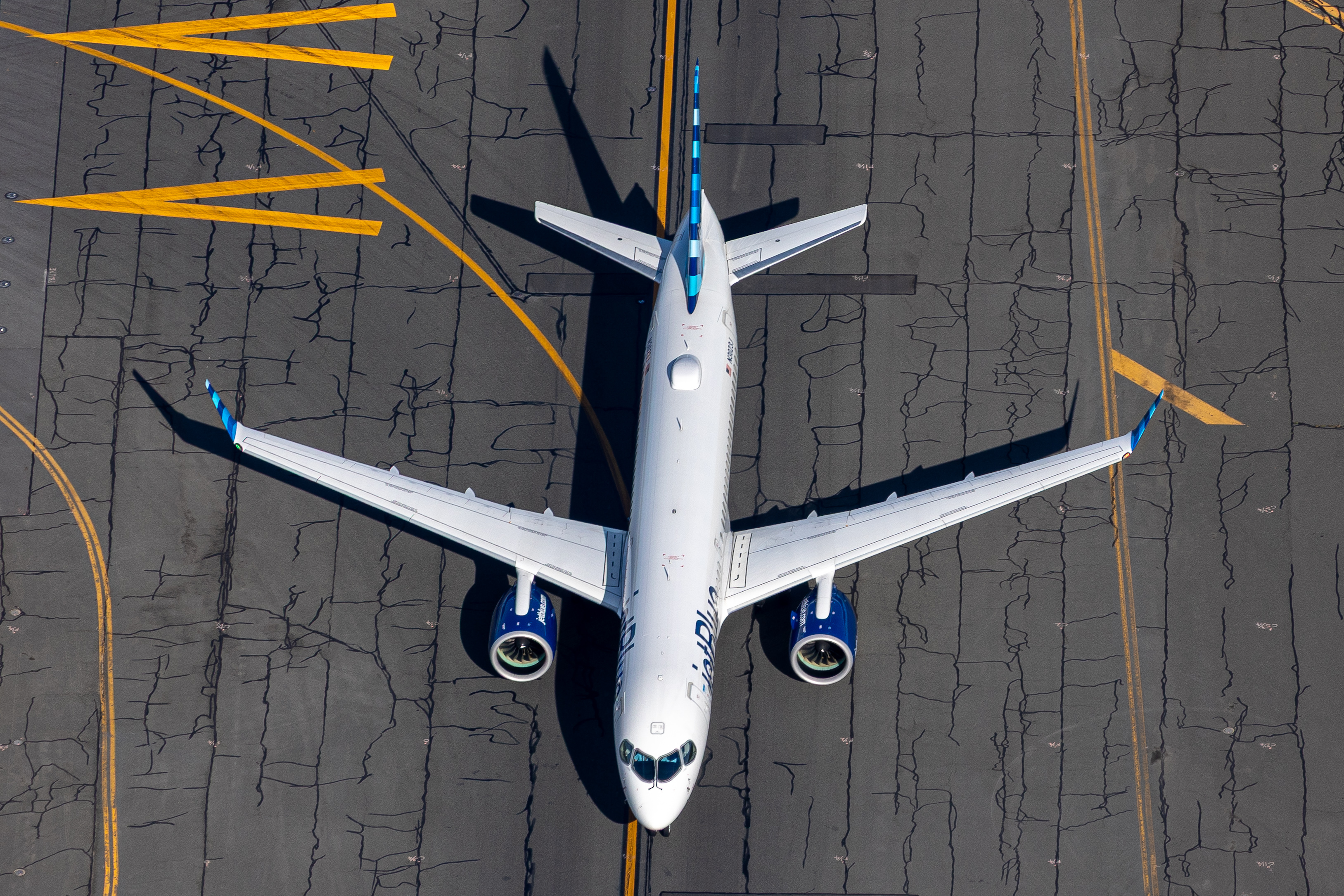
While Embraer itself had a newer alternative to the E190 — the Embraer E190-E2 — JetBlue opted for an Airbus aircraft to maintain fleet commonality. As is the norm with low-cost airlines, keeping the fleet mostly with one aircraft manufacturer streamlines processes like maintenance and pilot training. While the A220 and A320 families have separate pilot type ratings, an all-Airbus fleet simplifies things overall.
The A220 is slightly larger than the E190, seating 140 passengers in a 2-3 configuration. Despite this, it is often seen as the best of both worlds. Its size and powerful engines mean it is small enough to operate from regional airports while still being capable of taking off from shorter runways. Furthermore, the A220’s range allows it to fly almost 4,000 miles nonstop, compared to the E190’s maximum range of just under 3,000 miles, while also being about 25% more fuel-efficient per seat. From a passenger experience standpoint, the A220 offers newer, larger in-flight entertainment facilities and enhanced WiFi. The in-flight entertainment screens also offer touchscreen functionality and Bluetooth connectivity. On the other hand, the E190's cabins had not been refurbished since the planes entered service with JetBlue, still retaining the original DirecTV systems from their onset. Thus, it is safe to say that the A220 offers a more coveted passenger experience in today’s day and age.
The Final Flight

JetBlue’s final E190 flight date was pushed forward many times. Similar to how the E190 fleet once faced teething issues, so too did the A220s, but on a slightly larger scale. The aircraft’s Pratt & Whitney PW1500G engines faced various reliability issues related to corrosion, accelerated wear, and fatigue. Similar issues plagued the PW100G powering the Airbus A320neo. Various JetBlue A220s were grounded due to these issues, forcing JetBlue to keep the E190s flying for a while longer. Eventually, the final flight date was confirmed for September 9th, 2025.
| Flight Details | |
| Date | September 9, 2025 |
| Route | New York (JFK) to Boston (BOS) |
| Flight | JetBlue 190 |
| Aircraft | Embraer E190AR (N329JB) |
| Aircraft Name | My Other Ride is a JetBlue A320 |
| Duration | 0h 40m |
Normally, Flight 190 operates between San Diego and JFK; however, on September 9th, an exception had to be made for the momentous occasion. The gate areas around Gates 515 and 516 at JFK were adorned with balloons and tables. A party thrown at the gate had snacks, drinks, and a special retirement poster that passengers could sign. Passengers could also enter raffles to win a 1/100-scale E190 model. As a testament to the contrast between new and old, an empty A220 was parked at the neighboring gate, and JetBlue passengers were invited to tour the aircraft. Pop hits from 2005 were played in the terminal to provide a throwback to when JetBlue’s Embraer 190 era began.
Upon boarding flight 190, each passenger was welcomed with a gift bag containing a trading card, a final flight certificate, a custom E190 25th Anniversary AirTag, a special luggage tag, an E190 pin, and stickers.

Matthew Hefferon, a JetBlue ramp agent at the carrier’s Fort Lauderdale base, had specially made the trip up the East Coast to celebrate this momentous occasion. “There were plenty of stories [told] from crewmembers about their time on the E190”, Hefferon noted, “It was a beautiful send off”.
Nolan Walters, a passenger on the flight, noted that “Everyone who was anyone [high-ranking executive] for JetBlue was there. The Chief Operating Officer, Warren Christie, was the Captain for the flight, which I thought was a nice touch.” Indeed, Captain Christie piloting the final flight made for a full-circle moment, as it was he who had flown JetBlue’s inaugural E190 flight back in 2005.

“I am proud to operate today’s flight, as it marks a significant evolution of our fleet,” said Christie. “The E190 was instrumental in our early years and proved to deliver on critical connectivity in short-haul markets, allowing us to grow into new regions, especially in our New York and Boston focus cities. As one of the originating crewmembers to launch the E190 at JetBlue, it is an honor to pilot our final E190 revenue flight.” Captain Christie also received an award from the FAA for his many years of service as a pilot.
Many JetBlue crewmembers who had worked on the inaugural E190 flight in 2005 joined Flight 190 as passengers to witness the aircraft’s farewell. The Embraer 190 requires only two flight attendants to operate, and for this final journey, JetBlue selected the two most senior attendants with the most experience on the E190. Adding a special touch to the occasion, that pair happened to be married.
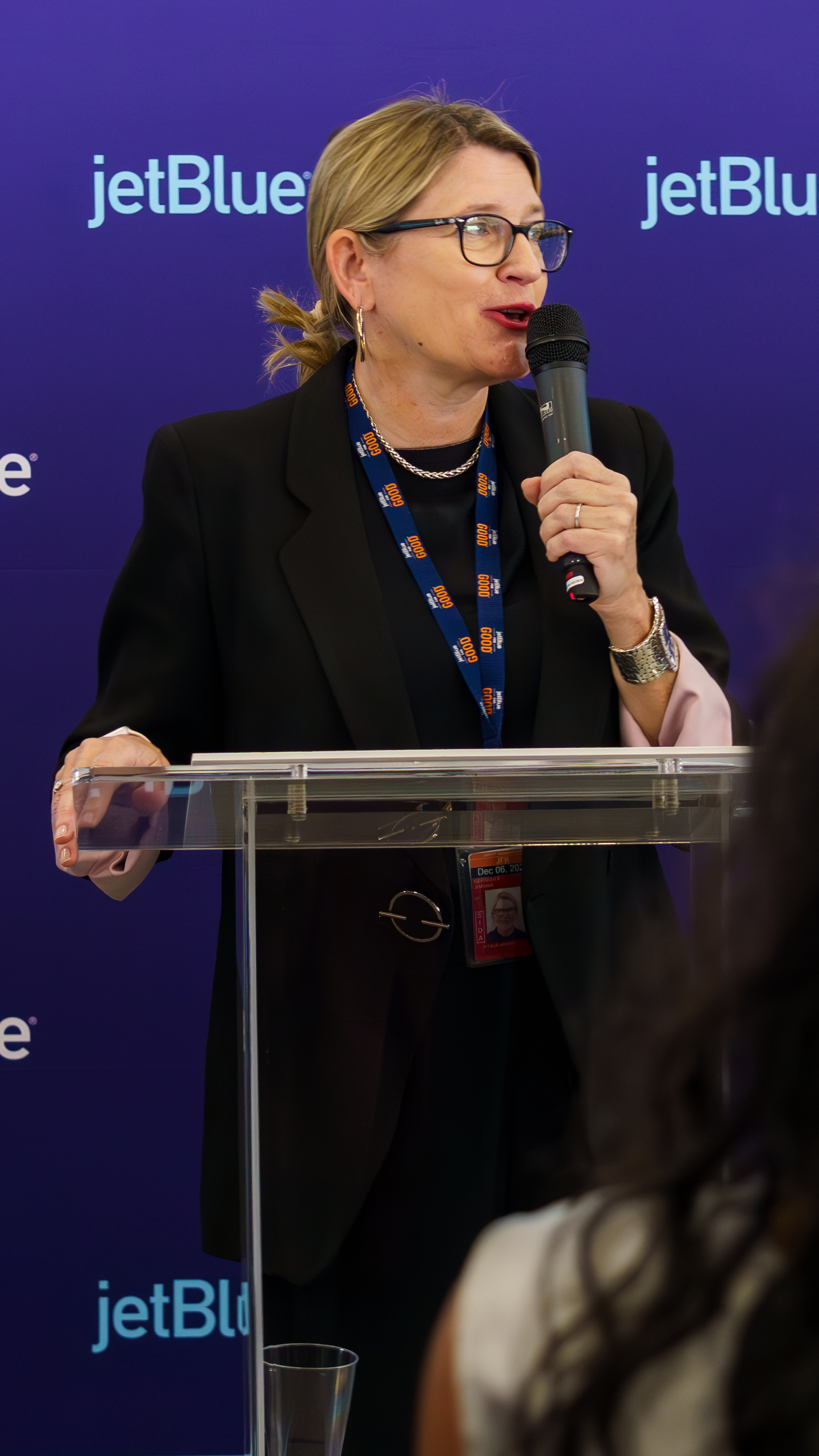
Flight 190 departed on time from JFK Airport’s Runway 4L. An aircraft that was once seemingly impossible to avoid at JetBlue’s largest hub now flew into the history books. The flight to Boston was just under 40 minutes, and the maximum cruising altitude was 21,000 feet. Before long, the E190 landed for the final time at Boston Logan's Runway 4L. After passengers deplaned, another celebration was held in the gate area. Following a series of speeches, JetBlue’s CEO, Joanna Geraghty, was presented with a special E190 retirement certificate from Boston Logan Airport. The following day, Aircraft 329 became the final JetBlue E190 to depart Boston: at 9:16am, the jet lifted off Logan Airport’s Runway 4R towards Marana Pinal Airpark in Arizona, where it would join its fellow E190s in retirement.
20 years of the JetBlue Embraer 190 thus concluded. While many nowadays tend to focus on the airline’s more exciting developments — such as its premium cabin and international operations — the E190’s impact on JetBlue can never be overlooked. This was the aircraft that carved JetBlue's place in a fiercely competitive Northeast market; it helped bolster the airline’s operations around the East Coast, Midwest, and Caribbean; and, most of all, it provided passengers with a unique experience they couldn't find on any other airline. Though the A220 now carries the airline into a new era of efficiency and comfort, the Embraer E190 will forever be remembered as the aircraft that defined the JetBlue we know today.
This content is only available with an AeroXplorer+ subscription.
United Boeing 757 Makes Overweight Landing in Dublin After Crew Reports Strong Fuel Smell and Headaches » British Airways Flight to Chicago Forces Emergency Descent After Cabin Pressure Failure » British Airways Unveils World's Largest Business Class Cabin With 106 Seats Aboard Refurbished A380 Fleet »

Comments (0)
Add Your Comment
TAGS
INFORMATIONAL JetBlue Jetstream Magazine Travel Airlines Retirement E190 Embraer N329JBRECENTLY PUBLISHED
 This Week in Aviation: The 10 Stories That Mattered Most
From major airline developments to aircraft updates and industry shifts, this weekly recap highlights the ten most-read aviation stories from the week of October 04.
INFORMATIONAL
READ MORE »
This Week in Aviation: The 10 Stories That Mattered Most
From major airline developments to aircraft updates and industry shifts, this weekly recap highlights the ten most-read aviation stories from the week of October 04.
INFORMATIONAL
READ MORE »
 4th vs 5th Generation Fighter Jets: How Fighter Jets Have Evolved
A look at what separates fourth- and fifth-generation fighter jets, from stealth and sensor fusion to combat capability and cost.
INFORMATIONAL
READ MORE »
4th vs 5th Generation Fighter Jets: How Fighter Jets Have Evolved
A look at what separates fourth- and fifth-generation fighter jets, from stealth and sensor fusion to combat capability and cost.
INFORMATIONAL
READ MORE »
 United 777 Diverts to Dublin After Cockpit Windscreen Cracks Over the Atlantic
A United Airlines Boeing 777 bound for Milan made a steep descent and diverted to Dublin after its cockpit windscreen cracked mid-flight.
NEWS
READ MORE »
United 777 Diverts to Dublin After Cockpit Windscreen Cracks Over the Atlantic
A United Airlines Boeing 777 bound for Milan made a steep descent and diverted to Dublin after its cockpit windscreen cracked mid-flight.
NEWS
READ MORE »
More than just headlines.
Get unlimited ad-free access to in-depth aviation news, premium stories, and exclusive insights other sites don't cover.
- Ad-free browsing on AeroXplorer
- Unlimited access to premium and exclusive articles
- Higher photo upload limits & commissions on sales
- Free access to Jetstream Magazine on higher tiers
- Ad-free browsing
- Sell aviation photos with 60% commission
- First week free!
- Everything in Basic+
- Unlimited premium articles
- Sell aviation photos with 70% commission
- Free Digital subscription to Jetstream Magazine
- First week free!
- Everything in Basic+ and Pro
- Sell aviaiton photos with 80% commission
- Early access to exclusive stories
- Free Digital+Print subscription to Jetstream Magazine