


In today’s private aviation market, speed is no longer a “nice to have.” It’s an expectation. Brokers, operators, and clients all work under tighter timelines, higher price sensitivity, and far less tolerance for vague answers. When someone asks, “How much will this flight cost?” they don’t want a rough guess tomorrow — they want a credible answer now.
This shift has quietly changed how charter decisions are made.

The New Market Expectations: Speed, Transparency, Accuracy
Private jet charter used to be built on long email chains, phone calls across time zones, and educated estimates written in spreadsheets. That approach worked when demand was slower and clients were more patient.
Today, expectations are different.
Clients compare charter quotes the same way they compare hotels or business-class tickets — quickly, side by side, with clear logic behind the numbers. Brokers are expected to respond within minutes, not hours. Operators want fewer speculative requests and more qualified leads.
Speed matters — but speed without accuracy creates mistrust. Transparency matters — but transparency without structure creates confusion. The winning combination is fast, clear, and defensible pricing.
Why “Rough Estimates” Are No Longer Enough
A vague number can cost a deal.
If a broker underestimates the price, expectations are set too low and trust is broken later. If the estimate is too high, the client may never come back. For operators, responding to poorly qualified requests wastes time and resources.
That’s why the ability to generate a realistic preliminary price — before sending out requests — has become a competitive advantage.
This isn’t about replacing human expertise. It’s about supporting it with better tools.
A Real-World Workflow: Pricing First, Communication Second
Here’s how modern brokers increasingly work.
Before contacting operators, they use a price calculator to build a structured preliminary estimate. With tools like the private jet charter price calculator, brokers and operators can factor in aircraft type, flight time, positioning, and typical market conditions in seconds.
This initial number doesn’t pretend to be a final quote. It sets a realistic range — one that clients can understand and operators can work with.
Once the route and budget make sense, the next step is finding the right operators efficiently. Instead of manually emailing dozens of contacts, brokers use a private jet finder to reach relevant operators in one structured request.
The result is simple but powerful:
- Clients get faster answers
- Brokers reduce hours of back-and-forth
- Operators receive clearer, more serious inquiries
Why This Matters for the Entire Industry
Private aviation has always been relationship-driven, but technology now shapes those relationships. According to Wikipedia’s overview of business aviation, the sector supports a wide range of missions — corporate travel, medical flights, government operations — all of which depend on reliability and time efficiency.
Industry organizations like the National Business Aviation Association (NBAA) consistently emphasize efficiency, safety, and professionalism as core values. Fast, accurate pricing supports all three.
When expectations are aligned early, fewer deals fall apart later.
The Quiet Advantage of Being Prepared
The brokers who win today aren’t necessarily the loudest or the biggest. They’re the ones who show up prepared — with numbers that make sense and processes that respect everyone’s time.
Fast price estimation isn’t about rushing decisions. It’s about removing uncertainty at the very beginning of the conversation.
In a market where speed, transparency, and accuracy define trust, having the right tools at the start changes everything.
How One Tech Entrepreneur Is Solving Private Aviation’s Million-Dollar Puzzle » Two Pilots Accused of Flying Drunk Before Crashing New Private Jet in Libya » One-Millisecond Software Defect Identified as Cause of UK Air Traffic Control Collapse That Grounded Thousands of Flights »

Comments (0)
Add Your Comment
TAGS
INFORMATIONAL Broker Private Jet Travel PricingRECENTLY PUBLISHED
 UAE Suspends Iranian Airline Flights to Comply With US Sanctions, Triggering Retaliatory Airspace Ban From Tehran
The UAE has halted all Iranian carrier operations to comply with reimposed US sanctions, prompting Iran to bar Emirati airlines from its airspace.
NEWS
READ MORE »
UAE Suspends Iranian Airline Flights to Comply With US Sanctions, Triggering Retaliatory Airspace Ban From Tehran
The UAE has halted all Iranian carrier operations to comply with reimposed US sanctions, prompting Iran to bar Emirati airlines from its airspace.
NEWS
READ MORE »
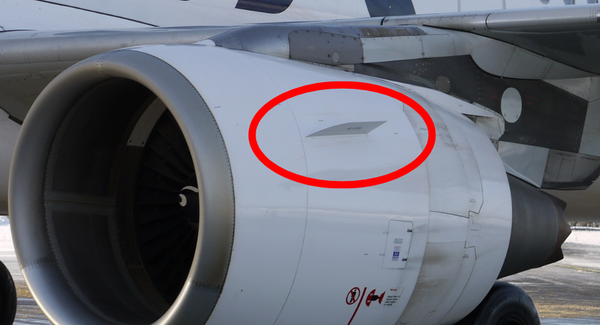 What Are Strakes? The Aerodynamic Fins Attached on an Aircraft's Fuselage
A look at how aircraft strakes quietly shape airflow, improve stability, and enhance aerodynamic performance.
INFORMATIONAL
READ MORE »
What Are Strakes? The Aerodynamic Fins Attached on an Aircraft's Fuselage
A look at how aircraft strakes quietly shape airflow, improve stability, and enhance aerodynamic performance.
INFORMATIONAL
READ MORE »
 BETA Technologies Begins Electric Aircraft Operations in North Carolina to Support Rural Healthcare Access
BETA Technologies launches its ALIA CTOL electric aircraft in North Carolina under a FAA program aimed at improving rural healthcare logistics.
NEWS
READ MORE »
BETA Technologies Begins Electric Aircraft Operations in North Carolina to Support Rural Healthcare Access
BETA Technologies launches its ALIA CTOL electric aircraft in North Carolina under a FAA program aimed at improving rural healthcare logistics.
NEWS
READ MORE »
More than just headlines.
Get unlimited ad-free access to in-depth aviation news, premium stories, and exclusive insights other sites don't cover.
- Ad-free browsing on AeroXplorer
- Unlimited access to premium and exclusive articles
- Higher photo upload limits & commissions on sales
- Free access to Jetstream Magazine on higher tiers
- Ad-free browsing
- Sell aviation photos with 60% commission
- First week free!
- Everything in Basic+
- Unlimited premium articles
- Sell aviation photos with 70% commission
- Free Digital subscription to Jetstream Magazine
- First week free!
- Everything in Basic+ and Pro
- Sell aviaiton photos with 80% commission
- Early access to exclusive stories
- Free Digital+Print subscription to Jetstream Magazine