
Portions of this article were created with assistance from AI tools to help with research, drafting, or copy editing. A human editor reviewed the work, verified key facts, and approved the final version.
AI-assisted content
The Boeing 777X was meant to be the crowning achievement of modern wide-body aviation: a folding-wing giant capable of carrying more passengers more efficiently than any twin-engine jet in history. Instead, the program has become a case study in aerospace endurance.
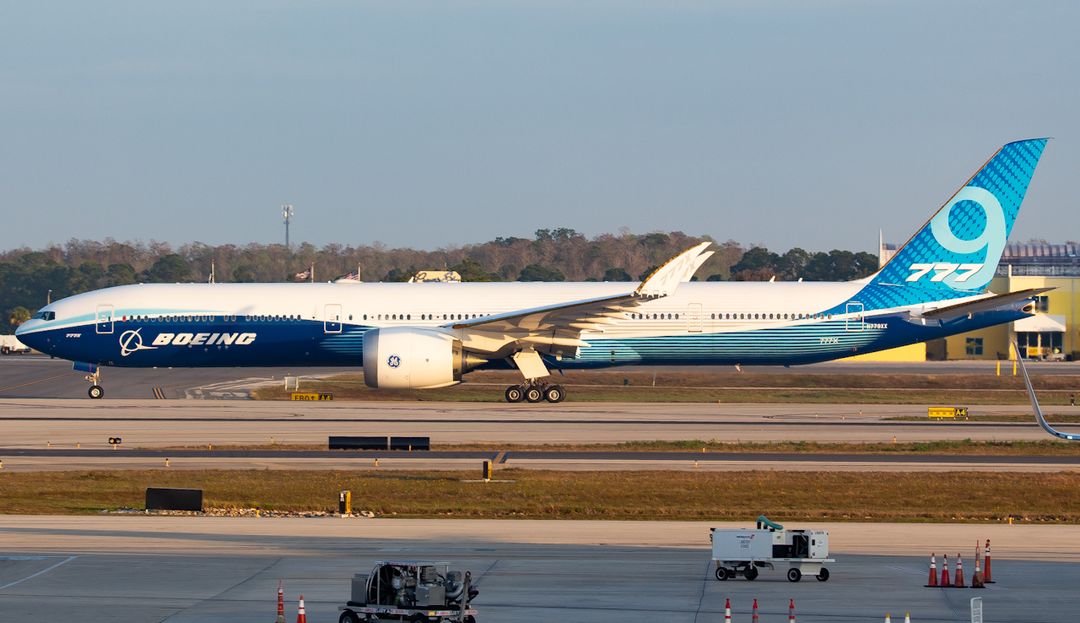
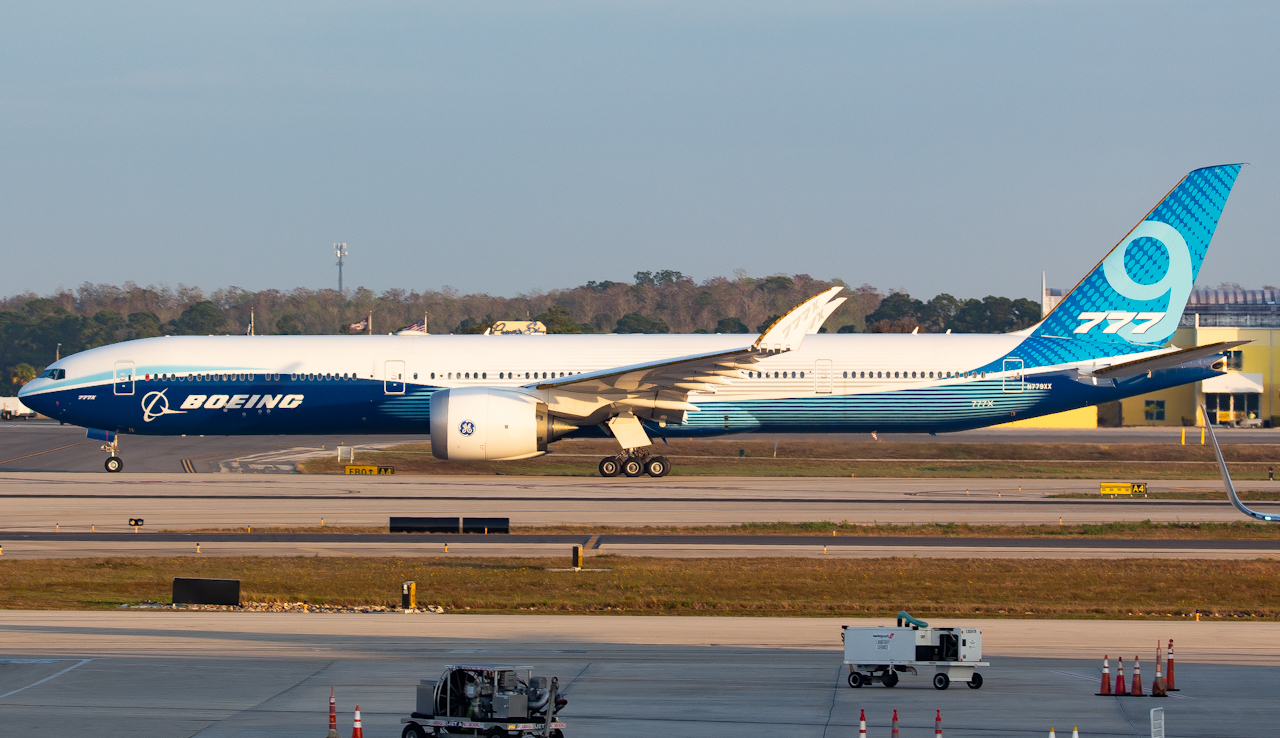
As we approach the end of 2025, the 777X remains uncertified, with its entry into service (EIS) pushed back to 2027, seven years behind its original schedule. While the order book remains robust and flight testing continues, the path forward is still paved with technical and regulatory challenges.

Cliffs, Clouds, and Courage: Lukla Airport Nepal, The World's Most Dangerous Airport
Timeline of Delays
The 777X program has suffered a series of setbacks that have repeatedly shifted the delivery goalposts.
Original Target: 2020
Previous Revision: 2026
Current Reality: 2027 (As confirmed by Boeing in late 2025)
The latest delay, announced in October 2025, resulted in a $4.9 billion pre-tax charge, bringing the program's total cost overruns to roughly $15 billion. This shift was driven not just by supply chain issues, but by a prolonged and rigorous Federal Aviation Administration (FAA) certification process that has become significantly stricter following the 737 MAX crisis.
Technical Hurdles
Two major technical issues have defined the program's recent struggles in 2024 and 2025.
The Thrust Link Crack (August 2024)
In mid-2024, flight testing was grounded after a scheduled inspection revealed a structural crack in a thrust link, a critical component that transfers engine thrust to the airframe.
The Issue: A severed thrust link could theoretically allow an engine to detach or cause catastrophic structural failure.
Mixed Signals: The Tragic Story of Iran Air Flight 655
The Fix: Boeing and GE Aerospace redesigned the component. The fix was installed and validated, allowing flight testing to resume in early 2025.
Significance: While resolved, this issue consumed valuable time in the certification schedule.
The GE9X Engine Issue (November 2025)
Just as momentum was rebuilding, a new setback occurred in late 2025.
The Incident: During a borescope inspection of a flight test engine, an unspecified issue was discovered with the GE9X engine, the exclusive powerplant for the 777X.

Status: Flight tests were temporarily suspended in late November 2025 while GE Aerospace and Boeing investigated whether the issue was an isolated manufacturing defect or a design flaw.
Impact: If this requires a design change to the engine, it could threaten the 2027 target. If it is limited to a specific batch, testing should resume quickly.
Market Position
Despite the frustration of delays, airlines have largely stuck by the 777X. It occupies a unique niche: it is the only true replacement for the Boeing 747 and Airbus A380 in terms of capacity.
| Key Metric | Status (Dec 2025) |
|---|---|
| Total Backlog | ~565 Aircraft |
| Largest Customer | Emirates (270+ orders) |
| Launch Customer | Lufthansa (Expected first delivery in 2027) |
| Other Key Buyers | Qatar Airways, Singapore Airlines, Cathay Pacific, ANA, Air India |
Recent Wins
Emirates reaffirmed its commitment in November 2025 with an additional order for 65 aircraft, signaling that despite their public criticism of the delays, they see no viable alternative for their "super-connector" business model.

Terminal Trouble: One of Japan's Busiest Airports is Slowly Sinking
Production Continuity: Boeing has already built over 20 airframes that are currently sitting in storage. These jets will need to be modified to meet the final certification standard before they can be delivered.
The Competition: A Window of Opportunity for Airbus?
The 777X's main competitor is the Airbus A350-1000. While smaller than the 777-9, the A350-1000 is available now.

Market Shift: Some carriers have hedged their bets by ordering more A350-1000s to fill capacity gaps left by the delayed 777X.
The 777X Advantage: The 777-9 still holds a capacity advantage (400+ seats vs. ~350-400), which is critical for slot-constrained airports like London Heathrow or Dubai.
Future Outlook
For the 777X to meet its new 2027 deadline, 2026 must be a year of flawless execution.
Type Inspection Authorization (TIA): The program needs to clear this major FAA milestone to begin the final phase of certification flight testing with FAA pilots onboard.
Engine Resolution: Quick resolution of the recent GE9X engine anomaly is non-negotiable.
Production Stability: Boeing must stabilize its wider production ecosystem, which has been rattled by labor strikes and supply chain fractures throughout 2025.
Summary
The Boeing 777X is "too big to fail" for both Boeing and its key customers, but it is currently trapped in a cycle of scrutiny and rework. The plane will fly passengers — likely setting new standards for efficiency and comfort — but the road to that first commercial flight remains steep.
FAA Clears JetBlue's $58.5M Purchase of Spirit's LaGuardia Slots » Caribbean Airlines Expands Network With New Toronto and Caracas Routes » KLM Brings Starlink Internet to Long-Haul Flights »

Comments (0)
Add Your Comment
TAGS
INFORMATIONAL Boeing 777 777X Boeing 777X 777-9X Manufacturer Boeing Manufacturing TimelineRECENTLY PUBLISHED
 4th vs 5th Generation Fighter Jets: How Fighter Jets Have Evolved
A look at what separates fourth- and fifth-generation fighter jets, from stealth and sensor fusion to combat capability and cost.
INFORMATIONAL
READ MORE »
4th vs 5th Generation Fighter Jets: How Fighter Jets Have Evolved
A look at what separates fourth- and fifth-generation fighter jets, from stealth and sensor fusion to combat capability and cost.
INFORMATIONAL
READ MORE »
 United 777 Diverts to Dublin After Cockpit Windscreen Cracks Over the Atlantic
A United Airlines Boeing 777 bound for Milan made a steep descent and diverted to Dublin after its cockpit windscreen cracked mid-flight.
NEWS
READ MORE »
United 777 Diverts to Dublin After Cockpit Windscreen Cracks Over the Atlantic
A United Airlines Boeing 777 bound for Milan made a steep descent and diverted to Dublin after its cockpit windscreen cracked mid-flight.
NEWS
READ MORE »
 Boeing's Touchscreen Flight Controls for 737 Draw Sharp Criticism from Pilots
Boeing's plan to introduce Touchscreen Control Display Units on the 737 has sparked backlash from pilots who warn of safety and usability concerns.
NEWS
READ MORE »
Boeing's Touchscreen Flight Controls for 737 Draw Sharp Criticism from Pilots
Boeing's plan to introduce Touchscreen Control Display Units on the 737 has sparked backlash from pilots who warn of safety and usability concerns.
NEWS
READ MORE »
More than just headlines.
Get unlimited ad-free access to in-depth aviation news, premium stories, and exclusive insights other sites don't cover.
- Ad-free browsing on AeroXplorer
- Unlimited access to premium and exclusive articles
- Higher photo upload limits & commissions on sales
- Free access to Jetstream Magazine on higher tiers
- Ad-free browsing
- Sell aviation photos with 60% commission
- First week free!
- Everything in Basic+
- Unlimited premium articles
- Sell aviation photos with 70% commission
- Free Digital subscription to Jetstream Magazine
- First week free!
- Everything in Basic+ and Pro
- Sell aviaiton photos with 80% commission
- Early access to exclusive stories
- Free Digital+Print subscription to Jetstream Magazine