

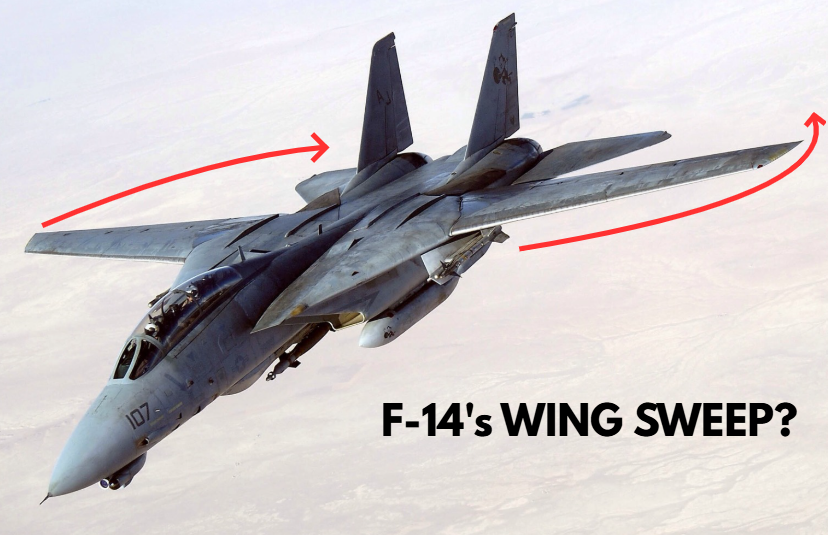
Very few aircraft change shape in flight, and fewer still do it as dramatically as the Tomcat. Its wings swept from a broad, nearly straight position to a narrow, almost delta-like profile and back again. The reason is simple to state. The F-14 had two very different jobs, and no single fixed wing could do both well.
One Aircraft, Two Very Different Jobs
The Navy needed a fleet defense fighter that could engage high-altitude bombers from well beyond visual range. Armed with long-range Phoenix missiles able to reach targets more than 90 miles away, and carrying a heavy weapons load, the aircraft needed the speed of an interceptor. It also had to launch from and land on a carrier deck, which demands slow, controllable flight. Grumman's answer was a variable sweep wing that let the Tomcat operate across a wide range of airspeeds.
Wings Forward: Lift at Low Speed
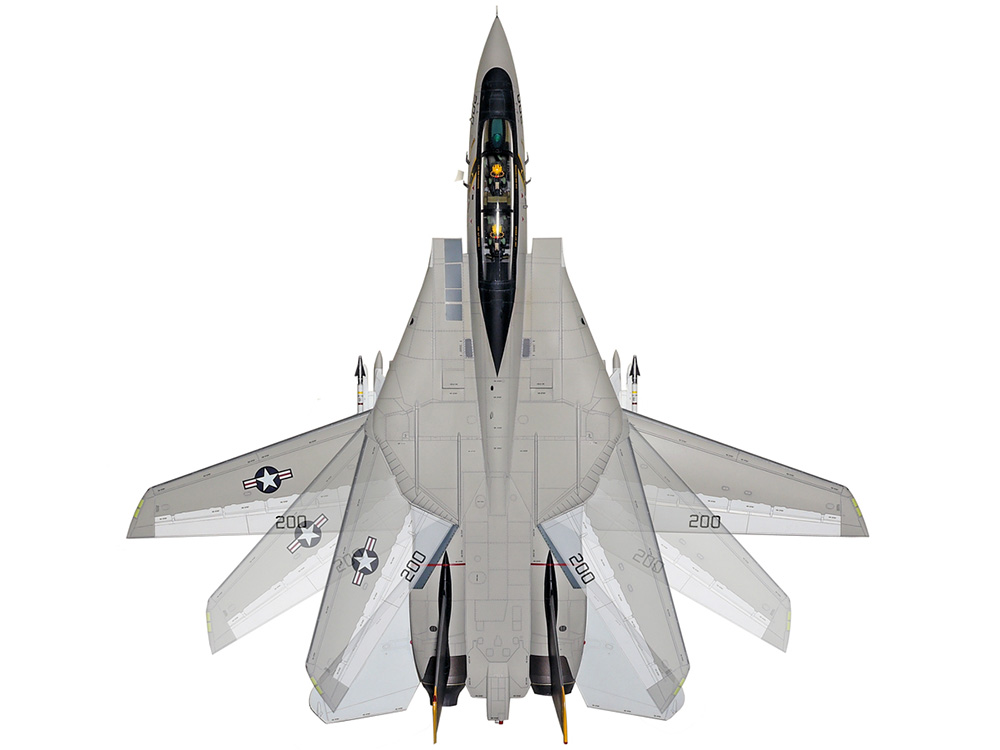
With the wings near their forward limit, around 20 degrees, the aircraft had its greatest span and the least sweep relative to the airflow. That improved low-speed lift and worked together with the leading-edge slats and trailing-edge flaps during takeoff, approach and landing. A wing optimized only for landing would have produced excessive drag at high Mach, while a sharply swept supersonic wing would have forced much higher takeoff and landing speeds. Moving the wings let the Tomcat avoid either compromise.
Wings Aft: Cutting Drag at High Speed
Sweeping the wings back reduces the portion of the airflow that strikes the leading edge head-on. That limits the wave drag that builds near and beyond the speed of sound. It also shortens the projected span, although low-speed efficiency suffers. At the full 68 degrees of sweep, the Tomcat could exceed Mach 2 with room to spare.
Who Decided When to Move
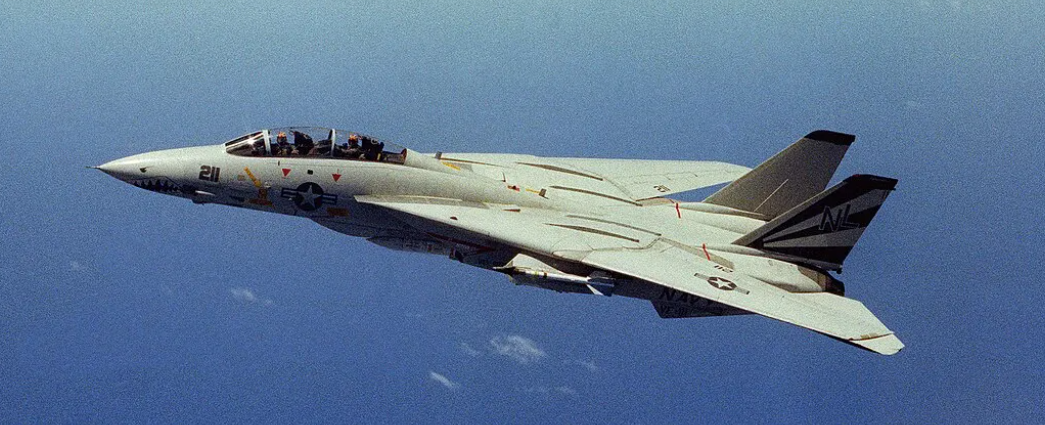
In normal flight, the pilot did not have to think about it. In AUTO mode, the Central Air Data Computer scheduled the sweep angle progressively, with Mach number as the main input rather than indicated airspeed. At the same indicated airspeed, a jet flying higher has a higher Mach number and therefore receives a more aft sweep command.
The pilot still had options. Extra aft sweep could be commanded manually, and a bomb mode selected a stable swept position of about 55 degrees for weapons delivery. If the computer failed, a manual lever overrode the electrical controls entirely. Crews knew which angle suited which speed, so they could still bring the wings forward to land. The wing sweep was also interlocked with the high-lift devices, since full flaps cannot work correctly with the wings well aft.
What the Mechanism Looked Like
Each wing panel pivoted inside a fixed wing glove, with loads passing through the pivots into a heavily reinforced structure at the center of the aircraft rather than an ordinary wing root. Hydraulic motors and geared screw jack actuators supplied the force, while a mechanical link kept both wings moving together.
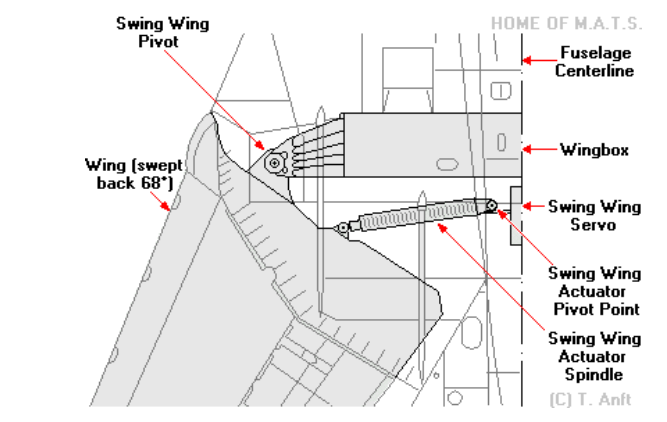
Over-sweep: Wings That Moved to Save Space
The Tomcat had one more position that had nothing to do with flying. Over-sweep pushed the wings back to about 75 degrees, and it was used only on the ground. At that angle the wings would interfere with the tail control surfaces, so a jack screw moved into position to limit their travel, and the wings could not enter over-sweep until it was out of the way. Selecting it was a deliberate manual action; lift the guard, push the button and pull the lever back. The payoff was space. A large aircraft on a crowded deck became noticeably smaller, and parked Tomcats stacked together neatly. Crews often parked this way out of habit.
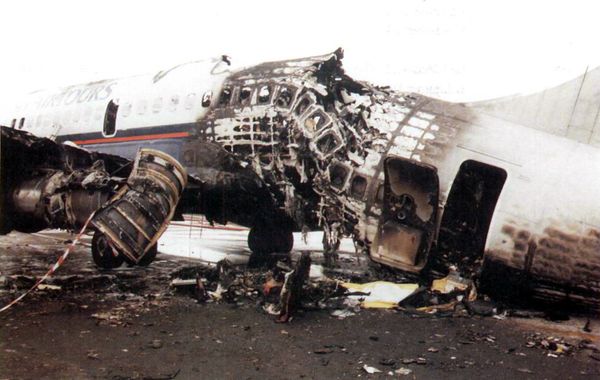
Seconds to Survive: The Human Factors Lessons of the 1985 Manchester Airport Disaster
A Compromise That Paid Off
The ability to adapt wing geometry to the flight condition became one of the F-14's defining strengths, contributing to its reputation as a fast, capable dogfighter as well as a long-range interceptor. The wings moved because the mission demanded it, and the result was an aircraft that handled a carrier approach and a Mach 2 intercept with the same airframe.
European Airlines Face Fresh Wave of Bomb Hoax Calls as Carriers Weigh Response » FAA Orders Fuel Tank Inspections on 60 US Boeing 787s Over Lightning Ignition Risk » VIDEO: The Lear Jet Restoration Project »
Comments (0)
Add Your Comment
TAGS
INFORMATIONAL F14 Tomcat Jet Mach Fighter jet Supersonic F14 TomcatRECENTLY PUBLISHED
 Five Major Airlines Face Fresh Lawsuit Over Alleged Secret Fare Data Sharing Scheme
American, Delta, United, Southwest and Alaska Airlines face accusations of using a data clearinghouse to coordinate fares and inflate ticket prices.
NEWS
READ MORE »
 European Airlines Face Fresh Wave of Bomb Hoax Calls as Carriers Weigh Response
A new surge of hoax bomb threats is targeting European flights, with a Russian group claiming responsibility for some of the disruptive calls.
NEWS
READ MORE »
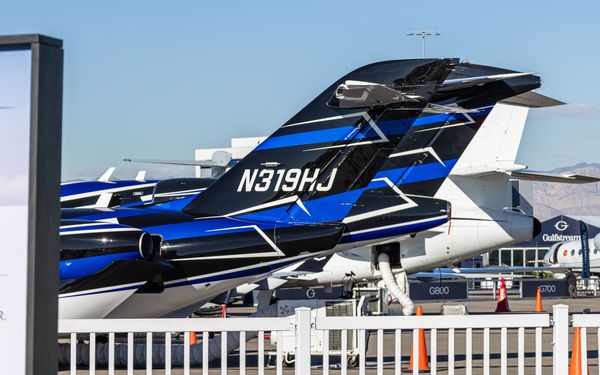 Exclusive: Thrive Aviation CEO Details New HondaJet Fractional Program Launching in 2027
In an interview with AeroXplorer, Thrive Aviation CEO Curtis Edenfield explains why Thrive chose a HondaJet and a Challenger, how its existing fleet will support the launch, and what must happen behind the scenes before fractional operations can ramp up.
STORIES
READ MORE »
More than just headlines.
Get unlimited ad-free access to in-depth aviation news, premium stories, and exclusive insights other sites don't cover.
- Ad-free browsing on AeroXplorer
- Unlimited access to premium and exclusive articles
- Higher photo upload limits & commissions on sales
- Free access to Jetstream Magazine on higher tiers
- Ad-free browsing
- Sell aviation photos with 60% commission
- First week free!
- Everything in Basic+
- Unlimited premium articles
- Sell aviation photos with 70% commission
- Free Digital subscription to Jetstream Magazine
- First week free!
- Everything in Basic+ and Pro
- Sell aviaiton photos with 80% commission
- Early access to exclusive stories
- Free Digital+Print subscription to Jetstream Magazine