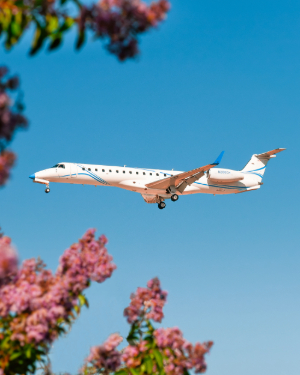


Federal investigators have recovered a key piece of a Learjet 60 several miles from the main crash site in Florida, a finding that indicates the business jet broke apart before it struck the ground, according to the National Transportation Safety Board.
The NTSB confirmed that searchers located the aircraft's left elevator a substantial distance from the primary debris field, a discovery that reshapes the early picture of the accident and points investigators toward a possible in-flight structural failure.
What Investigators Found
The elevator, a control surface mounted on the horizontal stabilizer at the rear of the aircraft, controls pitch and plays a central role in keeping a jet stable in flight. Finding it separated from the rest of the wreckage, and at a significant distance, is a strong indicator to accident investigators that the component departed the airframe while the aircraft was still airborne.
According to the NTSB, the component was recovered miles from the main impact site. The remainder of the Learjet 60 came down in a concentrated debris field consistent with a high-energy impact.
Investigators have tagged and documented the elevator and are transporting it, along with other recovered structural pieces, to a secure facility for detailed examination. The NTSB will study the fracture surfaces, fasteners, and attachment points to determine whether the separation resulted from a mechanical failure, a maintenance issue, flutter, or overload caused by another in-flight event.
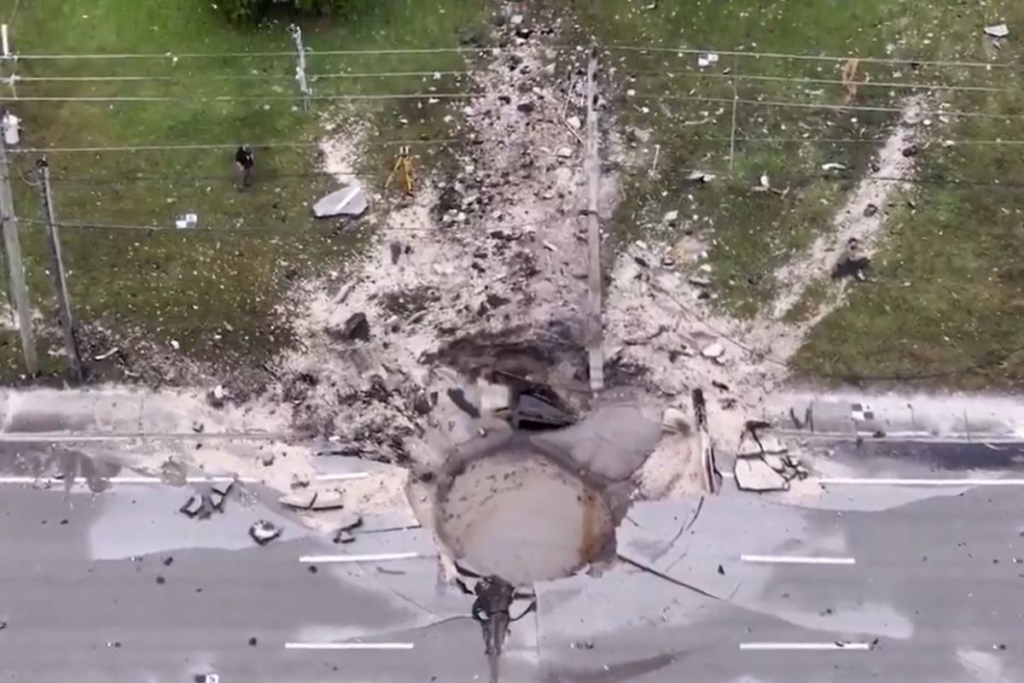
Photo: X.com/ @Mollyploofkins
The Accident
The Learjet 60 crashed in Florida, killing everyone on board. Local emergency responders were first on the scene, and the NTSB took over the investigation shortly afterwards, as is standard procedure for civil aviation accidents in the United States.
The aircraft, a twin-engine midsize business jet manufactured by Bombardier, is widely used in corporate and charter operations. The Learjet 60 has a long service history, and variants of the model have been in operation for decades.
Weather conditions, flight path data, and air traffic control communications are all being reviewed as part of the probe. Investigators will also look at the aircraft's maintenance records, recent inspections, and any service bulletins or airworthiness directives relevant to the elevator and tail assembly.
Why the Separation Matters
An elevator found miles from the primary wreckage changes the investigative focus. When an aircraft comes apart in flight, debris scatters along the flight path based on each component's weight, shape, and the altitude at which it separated. Lighter control surfaces travel farther from the impact point than heavier structural sections.
Investigators will now work to establish the sequence of the breakup. That means determining which component failed first, whether the failure was the result of fatigue, corrosion, a manufacturing defect, impact with another object, or forces that exceeded the airframe's structural limits.
The NTSB has said its team will examine the elevator for signs of pre-existing damage, including cracks, corrosion, or evidence of flutter, a destructive aerodynamic oscillation that can tear control surfaces from an aircraft if dampers or balance weights fail.

How AI Quietly Became the Backbone of Today’s Aviation Industry
Recovery Operations
Search teams combed a wide area around the main crash site after radar data and eyewitness accounts suggested the aircraft may have shed pieces before impact. Ground searchers, assisted by aerial surveys, located the elevator in terrain well removed from where the main fuselage and engines came to rest.
Recovery crews are continuing to look for additional components that may have broken away before the final impact. Any further structural pieces found away from the main site will be mapped by GPS and documented in place before removal, which allows investigators to reconstruct the debris pattern.
The NTSB routinely reassembles recovered wreckage in a hangar during serious accident investigations. That process, which can take months, helps investigators visualize how the aircraft came apart and in what order.

Photo: Storyful/ Aki Kuusisto
The Investigation Ahead
The NTSB has not released a probable cause and typically does not do so in the early stages of an inquiry. The agency's preliminary report, usually issued within about 30 days of an accident, will outline the basic facts without drawing conclusions. A final report that identifies the probable cause and contributing factors generally follows one to two years later.
Parties to the investigation can include the Federal Aviation Administration, the aircraft's manufacturer, the engine manufacturer, and the operator. Each contributes technical expertise under NTSB supervision.
Investigators will also pursue recovery of the cockpit voice recorder and flight data recorder if the aircraft was equipped with them. Data from those devices, along with radar tracks and any available ADS-B transmissions, would help establish the aircraft's speed, altitude, and attitude in the moments leading up to the breakup.
Broader Implications
Should investigators determine that a structural failure of the elevator initiated the accident, the finding could prompt the FAA and the manufacturer to issue inspection requirements or airworthiness directives for the Learjet 60 fleet. Operators would then be required to examine their aircraft for similar vulnerabilities.
For now, the NTSB has cautioned against drawing firm conclusions. The location of the elevator is a significant data point, but the agency has emphasized that a full picture will only emerge once laboratory analysis of the recovered components is complete.
The names of those killed in the crash have not been released pending notification of relatives. The NTSB has asked anyone who witnessed the accident or who may have found debris to contact the agency directly.
FAA Orders Fuel Tank Inspections on 60 US Boeing 787s Over Lightning Ignition Risk » Exclusive: Inside Lufthansa Technik's Touchscreen Tray Table » JetBlue Raises Checked Bag Fees for Third Time in a Year as Fuel Costs Climb »

Comments (0)
Add Your Comment
TAGS
NEWS NTSB Learjet 60 Florida Crash In-Flight Breakup Elevator Recovery Accident Investigation Business Jet Crash Aviation Safety Aviation Accident Aviation NewsRECENTLY PUBLISHED
 JetBlue Raises Checked Bag Fees for Third Time in a Year as Fuel Costs Climb
JetBlue has increased checked bag fees again, pushing the cost to check a bag up 43% in two years. Here's what travelers need to know.
NEWS
READ MORE »
 British Airways Returns to Dubai After Eight-Month Pause Tied to Iran Conflict
British Airways resumes London to Dubai flights after an eight-month suspension prompted by regional tensions and Iran-related airspace concerns.
ROUTES
READ MORE »
 FAA Orders Fuel Tank Inspections on 60 US Boeing 787s Over Lightning Ignition Risk
The FAA has issued an airworthiness directive requiring inspections of 60 US-registered Boeing 787s to address a fuel tank ignition hazard tied to lightning strikes.
NEWS
READ MORE »
More than just headlines.
Get unlimited ad-free access to in-depth aviation news, premium stories, and exclusive insights other sites don't cover.
- Ad-free browsing on AeroXplorer
- Unlimited access to premium and exclusive articles
- Higher photo upload limits & commissions on sales
- Free access to Jetstream Magazine on higher tiers
- Ad-free browsing
- Sell aviation photos with 60% commission
- First week free!
- Everything in Basic+
- Unlimited premium articles
- Sell aviation photos with 70% commission
- Free Digital subscription to Jetstream Magazine
- First week free!
- Everything in Basic+ and Pro
- Sell aviaiton photos with 80% commission
- Early access to exclusive stories
- Free Digital+Print subscription to Jetstream Magazine