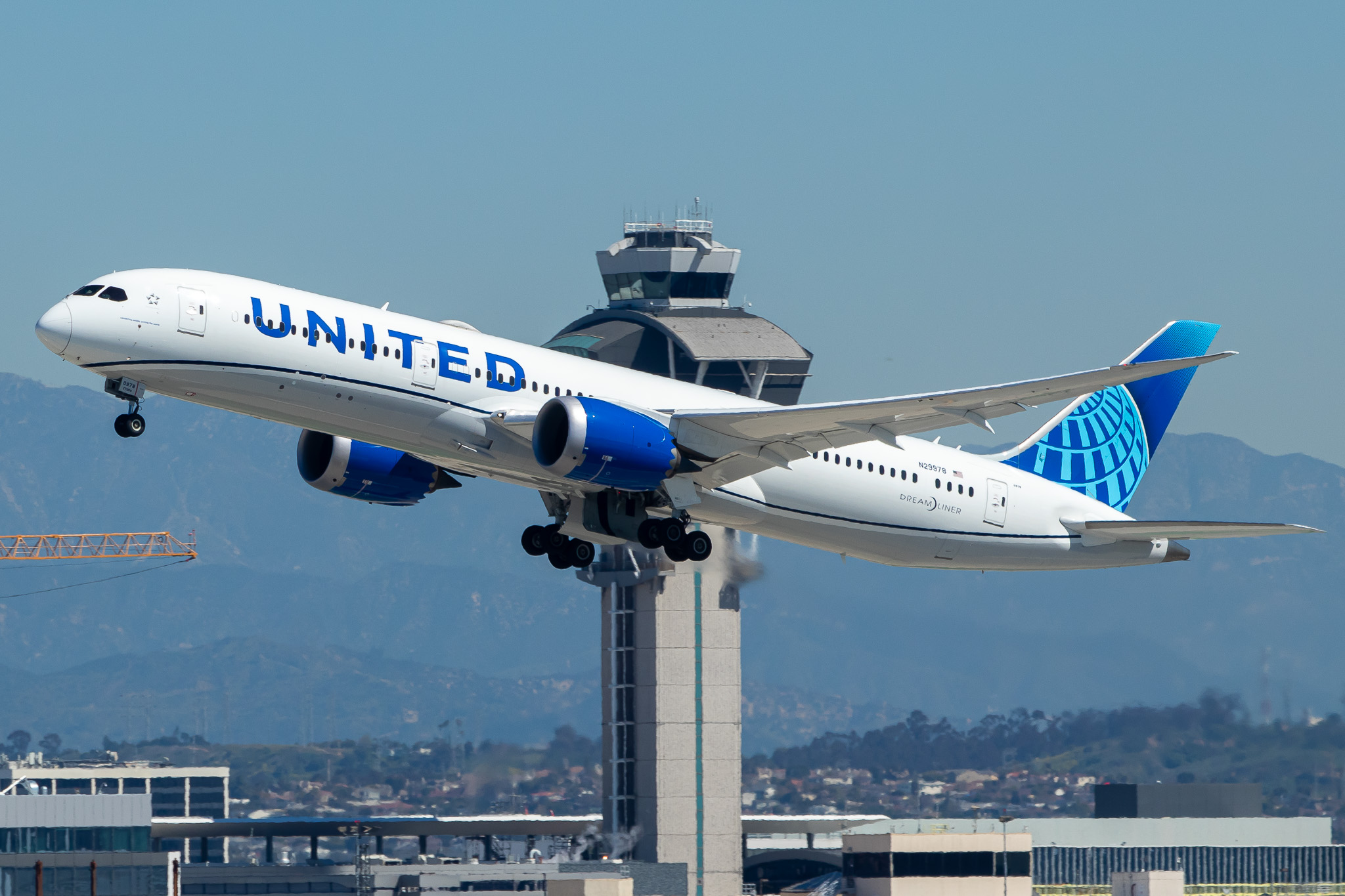

United Airlines will deploy its premium-heavy Boeing 787-9 Dreamliner on two additional routes during the upcoming holiday season, giving travelers greater access to the carrier's most business-class-dense widebody configuration. The move reflects United's broader strategy of concentrating premium capacity on high-demand long-haul markets during peak travel periods.
A Higher-Premium Dreamliner Enters New Markets
United operates several configurations of its Boeing 787-9 fleet, but one variant stands out for its elevated premium cabin. This layout features 48 Polaris business class seats, significantly more than the airline's standard 787-9 configurations. For the winter travel season, United will bring this aircraft to routes serving Houston (IAH) and Sydney (SYD) from San Francisco (SFO), expanding the number of passengers who can experience the carrier's flagship international product.
The decision aligns with a broader industry trend of matching premium capacity to seasonal demand. Business and leisure travelers alike have shown continued willingness to pay for lie-flat seating on long-haul flights, and United appears intent on capturing that demand where it matters most.

San Francisco Gets an Upgrade
San Francisco International Airport serves as one of United's largest hubs, connecting travelers across the Americas, Europe, and Asia. During the holiday season, the airline will schedule the high-premium 787-9 on select Houston routes, replacing lower-density widebody variants that typically operate in these markets.
For travelers departing from Houston or San Francisco, this shift means a greater likelihood of securing a Polaris seat on international itineraries during December and January, when demand traditionally peaks. Corporate travelers heading overseas for year-end meetings and leisure passengers seeking premium comfort for holiday getaways stand to benefit from the increased availability.
Sydney Sees a Premium Boost
United's service between the United States and Sydney remains one of the longest and most demanding routes in its network. The carrier has invested heavily in its Australian operations in recent years, and deploying the high-premium 787-9 on this route underscores the market's importance.
The ultra-long-haul flight to Sydney regularly attracts business travelers, tourists, and those visiting family across the Pacific. With more Polaris seats available, passengers making the roughly 15-hour journey will find increased opportunities to fly in a lie-flat suite, complete with direct aisle access and enhanced dining service.

Analysis: How Spirit Airlines Changed Airline Pricing, then Paid the Price
Why United Is Making the Change
The aircraft reallocation reflects careful capacity planning. United has been growing its premium footprint as part of its long-term fleet renewal strategy, which includes new Boeing 787-9 and Airbus A321XLR deliveries. The airline has publicly emphasized its intent to offer more Polaris seats systemwide, and holiday scheduling gives it a natural opportunity to test premium demand in specific markets.
Fleet flexibility plays a key role here. By rotating the higher-premium 787-9 into holiday-heavy routes, United can maximize revenue on flights that historically sell out weeks in advance. It also allows the airline to reserve its lower-premium widebodies for routes where economy demand outpaces business class demand.
The Boeing 787-9 in United's Fleet
United operates one of the largest Boeing 787 fleets in the world. The 787-9 in particular has become a workhorse for the carrier's long-haul network, valued for its fuel efficiency, range, and passenger comfort. The high-premium variant features an expanded Polaris cabin along with Premium Plus, Economy Plus, and standard economy sections.
Polaris passengers benefit from lie-flat suites arranged in a 1-2-1 configuration, ensuring every passenger has direct aisle access. The cabin also includes proprietary bedding developed in partnership with Saks Fifth Avenue and a multi-course dining program that reflects United's investment in premium service.

What Travelers Should Know
If you are planning to travel through San Francisco or to Sydney during the holiday period, checking the aircraft type before booking may help you secure a Polaris seat on the higher-density variant. United's booking engine and mobile app display aircraft configurations, and seat maps clearly indicate the number of premium cabin seats available on each flight.
Award travelers using MileagePlus miles or partner programs such as Aeroplan, ANA Mileage Club, or Avianca LifeMiles may also find more Polaris award space during the deployment window, particularly on off-peak days within the holiday season.
Looking Ahead
United's decision to concentrate premium capacity on these two routes during the holidays signals a continuation of its long-term strategy. As the airline receives additional widebody deliveries in the coming years, more routes across its network will likely see similar upgrades. For now, travelers heading to Sydney or connecting through San Francisco have a strong reason to consider United's Polaris product during the winter months.
The holiday season traditionally brings capacity constraints and higher fares. By deploying its most premium-heavy Dreamliner on these routes, United is positioning itself to serve high-value travelers while maintaining a competitive edge in two important markets.
The $30 Billion Question: Why America's Air Traffic Control Overhaul Keeps Getting More Expensive » IATA's New Passenger Data Shows Global Air Travel Demand Shrinking for the First Time This Year » British Airways Restarts Starlink Installation on Airbus A350 Fleet With Free High-Speed Wi-Fi for Passengers »

Comments (0)
Add Your Comment
TAGS
ROUTES United Airlines Boeing 787-9 Holiday Routes Premium Cabin Route Launch Widebody Aircraft Seasonal Routes Airline Strategy Routes Flights Travel Domestic AviationRECENTLY PUBLISHED
 IATA's New Passenger Data Shows Global Air Travel Demand Shrinking for the First Time This Year
Global air travel just hit a reverse that has not been seen in months -- the numbers point to something more interesting than a simple slowdown.
INFORMATIONAL
READ MORE »
IATA's New Passenger Data Shows Global Air Travel Demand Shrinking for the First Time This Year
Global air travel just hit a reverse that has not been seen in months -- the numbers point to something more interesting than a simple slowdown.
INFORMATIONAL
READ MORE »
 The $30 Billion Question: Why America's Air Traffic Control Overhaul Keeps Getting More Expensive
The U.S. government is seeking $30 billion more to modernize America’s aging air traffic control system. Explore the rising $42.5 billion price tag, GAO oversight concerns, and where the new funding would go.
INFORMATIONAL
READ MORE »
The $30 Billion Question: Why America's Air Traffic Control Overhaul Keeps Getting More Expensive
The U.S. government is seeking $30 billion more to modernize America’s aging air traffic control system. Explore the rising $42.5 billion price tag, GAO oversight concerns, and where the new funding would go.
INFORMATIONAL
READ MORE »
 Embraer Posts Record 66 Aircraft Deliveries in Q3 2026 as Commercial Jets Climb 10%
Embraer delivered 66 aircraft in Q3 2026, its strongest third quarter on record, with commercial jets up 10% and business jets rising 41%.
NEWS
READ MORE »
Embraer Posts Record 66 Aircraft Deliveries in Q3 2026 as Commercial Jets Climb 10%
Embraer delivered 66 aircraft in Q3 2026, its strongest third quarter on record, with commercial jets up 10% and business jets rising 41%.
NEWS
READ MORE »
More than just headlines.
Get unlimited ad-free access to in-depth aviation news, premium stories, and exclusive insights other sites don't cover.
- Ad-free browsing on AeroXplorer
- Unlimited access to premium and exclusive articles
- Higher photo upload limits & commissions on sales
- Free access to Jetstream Magazine on higher tiers
- Ad-free browsing
- Sell aviation photos with 60% commission
- First week free!
- Everything in Basic+
- Unlimited premium articles
- Sell aviation photos with 70% commission
- Free Digital subscription to Jetstream Magazine
- First week free!
- Everything in Basic+ and Pro
- Sell aviaiton photos with 80% commission
- Early access to exclusive stories
- Free Digital+Print subscription to Jetstream Magazine