Horse racing is a global sport, but we as fans focus only on the important part, the entertainment, and never really think about how horses are getting from one place to another (and sometimes that distance is thousands of miles).
That leaves only one option: airplane travel. But how do you actually put a Thoroughbred on an airplane? Well, not easy, that’s for sure.
Moving expensive horses internationally requires specialist aircraft equipment, veterinary paperwork, quarantine planning, a lot of trained handlers, and a surprisingly large amount of coordination, not only for the horse to reach from point A to point B, but also to be able to still race without losing on performance.
When you think about it, Thoroughbred horses are traveling quite a lot. Races like the Breeders’ Cup attract horses from Europe, Japan, South America, and elsewhere to the United States.
So, let’s dive deeper into the logistics of the horse racing industry, because we as fans never get to see that part.
Racehorses Usually Fly in Their Own Air Stalls
Before we dive deeper into racehorse logistics, let’s understand how horses actually fly. Well, the basic unit of equine aviation is the air stall, or sometimes people call it a jet stall.
We’re talking about a purpose-built container that allows horses to be loaded safely before the entire stall is moved into the cargo aircraft. Most companies offer dedicated Airstable units (think of them as containers), with professional grooms, loadmasters, supervised loading and unloading, and other staff members. Companies like InstoneAir specialize in arranging transport specifically for international events like the Breeders’ Cup, Saudi Cup, or Melbourne Cup.
The space (container) itself can be configured differently depending on the horse and booking.
But as we mentioned before, the entire process isn’t just about moving the horse thousands of miles safely. It is also about the journey itself. Horses can be spooked, shaken, or thrown off, which may affect their performance at the race they are attending.
And that’s one of the things we as bettors forget. Can a bad flight be the cause of the horse’s poor result in a race? Of course. That’s the thing that makes horse betting online so exciting.
Professional handicappers even take into account the distance that horses need to travel before the race or when was the last time they’ve traveled by air. Why? Well, this can impact their performance, and when you’re betting online, analyzing every piece of the puzzle is the best way to increase your winning chances. That’s true with every sport, which is part of the reason why away teams (which travel) are less favored.
Flying Grooms Are the Cabin Crew the Horses Actually Need
The most important people aboard are often the flying grooms.
Their job begins before takeoff and continues long after landing. They help load horses, observe behavior, check that animals are eating and drinking, monitor temperature, and deal with problems before they become serious. Equitrans says its flying grooms typically have at least 15 years of equine-flight experience and remain responsible for feeding, watering, monitoring, and, where necessary, helping administer veterinary care during the journey.
Intradco Global chief flying groom Zac Carroll described the detail involved after the company introduced a new U.S. equine charter operation in 2025. Discussing its loading system, he explained that the flat-floor design removed a step between ramp and stall, helping reduce stress on horses' limbs during boarding.
The Breeders’ Cup Is an International Airlift Before It Is a Race Meeting
The scale becomes clearer when you look at the Breeders’ Cup.
The 2026 World Championships at Keeneland drew 222 unique horses, including 79 international contenders, from places like Argentina, Canada, Chile, France, Great Britain, Ireland, South Africa, Japan and other countries.
That creates an enormous logistical puzzle.
Breeders’ Cup rules required international runners to be at Keeneland by the evening of October 25, several days before racing began on October 30. The event works with specialist import agents to coordinate shipping, health requirements, and quarantine arrangements.
The 2024 edition provided a good example of why specialist experience matters.
Flying groom Brian Taylor, who has transported horses internationally for around 40 years, was responsible for a flight carrying 47 European Breeders’ Cup contenders to the United States.
Bad weather prevented the aircraft from landing at Shannon as scheduled, forcing it to circle for almost two hours before runners from Ireland and France could join the horses already aboard from Britain. Taylor described the experience simply as “unpleasant.”
Australia Makes Quarantine Part of the Training Plan
The Melbourne Cup illustrates another side of international transport.
Australia's biosecurity system means the journey has to be planned well before the horse reaches an aircraft.
For the 2026 Spring Carnival, the first group of international contenders entered pre-export quarantine in Britain and Ireland for two weeks before travelling to Melbourne.
Once in Australia, international runners use the Werribee International Horse Centre, Racing Victoria's approved post-arrival quarantine facility for Spring Carnival horses. Crucially, the horses can continue training while remaining within a controlled biosecurity environment.
The Aircraft Is Only One Piece of the Journey
It is tempting to think the difficult part is the flight itself.
Often, it is everything around it.
The horse must travel from its stable to an approved quarantine or departure facility. Health certificates and import permits have to be prepared. Veterinary testing may be required. Airport handling has to be coordinated so the horse is not left unnecessarily waiting in unsuitable conditions. On arrival, customs and quarantine procedures begin before the horse can finally move to the racecourse or training facility.
IRT describes international equine shipping as a process covering pre-flight health requirements, permits and customs, in-flight care and post-arrival quarantine and delivery.
Even the Pilot Changes the Way the Aircraft Is Flown
Horses also influence how the flight itself is operated.
International Racehorse Transport managing director Jim Paltridge has explained that pilots transporting horses try to avoid sharp descents and tight turns where possible.
It makes sense.
A horse is standing throughout the journey and constantly balancing against movement. Smooth acceleration, turning, and descent can therefore make the trip easier for the animal.
Specialist operators also pay close attention to ventilation and temperature. EIAF says its flying grooms provide hay and water while the aircraft environment is kept cool and ventilated for the horses.
Sedation is not simply routine either. Specialist shippers describe it as unusual and generally unnecessary when horses are properly handled, although veterinary intervention remains available if a horse becomes seriously distressed.
So, it is a complicated process that involves a lot of stuff, and with many moving parts, including the most important and most expensive one: the cargo itself, the horse. But thanks to modern technology and specialized logistics companies for equine transport, the process is smooth.
Canada Clears Flyte for Cross-Border Charter Flights » Hindenburg: The Disaster That Ended the Airship Age » SAF's Uncomfortable Math: Availability, Price Premiums, Mandates, and Who Actually Pays »

Comments (0)
Add Your Comment
TAGS
INFORMATIONAL Sporting Events Aviation Aviation LogisticsRECENTLY PUBLISHED
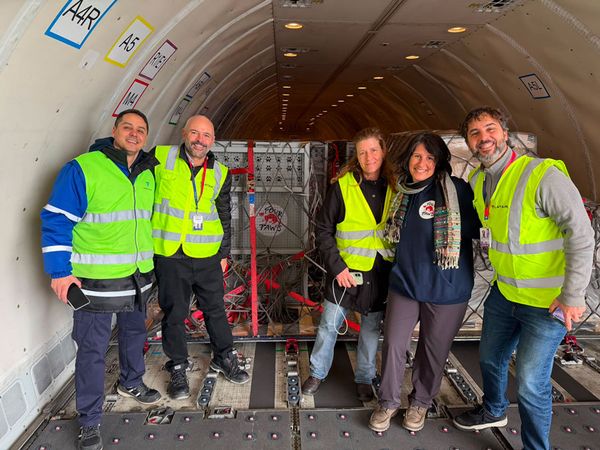 How Air Cargo Moves Big Cats: Inside the International Airlift from Argentina
LATAM Cargo transported 15 lions and tigers from Argentina to the United States aboard a Boeing 767 freighter. Explore the complex air cargo operation, live animal transport regulations, veterinary preparations and logistics behind relocating 30 big cats to sanctuaries in Colorado and South Africa.
INFORMATIONAL
READ MORE »
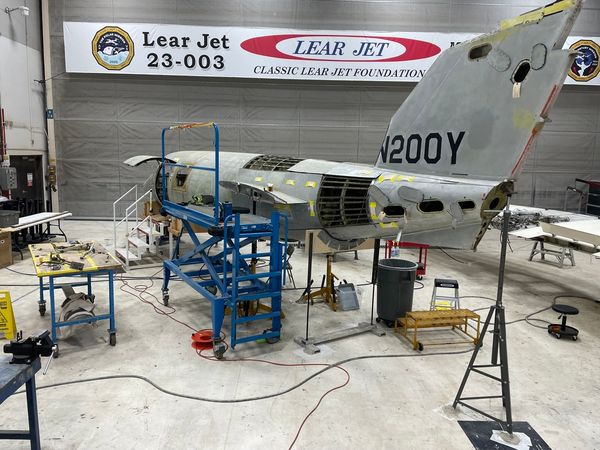 VIDEO: The Lear Jet Restoration Project
A Wichita nonprofit is restoring the first Lear Jet ever built to flying condition. Meet the volunteers bringing 23-003 back to life, decades after it first flew.
STORIES
READ MORE »
 Canada Clears Flyte for Cross-Border Charter Flights
Flyte secures Canadian approval to operate on-demand charter flights between the US and Canada, expanding options for business travelers.
NEWS
READ MORE »
More than just headlines.
Get unlimited ad-free access to in-depth aviation news, premium stories, and exclusive insights other sites don't cover.
- Ad-free browsing on AeroXplorer
- Unlimited access to premium and exclusive articles
- Higher photo upload limits & commissions on sales
- Free access to Jetstream Magazine on higher tiers
- Ad-free browsing
- Sell aviation photos with 60% commission
- First week free!
- Everything in Basic+
- Unlimited premium articles
- Sell aviation photos with 70% commission
- Free Digital subscription to Jetstream Magazine
- First week free!
- Everything in Basic+ and Pro
- Sell aviaiton photos with 80% commission
- Early access to exclusive stories
- Free Digital+Print subscription to Jetstream Magazine