GTON – In a scathing indictment of federal oversight and airspace design, the National Transportation Safety Board (NTSB) has officially cited the Federal Aviation Administration (FAA) as the primary cause of the catastrophic midair collision near Ronald Reagan Washington National Airport (DCA).
The final report, adopted during a public board meeting on Tuesday, January 27, 2026, concludes that the January 29, 2025, tragedy, which claimed 67 lives, was the direct result of "deep, underlying systemic failures" that had been left unaddressed for over a decade.
The Probable Cause
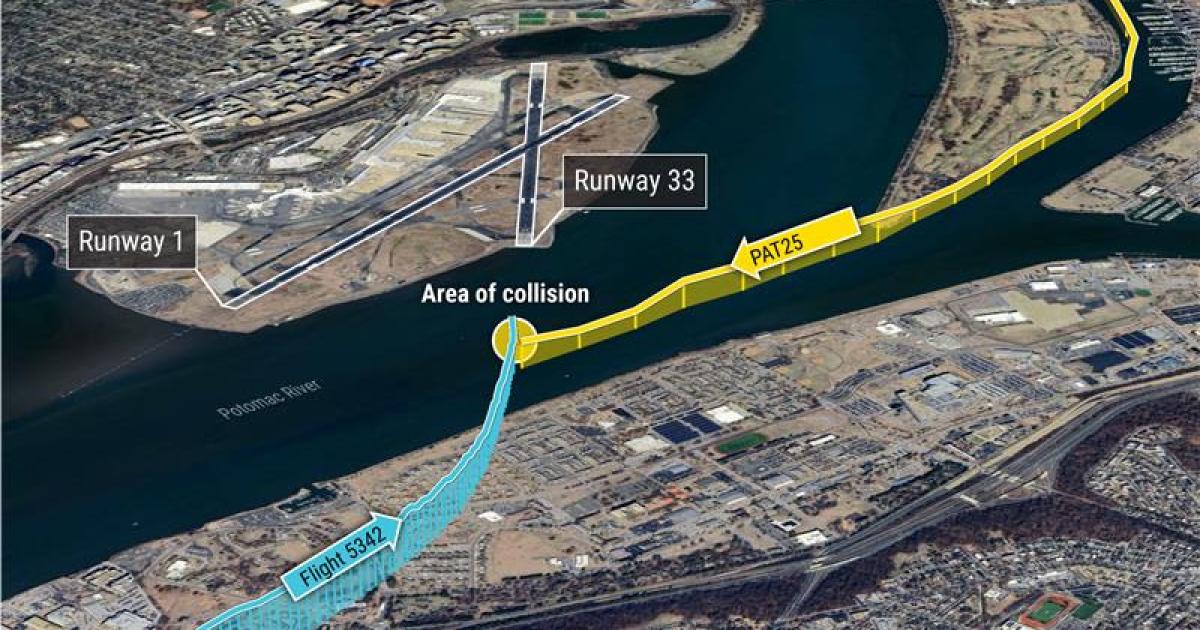
The investigation into the collision between PSA Airlines Flight 5342 (a CRJ700) and a U.S. Army UH-60 Black Hawk helicopter (callsign PAT25) centred on the proximity of Washington Route 4 to the commercial approach path for Runway 33.
The Board found that at the time of the accident, the helicopter was separated from the descending airliner by as little as 75 feet vertically. The NTSB formally determined the probable cause was:
“The FAA's placement of a helicopter route in close proximity to a runway approach path, their failure to regularly review and evaluate helicopter routes and available data, and their failure to act on recommendations to mitigate the risk of a midair collision near Ronald Reagan Washington National Airport.”
Read more: https://aeroxplorer.com/articles/us-government-admits-liability-in-fatal-midair-collision.php
"See and Avoid" Called into Question
A central theme of the 2026 report is the failure of the "see and avoid" concept in high-density, complex airspace. The NTSB highlighted that air traffic controllers had become overly reliant on pilots visually identifying conflicting traffic, even when technical alerts were available.
“What we refer to as human error is, in reality, the last event in a chain of systemic failures,” said NTSB Chair Jennifer Homendy. “The air traffic system's over-reliance on visual separation in order to promote efficient traffic flow without consideration for the limitations of the 'see and avoid' concept created an intolerable risk.”
The investigation revealed that the DCA tower controller, saturated with a workload of 12 aircraft in a two-minute window, failed to issue a critical safety alert even after a conflict warning appeared on radar when the aircraft were still 1.6 miles apart.

Photo: The Aviation Herald
Key Outcomes and Systemic Lapses
The report identified several contributing factors that allowed the "Swiss Cheese" model of accident causation to align:
Tower Downgrade: The FAA's 2018 decision to downgrade the DCA tower from a Level 10 to a Level 9 facility was criticised for failing to account for the actual complexity of mixed helicopter and fixed-wing traffic.
Task Saturation: Controllers were found to be "overwhelmed," combining control positions that should have been separated, given the traffic volume.
Equipment Gaps: While the regional jet was not equipped with ADS-B In, the Army helicopter was not consistently broadcasting its position data, further degrading the controller’s situational awareness.
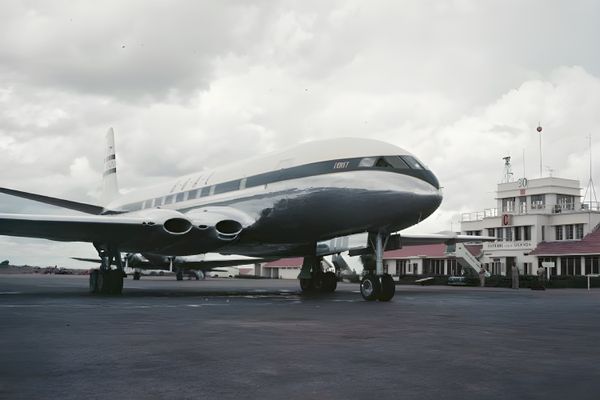
The Shape of Disaster: The Plane That Kept Falling Apart Mid-Air
The 48 Recommendations for Reform
To prevent a recurrence, the NTSB has issued 48 new safety recommendations targeting the FAA, the U.S. Army, and the Department of Transportation. These include:
Mandatory Route Redesign: A permanent prohibition of non-essential helicopter traffic on Route 4 when Runways 15 or 33 are in use.
Elimination of Visual Separation: Prohibiting the use of pilot-applied visual separation within 5 nautical miles of DCA.
ADS-B Requirements: Formalising agreements to require military aircraft to broadcast ADS-B Out while operating in the National Capital Region.
Staffing Overhaul: Increasing oversight and staffing levels at the DCA tower to match its true operational complexity.
Reaction from the Families
The hearing was attended by grieving families, including those of the 28 members of the figure skating community who perished in the crash. Outside the hearing room, the sentiment was one of betrayal by the regulatory system.
“The negligence of not fixing things that needed to be fixed killed my brother and 66 other people,” stated one family member. Doug Lane, who lost his wife and son in the disaster, added, “100%, I feel like the FAA failed me and my family.”
The FAA has already begun implementing some changes, including an Interim Final Rule published on January 23, 2026, which formalises permanent flight restrictions in the Potomac River corridor. However, the NTSB remains focused on ensuring these "systemic guardrails" are never again bypassed by administrative or political pressure.
Caribbean Airlines Expands Network With New Toronto and Caracas Routes » AirBaltic to Cut Up to 700 Jobs in Restructuring » British Airways Unveils World's Largest Business Class Cabin With 106 Seats Aboard Refurbished A380 Fleet »

Comments (0)
Add Your Comment
TAGS
STORIES CRJ700 PSA Airlines Flight 5342 Black Hawk PAT25 Washington DC USA NTSB FAA Aviation Safety DisasterRECENTLY PUBLISHED
 Boeing's Touchscreen Flight Controls for 737 Draw Sharp Criticism from Pilots
Boeing's plan to introduce Touchscreen Control Display Units on the 737 has sparked backlash from pilots who warn of safety and usability concerns.
NEWS
READ MORE »
Boeing's Touchscreen Flight Controls for 737 Draw Sharp Criticism from Pilots
Boeing's plan to introduce Touchscreen Control Display Units on the 737 has sparked backlash from pilots who warn of safety and usability concerns.
NEWS
READ MORE »
 Southwest Airlines Blames Brief System Outage for Boarding Delays and Checked Bag Disruptions
Southwest Airlines confirms a brief technology outage disrupted boarding and checked bag operations, forcing gate agents to process travelers manually.
NEWS
READ MORE »
Southwest Airlines Blames Brief System Outage for Boarding Delays and Checked Bag Disruptions
Southwest Airlines confirms a brief technology outage disrupted boarding and checked bag operations, forcing gate agents to process travelers manually.
NEWS
READ MORE »
 Southwest Airlines Considers Boeing 787 Order for Long-Haul International Expansion
Southwest Airlines is evaluating the Boeing 787 Dreamliner as it explores a shift into long-haul international flying, sources tell Reuters.
NEWS
READ MORE »
Southwest Airlines Considers Boeing 787 Order for Long-Haul International Expansion
Southwest Airlines is evaluating the Boeing 787 Dreamliner as it explores a shift into long-haul international flying, sources tell Reuters.
NEWS
READ MORE »
More than just headlines.
Get unlimited ad-free access to in-depth aviation news, premium stories, and exclusive insights other sites don't cover.
- Ad-free browsing on AeroXplorer
- Unlimited access to premium and exclusive articles
- Higher photo upload limits & commissions on sales
- Free access to Jetstream Magazine on higher tiers
- Ad-free browsing
- Sell aviation photos with 60% commission
- First week free!
- Everything in Basic+
- Unlimited premium articles
- Sell aviation photos with 70% commission
- Free Digital subscription to Jetstream Magazine
- First week free!
- Everything in Basic+ and Pro
- Sell aviaiton photos with 80% commission
- Early access to exclusive stories
- Free Digital+Print subscription to Jetstream Magazine