
Originally published in the Fall 2026 issue of Jetstream Magazine.
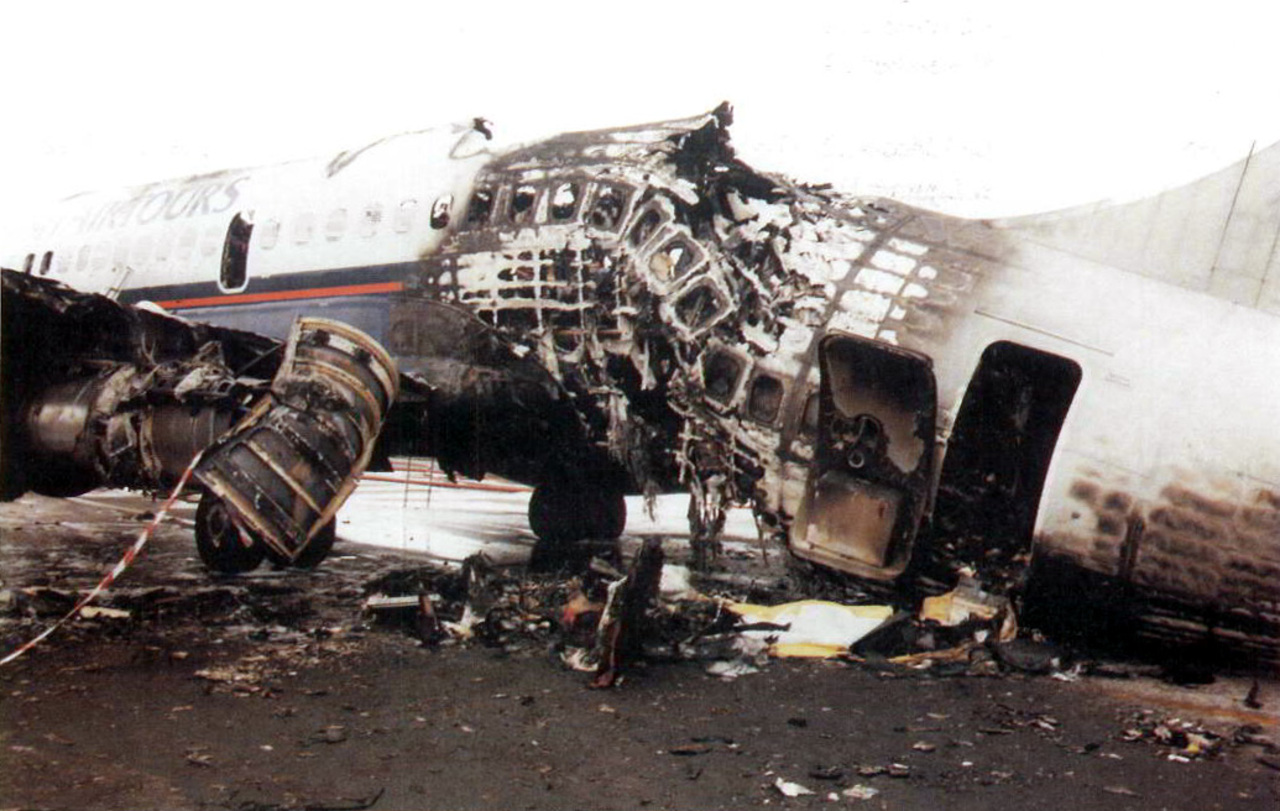
It’s August 22, 1985. A British Airtours 737-200 lines up on Runway 24 at Manchester Airport, and 131 passengers are about to start a late summer holiday to Corfu. The engines spool up, takeoff thrust is set, and the aircraft accelerates down the runway. Seconds later, a loud thump interrupts the departure. The pilots bring the plane to a stop. Yet 55 people will never leave it alive.
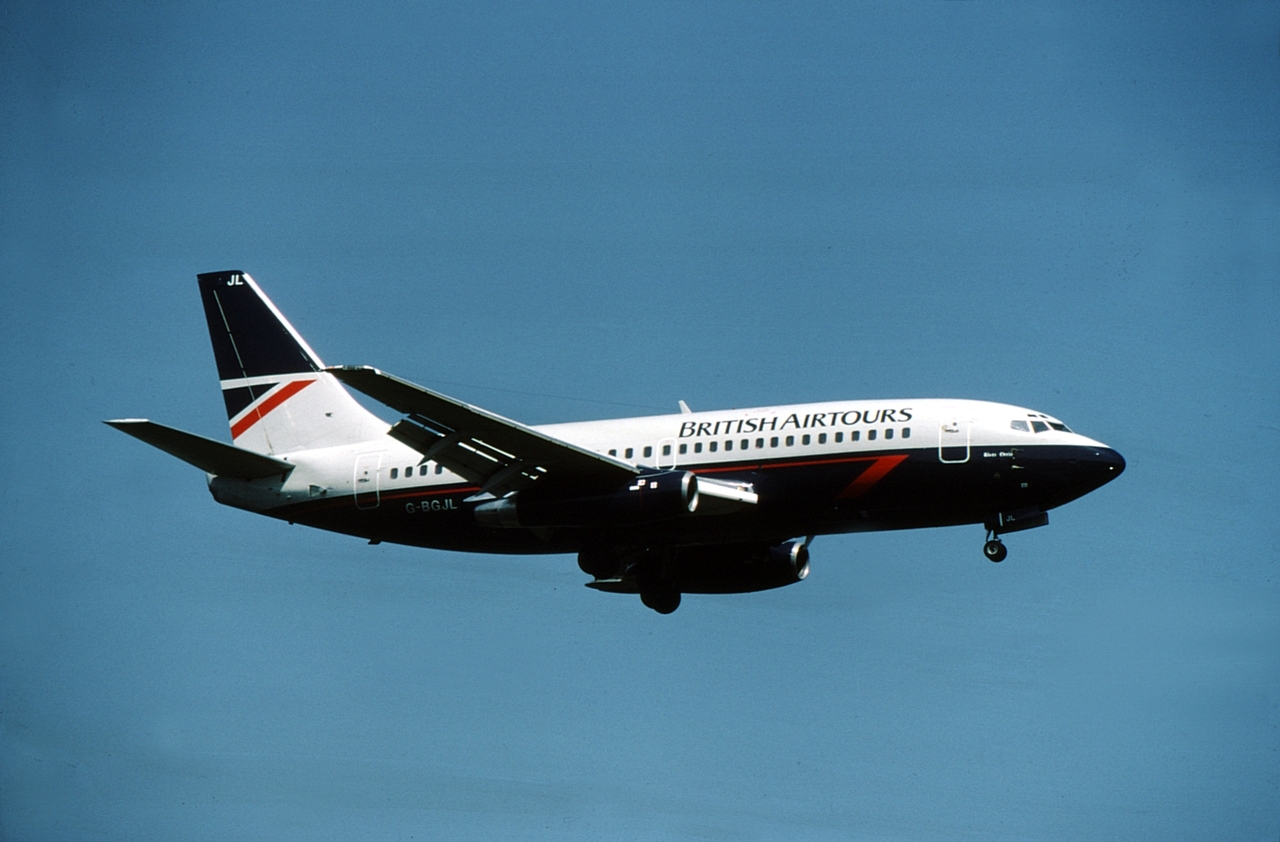
British Airtours Flight 328 was operated by a Boeing 737-236 named River Orrin, registered G-BGJL. Six crew members were aboard alongside the passengers. For the flight crew, the first sign of trouble sounded like a burst tire. What had actually happened was far more dangerous.
Engine Trouble
During the takeoff roll, a section of the No. 9 combustor can broke free inside the left engine. The engine failed without containing the debris, and a fragment struck an access panel beneath the left wing’s fuel tank. The panel fractured, fuel poured out, and a large fire developed behind the engine.
The captain ordered a rejected takeoff after hearing the thump. As the aircraft slowed, the fire warning sounded. Air traffic control confirmed that there was a substantial fire, and the crew decided to evacuate passengers on the right side of the aircraft, away from the flames.
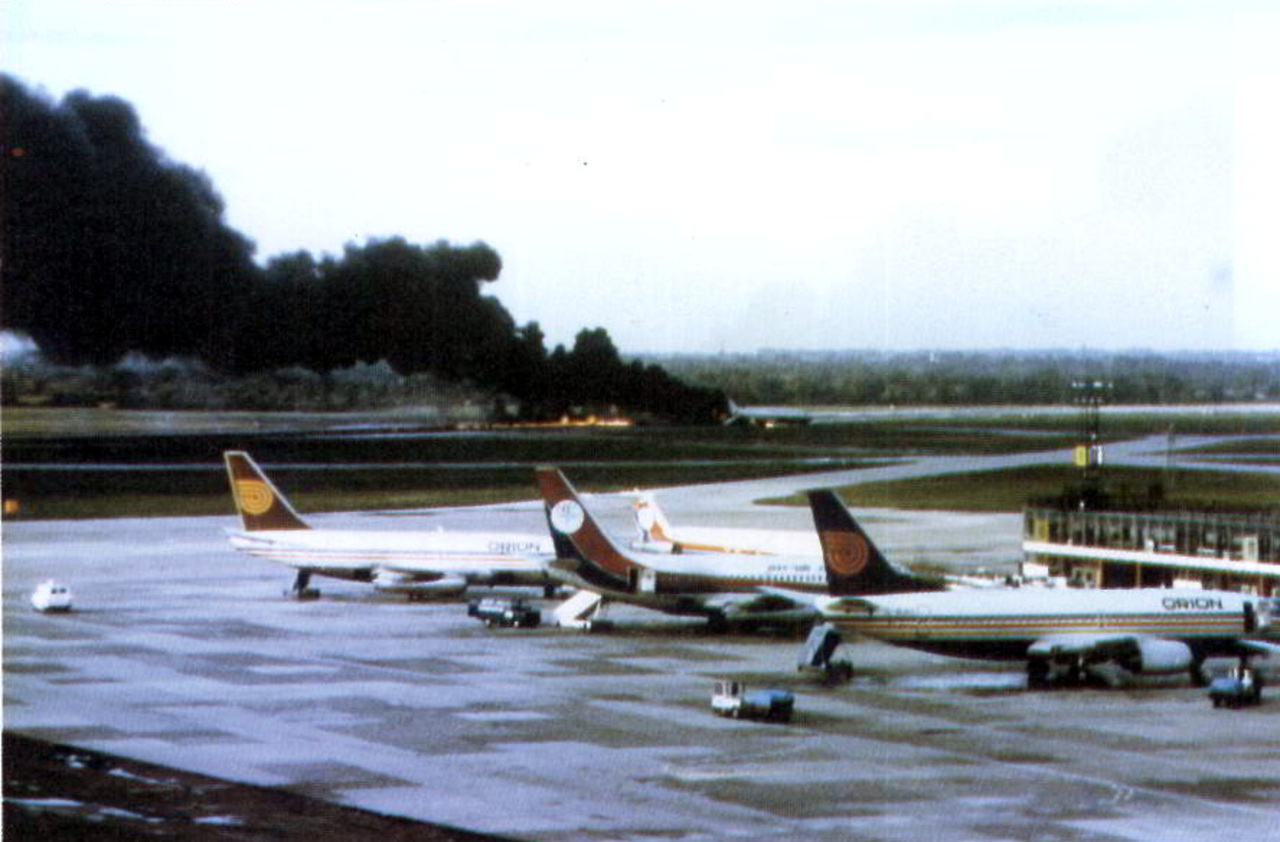
The pilots turned off the runway and stopped on a taxiway. That decision cleared the runway and positioned the aircraft for an evacuation. It also placed the burning left wing in an unfortunate relationship with the wind. A seven-knot wind from roughly 250 degrees carried the fuel-fed fire against and around the rear fuselage. Even a light wind can matter when flames are already burning beside an aircraft.
The aircraft had stopped, but the people inside still had to get out.
Evacuate, Evacuate, Evacuate!
The purser first tried to open the forward right door. A fault involving the escape slide container caused it to jam against the doorframe. He then crossed to the forward left door and opened it about 25 seconds after the aircraft stopped. Firefighters were arriving, but the fire outside was growing rapidly. The purser returned to the forward right door, cleared the obstruction, and opened it about 85 seconds after the stop.
Inside, those seconds mattered. Passengers moving toward the front exits had to pass through a narrow opening by the forward galley. Access to the overwing exits was also awkward: passengers had to negotiate seats and armrests while smoke made it harder to see and breathe. Some struggled to operate the exits. At the time, exit-row passengers were not required to receive the kind of individual instruction familiar to many travelers today.
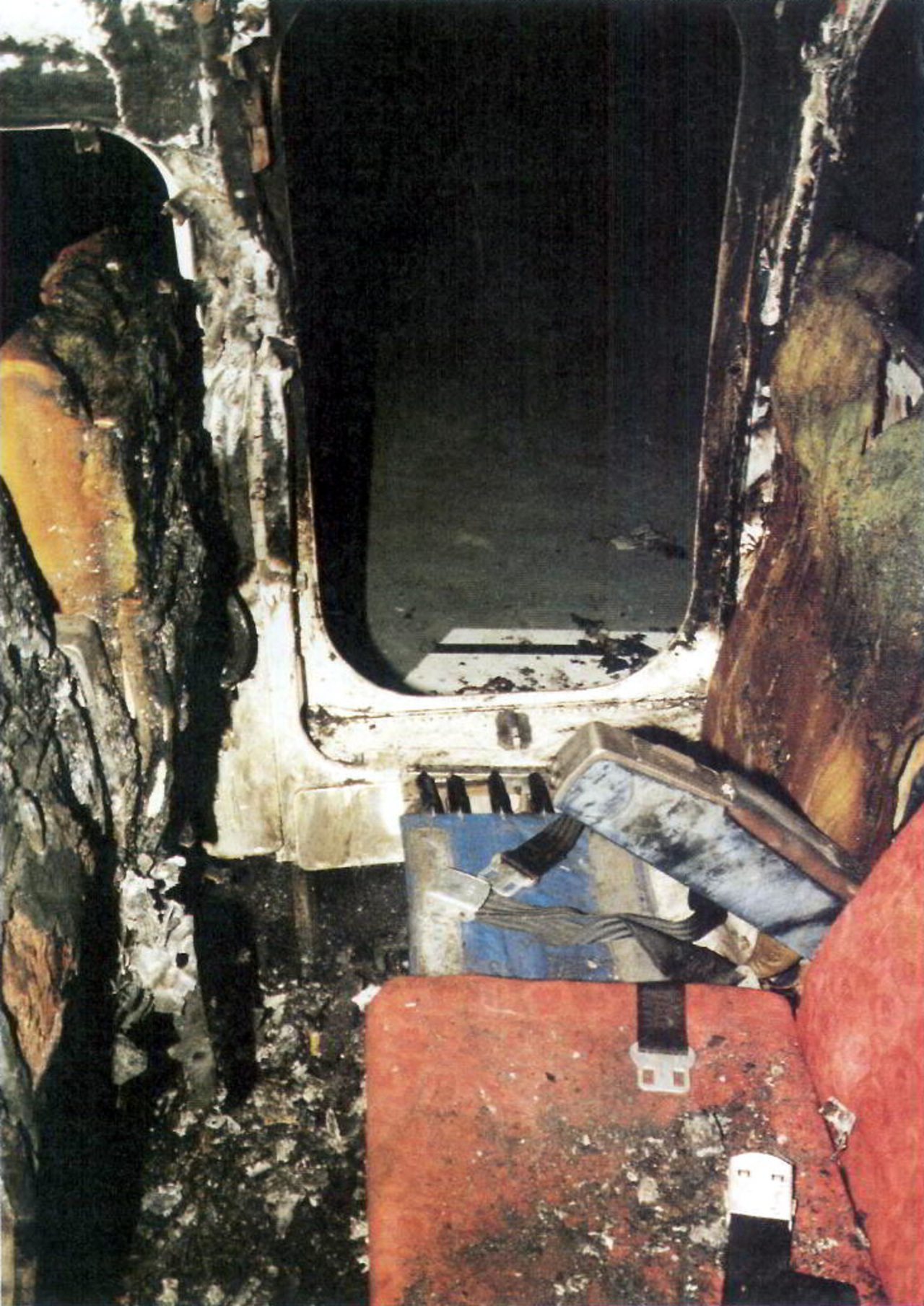
The right overwing exit was eventually opened. The right rear door was opened too, but no one escaped through it. As the fire penetrated the rear of the aircraft, smoke entered the cabin and conditions deteriorated. People trying to reach an exit were forced around or over seats and other occupants. The exits themselves could only help those who remained conscious long enough to reach them.
In all, 17 surviving passengers escaped through the forward left door, 34 through the forward right door, and 27 through the right overwing exit. Firefighters reached the aircraft quickly, but their presence could not reverse what was happening inside the cabin.
Fire and Fumes
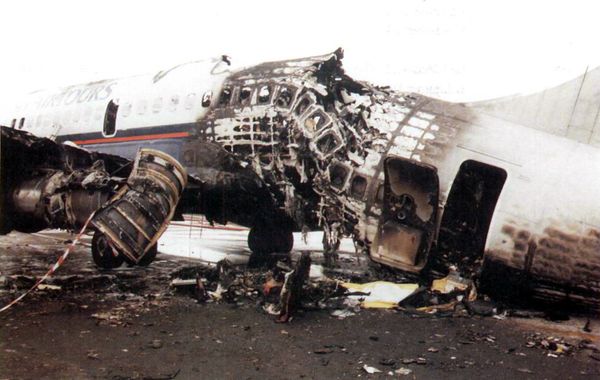
The wind did not create the heat of the fire; the leaking fuel fed it. But the wind directed flames toward the fuselage. The fire breached the aircraft’s outer structure, and burning cabin materials produced dense, toxic, irritating smoke. Passengers were overcome before they could make their way out.
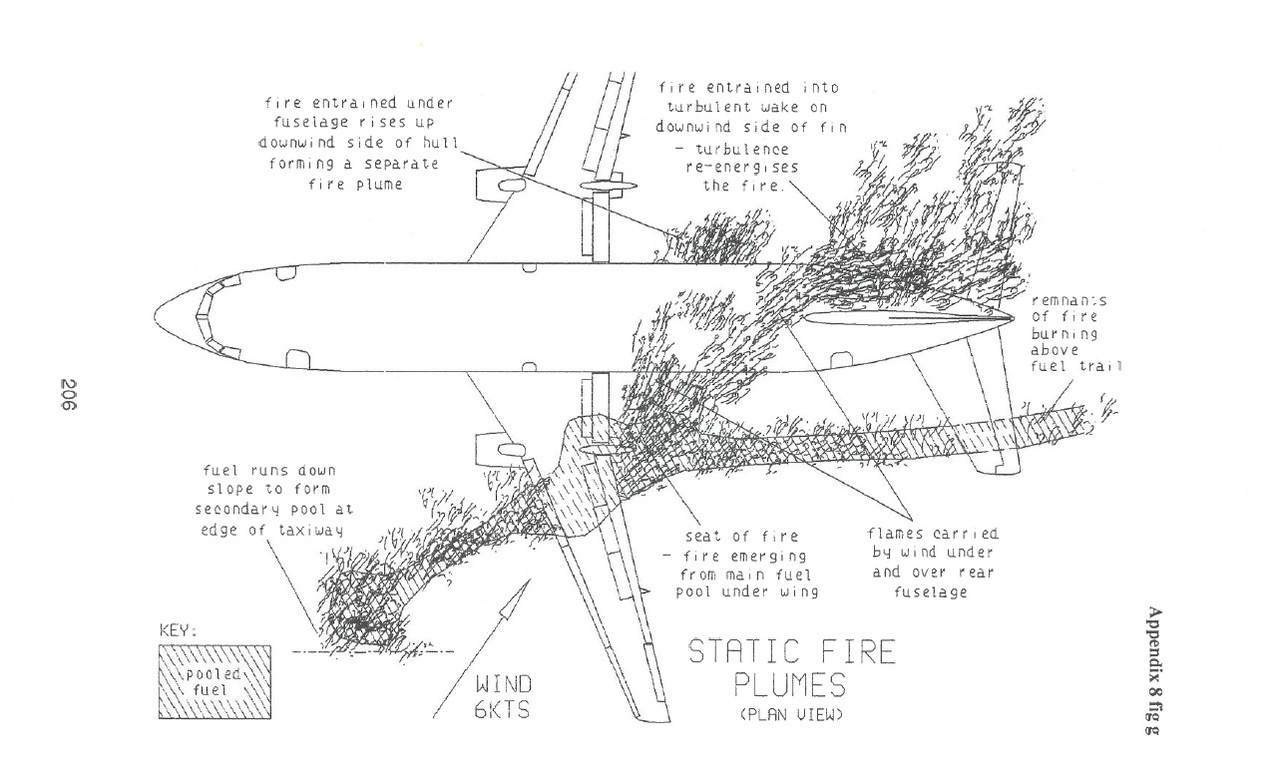
That distinction is central to understanding the disaster. The engine failure and ruptured fuel tank access panel caused the fire. According to the accident investigation, the principal cause of the fatalities was rapid incapacitation from smoke inhalation, made worse by the jammed forward right door and restricted access to the exits. Fifty-three passengers and two cabin crew members died.

The rear of the cabin had become especially dangerous, but the consequences were felt throughout the aircraft. A passageway that is merely inconvenient on a normal flight can become a bottleneck during an evacuation. A door that opens a minute late can leave passengers trapped in a cabin that is becoming impossible to cross.
Findings and Human Factors Lessons
The investigation traced the initial failure to the No. 9 combustor can in the left engine, which had previously been repaired. The history of that repair and the guidance surrounding it became part of the investigation. A fragment from the failed engine broke through a fuel tank access panel that was vulnerable to this kind of impact. Fuel escaped, ignited, and burned against an aircraft whose rear cabin and interior materials could not protect its occupants for long enough.
The Human Factors Analysis and Classification System, or HFACS, draws on James Reason’s Swiss Cheese Model. In that model, safety depends on multiple layers of protection. Each layer has weaknesses; a disaster becomes possible when those weaknesses align.
Manchester can be understood in those terms. The engine repair and failure formed one part of the chain. The vulnerable access panel allowed fuel to escape. The aircraft’s position relative to the wind pushed the fire against the fuselage. The jammed door, difficult access to other exits, limited ability to fight a major cabin fire, and toxic smoke all reduced the time available to evacuate.
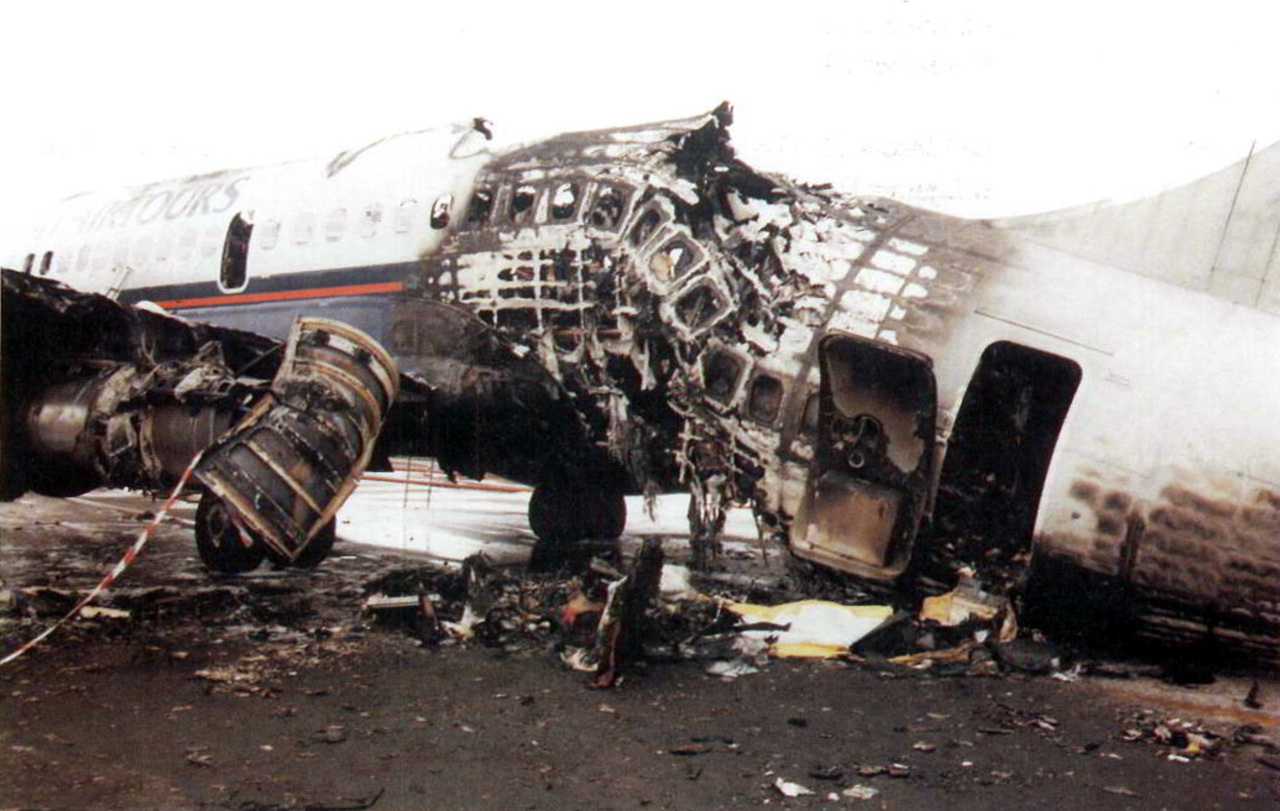
That does not mean every layer was a mistake made by the people responding to the emergency. The pilots had to react to a sudden engine failure while initially believing they might have a tire problem. From the investigation, we can say that the final position of the aircraft greatly worsened the fire. Calling that position a straightforward crew error, without accounting for what the pilots knew and the procedures available to them, would be a much less certain conclusion.
The lesson is broader than cockpit decision-making. Human factors also concerns what people can reasonably see, understand, and do when equipment fails. A cabin crew member cannot evacuate passengers through a jammed door. Passengers cannot move quickly through an obstructed passageway or navigate an exit they cannot reach. And even a prompt response may come too late if smoke incapacitates people before they can escape.
Lessons for the Future
The Manchester accident prompted 31 safety recommendations. Investigators examined engine repair guidance, the ability of fuel tank access panels to resist impact, the operation of exit doors and slides, access to exits, cabin materials, and the ability to fight a fire inside an aircraft. Subsequent safety measures addressed several of these vulnerabilities, including stronger requirements for vulnerable fuel tank access covers and action on the door and slide design.
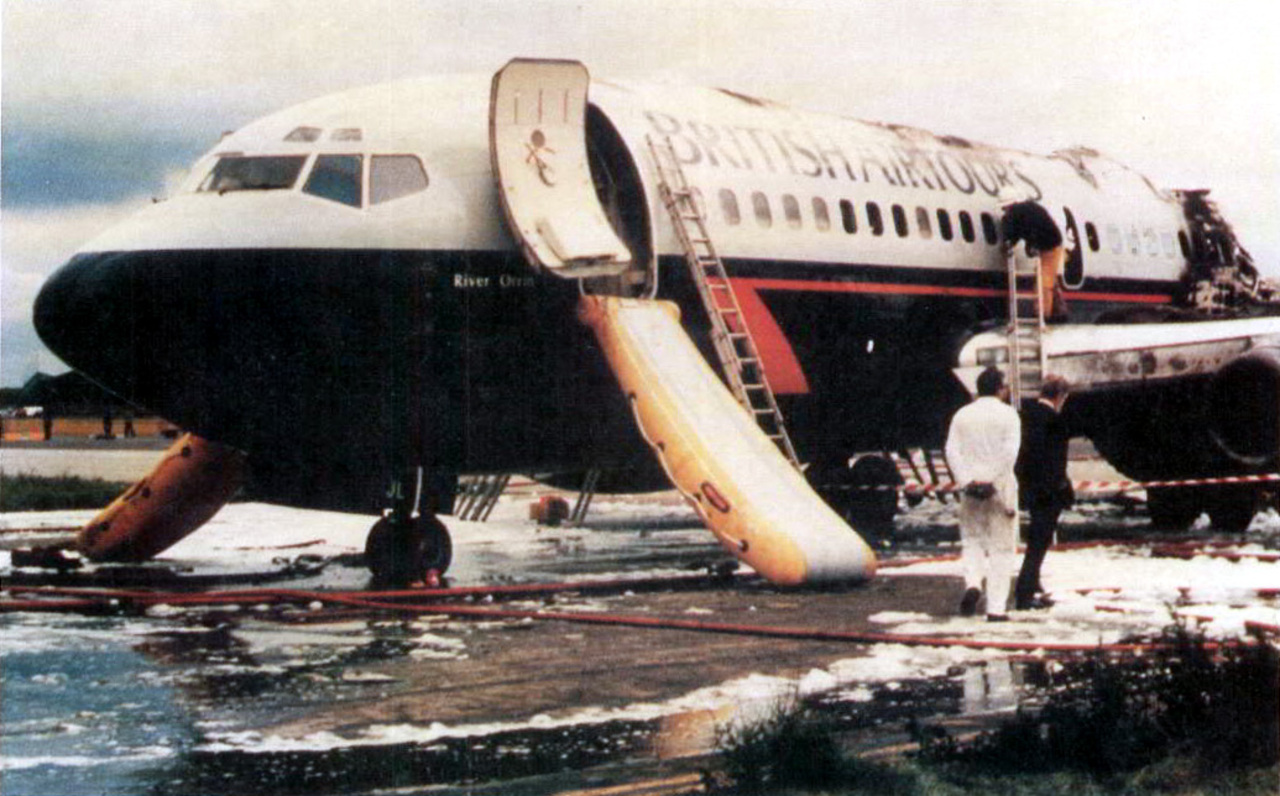
It is often said that aviation’s rules are written in blood. The phrase can sound familiar enough to lose its force. At Manchester, the flight crew stopped the aircraft, and airport firefighters arrived quickly. Neither was enough to ensure everyone could escape. The disaster showed that survival also depends on the layers built into the aircraft before an emergency begins: fuel containment, fire resistance, usable exits, clear communication, and time.
Cabin crew members Sharon Ford and Jacqui Urbanski were among the 55 people who died. A memorial near Manchester Airport remembers them and the passengers who never made it out. It also recalls a difficult question that remains relevant to every aircraft design: when something goes wrong, how much time will the people inside have to survive it?
This content is only available with an AeroXplorer+ subscription.
Catering to the Aircraft: What Crews Should Consider Before Ordering » Why Aircraft Towing May Be One of the Last Frontiers of Autonomous Ground Operations » How Delivery Delays Are Reshaping Aviation Sourcing »

Comments (0)
Add Your Comment
TAGS
INFORMATIONAL British Airtours Manchester G-BGJLRECENTLY PUBLISHED
 British TUI Flight Attendant Arrested in Sri Lanka Over Alleged 100-Pound Drug Smuggling Attempt
A British TUI flight attendant faces serious charges in Sri Lanka after authorities allegedly found around 100 pounds of synthetic drugs in her luggage.
NEWS
READ MORE »
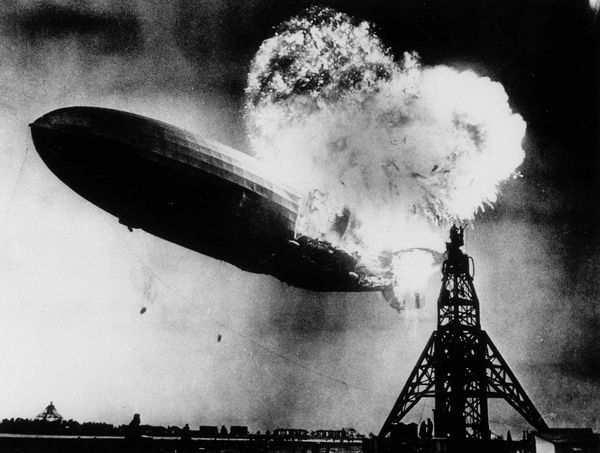 Hindenburg: The Disaster That Ended the Airship Age
Within 34 seconds, the pride of German aviation had folded into the ground as 7 million cubic feet of hydrogen turned into a curtain of fire nearly as tall as the mast it was supposed to dock against. Passengers leapt from windows 20 and 30 feet up rather than wait for the flames to reach them.
INFORMATIONAL
READ MORE »
 Catering to the Aircraft: What Crews Should Consider Before Ordering
Successful private jet catering starts with clear communication between flight crews and catering providers. SkyDine, a private jet catering company, explains how galley limitations, refrigeration, packaging and service expectations should influence choices, and why establishing clear expectations from the beginning is essential to a smooth onboard experience.
INFORMATIONAL
READ MORE »
More than just headlines.
Get unlimited ad-free access to in-depth aviation news, premium stories, and exclusive insights other sites don't cover.
- Ad-free browsing on AeroXplorer
- Unlimited access to premium and exclusive articles
- Higher photo upload limits & commissions on sales
- Free access to Jetstream Magazine on higher tiers
- Ad-free browsing
- Sell aviation photos with 60% commission
- First week free!
- Everything in Basic+
- Unlimited premium articles
- Sell aviation photos with 70% commission
- Free Digital subscription to Jetstream Magazine
- First week free!
- Everything in Basic+ and Pro
- Sell aviaiton photos with 80% commission
- Early access to exclusive stories
- Free Digital+Print subscription to Jetstream Magazine