
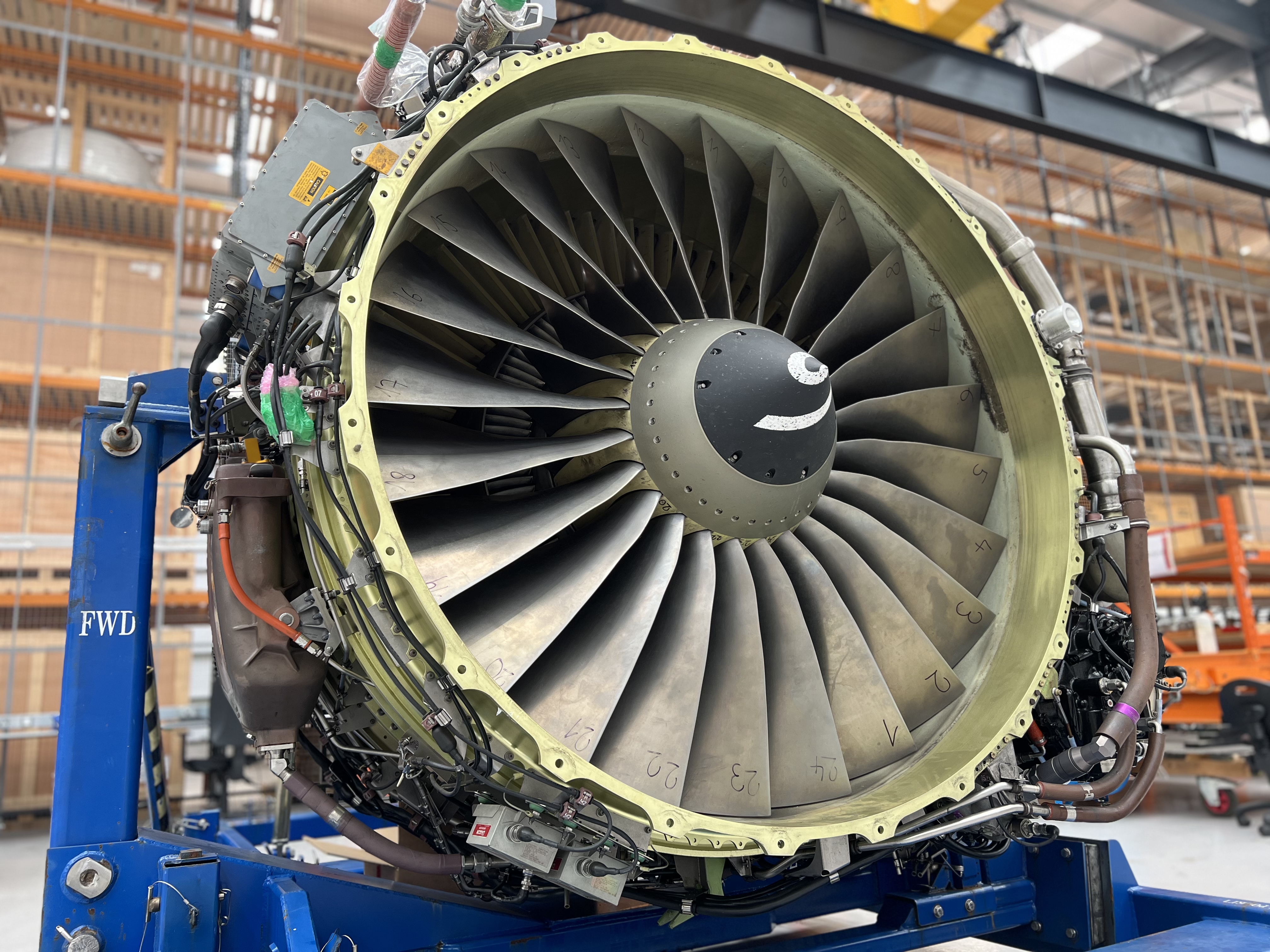
When Boeing and Airbus can't deliver new aircraft fast enough, someone has to keep the old ones flying. That reality, playing out across airline fleets and MRO shops worldwide, is fueling what industry insiders are now calling a defining moment for the aviation aftermarket.
The dollar figures underline just how large that gap has grown. For example, Boeing's Commercial Airplanes division alone was sitting on a $596.7 billion order backlog as of June 30, 2026, up from $567.3 billion at the end of 2025, according to the company's filings. Airbus’ consolidated group order book, spanning commercial jets, defense, and helicopters, stood at €619 billion, or roughly $718 billion, at the close of 2025. Between the two manufacturers, close to $1.3 trillion in future aircraft production is effectively queued up and not yet delivered.
This period of time, because of those challenges, is the year for aftermarket and the year for such kind of marketplaces as Locatory.com,
says Indre Ovsenkiene, VP of Sales at Locatory, a global aviation parts marketplace. She would know; roughly 80% of her working hours are spent with customers in the US market, giving her a front-row seat to how American suppliers and operators are adjusting to a supply chain under strain.

A Backlog Measured in Decades, Not Years
The scale of the problem is hard to overstate. According to Ovsenkiene, the commercial aircraft backlog currently sits around 18,100 aircraft, and at current production rates, that represents roughly 12 years of output. Manufacturers simply cannot build and deliver new airframes fast enough to retire aging fleets on schedule. Such timelines thereby enforce keeping older legacy fleets airborne until newer aircraft are able to replace them.
A recent data brief by Locatory puts a finer point on the numbers: the backlog stands at approximately 18,100 aircraft, and the average in-service fleet age has climbed to a record 15.2 years. At current production rates, the brief estimates the backlog represents roughly 12 years of output. Whatever the precise figure, the direction is the same: fleet renewal will stay gradual even as Boeing and Airbus work to increase deliveries.
The effect is straightforward but relentless: airlines are keeping older aircraft in service longer than originally planned. Every additional year of operation means more flight hours, more cycles, more inspections, and more shop visits, which in turn means more component replacement, at a moment when new-material lead times are already stretched thin.
When OEM supply alone cannot absorb that additional demand, [and] repair capacity is concentrated while aircraft need to return to service quickly, the aftermarket becomes even more important,
Ovsenkiene explains.
In many cases, used serviceable material, surplus inventory, and exchange components have become the only realistic way to source a needed part within an operationally acceptable window, allowing these older legacy fleets to remain airborne.
From Cost-Saving Option to Sourcing Strategy
Perhaps the most telling shift Ovsenkiene points to is about operator mindset. Used serviceable material (USM), she says, used to be viewed mainly as a way to cut costs. That's no longer the case.
"Today, with new material concentrated [and] repair capacity under pressure, USM became part of operational, [and] actual sourcing strategy," she says. "It's kind of a new normal."
That reframing shows up clearly in Locatory's own marketplace data. Demand remains heavily concentrated around mature platforms – including the Boeing 737NG and Airbus A320 families, along with CFM56 engine-related material – but the pressure has spread well beyond engines into electrical systems, pneumatics, landing gear, avionics, and even standard hardware. Ovsenkiene notes that between May and June, engine component searches accounted for more than 60% of top North American search activity on the platform, alongside a notable regional uptick in airframe, landing gear, and cabin-safety-related searches.
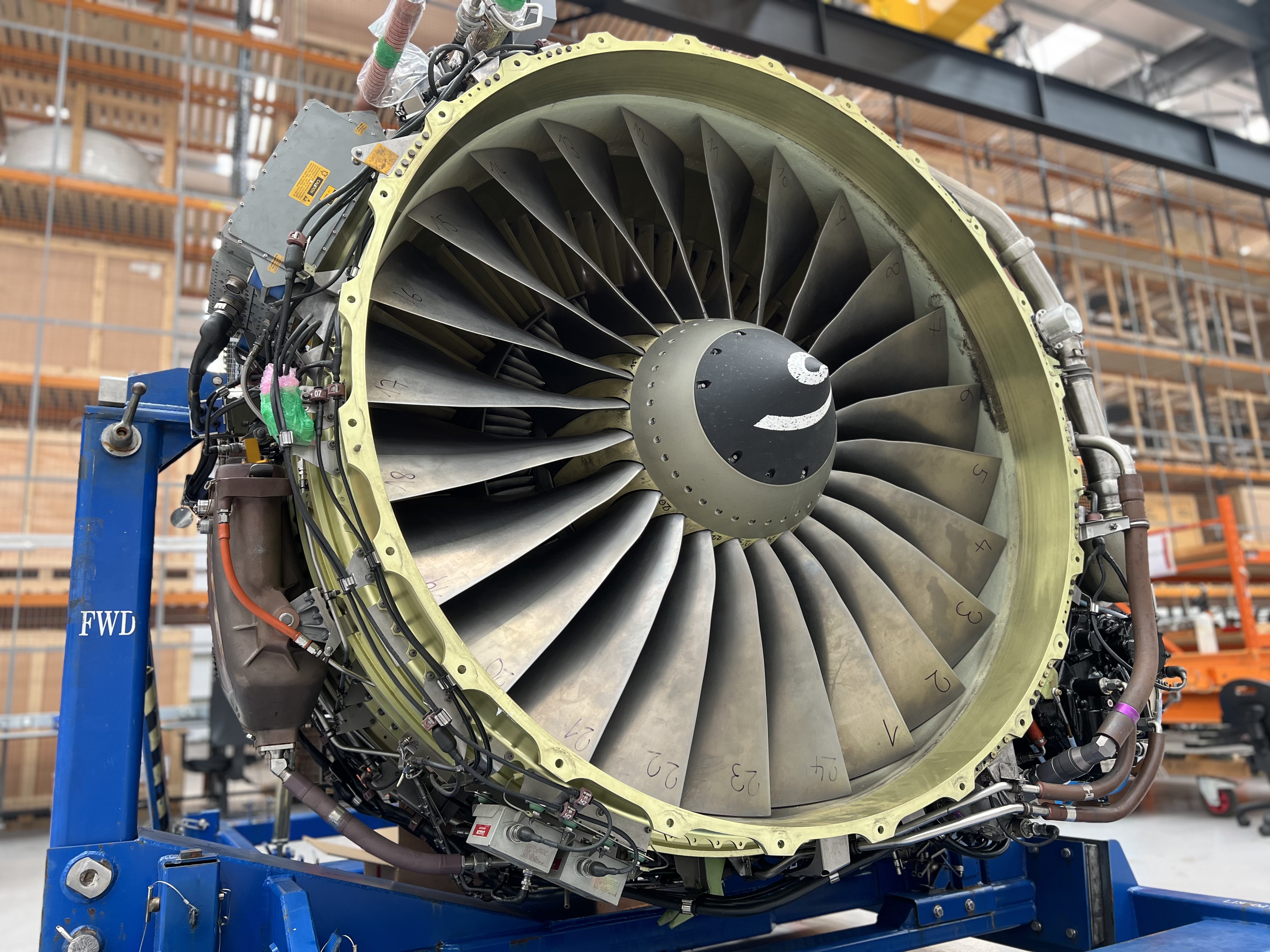
Part of that surge traces back to regulatory pressure as much as scarcity. Ovsenkiene points to a new FAA directive affecting CFM56-7B engines, which would require initial and repetitive fan-blade inspections and replacement where unacceptable indications are found, adding another maintenance consideration to the already strong CFM56 demand Locatory.com is tracking in its monthly search data.
Locatory's month-by-month search data backs that up. Engine components led global top-search activity for most of the first half of 2026, climbing from just 13% of top searches in January to a peak of 56% in April, with CFM56 variants accounting for the vast majority of that demand. The signal shows up down to the part-number level: a CFM56-7B hydromechanical unit, PN 442653, appeared among Locatory's global top searches in five of the first six months of the year, alongside recurring demand for HPT and HPC material, starters, and other hydromechanical components.

August Demand: The Pressure Spreads Beyond the Engine Core
By August, that pressure had visibly broadened across the aircraft. Standard hardware and seals, think bolts, collars, rivets, packings, nuts, and fittings, had overtaken engine material as the single largest category of Locatory's Top 50 most-searched parts. The same pattern shows up in the hardest-to-find data across the first half of the year.
Locatory's Top 50 Most-Searched Parts, August 2026 (by category):
| Category | Share of August Top 50 |
| Standard hardware and seals | 44% |
| Airframe and landing gear | 24% |
| Engine material | 16% |
| Electrical, power and avionics | 10% |
| Cabin and safety | 4% |
Global Hardest-to-Find Share by Category, Month by Month (from top 50 list):
| Category | Jan | Feb | Mar | Apr | May | Jun | Jul |
| Engine / Fuel Control | 26% | 28% | 13% | 8% | 28% | 24% | 31% |
| Standard Hardware/Seals | 10% | 45% | 40% | 30% | 32% | 20% | 12% |
| Airframe/Landing Gear | 12% | 0% | 0% | 14% | 8% | 18% | 26% |
| Electrical/Avionics/Sensors | 22% | 20% | 23% | 22% | 22% | 28% | 17% |
| Cabin/Safety/Interior | 19% | 7% | 24% | 26% | 10% | 0% | 14% |
Source: Locatory.com marketplace data, January-July 2026. Based on monthly Top 50 hardest-to-find parts.
This serves as a reminder that unit value and operational importance don't always move together. A relatively inexpensive seal or fastener that isn't available can hold up installation of a far more expensive assembly, and ground an aircraft in the process, much like the small, costly-to-source bearing Ovsenkiene described during the interview.
Smaller Operators Feel It Most
Not every airline is affected equally. Ovsenkiene notes that large fleet operators with direct distribution agreements with OEMs are generally weathering the disruption better, though even they aren't immune. It's the small and medium-sized operators who are hit hardest, facing access that is both more expensive and slower than what larger carriers can secure through established channels.
That's driving a behavioral shift even among long-standing customers. "Even customers that I was in communication with for a long time, they didn't have that big interest in such kind of solution," Ovsenkiene says. "Now recently they changed their mind." She points to one client Locatory had worked with for more than five years who, within the span of a couple of months, moved to a full API integration, not just to list surplus material for sale, but to actively source spare parts through the platform.
The underlying driver, she argues, is that traditional vendor networks, no matter how well established, simply can't flex to absorb today's demand spikes. "The normal connection, normal network cannot support" the current pressure, she says, pushing buyers to widen their sourcing options beyond trusted, approved-vendor lists alone.
What This Means Heading Into the Next Maintenance Cycle
For procurement and fleet-planning teams bracing for the next wave of shop visits, the advice from Locatory's team is less about predicting individual part numbers and more about posture: list everything you can, and don't assume a part's demand is predictable. Ovsenkiene cites a live example: an Asia-based airline in an AOG (aircraft-on-ground) situation for weeks, unable to source a needed part despite maintaining a strong network of approved vendors.
Ovsenkiene adds a granular data point that underscores just how unpredictable "hard to find" can be. It isn't always the big-ticket engine modules driving urgency. Sometimes it's a small bearing, a component that can cost several thousand dollars simply because of how difficult it is to locate, that ends up grounding an aircraft.
Locatory releases monthly reports tracking both the most-searched parts and the hardest-to-find parts across its marketplace, data the company says it's making available to help operators anticipate, rather than merely react to, the next bottleneck.
The supplementary data brief flags two areas the company's analysts are watching most closely heading into the next cycle. The first is the Boeing 777/GE90 ecosystem: roughly 38% of August's hardest-to-find entries were engine or engine-control components when GE90 FADEC units are included, with thirteen shortage references tied directly to GE90 engine controls, fuel management, or supporting systems, spanning FADECs, hydromechanical units (HMUs), fuel-oil cooler and heat-exchanger assemblies, and IDG cooler and check-valve interfaces. The brief notes this isn't a one-month anomaly; GE90 FADEC and HMU scarcity has been a recurring signal alongside CFM56 demand since earlier in the year. There's a structural reason to keep watching it, too: according to the brief, GE Aerospace estimates approximately 70% of the GE90 fleet has not yet undergone its second shop visit, and second visits typically involve heavier workscopes.
The second area is regulatory. The brief points to the FAA's new V2500 Airworthiness Directive 2026-17-03, effective September 24, 2026, which requires affected third-stage HPC rotor blades to be replaced with eligible material at the next applicable engine shop visit, following blade failures linked to engine fires, unplanned removals, aborted takeoffs, and in-flight shutdowns. The brief is careful to note that this doesn't guarantee an immediate shortage, but it adds another known maintenance requirement to a mature engine family already under watch.

Analysis: How Spirit Airlines Changed Airline Pricing, then Paid the Price
The Bigger Picture
Strip away the platform-specific details, and the pattern that emerges is bigger than any one marketplace: aircraft deliveries are delayed, aging (legacy) fleets are flying longer than planned, and the aftermarket, once considered a secondary, cost-driven option, is becoming central to how operators keep planes in the air. As Ovsenkiene puts it, the parts driving today's search activity often "are not in production anymore," pushing buyers toward the used and surplus market almost by necessity.
Locatory.com's data brief frames the shift in similar terms, describing OEM material, traditional suppliers, USM, repair, exchanges, and pooling as options that increasingly need to be weighed in parallel rather than one after another. The brief also cites IATA's description of today's aviation supply chain as constrained not only by physical shortages but by fragmented data and disconnected systems, part of the industry's broader push to integrate airline maintenance systems with external market intelligence.
Whether the underlying shift proves temporary or lasting will depend largely on how quickly Boeing and Airbus can work through their backlogs. Until then, the aftermarket, and the digital marketplaces built to serve it, look set to remain a critical piece of aviation's supply chain infrastructure.
American Airlines 737 Diverts to Chicago O'Hare After Suspected Cabin Fire » Federal Grand Jury Indicts Passenger Duct-Taped to Seat on American Airlines Flight » Why the A-10 Warthog's Nose Gear Is Offset to the Right »

Comments (0)
Add Your Comment
TAGS
STORIES Locatory Locatory.com Delivery Delays Delays Aviation Sourcing MRO Sourcing CFM56 Airbus A320 Boeing 737NGRECENTLY PUBLISHED
 Phillips 66 Aviation Donates $23,928 to CAN in Support of Cancer Patient Flights
Phillips 66 Aviation presented a $23,928 check to Corporate Angel Network at NBAA-BACE 2026, supporting free flights for cancer patients on corporate aircraft.
NEWS
READ MORE »
 Aegis Air Bets on By-the-Seat Private Jet Flights From Miami to Caracas
A new US start-up is testing whether Caracas can support its own private jet shuttle. Aegis Air, a virtual carrier founded this year, is due to start by-the-seat flights between Miami and the Venezuelan capital today, 20 October, aboard a 16-seat Embraer E135.
NEWS
READ MORE »
 Ambulances Meet Eurowings Jet From Rhodes After Passengers Feel Unwell in Flight
A Eurowings Airbus landed in Düsseldorf on Sunday evening, October 18, to a large emergency response, after several people on board suddenly became unwell on the way from Rhodes.
NEWS
READ MORE »
More than just headlines.
Get unlimited ad-free access to in-depth aviation news, premium stories, and exclusive insights other sites don't cover.
- Ad-free browsing on AeroXplorer
- Unlimited access to premium and exclusive articles
- Higher photo upload limits & commissions on sales
- Free access to Jetstream Magazine on higher tiers
- Ad-free browsing
- Sell aviation photos with 60% commission
- First week free!
- Everything in Basic+
- Unlimited premium articles
- Sell aviation photos with 70% commission
- Free Digital subscription to Jetstream Magazine
- First week free!
- Everything in Basic+ and Pro
- Sell aviaiton photos with 80% commission
- Early access to exclusive stories
- Free Digital+Print subscription to Jetstream Magazine