
Join us virtually next week. Free to attend • Seats are limited.
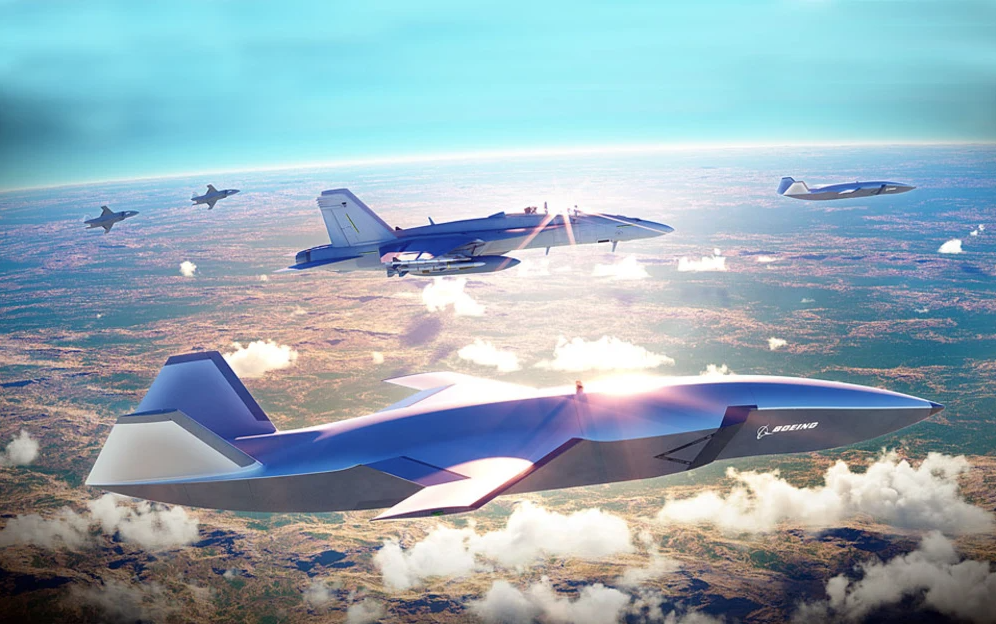
The race to field operational autonomous "loyal wingman" drones is accelerating into overdrive as 2026 approaches, with the United States Air Force poised to make critical production decisions, Australia demonstrating combat capabilities with live weapons, and rival programs in Europe and Asia rapidly maturing.
US Air Force Eyes Fiscal 2026 Production Decision
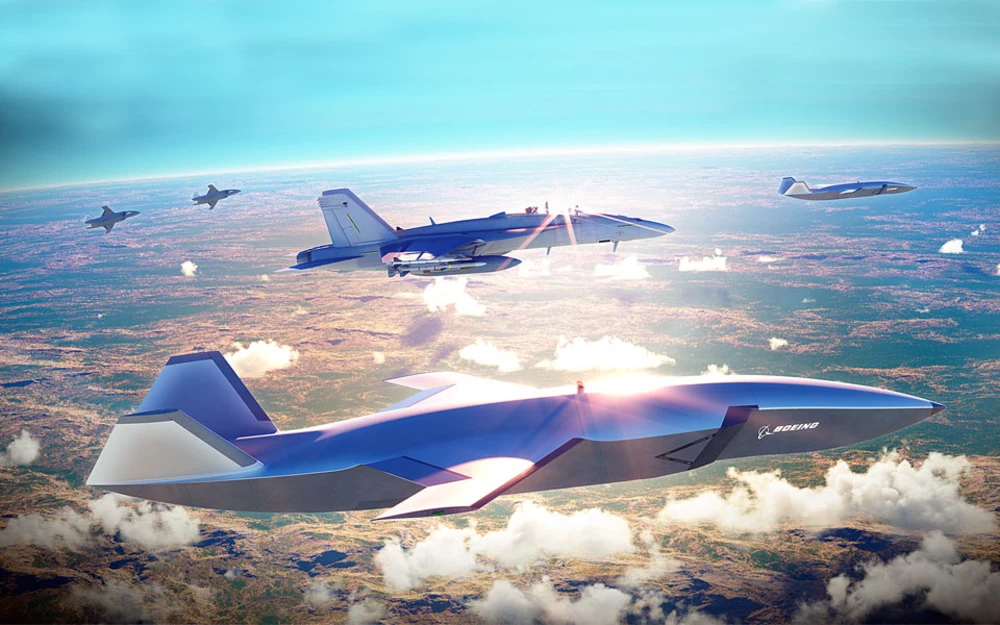
The USAF is on track to make a competitive production decision for the first increment of its Collaborative Combat Aircraft (CCA) program in fiscal year 2026, with plans to field a fully operational capability before the decade's end.
Following the successful first flights of both Increment 1 prototypes in 2025, the service is now one step closer to the final production decision. The YFQ-42A from General Atomics and the YFQ-44A from Anduril Industries have both transitioned to flight testing, generating critical performance data.
The F-22 Raptor will be the first operational platform to control CCAs, with new tablet-based control systems scheduled for installation beginning in Fiscal Year 2026. This $15 million initiative will retrofit combat-coded Raptors to serve as airborne controllers for the autonomous systems.

Air Force Secretary Frank Kendall anticipates ordering more than 100 CCAs over the next five years as part of Increment 1, with the service ultimately targeting a fleet exceeding 1,000 aircraft paired with F-22s, F-35s, the future Next Generation Air Dominance (NGAD) fighter, and strategic platforms.
Australia Achieves Historic Combat Milestone
Australia's MQ-28 Ghost Bat program delivered a watershed moment in December 2025, becoming the first autonomous aircraft to complete an air-to-air weapon engagement with an AIM-120 missile.
The engagement saw the MQ-28 working together with a Boeing E-7 Wedgetail and F/A-18F Super Hornet to engage an aerial target, with the drone receiving authorisation from the E-7A before successfully destroying the target.

Development of the air-to-air capability took just over eight months, starting with a decision at the Avalon Airshow in March. The operator issued only four major commands during the flight: takeoff, conduct combat air patrol, commit to intercept, and clear to arm and fire.
Following this success, Canberra approved a third tranche worth AUS $754 million for seven additional drones, six Block 2 and the first Block 3 aircraft, to support operational capability by 2028. The Block 3 variant is expected to include an internal weapons bay to maintain stealth characteristics.

European Programs Navigate Complexity
Europe's loyal wingman landscape remains fragmented but increasingly active heading into 2026. Germany's Airbus and Sweden's Saab are negotiating to develop an advanced loyal wingman drone for the Eurofighter Typhoon and Gripen aircraft, separate from the troubled Franco-German-Spanish Future Combat Air System (FCAS) program.

BAE Systems confirmed plans to fly an Autonomous Collaborative Platform demonstrator in 2026 to support the UK-Italy-Japan Global Combat Air Programme (GCAP), though specific platform requirements remain under assessment.
Japan's Mitsubishi Heavy Industries unveiled two CCA concepts at the Japan International Aerospace Exhibition 2024, including a missile-like design designated Affordable Rapid Prototype Missile Drone Concept 20X and a high-performance tactical UAV, signalling Tokyo's commitment to manned-unmanned teaming for GCAP.
The European theatre faces uncertainty as some observers now see FCAS as effectively dead, with Germany potentially pivoting to GCAP or independent loyal wingman development.

Analysis: How Spirit Airlines Changed Airline Pricing, then Paid the Price
China's Rapid Development Raises Stakes
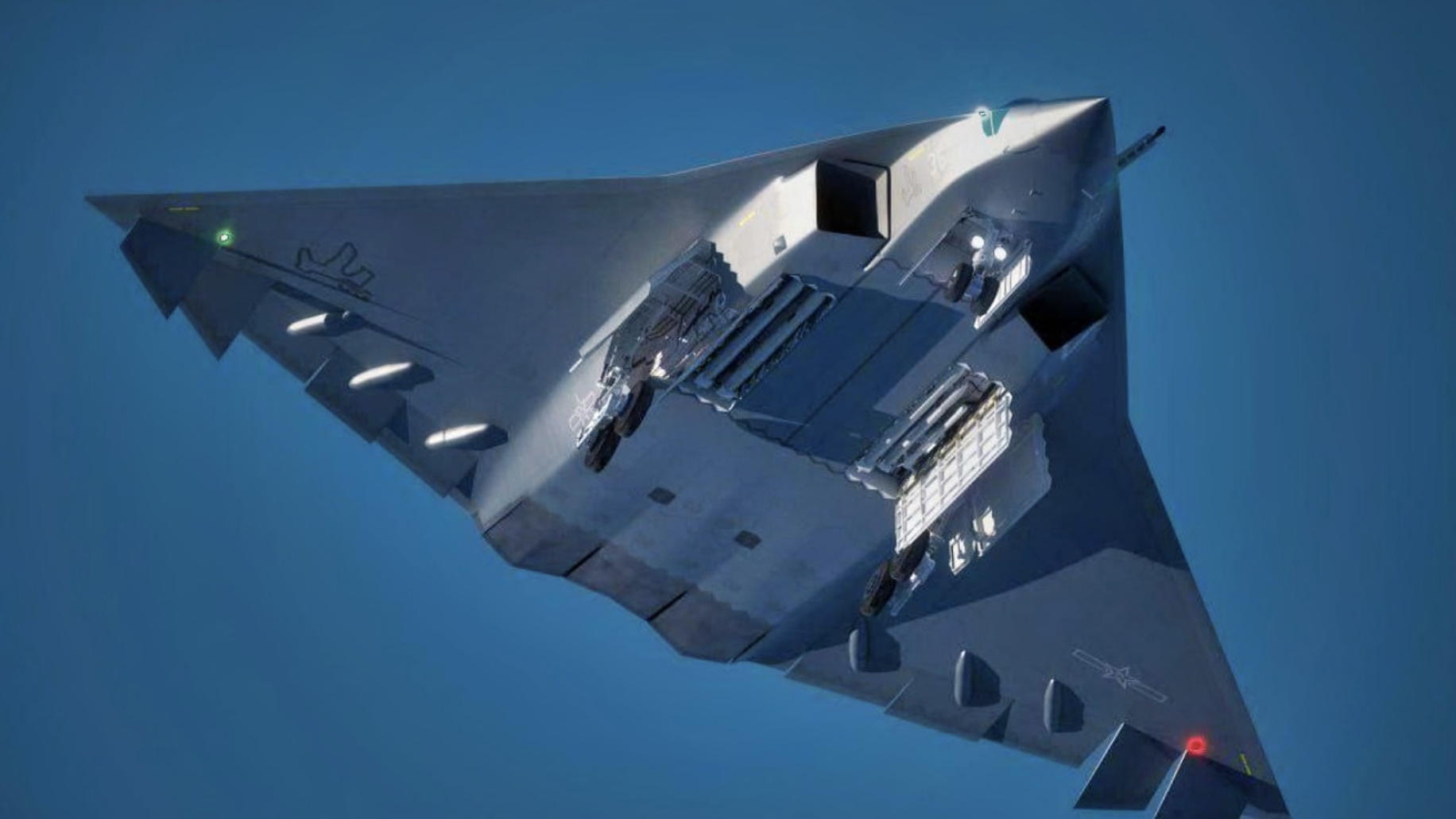
China's parallel development of multiple sixth-generation platforms and supporting loyal wingman systems has dramatically accelerated the global competition. A third J-36 prototype was observed flying on December 25, 2025, incorporating further refinements focused on endurance, thermal management, and manned-unmanned teaming integration.
Satellite imagery from June 2025 of the Yangfang base near Beijing revealed a diverse array of uncrewed aerial vehicles, including five tailless designs not previously identified, suggesting imminent unveiling of new loyal wingman capabilities.
China’s two-seat J-20S stealth fighter has likely entered operational PLAAF service, with the redesigned fuselage accommodating a second crew member tasked with controlling loyal wingman drones.
Alongside next‑generation combat aircraft and loyal wingmen, air and critical‑infrastructure bases increasingly depend on advanced ground‑based drone detection systems to spot and track hostile UAVs at long range, such as Pelco’s drone detection camera platforms designed for long‑range visual and thermal tracking of small drones.
Read More: China’s ‘Tailless’ 6th-Gen Fighter Prototypes
US Army Enters the Fray
The US Army's aviation arm has been working with industry and component commands in the Indo-Pacific and Europe to develop requirements for a future loyal wingman drone program, with experimentation planned for early 2026.
Any Army CCAs would likely carry launched effects themselves, further extending reach into higher-risk environments and allowing for crewed-uncrewed teams capable of executing complex and flexible tactics.
Industry Competition Intensifies
Beyond the prime contractors already selected, the competitive landscape continues evolving. Northrop Grumman unveiled Project Talon in December 2025, featuring a fully composite structure that is 1,000 pounds lighter with 50 per cent fewer parts than its CCA Increment 1 offering.
Lockheed Martin's Skunk Works announced its Vectis stealth combat drone, with first flight planned for 2027, while General Atomics indicated its Longshot drone under DARPA contract could fit Increment 2 requirements.
2026: The Pivotal Year
The confluence of US production decisions, European demonstrator flights, continued Australian operational testing, and potential Chinese unveilings makes 2026 a watershed year for collaborative combat aircraft. The programs that demonstrate operational viability, affordability, and effective human-machine teaming will likely shape air combat for decades to come.
The CCA program will spend more in its first two years than the six precursor projects combined spent over the past decade, underscoring the strategic priority assigned to this capability by Western air forces seeking affordable mass to counter peer adversaries.
As one senior USAF official noted, the transition from concept to flight in record time proves the service can deliver combat capability at speed when barriers are cleared, and efforts align around warfighter needs. The question now is whether production, integration, and operational employment can maintain that momentum through 2026 and beyond.
Air India Flight AI2379 Plunges 300 Feet in Severe Turbulence, Injuring 17 on Phuket to Delhi Route » Cape Town Airport Runway Shut After Kenya Airways Boeing 737-800 Tire Failure » Silk Way West 747-8 Diverts to Dallas After Houston Mix-Up, Declares Fuel Emergency »

Comments (0)
Add Your Comment
TAGS
NEWS Defence Drones USAF Collaborative Combat Aircraft CCA AutonomousRECENTLY PUBLISHED
 Boeing's 777X Headache Just Got Worse: Lufthansa Says No Thanks
Lufthansa has refused to accept the earliest built Boeing 777-9 jets, following Emirates in rejecting the aging airframes amid ongoing certification delays.
NEWS
READ MORE »
Boeing's 777X Headache Just Got Worse: Lufthansa Says No Thanks
Lufthansa has refused to accept the earliest built Boeing 777-9 jets, following Emirates in rejecting the aging airframes amid ongoing certification delays.
NEWS
READ MORE »
 Solairus Moves to Acquire Clay Lacy Charter Business, Forming a 500-Aircraft Management Powerhouse
Solairus Aviation's acquisition of Clay Lacy's charter management operation creates one of the largest managed fleets in U.S. business aviation.
NEWS
READ MORE »
Solairus Moves to Acquire Clay Lacy Charter Business, Forming a 500-Aircraft Management Powerhouse
Solairus Aviation's acquisition of Clay Lacy's charter management operation creates one of the largest managed fleets in U.S. business aviation.
NEWS
READ MORE »
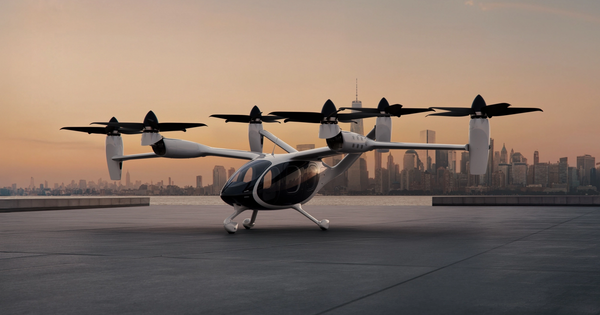 Joby Aviation Opens Texas Facility to Prepare for Dallas-Fort Worth Air Taxi Service
Joby Aviation has established a new Texas base to support planned electric air taxi operations across the Dallas-Fort Worth region.
NEWS
READ MORE »
Joby Aviation Opens Texas Facility to Prepare for Dallas-Fort Worth Air Taxi Service
Joby Aviation has established a new Texas base to support planned electric air taxi operations across the Dallas-Fort Worth region.
NEWS
READ MORE »
More than just headlines.
Get unlimited ad-free access to in-depth aviation news, premium stories, and exclusive insights other sites don't cover.
- Ad-free browsing on AeroXplorer
- Unlimited access to premium and exclusive articles
- Higher photo upload limits & commissions on sales
- Free access to Jetstream Magazine on higher tiers
- Ad-free browsing
- Sell aviation photos with 60% commission
- First week free!
- Everything in Basic+
- Unlimited premium articles
- Sell aviation photos with 70% commission
- Free Digital subscription to Jetstream Magazine
- First week free!
- Everything in Basic+ and Pro
- Sell aviaiton photos with 80% commission
- Early access to exclusive stories
- Free Digital+Print subscription to Jetstream Magazine