
British Airways is facing a lawsuit from a passenger who claims a flight attendant struck her in the head during a flight, causing injuries she says still affect her today. But the details suggest a more specific story than the headline implies.
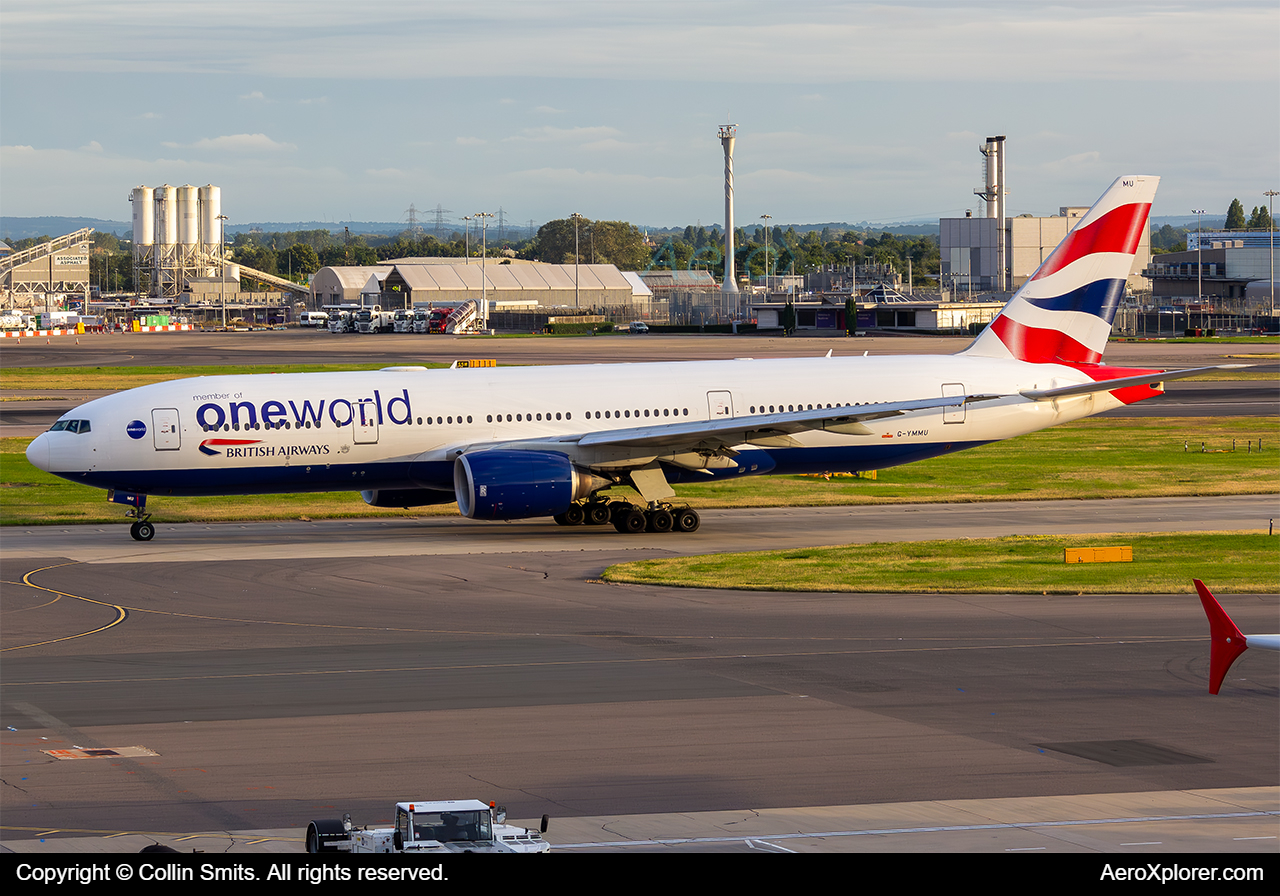
The passenger, identified in court documents as Karen Gibbs, a retired U.S. Navy captain, filed suit in a Virginia federal district court. She alleges the incident occurred aboard British Airways flight BA217, from London Heathrow to Washington Dulles, on August 1, 2024. According to the complaint, a disturbance broke out involving a different, unruly passenger seated nearby, and a flight attendant intervening in that disturbance accidentally struck Gibbs in the head, though she was not involved in the incident herself.
Gibbs argues that British Airways bears responsibility under Article 17 of the Montreal Convention, an international treaty governing airline liability for passenger injuries on international flights. Under the convention, airlines can be held liable for injuries caused by an "accident" onboard, even without negligence.

What the Lawsuit Claims
Gibbs says she suffered a concussion with blurred vision, dizziness, and pain immediately after being struck, and continues to experience migraines, memory problems, and balance issues more than two years later, prompting her early retirement. She is seeking damages for medical expenses, pain and suffering, and other losses.
Beyond the strike itself, the lawsuit centers heavily on British Airways' response afterward. Cabin crew gave Gibbs a cold compress but reportedly did not immediately seek medical help; the complaint alleges it was roughly 90 minutes before the crew requested a medical volunteer. A passenger who was an emergency room doctor eventually assessed her, diagnosed a probable concussion, and recommended oxygen, though no medical responders were arranged to meet the aircraft on arrival. Gibbs says the airline later offered only a £50 (roughly $67) goodwill payment.
The lawsuit does not accuse the flight attendant of intentional wrongdoing. Instead, it treats the collision as an accident under the Montreal Convention, while separately alleging the airline's aftermath response fell short. Courts have interpreted the "accident" definition broadly, ruling that unexpected events outside a passenger's control can qualify, even when the underlying cause, such as a crew member responding to a disruptive passenger, was not itself negligent.
Why the Incident Isn't What the Headline Suggests
The phrase "struck a passenger in the head" might imply deliberate action or negligence. The facts tell a more specific story: the flight attendant was reportedly responding to an unrelated disturbance, and Gibbs was struck as an unintended bystander, not through simple loss of balance in turbulence.
Incidents involving disruptive passengers remain a recurring source of injury claims, alongside more common causes like turbulence. Crews are trained to intervene in disturbances, but such interventions can create unintended risks to bystanders.
It remains unclear exactly what triggered the disturbance or what steps the attendant took while intervening. Those details, along with the airline's medical response, could affect how a court views its responsibility.
The Montreal Convention Factor
The Montreal Convention plays a central role in cases like this. Airlines face strict liability for damages up to a threshold that applies based on the date of travel; at the time of Gibbs's August 2024 flight, that threshold stood at 128,821 Special Drawing Rights, roughly $170,000 depending on exchange rates at the time. ICAO has since raised the general threshold to 151,880 Special Drawing Rights, or roughly $200,000, effective for flights from late December 2024 onward, though the lower, earlier figure is what would apply to Gibbs's claim. Beyond the applicable limit, airlines can only avoid liability by proving they were not negligent.
Passengers don't need to prove the airline did something wrong to recover damages for smaller claims; they only need to show an accident occurred and caused their injury. Separately, claims like delayed medical assistance can raise negligence questions that may support damages beyond the strict-liability threshold.
Legal experts note that crew members inadvertently striking passengers while responding to onboard disturbances typically falls within the accident definition, and similar cases have resulted in payouts even when airlines argued the event was unavoidable.

Analysis: How Spirit Airlines Changed Airline Pricing, then Paid the Price
British Airways' Position
British Airways has not publicly commented on the specifics of the lawsuit, consistent with standard practice for pending litigation. The carrier will likely challenge aspects of Gibbs's claims, including the extent of her injuries, the characterization of the crew's response, and the damages sought.
The case highlights a reality many travelers may not fully understand: the legal framework governing international flights differs significantly from domestic travel, with the Montreal Convention offering certain protections while also capping or limiting recovery in specific ways.
For now, the lawsuit is in its early stages, and it could take months or longer before a court rules or the parties settle. The case serves as a reminder that even routine flights can result in unexpected injuries, and that the legal path forward for injured passengers can be complex.
Fiat Panda vs. Private Jet: Ground Vehicle Collision Rattles Milan's Linate Airport » Passenger Threatens to "Take Over" Alaska Airlines Aircraft, Rebooked on a Later Flight » This Week in Aviation: The 10 Stories That Mattered Most »

Comments (0)
Add Your Comment
TAGS
NEWS British Airways BA217 LHRRECENTLY PUBLISHED
 FAA Investigating After Two American Airlines Flights Flying Towards Each Other Share Same Callsign Mid-Air
An air traffic controller prevented a possible disaster when two American Airlines aircraft flying toward each other were assigned flying with identical callsigns.
NEWS
READ MORE »
FAA Investigating After Two American Airlines Flights Flying Towards Each Other Share Same Callsign Mid-Air
An air traffic controller prevented a possible disaster when two American Airlines aircraft flying toward each other were assigned flying with identical callsigns.
NEWS
READ MORE »
 FAA Eases, But Doesn't Lift, SFO's Parallel Landing Restrictions
NEWS
READ MORE »
FAA Eases, But Doesn't Lift, SFO's Parallel Landing Restrictions
FAA Eases, But Doesn't Lift, SFO's Parallel Landing Restrictions
NEWS
READ MORE »
 American Airlines Regional Jet Declares Fuel Emergency After Three Failed Landing Attempts
An American Eagle regional jet flying from Dallas to Lexington, Kentucky was forced to declare a fuel emergency and divert to a third airport in Indiana after three missed approaches.
NEWS
READ MORE »
American Airlines Regional Jet Declares Fuel Emergency After Three Failed Landing Attempts
An American Eagle regional jet flying from Dallas to Lexington, Kentucky was forced to declare a fuel emergency and divert to a third airport in Indiana after three missed approaches.
NEWS
READ MORE »
More than just headlines.
Get unlimited ad-free access to in-depth aviation news, premium stories, and exclusive insights other sites don't cover.
- Ad-free browsing on AeroXplorer
- Unlimited access to premium and exclusive articles
- Higher photo upload limits & commissions on sales
- Free access to Jetstream Magazine on higher tiers
- Ad-free browsing
- Sell aviation photos with 60% commission
- First week free!
- Everything in Basic+
- Unlimited premium articles
- Sell aviation photos with 70% commission
- Free Digital subscription to Jetstream Magazine
- First week free!
- Everything in Basic+ and Pro
- Sell aviaiton photos with 80% commission
- Early access to exclusive stories
- Free Digital+Print subscription to Jetstream Magazine