
As the final reports for 2025 are filed at NTSB headquarters, a contradiction emerges from the data.
At first glance, the numbers for the year just passed are a triumph of engineering and oversight: total recorded incidents dropped by nearly 10%, and fatal accidents decreased by over 11%. Most significantly, the number of lives lost plummeted from 763 in 2024 to 555 in 2025: a staggering 27.3% reduction in lethality.
However, beneath these encouraging drops in the death toll lies a statistic that should give every regulator pause: injuries are up.
While the number of deaths decreased, the number of injuries rose by 4.2%. In the clinical language of aviation safety, this represents "injury conversion," where plane crashes seem to be more survivable.
Game Day: The Unseen Operation Behind College Sports Travel
This progress shows that although our machines are getting better at protecting us, our systems are still failing to keep us out of harm's way in the first place.
This table was aggregated from the NTSB's incidents/accidents webpage:
| Metric | 2024 | 2025 | Change |
| NTSB Total Incidents | 1,683 | 1,517 | -9.9% |
| Fatal Accidents | 287 | 254 | -11.5% |
| Total Fatalities | 763 | 555 | -27.3% |
| Total Injuries | 142 | 148 | +4.2% |
The most striking conclusion from 2025 is that we've entered an era where the aircraft airframe has become a fortress. We see this in the "injury-conversion" successes that defined the year.
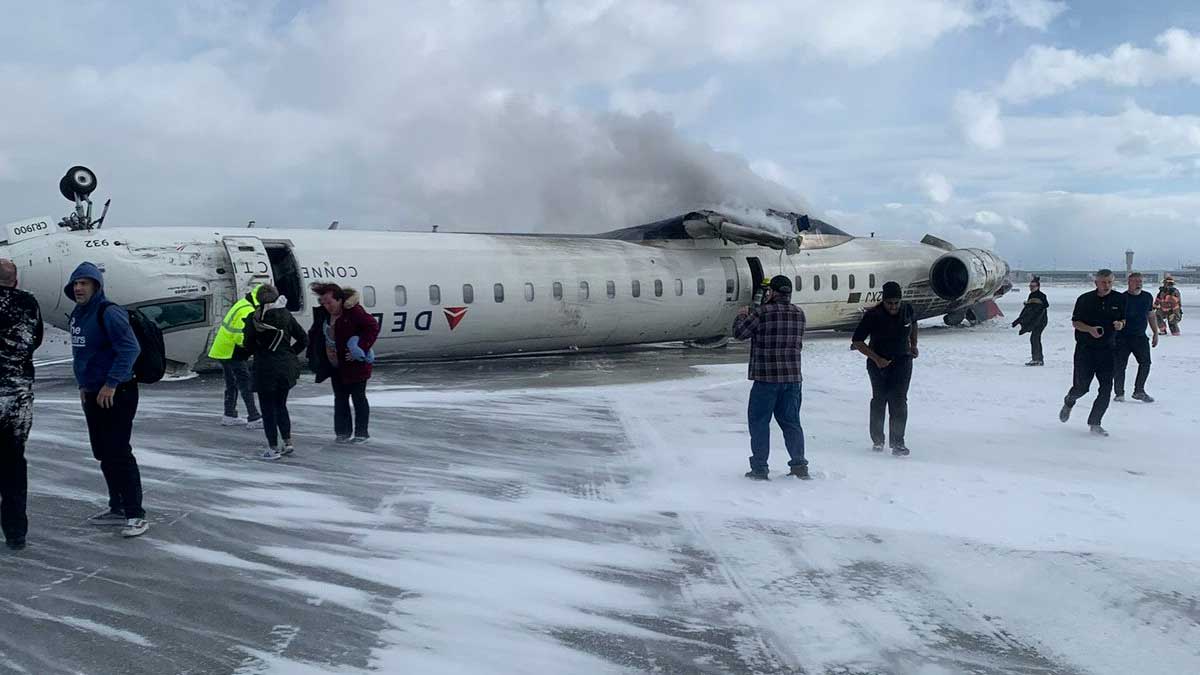
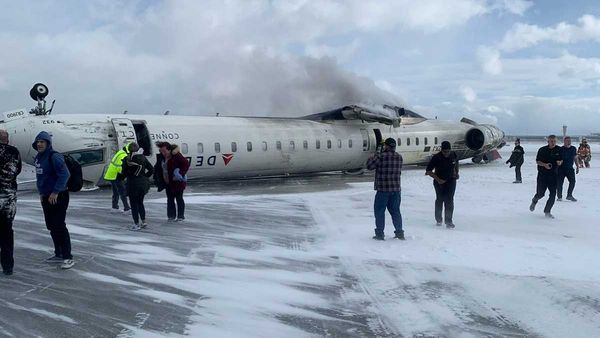
Consider the crash-landing of Delta Connection Flight 4819 in Toronto earlier this year. The hull was destroyed, a scene that a decade ago would have almost certainly resulted in a "black box" investigation for a mass-casualty event. Instead, the cabin stayed intact long enough for the crew to execute a textbook evacuation. The result? A surge in the "injury" column, but a victory in the "survivable" column. This is the fruit of decades of research into fire-retardant materials and seat-track integrity.

However, 2025 also exposed the fraying edges of our air traffic infrastructure. The Potomac River mid-air collision in January, involving a commercial CRJ700 and a military Black Hawk, was a reminder that all the safety engineering in the world can't save a plane from a collision it never saw coming.
With 67 lives lost in that single evening, it became the grim anchor of the 2025 death toll. The investigation pointed to a variety of ATC staffing shortages and communication dead zones in busy corridors.
It is an opinion widely shared in the industry that we are over-relying on pilots to "see and avoid" because our ground-based systems are reaching their breaking point.
June 2025 brought another sobering milestone: the first fatal total loss of a Boeing 787 Dreamliner. Air India Flight 171’s tragic crash in Ahmedabad ended the aircraft's decade-long streak of perfect safety. While investigators are still parsing the data, the event sent a shockwave through an industry that had perhaps become too comfortable with the idea of "ultra-safe" modern jets.

The 1,517 incidents of 2025 tell us that we are still tempting fate too often. We have successfully mitigated the outcomes of accidents (better fire suppression, training, software, etc), but we have not yet mastered the prevention of the human errors that lead to them.
The drop in fatalities is a credit to the engineers at these aircraft manufacturers, but the persistence of mid-air close calls and runway incursions is a failure of the regulatory bodies that manage our controllers.
As we enter 2026, we can't expect the machines to do all the work. We must address the ATC fatigue, the pilot training gaps, and the aging radar systems that allowed 555 people to never make it home this year. We are getting better at surviving crashes; now we just need to work harder to prevent them from happening in the first place.
FAA Deploys AI System to Cut Flight Delays at Washington-Area Airports » What Are Strakes? The Aerodynamic Fins Attached on an Aircraft's Fuselage » Cabin Fumes Send Delta Passengers To Hospital, Force Flight To Divert To Honolulu »

Comments (1)
 Radu
I'm afraid this article over simplifies many things, is inconsistent in highlighting "successes", missing out on many other factors, and puts too much emphasis on oversight, while missing out completely on the elephant in the room: the incessant chasing of profit, at the expense of essential investment, such as more modern equipment, training, staff.
Also, it omits altogether to mention safety management, or the massive efforts all operators put into learning and preventing. Let's not forget the dedication and efforts of all professionals, sometimes against the most unfavourable odds, and always under the pressure of that additional cent that must be saved, whether for profit, environment or publicity.
Radu
I'm afraid this article over simplifies many things, is inconsistent in highlighting "successes", missing out on many other factors, and puts too much emphasis on oversight, while missing out completely on the elephant in the room: the incessant chasing of profit, at the expense of essential investment, such as more modern equipment, training, staff.
Also, it omits altogether to mention safety management, or the massive efforts all operators put into learning and preventing. Let's not forget the dedication and efforts of all professionals, sometimes against the most unfavourable odds, and always under the pressure of that additional cent that must be saved, whether for profit, environment or publicity.
Add Your Comment
TAGS
STORIES Opinion Analysis Data NTSB Crashes ReportRECENTLY PUBLISHED
 UAE Suspends Iranian Airline Flights to Comply With US Sanctions, Triggering Retaliatory Airspace Ban From Tehran
The UAE has halted all Iranian carrier operations to comply with reimposed US sanctions, prompting Iran to bar Emirati airlines from its airspace.
NEWS
READ MORE »
UAE Suspends Iranian Airline Flights to Comply With US Sanctions, Triggering Retaliatory Airspace Ban From Tehran
The UAE has halted all Iranian carrier operations to comply with reimposed US sanctions, prompting Iran to bar Emirati airlines from its airspace.
NEWS
READ MORE »
 What Are Strakes? The Aerodynamic Fins Attached on an Aircraft's Fuselage
A look at how aircraft strakes quietly shape airflow, improve stability, and enhance aerodynamic performance.
INFORMATIONAL
READ MORE »
What Are Strakes? The Aerodynamic Fins Attached on an Aircraft's Fuselage
A look at how aircraft strakes quietly shape airflow, improve stability, and enhance aerodynamic performance.
INFORMATIONAL
READ MORE »
 BETA Technologies Begins Electric Aircraft Operations in North Carolina to Support Rural Healthcare Access
BETA Technologies launches its ALIA CTOL electric aircraft in North Carolina under a FAA program aimed at improving rural healthcare logistics.
NEWS
READ MORE »
BETA Technologies Begins Electric Aircraft Operations in North Carolina to Support Rural Healthcare Access
BETA Technologies launches its ALIA CTOL electric aircraft in North Carolina under a FAA program aimed at improving rural healthcare logistics.
NEWS
READ MORE »
More than just headlines.
Get unlimited ad-free access to in-depth aviation news, premium stories, and exclusive insights other sites don't cover.
- Ad-free browsing on AeroXplorer
- Unlimited access to premium and exclusive articles
- Higher photo upload limits & commissions on sales
- Free access to Jetstream Magazine on higher tiers
- Ad-free browsing
- Sell aviation photos with 60% commission
- First week free!
- Everything in Basic+
- Unlimited premium articles
- Sell aviation photos with 70% commission
- Free Digital subscription to Jetstream Magazine
- First week free!
- Everything in Basic+ and Pro
- Sell aviaiton photos with 80% commission
- Early access to exclusive stories
- Free Digital+Print subscription to Jetstream Magazine