
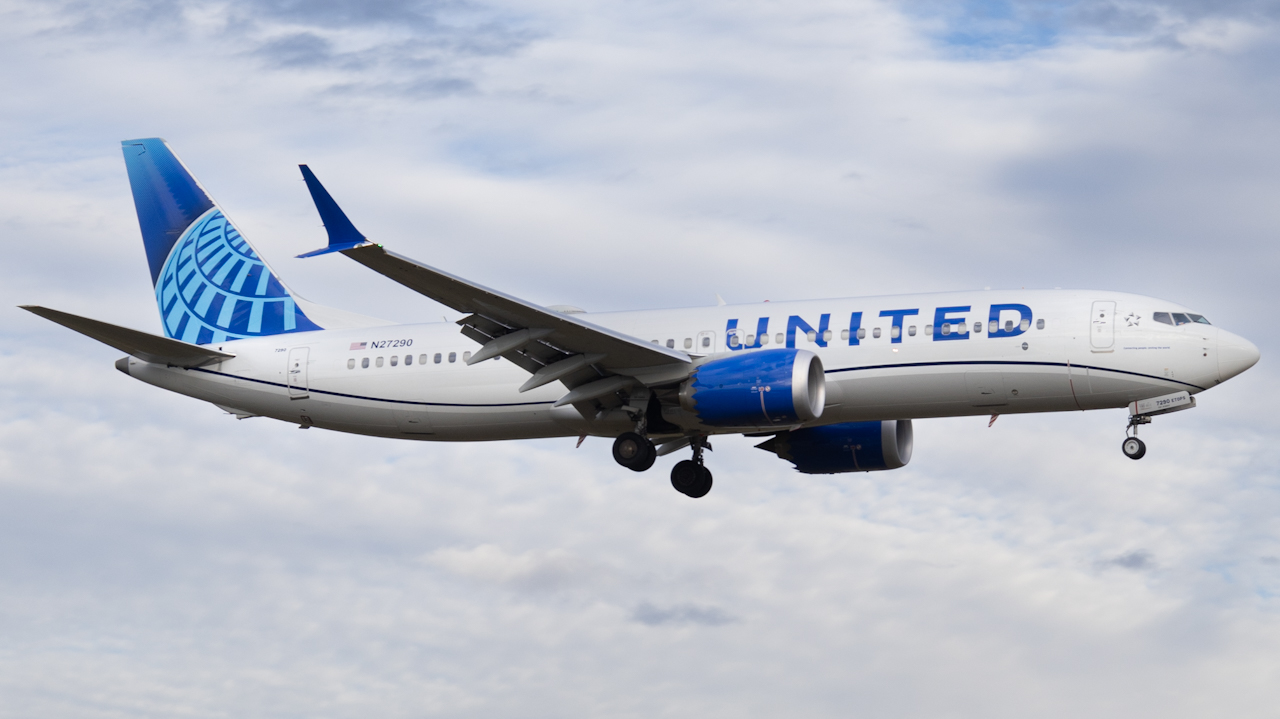

HOUSTON — Freshly released investigative documents from the National Transportation Safety Board (NTSB) have shed new light on the March 8, 2024, runway excursion involving a United Airlines Boeing 737 MAX 8. The report highlights a critical sequence of events in which Air Traffic Control (ATC) instructions, the pilot's perception of runway conditions, and a high-speed exit manoeuvre converged to send the aircraft into the grass at George Bush Intercontinental Airport (IAH).
The "Keep Your Speed Up" Directive
According to the NTSB’s operational factors report, United Flight 2477, arriving from Memphis with 160 passengers and six crew members, was advised by Houston Tower to expedite its movement after landing.
Following a request from the flight crew to roll to the end of Runway 27 to shorten their taxi time to the gate, the controller approved the request but added a specific instruction: “Keep your speed up.”
Investigators noted that this directive likely reinforced a "sense of urgency" within the cockpit. At the time, the airport was managing a tight arrival sequence, with an Embraer ERJ-145 having just landed ahead of the United jet and another Boeing 737 on short final behind it.

Perception vs. Reality
A significant portion of the report focuses on the discrepancy between the captain’s perception of the runway and the actual environmental data:
Braking Action Reports: The Automated Terminal Information Service (ATIS) was broadcasting runway condition codes of 3/3/3, signifying the runway was "slippery when wet" with noticeably reduced braking deceleration.
The Captain's View: Despite the FO’s observation that the runway appeared wet, the captain (the pilot flying) recalled the runway appearing dry.
Autobrake Selection: Relying on his visual assessment and a desire for "passenger comfort," the captain selected Autobrake 1, the lowest possible setting, and eventually disabled the system entirely just five seconds after touchdown to perform manual braking.
The captain later told investigators he had performed similar "roll-to-the-end" manoeuvres hundreds of times and believed that minimal braking was appropriate for the conditions he perceived.

The Physics of the Excursion
The NTSB’s analysis of the Digital Flight Data Recorder (DFDR) and ADS-B data paints a clear picture of the aircraft's final moments on the pavement:
| Metric | Recorded Data |
|---|---|
| Touchdown Speed | ~158 knots |
| Speed with 1,000 ft of runway left | 72 knots |
| Speed at Taxiway SC Turn Initiation | 37 knots |
| Speed when exiting paved surface | 22 knots |
As the aircraft reached the end of the runway, the captain realised the aircraft was not decelerating as expected. Faced with the choice of continuing straight into the grass or attempting the turn onto Taxiway SC, he opted for the turn.
At 37 knots on a slippery surface, the aircraft lacked the necessary traction. The 737 MAX 8 skidded, and the left main landing gear (MLG) departed the pavement, striking a concrete electrical junction box. The impact caused the gear to separate at its fuse pins a design feature intended to protect the wing's fuel tanks causing the aircraft to tilt and come to rest on its left engine nacelle and winglet.
NTSB Finding: “The captain felt the fuselage and rudder/ brake pedals begin to shake violently during the turn. He briefly released brake pressure, then reapplied it aggressively, but the aircraft continued to slide off the runway.”

How AI Quietly Became the Backbone of Today’s Aviation Industry
Safety Implications and Procedures
While no injuries were reported, the incident has prompted a review of United Airlines' landing performance procedures. At the time of the incident, United’s policy suggested using more conservative autobrake settings (such as "MAX") when runway conditions are uncertain or reported as slippery.
The NTSB noted that the captain had completed landing performance training just one month prior to the accident, yet did not conduct a formal "threat briefing" regarding the runway change and the potential for reduced braking action.
Current Status
The aircraft, N27290, sustained substantial damage to the left wing and aft fuselage. The NTSB investigation is now moving toward a final determination of probable cause, focusing on the human factors of "expedite" instructions from ATC and the management of aircraft energy on contaminated surfaces.
American Airlines Swaps Landline Buses for CRJ-700 Flights on 84-Mile South Bend to Chicago Route » Southwest Airlines Considers Boeing 787 Order for Long-Haul International Expansion » Riyadh Airport Closed After Reported Ballistic Missile Strike on Saudia Airbus Jet »

Comments (4)
 Ehud Gavron
Riderz wrote:
>> It would have been if you had provided a link to the NTSB report.
Rave Bannon wrote:
> Goigle is your friend, friend.
The NTSB link should have been provided. If you can't cite your sources your website will die.
Riderz was right in saying so nicely. He/she made no demands.
Rave Bannon missed the boat here. Also he tried twice to spell "google" and missed both times.
The real Race Bannon would be unimpressed. Stupid is easy.
riderz
It would have been if you had provided a link to the NTSB report.
Rave Bannon
Goigle is your friend, friend.
Rave Bannon
Goigle is your friend, friend.
Ehud Gavron
Riderz wrote:
>> It would have been if you had provided a link to the NTSB report.
Rave Bannon wrote:
> Goigle is your friend, friend.
The NTSB link should have been provided. If you can't cite your sources your website will die.
Riderz was right in saying so nicely. He/she made no demands.
Rave Bannon missed the boat here. Also he tried twice to spell "google" and missed both times.
The real Race Bannon would be unimpressed. Stupid is easy.
riderz
It would have been if you had provided a link to the NTSB report.
Rave Bannon
Goigle is your friend, friend.
Rave Bannon
Goigle is your friend, friend.
Add Your Comment
TAGS
NEWS United Airlines Boeing 737 Max 8 NTSB Aviation Safety Human Factors ATCRECENTLY PUBLISHED
 This Week in Aviation: The 10 Stories That Mattered Most
From major airline developments to aircraft updates and industry shifts, this weekly recap highlights the ten most-read aviation stories from the week of October 04.
INFORMATIONAL
READ MORE »
This Week in Aviation: The 10 Stories That Mattered Most
From major airline developments to aircraft updates and industry shifts, this weekly recap highlights the ten most-read aviation stories from the week of October 04.
INFORMATIONAL
READ MORE »
 4th vs 5th Generation Fighter Jets: How Fighter Jets Have Evolved
A look at what separates fourth- and fifth-generation fighter jets, from stealth and sensor fusion to combat capability and cost.
INFORMATIONAL
READ MORE »
4th vs 5th Generation Fighter Jets: How Fighter Jets Have Evolved
A look at what separates fourth- and fifth-generation fighter jets, from stealth and sensor fusion to combat capability and cost.
INFORMATIONAL
READ MORE »
 United 777 Diverts to Dublin After Cockpit Windscreen Cracks Over the Atlantic
A United Airlines Boeing 777 bound for Milan made a steep descent and diverted to Dublin after its cockpit windscreen cracked mid-flight.
NEWS
READ MORE »
United 777 Diverts to Dublin After Cockpit Windscreen Cracks Over the Atlantic
A United Airlines Boeing 777 bound for Milan made a steep descent and diverted to Dublin after its cockpit windscreen cracked mid-flight.
NEWS
READ MORE »
More than just headlines.
Get unlimited ad-free access to in-depth aviation news, premium stories, and exclusive insights other sites don't cover.
- Ad-free browsing on AeroXplorer
- Unlimited access to premium and exclusive articles
- Higher photo upload limits & commissions on sales
- Free access to Jetstream Magazine on higher tiers
- Ad-free browsing
- Sell aviation photos with 60% commission
- First week free!
- Everything in Basic+
- Unlimited premium articles
- Sell aviation photos with 70% commission
- Free Digital subscription to Jetstream Magazine
- First week free!
- Everything in Basic+ and Pro
- Sell aviaiton photos with 80% commission
- Early access to exclusive stories
- Free Digital+Print subscription to Jetstream Magazine