A group of federal lawmakers has called on the Federal Aviation Administration to halt the deployment of an artificial intelligence tool used to manage air traffic at Washington, DC-area airports, warning that the technology could pose serious safety risks in one of the nation's most congested airspaces.
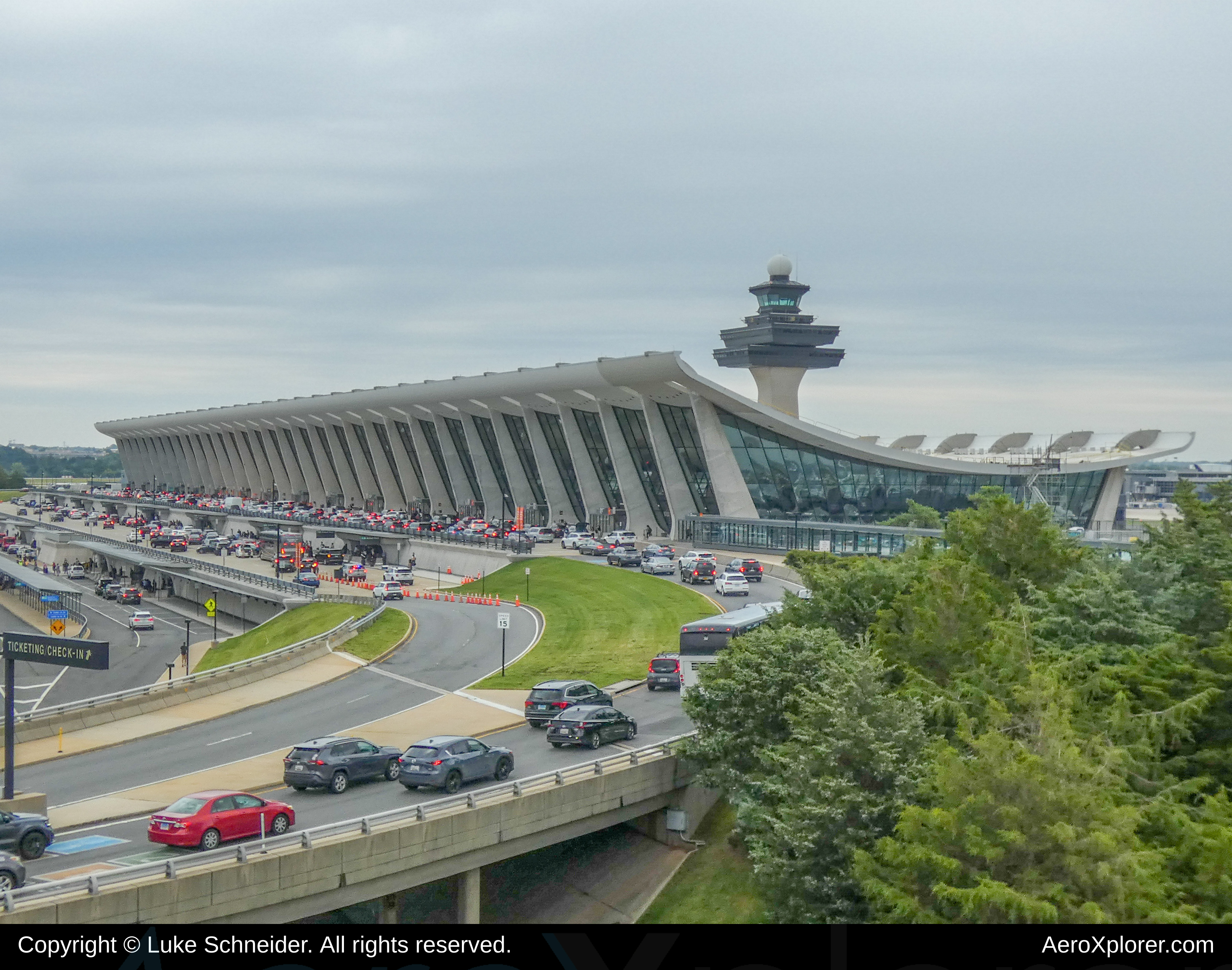
The request, delivered through a formal letter to FAA leadership, centers on a system known as Smart Airport Traffic Control, or Smart ATC. Lawmakers argue that the tool has not undergone sufficient vetting before being introduced into live operations at Ronald Reagan Washington National Airport (DCA) and Washington Dulles International Airport (IAD).
The Core of the Dispute
The lawmakers raised concerns that the AI tool was fielded without adequate testing, training, or input from the controllers tasked with using it on a daily basis. The system is designed to assist controllers by predicting aircraft movements and recommending sequencing decisions. However, the lawmakers contend that introducing an unproven algorithmic tool into the Washington metropolitan airspace, which handles a dense mix of commercial, general aviation, and restricted military traffic, could jeopardize the safety of passengers and crew.
In their letter, the lawmakers described the stakes in stark terms, calling air traffic control decisions in the region a matter of "life or death." They requested that the FAA suspend use of Smart ATC until a thorough review can confirm that the system meets rigorous safety standards.
Union Backing the Call for a Pause
The National Air Traffic Controllers Association (NATCA) has aligned with the lawmakers' position. The union representing air traffic controllers has reportedly expressed reservations about the rollout of the AI tool, citing a lack of controller involvement in its development and deployment.
According to the lawmakers, controllers who would be expected to rely on the system were not consulted in a meaningful way before it was activated. The letter asserts that frontline personnel should have had a central role in evaluating whether the tool is ready for operational use in such a sensitive environment.
The concerns come at a particularly sensitive moment for air traffic control in the Washington region. In January, a midair collision between a US Army Black Hawk helicopter and a regional jet near Reagan National Airport resulted in the deaths of all 67 people aboard both aircraft. That accident has intensified scrutiny of operational procedures and technology decisions affecting the DC-area airspace.
The Shape of Disaster: The Plane That Kept Falling Apart Mid-Air
How Smart ATC Is Supposed to Work
Smart ATC uses machine learning to analyze flight data and offer controllers predictive guidance on aircraft sequencing and airspace management. Proponents of such tools argue they can reduce controller workload and improve efficiency in handling complex traffic flows.
The FAA has promoted the integration of advanced technology as part of broader modernization efforts, including the long-running NextGen program. Supporters within the agency view AI-assisted decision tools as a way to address persistent staffing shortages and growing demand on the national airspace system.
Critics, however, question whether the current generation of AI tools is ready for deployment in environments where errors can have catastrophic consequences. The lawmakers' letter frames Smart ATC as an example of technology being pushed into service before its reliability has been fully demonstrated.
Transparency and Oversight Questions
Beyond the immediate safety concerns, the lawmakers raised broader questions about the FAA's decision-making process. They asked the agency to provide documentation showing how Smart ATC was evaluated, what testing protocols were followed, and how controller feedback was incorporated.
The letter also pressed the FAA to clarify who within the agency authorized the tool's use at DCA and IAD, and whether similar deployments are planned at other major airports around the country. If the system is being considered for wider rollout, lawmakers want assurance that each deployment will be subject to independent safety review.
You can expect the agency's response to influence not only operations at the Washington-area airports but also the broader national conversation about how AI should be introduced into safety-critical aviation functions.
Industry and Public Reaction
The call for a pause has drawn attention from aviation safety advocates, pilot groups, and passengers who travel through the capital region's airports. Reagan National alone handles tens of thousands of flights each year, and the surrounding airspace is among the most restricted and complex in the country due to its proximity to government facilities and military installations.
Industry observers note that the FAA faces a difficult balancing act. Modernization is viewed as essential to keeping pace with rising traffic and reducing delays, but the agency must demonstrate that new tools will not compromise safety margins that have been built up over decades.
The lawmakers' intervention places additional pressure on the FAA to show its work publicly. Should the agency decline to pause Smart ATC, it will likely need to produce detailed evidence that the system has been validated under realistic operating conditions.
What Comes Next
The FAA has not yet publicly committed to suspending the program. Agency officials are expected to respond to the lawmakers' letter in the coming weeks, and any decision to pause or continue the deployment will be closely watched by controllers, airlines, and the traveling public.
For now, the debate over Smart ATC underscores a broader tension in modern aviation. Automation and artificial intelligence hold promise for improving operations, but when the margin for error is zero, the burden of proof rests firmly on those introducing new technology into the cockpit, the tower, and everywhere in between.
NetJets Expands US Footprint With Three New Private Terminals and Larger Palm Beach Facility » Heathrow Cites Airline Demand for Slots as Third Runway Review Continues » KLM Brings Starlink Internet to Long-Haul Flights »

Comments (0)
Add Your Comment
TAGS
NEWS FAA Air Traffic Control Artificial Intelligence Washington DC Airports Congressional Oversight Aviation Safety ATC Technology Aviation Policy DCARECENTLY PUBLISHED
 Lufthansa Wins Bid for 44.9% Stake in TAP Air Portugal, Edging Out Air France-KLM
Portugal selects Lufthansa as preferred buyer for a 44.9% stake in TAP Air Portugal, beating competing offers from Air France-KLM and IAG.
NEWS
READ MORE »
Lufthansa Wins Bid for 44.9% Stake in TAP Air Portugal, Edging Out Air France-KLM
Portugal selects Lufthansa as preferred buyer for a 44.9% stake in TAP Air Portugal, beating competing offers from Air France-KLM and IAG.
NEWS
READ MORE »
 Why Engine Lease Rates Are Still Climbing as Values Level Off
Spirit Airlines’ shutdown released dozens of A320-family aircraft and spare engines into the market, but engine lease rates remain high despite stabilizing values. Explore how engine availability, MRO capacity and aircraft storage are shaping the narrowbody engine leasing market.
INFORMATIONAL
READ MORE »
Why Engine Lease Rates Are Still Climbing as Values Level Off
Spirit Airlines’ shutdown released dozens of A320-family aircraft and spare engines into the market, but engine lease rates remain high despite stabilizing values. Explore how engine availability, MRO capacity and aircraft storage are shaping the narrowbody engine leasing market.
INFORMATIONAL
READ MORE »
 How the AI Chip Boom Is Squeezing Transpacific Air Cargo
AI-driven semiconductor demand and Middle East disruptions have pushed transpacific air cargo rates higher, with Taiwan-US rates reaching $7.02/kg in May 2026. Explore why shippers are paying premium prices, shifting to shorter contracts, and whether the market will cool as AI demand evolves.
INFORMATIONAL
READ MORE »
How the AI Chip Boom Is Squeezing Transpacific Air Cargo
AI-driven semiconductor demand and Middle East disruptions have pushed transpacific air cargo rates higher, with Taiwan-US rates reaching $7.02/kg in May 2026. Explore why shippers are paying premium prices, shifting to shorter contracts, and whether the market will cool as AI demand evolves.
INFORMATIONAL
READ MORE »
More than just headlines.
Get unlimited ad-free access to in-depth aviation news, premium stories, and exclusive insights other sites don't cover.
- Ad-free browsing on AeroXplorer
- Unlimited access to premium and exclusive articles
- Higher photo upload limits & commissions on sales
- Free access to Jetstream Magazine on higher tiers
- Ad-free browsing
- Sell aviation photos with 60% commission
- First week free!
- Everything in Basic+
- Unlimited premium articles
- Sell aviation photos with 70% commission
- Free Digital subscription to Jetstream Magazine
- First week free!
- Everything in Basic+ and Pro
- Sell aviaiton photos with 80% commission
- Early access to exclusive stories
- Free Digital+Print subscription to Jetstream Magazine