
US semi-private carrier JSX is preparing to expand its route map by introducing ATR turboprop aircraft, marking a significant shift in the airline's fleet strategy. The Dallas-based operator, which currently operates a fleet of Embraer regional jets, sees the French-Italian manufacturer's aircraft as a practical tool for serving smaller markets and reducing per-seat operating costs.
According to a report by ch-aviation, JSX intends to operate both the ATR 42-600 and the larger ATR 72-600. The carrier views the turboprops as complementary to its existing regional jet operations rather than a replacement for them. The move reflects a broader effort by the airline to identify aircraft that match the economics of the thinner routes it hopes to serve.
A different kind of airline
JSX operates under a public charter model, which allows passengers to bypass conventional airport terminals and Transportation Security Administration checkpoints. Travelers instead use private terminals known as fixed base operators, where boarding times can be as short as 20 minutes before departure. The airline has built its reputation on this streamlined experience while charging fares that sit closer to premium commercial tickets than to traditional private jet pricing.
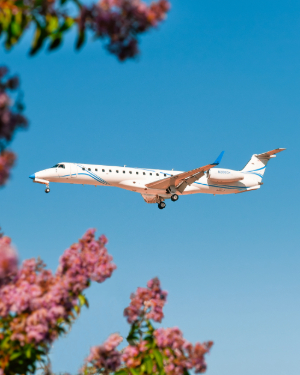
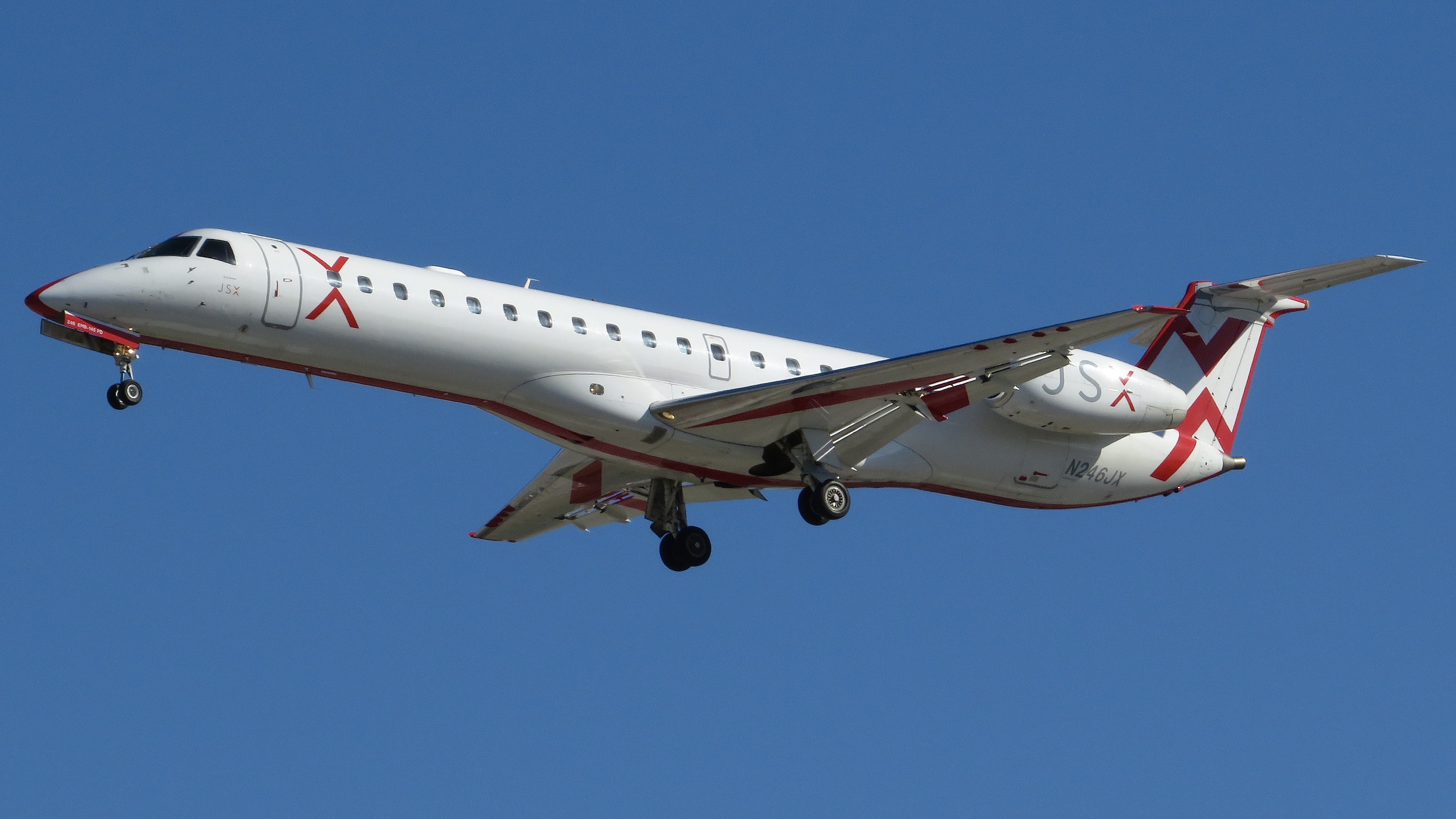
The carrier currently flies Embraer ERJ-135 and ERJ-145 aircraft configured with 30 seats, a capacity that keeps it within the regulatory limits governing public charter operations in the United States. Its network spans destinations across the western and southern United States, along with select routes to Mexico.

Photo: AeroXplorer/ Brandon McLeish

The Cockpit’s Next Revolution: When the Co-Pilot Is a Computer
Why turboprops make sense
Turboprop aircraft such as the ATR family burn less fuel than regional jets on short sectors, which makes them well suited to routes of roughly 300 nautical miles or less. For an operator like JSX, which targets business travelers and leisure passengers willing to pay for convenience, the ability to serve smaller communities profitably is a meaningful advantage.
The ATR 42-600 typically seats around 48 passengers in a standard configuration, while the ATR 72-600 can accommodate up to 78 passengers. JSX, however, would need to configure any ATR aircraft it operates in line with the seating restrictions applicable to its public charter certification. That likely means a lower-density cabin layout with additional legroom and amenities consistent with the carrier's positioning.
ATR, the joint venture between Airbus and Leonardo, has marketed the ATR 72-600 in particular as one of the most fuel-efficient regional aircraft in production. The manufacturer claims the type burns roughly 40 percent less fuel than a similarly sized regional jet on comparable missions. Those economics matter for an operator looking to serve markets where passenger volumes cannot support the higher trip costs of a jet.
Regulatory headwinds
JSX has spent much of the past two years defending its operating model against pressure from major US airlines and pilot unions, which have argued that the carrier exploits a loophole in Federal Aviation Administration rules. Critics contend that public charter operators like JSX operate what amount to scheduled services while avoiding the more stringent Part 121 rules that apply to airlines such as American, Delta, and United.
The FAA opened a rulemaking process in 2023 to review the regulatory framework governing public charters. That review remains ongoing, and its outcome could influence how JSX and similar operators structure their fleets and networks. The airline has consistently maintained that its operations comply fully with existing regulations and that it fills a market gap left by mainline carriers retreating from smaller cities.
Adding a new aircraft type introduces additional complexity for any airline, including crew training, maintenance infrastructure, and spare parts logistics. For JSX, which currently operates a single family of Embraer regional jets, the ATR would represent its first turboprop and its first Franco-Italian aircraft. The transition would require investment in new pilot type ratings and mechanic certifications.

Photo: AeroXplorer/ Lucas Wu
Market context
The US regional aviation sector has contracted meaningfully over the past decade. Many small and midsize communities have lost commercial air service entirely as major carriers and their regional affiliates concentrate on higher-volume markets. Pilot shortages, rising labor costs, and the retirement of 50-seat regional jets have all accelerated the trend.
That contraction has created an opening for operators willing to experiment with different business models. JSX has grown steadily by targeting travelers frustrated with the friction of mainline airports while offering fares that, although premium, remain reachable for many business flyers. The addition of turboprops would allow the carrier to extend that value proposition to routes that cannot economically support jet service.
Other operators have taken similar approaches. Cape Air, based in Massachusetts, has long used small piston and turboprop aircraft to serve routes that larger carriers abandoned. Silver Airways operates ATR aircraft on routes across Florida, the Bahamas, and the Caribbean. JSX's entry into the turboprop segment would place it in different competitive territory than its current jet-focused operations.
What comes next
JSX has not yet disclosed a firm order for ATR aircraft, nor has it announced specific routes that the turboprops would serve. The airline's leadership has indicated interest in expanding into markets across the Midwest, Pacific Northwest, and parts of Canada, though specific plans remain under development.
For travelers, the potential arrival of ATR turboprops in the JSX fleet could mean expanded options for reaching smaller destinations without the hassles of traditional airline travel. For the broader industry, it signals that public charter operators continue to view growth opportunities in segments that mainline carriers have largely abandoned.
Why Ice Is So Dangerous for Aircraft, and How Anti-Icing Systems Stop It » Breeze Airways Presses FAA to Block Legacy Carriers From Acquiring Spirit's Vacated Slots » Super Puma Firefighting Helicopter Crashes at Yosemite, Killing Both Pilots »

Comments (0)
Add Your Comment
TAGS
NEWS JSX ATR Turboprop Fleet Expansion Network Expansion Regional Aviation Route Growth Airline Operations Service Expansion Aircraft Delivery Regional Routes Flights TravelRECENTLY PUBLISHED
 Turkish Airlines Confirms Order for 100 Boeing 737 MAX Jets
Turkish Airlines has finalized a major deal with Boeing for 100 737 MAX aircraft, cementing its narrowbody fleet plans through the next decade.
NEWS
READ MORE »
Turkish Airlines Confirms Order for 100 Boeing 737 MAX Jets
Turkish Airlines has finalized a major deal with Boeing for 100 737 MAX aircraft, cementing its narrowbody fleet plans through the next decade.
NEWS
READ MORE »
 United Airlines Takes Delivery of First Aircraft Powered by Pratt & Whitney's GTF Advantage Engine
United Airlines becomes the launch operator of Pratt & Whitney's upgraded GTF Advantage engine, receiving its first Airbus A321neo with the new powerplant.
NEWS
READ MORE »
United Airlines Takes Delivery of First Aircraft Powered by Pratt & Whitney's GTF Advantage Engine
United Airlines becomes the launch operator of Pratt & Whitney's upgraded GTF Advantage engine, receiving its first Airbus A321neo with the new powerplant.
NEWS
READ MORE »
 Qantas Sets 2028 Launch for First Nonstop Sydney to New York Flights
Qantas will begin nonstop Sydney to New York service in mid-2028 using the Airbus A350-1000ULR, marking the second Project Sunrise route.
ROUTES
READ MORE »
Qantas Sets 2028 Launch for First Nonstop Sydney to New York Flights
Qantas will begin nonstop Sydney to New York service in mid-2028 using the Airbus A350-1000ULR, marking the second Project Sunrise route.
ROUTES
READ MORE »
More than just headlines.
Get unlimited ad-free access to in-depth aviation news, premium stories, and exclusive insights other sites don't cover.
- Ad-free browsing on AeroXplorer
- Unlimited access to premium and exclusive articles
- Higher photo upload limits & commissions on sales
- Free access to Jetstream Magazine on higher tiers
- Ad-free browsing
- Sell aviation photos with 60% commission
- First week free!
- Everything in Basic+
- Unlimited premium articles
- Sell aviation photos with 70% commission
- Free Digital subscription to Jetstream Magazine
- First week free!
- Everything in Basic+ and Pro
- Sell aviaiton photos with 80% commission
- Early access to exclusive stories
- Free Digital+Print subscription to Jetstream Magazine