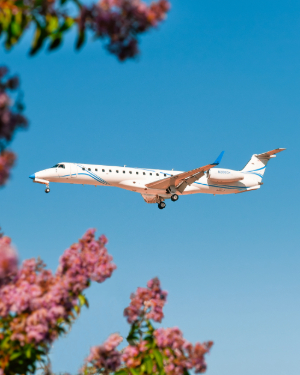

Looking closely at any airliner parked at the gate and two things stand out about its wings. They angle backward from the fuselage, and they tilt slightly upward toward the tips. Neither shape is decorative. Both solve real problems that engineers ran into once jets started flying faster and airliners started carrying passengers who expect a smooth ride, and the two angles have almost nothing to do with each other despite sitting on the same wing.

Why Wings Sweep Backward
Sweep exists because of what happens to air as an aircraft nears the speed of sound. Air flowing over a wing speeds up as it curves around the upper surface, which means parts of that airflow can reach supersonic speeds even while the aircraft itself is still flying below Mach 1. Once that happens, shockwaves start forming on the wing, and drag increases sharply. Angling the wing backward changes the airflow the wing actually experiences, delaying that shockwave formation and letting the aircraft cruise closer to the speed of sound without paying the drag penalty that a straight wing would.
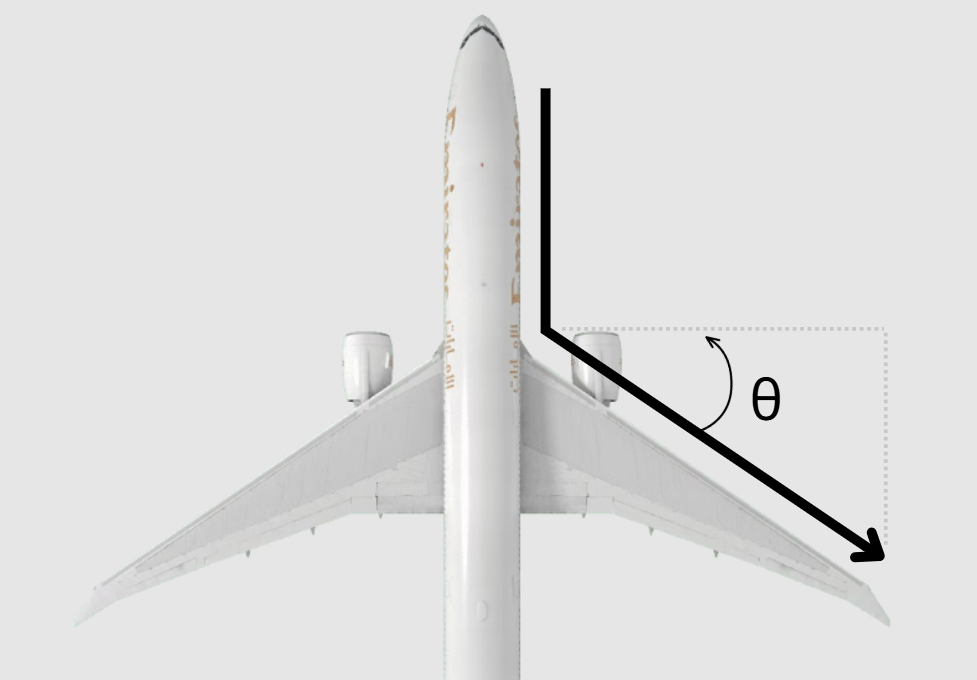
That is why sweep shows up on aircraft built for genuinely high subsonic cruise speeds, from airliners like the 747 and A380 down to fighter jets designed for speed and maneuverability. The more sweep a wing has, the higher the speed it is generally built to handle, which is also why the sharply angled delta wing on Concorde existed, and why a handful of jets like the F-14 could physically adjust their sweep angle mid-flight to trade speed for low-speed handling.
A Structural Side Effect Nobody Asked For
Sweep also changes how a wing behaves under load, and largely for the better. Wings flex upward in flight no matter how they're built, and a backward-swept wing responds to that flex by reducing its own angle of attack at the tip as it bends, which limits how much extra lift that bending produces. Forward-swept wings do the opposite: bending increases the tip's angle of attack, generating more lift, more bending, and more lift again in a runaway cycle that has to be engineered around with much heavier structure. That single difference is a big part of why almost every fast aircraft in the sky sweeps its wings backward rather than forward.
Why Wings Angle Upward
Dihedral, the upward tilt from root to tip, solves a completely different problem: keeping the aircraft level without constant pilot input. A straight, flat wing has no built-in tendency to correct itself if it rolls slightly off level, so once turbulence or a small control bump tips it to one side, it just stays tipped until someone corrects it. That is tolerable in a fighter jet built for aggressive maneuvering, but it is the last thing you want in an airliner.
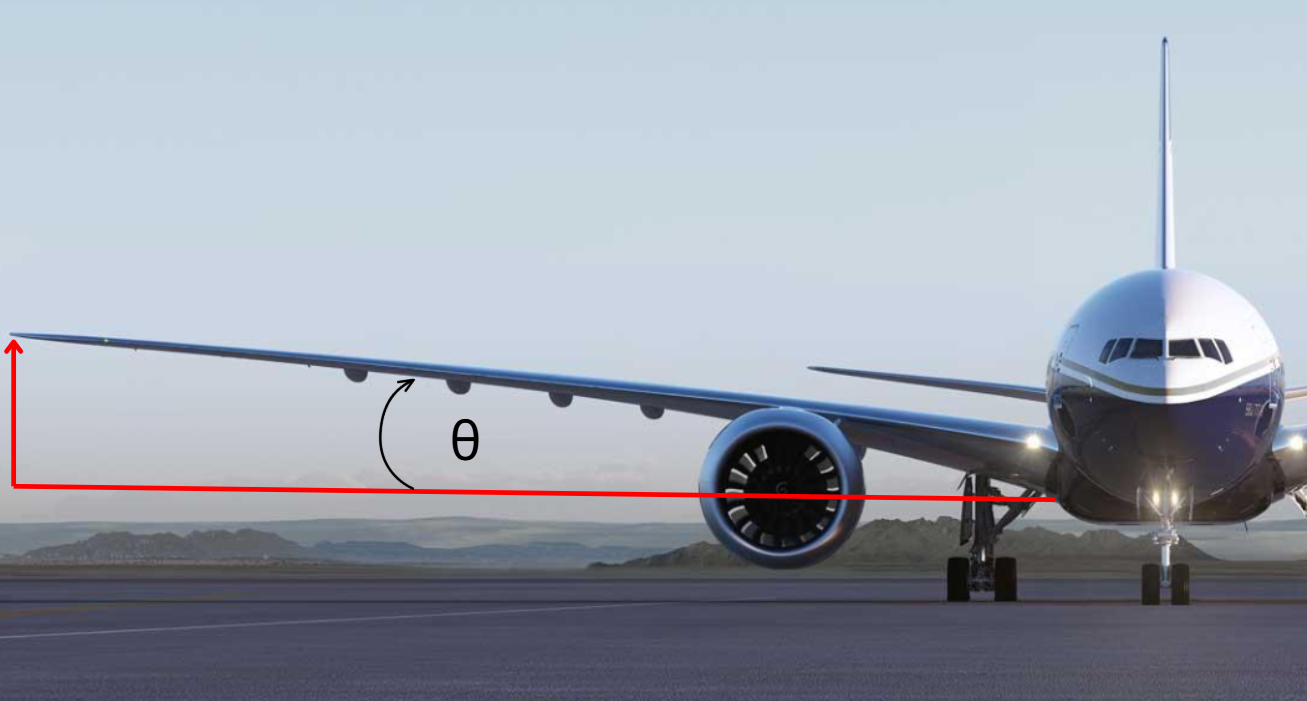
Dihedral fixes this through simple geometry. When the aircraft rolls slightly, it starts to sideslip in that direction, and because the wings are angled upward, the lower wing meets that sideways airflow at a slightly higher angle of attack than the upper one. That produces a bit more lift on the low wing, which nudges the aircraft back toward level flight with no pilot input required.
The Trade-off Behind the Stability
Dihedral is not free. Because the wings are angled rather than flat, some of the lift they generate points sideways instead of straight up, which slightly reduces efficiency. The same self-leveling tendency that keeps an airliner steady in turbulence also resists a pilot trying to roll it into a turn, which is why aircraft built for aggressive maneuvering often use little dihedral or even the opposite, anhedral, angling the wings slightly downward for a faster, more responsive roll.

Only Way Out: Private Aviation in a Region at War
Two Angles, One Shared Goal
Sweep and dihedral are solving entirely separate problems, one aerodynamic and about speed, the other about stability, yet they end up giving airliners the same general silhouette worldwide: wings angled back, tilted gently up, built to cruise fast and fly steady without a pilot fighting the controls the entire way across the ocean
FAA Nears Final Approval of Boeing 737 MAX 10 as Certification Review Concludes » Why the A-10 Warthog's Nose Gear Is Offset to the Right » Who Is Accountable When an AI Air Traffic Tool Gets It Wrong? »
Comments (0)
Add Your Comment
TAGS
INFORMATIONAL Boeing Airbus wings aerodynamics dihedral wing sweptback wing airfoilRECENTLY PUBLISHED
 British Airways Finishes Starlink Wi-Fi Rollout Across Its A350 Fleet
British Airways has installed SpaceX's Starlink Wi-Fi on every Airbus A350 in its fleet, offering passengers free high-speed internet on long-haul flights.
NEWS
READ MORE »
British Airways Finishes Starlink Wi-Fi Rollout Across Its A350 Fleet
British Airways has installed SpaceX's Starlink Wi-Fi on every Airbus A350 in its fleet, offering passengers free high-speed internet on long-haul flights.
NEWS
READ MORE »
 How Delivery Delays Are Reshaping Aviation Sourcing
When Boeing and Airbus can't deliver new aircraft fast enough, someone has to keep the old ones flying. That reality, playing out across airline fleets and MRO shops worldwide, is fueling what industry insiders are now calling a defining moment for the aviation aftermarket.
STORIES
READ MORE »
How Delivery Delays Are Reshaping Aviation Sourcing
When Boeing and Airbus can't deliver new aircraft fast enough, someone has to keep the old ones flying. That reality, playing out across airline fleets and MRO shops worldwide, is fueling what industry insiders are now calling a defining moment for the aviation aftermarket.
STORIES
READ MORE »
 Phillips 66 Aviation Donates $23,928 to CAN in Support of Cancer Patient Flights
Phillips 66 Aviation presented a $23,928 check to Corporate Angel Network at NBAA-BACE 2026, supporting free flights for cancer patients on corporate aircraft.
NEWS
READ MORE »
Phillips 66 Aviation Donates $23,928 to CAN in Support of Cancer Patient Flights
Phillips 66 Aviation presented a $23,928 check to Corporate Angel Network at NBAA-BACE 2026, supporting free flights for cancer patients on corporate aircraft.
NEWS
READ MORE »
More than just headlines.
Get unlimited ad-free access to in-depth aviation news, premium stories, and exclusive insights other sites don't cover.
- Ad-free browsing on AeroXplorer
- Unlimited access to premium and exclusive articles
- Higher photo upload limits & commissions on sales
- Free access to Jetstream Magazine on higher tiers
- Ad-free browsing
- Sell aviation photos with 60% commission
- First week free!
- Everything in Basic+
- Unlimited premium articles
- Sell aviation photos with 70% commission
- Free Digital subscription to Jetstream Magazine
- First week free!
- Everything in Basic+ and Pro
- Sell aviaiton photos with 80% commission
- Early access to exclusive stories
- Free Digital+Print subscription to Jetstream Magazine