
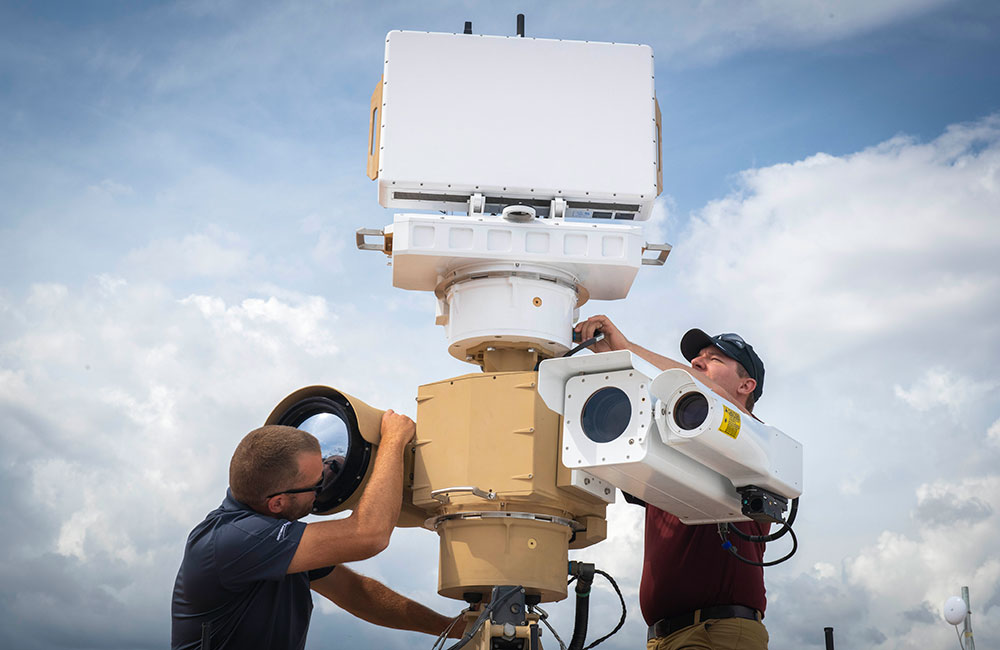
WASHINGTON, D.C. – As the United States enters a landmark year of national celebration and global sporting events, the defence of the National Capital Region (NCR) has undergone a silent yet profound technological evolution. As of January 26, 2026, the U.S. military and Department of Homeland Security (DHS) have officially achieved initial operating capability for "Athena," a sophisticated, multi-agency "web of sensors" designed to detect, identify, and neutralise any unauthorised, uncrewed aircraft system (UAS) activity with unprecedented precision.
The deployment marks a critical shift in domestic air defence strategy, moving away from isolated detection silos toward a "fused, actionable air picture" that covers every inch of the most restricted airspace in the world.
The Athena System
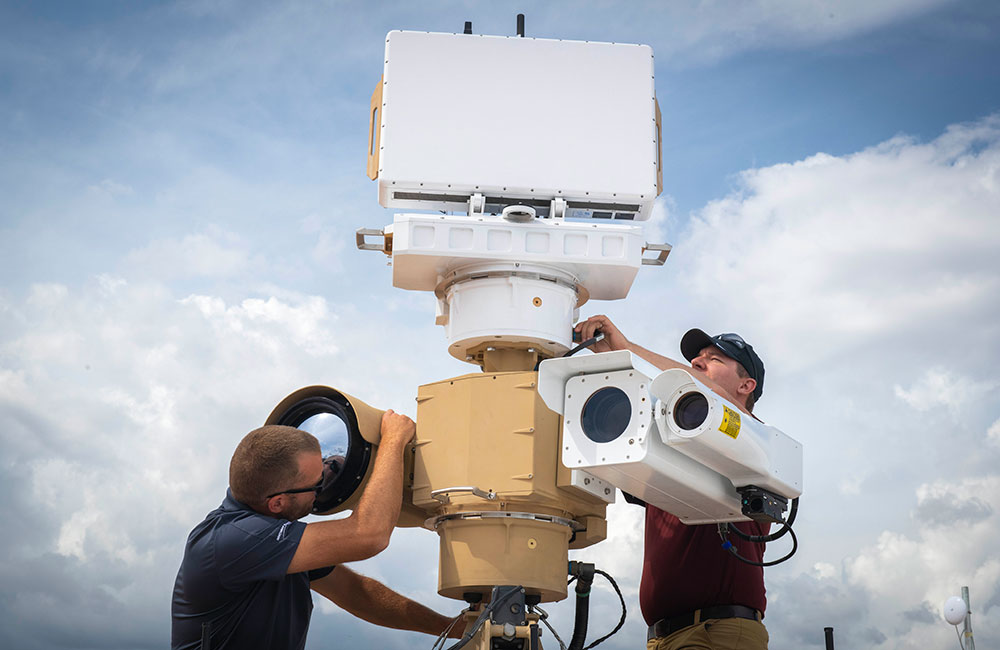
Developed over seven years, the Athena system serves as the central nervous system for counter-drone operations in D.C. Orchestrated by CONR-1AF (Air Forces Northern and Air Forces Space). The units tasked with the aerospace defence of the continental United States, the system integrates disparate data streams from radar, acoustic sensors, and radio-frequency (RF) scanners into a single interface.
Unlike previous generations of detection technology, Athena utilises advanced artificial intelligence to distinguish between benign objects, such as birds or weather balloons, and potential rogue drones.
“The Athena system represents a pivotal advancement in our ability to safeguard the skies,” stated Lieutenant General Luke Ahmann, Commander of CONR-1AF. “It amplifies our counter-UAS capabilities by providing a single, integrated air picture, enabling us to detect, track, and neutralise threats with greater speed and precision.”
Lieutenant Colonel Nicholas Detloff, Chief of CONR-1AF’s Strategic Requirements Division, emphasised the technical superiority of the integrated approach:
“Athena fuses information from multiple sensors to produce a more precise track than any individual sensor can provide.”
Strategic Context
The activation of Athena coincides with a broader push for "American Airspace Sovereignty" under the current administration. With the America250 commemorations and the 2026 FIFA World Cup looming, the federal government has earmarked billions to harden domestic infrastructure against aerial incursions.
Key financial and regulatory milestones supporting this rollout include:
The $115 Million Investment: On January 12, 2026, the newly established DHS Program Executive Office (PEO) for UAS and C-UAS finalised a $115 million surge in counter-drone tech to secure high-visibility venues.
FEMA C-UAS Grants: A $250 million grant pool was recently prioritised for the National Capital Region and the 11 host cities for the World Cup to bolster local law enforcement’s detection capabilities.
Expanded Authorities: The FY26 National Defence Authorisation Act (NDAA) extended counter-drone authorities for DHS and the DOJ until 2031, granting agents the power to intercept and damage hostile drones deemed a credible threat.

The Cockpit’s Next Revolution: When the Co-Pilot Is a Computer
Operational Impact
For drone pilots, the implications are stark. The NCR’s "No Drone Zone" is now reinforced by a system that forwards real-time tracking data directly to command-and-control hubs. If a pilot inadvertently crosses into restricted space, authorities typically first attempt to contact the operator. However, under new protocols, failure to comply can lead to a spectrum of mitigation tactics, from electronic jamming to physical entrapment with nets.
Secretary of the Army Dan Driscoll noted the necessity of this interagency unity:
“Countering this threat requires every element of the U.S. government working together with shared purpose and unity of effort.”
The Profound Horizon
As the FAA prepares to finalise Part 108, a rule that would permit routine beyond visual line of sight (BVLOS) operations, systems like Athena provide the essential safety net. By making the "invisible" visible, D.C. is setting the blueprint for future urban air mobility, where legitimate commercial drones can thrive while rogue actors are instantly identified.
The "web of sensors" is not just a defensive barrier; it is the foundational infrastructure for the next century of American flight.
Caribbean Airlines Expands Network With New Toronto and Caracas Routes » Frontier Airlines Flight Attendant Restrains Passenger Who Lunged for Cabin Door During Atlanta Jet Bridge Delay » British Airways Flight to Chicago Forces Emergency Descent After Cabin Pressure Failure »

Comments (0)
Add Your Comment
TAGS
NEWS Athena System Counter Drone Washington DC Defence SafetyRECENTLY PUBLISHED
 Southwest Airlines Blames Brief System Outage for Boarding Delays and Checked Bag Disruptions
Southwest Airlines confirms a brief technology outage disrupted boarding and checked bag operations, forcing gate agents to process travelers manually.
NEWS
READ MORE »
Southwest Airlines Blames Brief System Outage for Boarding Delays and Checked Bag Disruptions
Southwest Airlines confirms a brief technology outage disrupted boarding and checked bag operations, forcing gate agents to process travelers manually.
NEWS
READ MORE »
 Southwest Airlines Considers Boeing 787 Order for Long-Haul International Expansion
Southwest Airlines is evaluating the Boeing 787 Dreamliner as it explores a shift into long-haul international flying, sources tell Reuters.
NEWS
READ MORE »
Southwest Airlines Considers Boeing 787 Order for Long-Haul International Expansion
Southwest Airlines is evaluating the Boeing 787 Dreamliner as it explores a shift into long-haul international flying, sources tell Reuters.
NEWS
READ MORE »
 Delta Passenger Arrested After Allegedly Stealing Airport Tug
A Delta Air Lines passenger faces charges after allegedly stealing a ground service tug at a California airport and driving it onto a runway.
NEWS
READ MORE »
Delta Passenger Arrested After Allegedly Stealing Airport Tug
A Delta Air Lines passenger faces charges after allegedly stealing a ground service tug at a California airport and driving it onto a runway.
NEWS
READ MORE »
More than just headlines.
Get unlimited ad-free access to in-depth aviation news, premium stories, and exclusive insights other sites don't cover.
- Ad-free browsing on AeroXplorer
- Unlimited access to premium and exclusive articles
- Higher photo upload limits & commissions on sales
- Free access to Jetstream Magazine on higher tiers
- Ad-free browsing
- Sell aviation photos with 60% commission
- First week free!
- Everything in Basic+
- Unlimited premium articles
- Sell aviation photos with 70% commission
- Free Digital subscription to Jetstream Magazine
- First week free!
- Everything in Basic+ and Pro
- Sell aviaiton photos with 80% commission
- Early access to exclusive stories
- Free Digital+Print subscription to Jetstream Magazine