
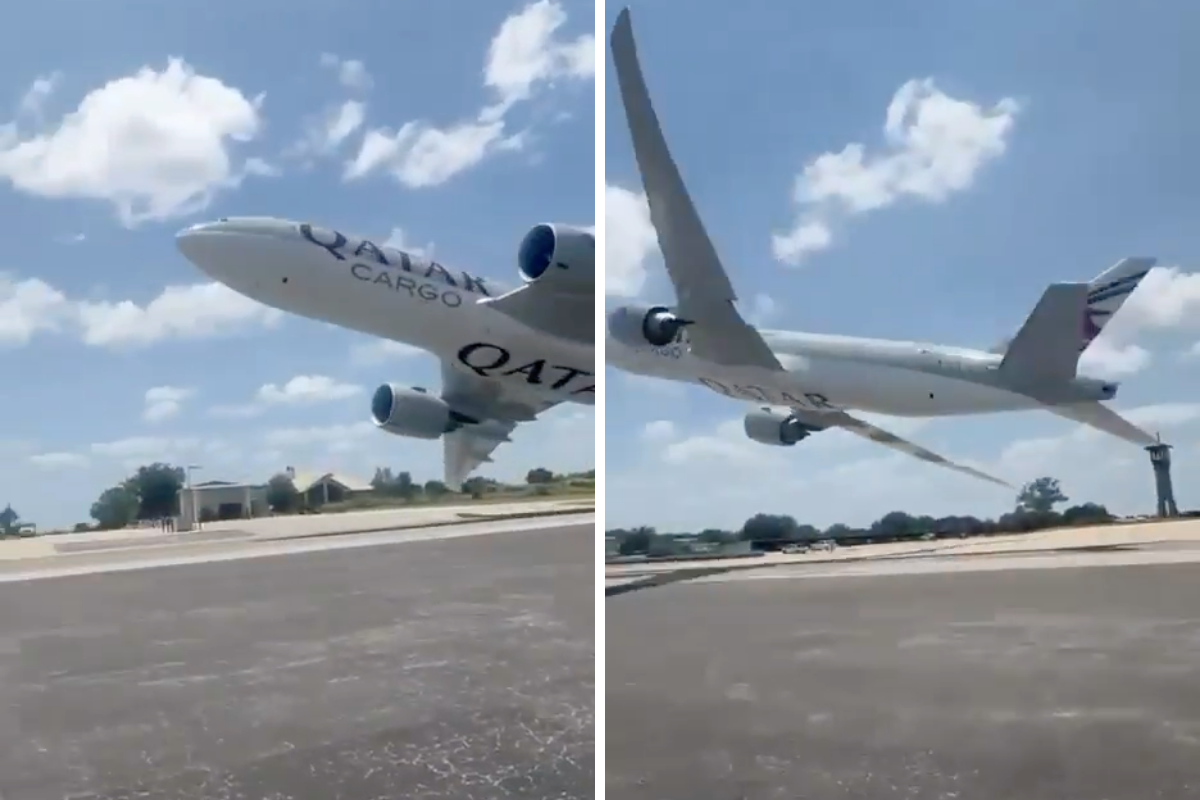
The Federal Aviation Administration has confirmed it is reviewing a viral video that appears to show a Boeing 777 widebody jet performing an extremely low pass, an incident that has drawn widespread attention across social media and concern from aviation professionals.
The footage, which spread rapidly online, shows the twin-engine airliner flying at what observers describe as an unusually low altitude. The maneuver prompted immediate questions about flight safety, regulatory compliance, and the circumstances that led to such a dramatic approach.
"The FAA is looking into the matter,"
the agency said in a statement regarding the video.

What the Video Shows
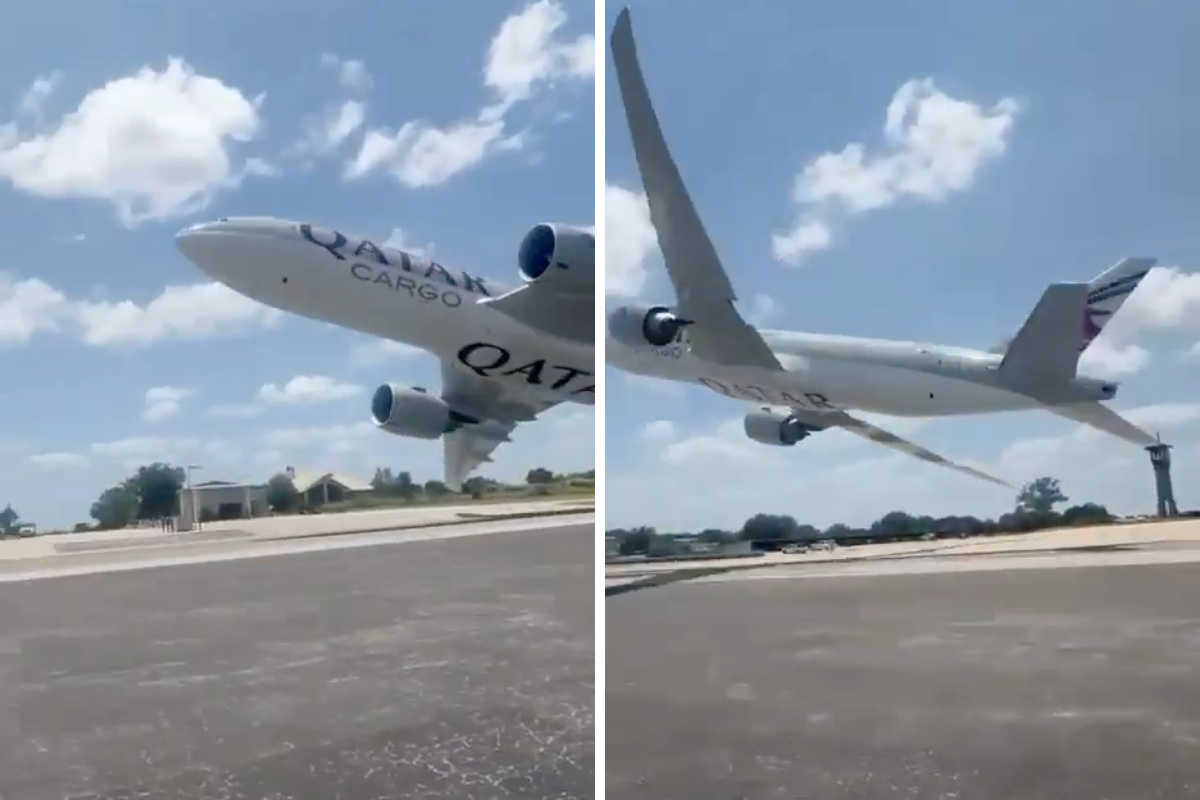
The clip captures the Boeing 777 passing over a runway environment at an altitude that experts have called startling for an aircraft of its size. The 777, one of the largest twin-engine jets in commercial service, typically operates with conservative margins during low-altitude maneuvers due to its size and weight.
Aviation analysts who reviewed the footage noted that while low passes do occur during certain operations, including airshow demonstrations, delivery flights, and ceremonial flyovers, the apparent altitude in this video has raised eyebrows among current and former airline pilots.
Pilot Reactions
Several Boeing 777 pilots have weighed in on the footage, offering technical analysis of what they observed. Their assessments focused on the visible flight configuration, the aircraft's apparent height above the ground, and the precision required to execute such a maneuver safely.
Experienced widebody pilots pointed out that any low pass in a 777 requires extensive preparation, including coordination with air traffic control, careful weight and balance calculations, and a clear understanding of performance margins. They emphasized that the aircraft's size means even small deviations from intended altitude can have significant consequences.
Some pilots commenting on the video suggested the maneuver appeared lower than typical ceremonial flyovers, which usually maintain altitudes that provide a clear safety buffer above ground obstacles and personnel.
Regulatory Framework
FAA regulations govern minimum safe altitudes for aircraft operations, with specific exceptions for takeoff, landing, and certain authorized activities. Commercial aircraft conducting low passes generally require advance coordination and authorization, particularly when performed outside the context of a normal approach or departure.
The agency's review will likely examine whether the flight crew had proper authorization for the maneuver, whether it complied with applicable altitude minimums, and whether any safety risks were created during the pass.
Investigators typically consider factors such as the airport environment, presence of ground personnel, weather conditions at the time, and the operational purpose of the flight when evaluating incidents of this nature.
Context for Low Passes
Low passes by commercial aircraft are not unprecedented. Boeing has conducted dramatic flyovers during delivery ceremonies, and airlines occasionally perform ceremonial passes for retirement flights or special occasions. These events are usually planned in advance with full regulatory coordination.
However, the visual impression created by the viral video has prompted debate about where the line should be drawn between an impressive demonstration and an unnecessarily risky maneuver. Critics argue that any low pass involving a large commercial airliner carries inherent risks that must be carefully weighed against the operational benefit.
Supporters of such maneuvers, when properly authorized, note that experienced flight crews can execute them safely with appropriate planning and that they have a long history in aviation tradition.

How AI Quietly Became the Backbone of Today’s Aviation Industry
What Happens Next
The FAA's review process typically involves gathering flight data, interviewing the crew, examining air traffic control communications, and reviewing any authorizations that were in place for the operation. The agency has not provided a timeline for when its review will conclude.
If investigators determine that regulations were violated, possible outcomes range from informal counseling to certificate actions against the pilots involved. The operator of the aircraft could also face scrutiny depending on the findings.
For now, the video continues to circulate online, sparking ongoing discussion among aviation enthusiasts and professionals about the proper boundaries for low-altitude operations involving large commercial jets. The FAA's findings, whenever they emerge, will likely shape how similar maneuvers are evaluated and authorized in the future.
US State Department Warns of Threats to Airlines and Airports in Saudi Arabia Following Deadly Houthi Attacks » FAA Clears JetBlue's $58.5M Purchase of Spirit's LaGuardia Slots » How Does a B-2 Spirit Fly Without a Tail? »

Comments (0)
Add Your Comment
TAGS
NEWS Boeing 777 Low-PassRECENTLY PUBLISHED
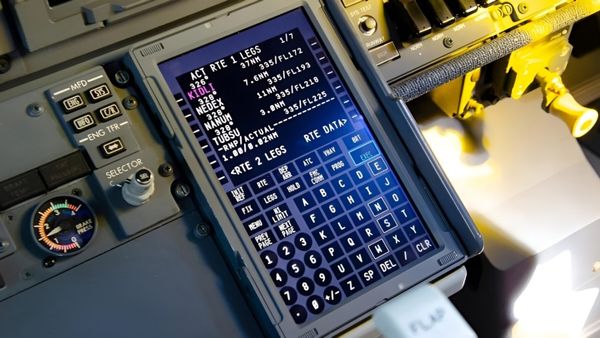 Boeing's Touchscreen Flight Controls for 737 Draw Sharp Criticism from Pilots
Boeing's plan to introduce Touchscreen Control Display Units on the 737 has sparked backlash from pilots who warn of safety and usability concerns.
NEWS
READ MORE »
Boeing's Touchscreen Flight Controls for 737 Draw Sharp Criticism from Pilots
Boeing's plan to introduce Touchscreen Control Display Units on the 737 has sparked backlash from pilots who warn of safety and usability concerns.
NEWS
READ MORE »
 Southwest Airlines Blames Brief System Outage for Boarding Delays and Checked Bag Disruptions
Southwest Airlines confirms a brief technology outage disrupted boarding and checked bag operations, forcing gate agents to process travelers manually.
NEWS
READ MORE »
Southwest Airlines Blames Brief System Outage for Boarding Delays and Checked Bag Disruptions
Southwest Airlines confirms a brief technology outage disrupted boarding and checked bag operations, forcing gate agents to process travelers manually.
NEWS
READ MORE »
 Southwest Airlines Considers Boeing 787 Order for Long-Haul International Expansion
Southwest Airlines is evaluating the Boeing 787 Dreamliner as it explores a shift into long-haul international flying, sources tell Reuters.
NEWS
READ MORE »
Southwest Airlines Considers Boeing 787 Order for Long-Haul International Expansion
Southwest Airlines is evaluating the Boeing 787 Dreamliner as it explores a shift into long-haul international flying, sources tell Reuters.
NEWS
READ MORE »
More than just headlines.
Get unlimited ad-free access to in-depth aviation news, premium stories, and exclusive insights other sites don't cover.
- Ad-free browsing on AeroXplorer
- Unlimited access to premium and exclusive articles
- Higher photo upload limits & commissions on sales
- Free access to Jetstream Magazine on higher tiers
- Ad-free browsing
- Sell aviation photos with 60% commission
- First week free!
- Everything in Basic+
- Unlimited premium articles
- Sell aviation photos with 70% commission
- Free Digital subscription to Jetstream Magazine
- First week free!
- Everything in Basic+ and Pro
- Sell aviaiton photos with 80% commission
- Early access to exclusive stories
- Free Digital+Print subscription to Jetstream Magazine