
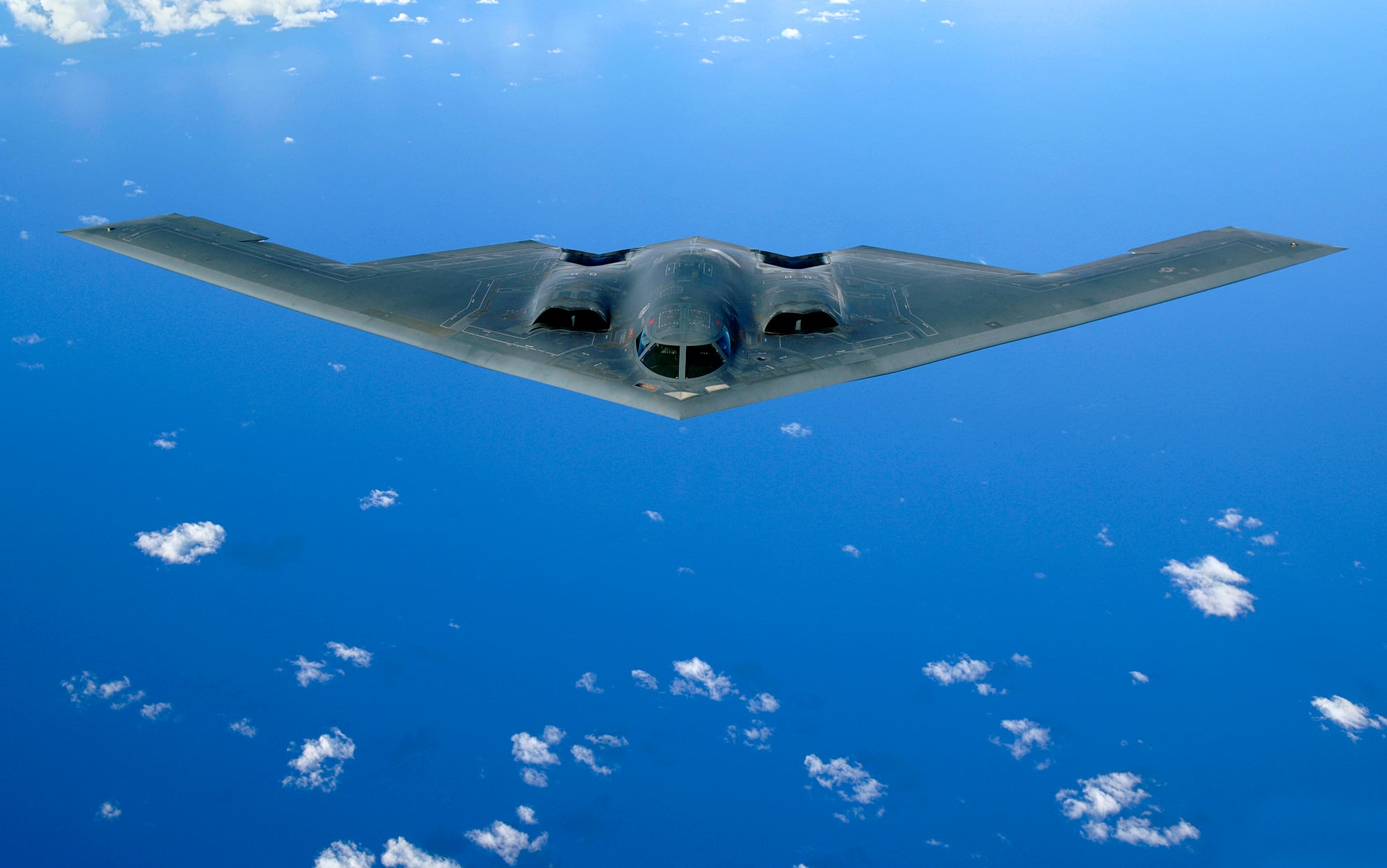
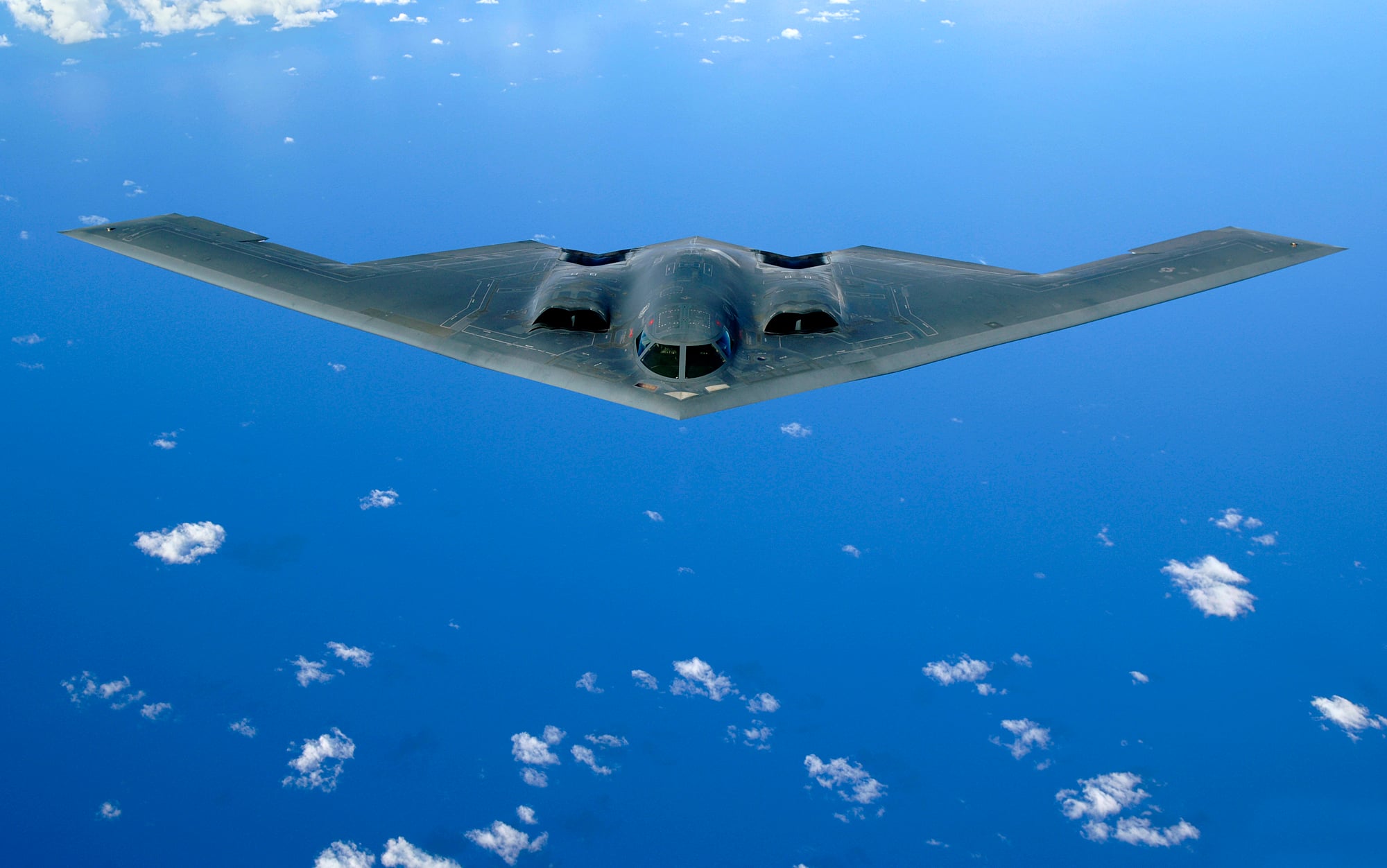
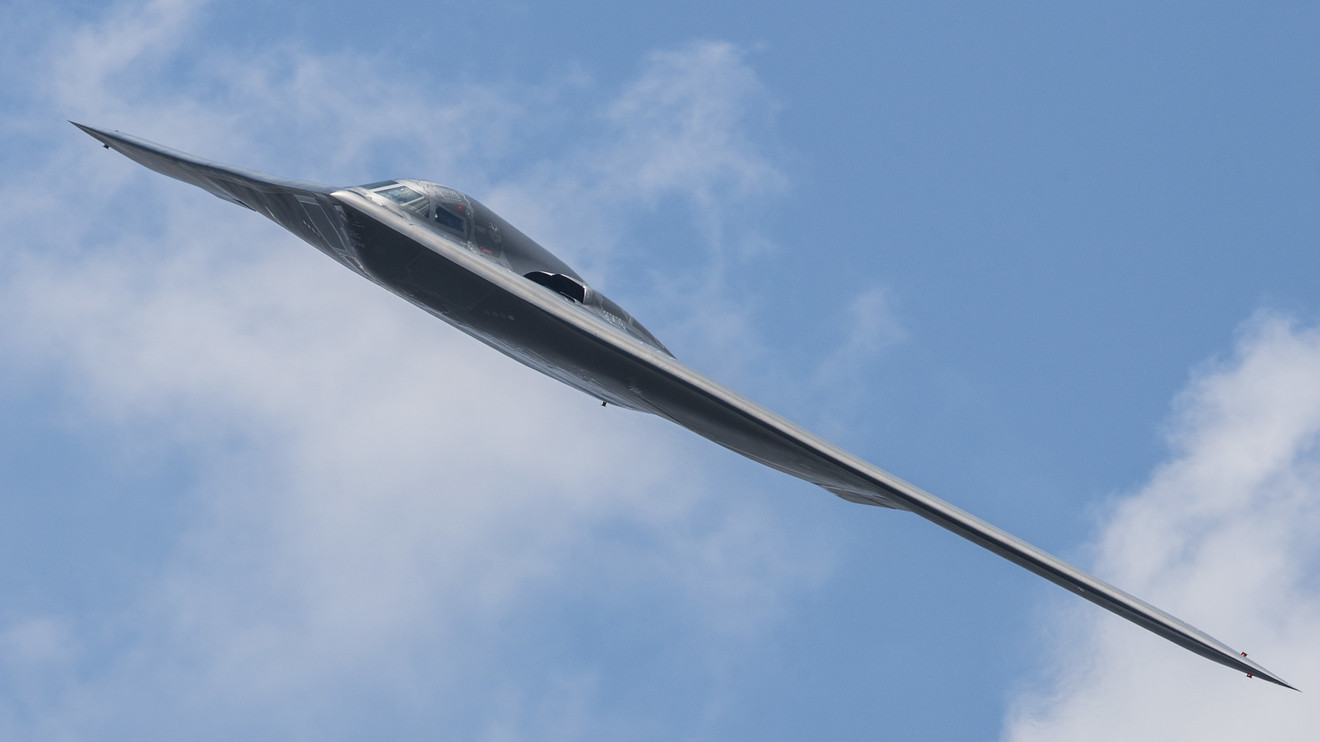
Every conventional airliner and fighter jet has a tail. The B-2 Spirit does not. No rudder, no vertical stabilizer, no horizontal tailplane. It is a pure flying wing, a shape that conventional aerodynamics says should be unstable and uncontrollable, yet it has been flying combat missions for nearly three decades.
Why a Tail Normally Exists
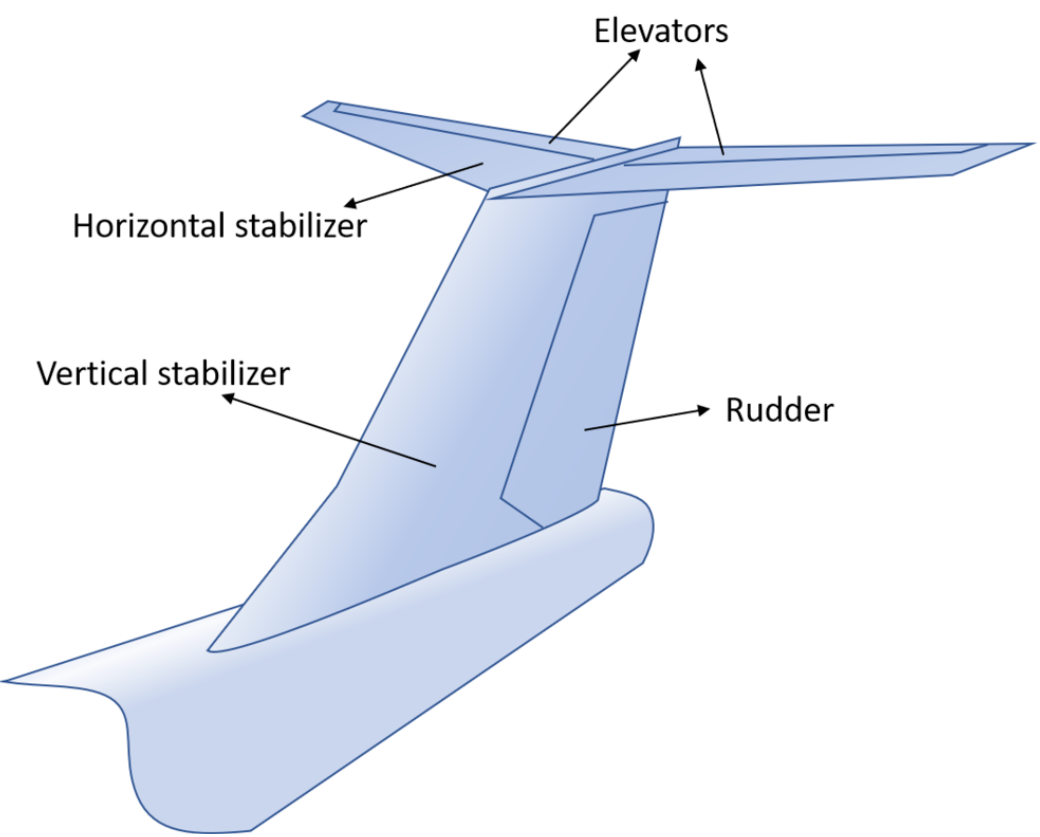
On a conventional aircraft, the vertical fin provides directional stability, keeping the nose pointed forward rather than yawing sideways, while the horizontal stabilizer manages pitch, preventing the nose from pitching up or down uncontrollably. Without these surfaces, a standard fuselage-and-wing design would be aerodynamically unstable and effectively impossible to control by hand. The tail is not a cosmetic addition. It is fundamental to how most aircraft remain controllable.
Why Northrop Removed It Anyway
The decision to eliminate the tail had little to do with aerodynamics and everything to do with stealth. Vertical surfaces are strong radar reflectors, since a tail viewed from the side sends radar energy directly back toward the transmitter, producing a clean, identifiable signature. A flying wing with no vertical surfaces at all most closely resembles what engineers describe as an infinite flat plate, considered the theoretical ideal for minimizing radar reflection, since introducing vertical control surfaces such as a tail or canards dramatically increases an aircraft's radar cross-section. Removing the tail entirely was, in effect, removing one of the largest radar return sources an aircraft can carry.
Replacing Stability with Computers
Because flying wing aircraft are inherently unstable without a tail, the B-2 relies on a quadruplex, computer-controlled fly-by-wire flight control system that automatically manipulates its control surfaces to maintain stability, without requiring direct pilot input for every correction. Even the aircraft's basic airspeed and angle-of-attack data comes from pitot-static sensing plates embedded in the skin rather than traditional protruding pitot tubes, a design choice made specifically to avoid compromising the aircraft's stealth profile. In practice, this means the flight computer is making dozens of corrections every second that a human pilot simply could not perform manually, translating a pilot's intended turn, climb, or descent into the precise combination of control surface movements needed to execute it without destabilizing the aircraft.
Turning Without a Rudder
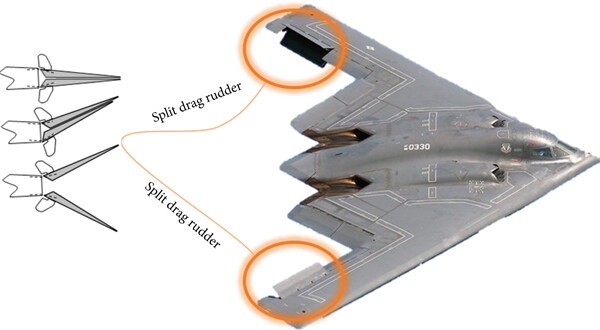
Directional control presented its own challenge once the vertical tail was gone. Northrop settled on a combination of split drag rudders, panels on the wing's trailing edge that open like a clamshell to create drag on one side of the aircraft, paired with differential thrust across the four engines to help yaw the aircraft in the desired direction. Four pairs of elevons run along the wing's trailing edge, with the inner pair used mainly at low speeds such as landing, and all of the elevons remain drooped during takeoff until the aircraft reaches sufficient airspeed. It is mechanically and computationally more complex than a conventional rudder, but it gives the B-2 full directional authority without reintroducing a single vertical surface.
A Narrow but Deliberate Flight Envelope
None of this comes without limits. Pilots fly the B-2 within clear procedural boundaries built to preserve its stealth performance, moderate bank angles, steady climb and descent profiles, and cruise typically between Mach 0.75 and Mach 0.8 at altitudes of 40,000 to 50,000 feet, where the lift-to-drag ratio is most favorable and the engines operate efficiently. Within that envelope, pilots who fly it consistently describe the experience as smooth and responsive, closer to flying a large executive jet than a heavy bomber, with the fly-by-wire system filtering out much of the turbulence a pilot would otherwise feel.

How AI Quietly Became the Backbone of Today’s Aviation Industry
An Idea That Finally Caught Up with the Technology
The flying wing concept itself is nearly as old as powered flight, with Jack Northrop building prototype flying wings in the late 1940s that were ultimately cancelled, not because the aerodynamic theory was flawed, but because the flight control technology of the era could not manage the inherent instability of the shape. It took the arrival of digital computers capable of thousands of corrections per second before a tailless bomber became genuinely practical. The B-2 did not solve a new aerodynamic problem so much as it finally had the computing power to solve an old one.
US Moves to Accelerate Aircraft Certification Citing Competition from China's Aviation Industry » AirBaltic to Cut Up to 700 Jobs in Restructuring » Ryanair Boeing 737 Aborts Takeoff at Alicante Airport, Civil Aviation Commission Launches Investigation »

Comments (0)
Add Your Comment
TAGS
INFORMATIONAL B2 Bomber B2 Spirit Vertical Stabilizer Tailplane JetRECENTLY PUBLISHED
 Halon Was Supposed to Disappear. This Company Kept It Flying.
H3R Aviation keeps recycled Halon 1211 fire extinguishers in circulation, helping aircraft operators navigate replacement options and regulations.
INFORMATIONAL
READ MORE »
Halon Was Supposed to Disappear. This Company Kept It Flying.
H3R Aviation keeps recycled Halon 1211 fire extinguishers in circulation, helping aircraft operators navigate replacement options and regulations.
INFORMATIONAL
READ MORE »
 Caribbean Airlines Expands Network With New Toronto and Caracas Routes
Caribbean Airlines launches new service from Tobago to Toronto and Port of Spain to Caracas as the carrier adjusts its regional and international network.
ROUTES
READ MORE »
Caribbean Airlines Expands Network With New Toronto and Caracas Routes
Caribbean Airlines launches new service from Tobago to Toronto and Port of Spain to Caracas as the carrier adjusts its regional and international network.
ROUTES
READ MORE »
 US Air Force Pulls All 12 B-1B Bombers from RAF Fairford Following Attempted Attack
The US Air Force has withdrawn all 12 B-1B Lancer bombers from RAF Fairford in Gloucestershire after an attempted attack near the base.
NEWS
READ MORE »
US Air Force Pulls All 12 B-1B Bombers from RAF Fairford Following Attempted Attack
The US Air Force has withdrawn all 12 B-1B Lancer bombers from RAF Fairford in Gloucestershire after an attempted attack near the base.
NEWS
READ MORE »
More than just headlines.
Get unlimited ad-free access to in-depth aviation news, premium stories, and exclusive insights other sites don't cover.
- Ad-free browsing on AeroXplorer
- Unlimited access to premium and exclusive articles
- Higher photo upload limits & commissions on sales
- Free access to Jetstream Magazine on higher tiers
- Ad-free browsing
- Sell aviation photos with 60% commission
- First week free!
- Everything in Basic+
- Unlimited premium articles
- Sell aviation photos with 70% commission
- Free Digital subscription to Jetstream Magazine
- First week free!
- Everything in Basic+ and Pro
- Sell aviaiton photos with 80% commission
- Early access to exclusive stories
- Free Digital+Print subscription to Jetstream Magazine