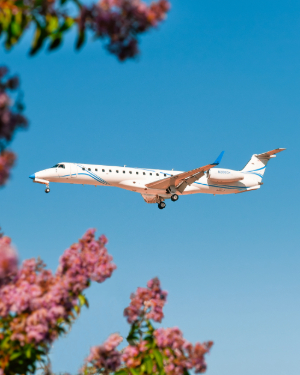


The aviation industry is constantly evolving and needs many qualified people to guarantee the efficiency and safety of air travel. Pilots and flight attendants are important field members and must complete training programs to carry out their duties effectively and professionally. For a more convenient reading experience with access to millions of books, check out this reading application.

Pilot Training
Aviation enthusiasts find flying to be an exciting experience worldwide. Training programs designed to prepare aspiring aviators are carefully built to grow aspiring pilots into skilled professionals capable of flying confidently and precisely in any environment. Their curriculum covers various topics, including emergency procedures, navigation skills, aerodynamics and aircraft systems, and aviation history lessons.
Private Pilot License
The first stage in every pilot's training process is obtaining a private pilot license (PPL), which gives holders all the abilities and information required to operate an aircraft for pleasure. PPL training includes the fundamentals of aviation, aerodynamics, aircraft systems, navigation, and flight maneuvers. Students then get hands-on flight experience under the supervision of a qualified flight instructor, which allows them to become proficient in smoothly and accurately handling an aircraft.

Commercial Pilot License
A Commercial Pilot License (CPL) is required for professional pilots who want to begin or continue their employment as professional aviators. Students also get in-depth training in emergency protocols, flight planning, and navigation skills, which equips them for the particular requirements of commercial aviation. The CPL training program strengthens PPL education by refining flight abilities and increasing competency in flight maneuvers.
Instrument Rating
An instrument rating (IR) is an essential part of pilot training for those hoping to fly commercially, particularly those looking at commercial flight aspirations. With this certification, pilots will learn to navigate aircraft solely using flight instruments in adverse weather conditions or low visibility, providing safer flying in adverse and low visibility conditions. Training for an instrument rating includes simulation scenarios for instrument flight practice with precision approaches and procedures designed for conducting safe instrument flight procedures.

Airline Transport Pilot License
The ultimate qualification accessible to pilots looking to work for commercial airlines is the Airline Transport Pilot License (ATPL), which represents the highest standard of pilot training. Three areas essential to commercial aviation's functioning are airline operations, crew resource management, and advanced flight capabilities, all of which are covered in ATPL training. Candidates undergo rigorous training to show they are proficient in various commercial aviation-related topics, including complicated aircraft systems, flight planning under duress, and making decisions under time restrictions.
With the cost of flight training becoming higher and higher, it's imperative that aspiring pilots have a plan for both their finances and training schedules. The folks at Part Time Pilot do an amazing job educating student pilots not only with their top rated online ground schools but also with their mentorship approach to guiding students through the entire flight training process so that they can avoid the mistakes that make flight training even more expensive.
Flight Attendant Training
In the aviation industry, flight attendants are essential because they give passengers comfort, safety, and security during their journey. Training programs are created especially to prepare people for work as flight attendants, and they are intended to cover every scenario that might come up while they're doing their tasks in flight, from handling emergency circumstances to giving exceptional customer service.

Safety and Emergency Procedures
Safety in aviation is of utmost importance, so flight attendant training starts by providing comprehensive instruction in safety and emergency procedures. Candidates learn to operate emergency equipment, evacuate aircraft in different circumstances, administer first aid treatment to passengers as necessary, and respond appropriately to security threats onboard aircraft. Particular emphasis is given to maintaining calm communication during emergencies to protect passenger safety and crew welfare.
Customer Service Hospitality
Flight attendants undergo customer service and hospitality training to create an exceptional passenger experience onboard the plane. Training topics may include passenger interaction, conflict resolution, cultural sensitivity, and service etiquette; flight attendants learn how to anticipate and meet passenger needs efficiently and professionally while creating a welcoming atmosphere onboard.

Cabin Crew Resource Management Training
CRM training is the cornerstone of flight attendant education, emphasizing teamwork, communication, and situational awareness. Flight attendants learn to collaborate effectively with fellow crew members during inflight operations while communicating efficiently in flight operations and managing challenging situations collaboratively. CRM training facilitates crew coordination and decision-making, contributing to safety and efficiency during operations.
Cultural and Language Skills
Due to the international nature of air travel, flight attendants receive training in cultural awareness and language proficiency to effectively interact with passengers from diverse backgrounds. Training may cover cultural customs and norms and basic proficiency in common passenger languages spoken onboard. If you need professional writing assistance, see writepaperfor.me. Flight attendants strive to foster inclusivity and respect cultural diversity onboard to ensure that each passenger feels welcomed throughout their journey.

Conclusion: Navigating the Skies Skillfully
Professional aviation training is indispensable to successful flight attendants and pilot careers. Pilot programs equip aspiring aviators with the knowledge, skills, and experience for precision flying. In contrast, flight attendant courses equip individuals to ensure passenger security and comfort through exceptional inflight service delivery. Pilots and flight attendants together navigate the skies with precision and professionalism on behalf of excellent aviation.
Aviation Fuel Prices Hit Six-Month High in September » US State Department Warns of Threats to Airlines and Airports in Saudi Arabia Following Deadly Houthi Attacks » United Boeing 757 Makes Overweight Landing in Dublin After Crew Reports Strong Fuel Smell and Headaches »

Comments (0)
Add Your Comment
TAGS
INFORMATIONAL Flight Training Pilot Commercial Airline Pilot Safety Aviation Commercial AviationRECENTLY PUBLISHED
 Southwest Airlines Blames Brief System Outage for Boarding Delays and Checked Bag Disruptions
Southwest Airlines confirms a brief technology outage disrupted boarding and checked bag operations, forcing gate agents to process travelers manually.
NEWS
READ MORE »
Southwest Airlines Blames Brief System Outage for Boarding Delays and Checked Bag Disruptions
Southwest Airlines confirms a brief technology outage disrupted boarding and checked bag operations, forcing gate agents to process travelers manually.
NEWS
READ MORE »
 Southwest Airlines Considers Boeing 787 Order for Long-Haul International Expansion
Southwest Airlines is evaluating the Boeing 787 Dreamliner as it explores a shift into long-haul international flying, sources tell Reuters.
NEWS
READ MORE »
Southwest Airlines Considers Boeing 787 Order for Long-Haul International Expansion
Southwest Airlines is evaluating the Boeing 787 Dreamliner as it explores a shift into long-haul international flying, sources tell Reuters.
NEWS
READ MORE »
 Delta Passenger Arrested After Allegedly Stealing Airport Tug
A Delta Air Lines passenger faces charges after allegedly stealing a ground service tug at a California airport and driving it onto a runway.
NEWS
READ MORE »
Delta Passenger Arrested After Allegedly Stealing Airport Tug
A Delta Air Lines passenger faces charges after allegedly stealing a ground service tug at a California airport and driving it onto a runway.
NEWS
READ MORE »
More than just headlines.
Get unlimited ad-free access to in-depth aviation news, premium stories, and exclusive insights other sites don't cover.
- Ad-free browsing on AeroXplorer
- Unlimited access to premium and exclusive articles
- Higher photo upload limits & commissions on sales
- Free access to Jetstream Magazine on higher tiers
- Ad-free browsing
- Sell aviation photos with 60% commission
- First week free!
- Everything in Basic+
- Unlimited premium articles
- Sell aviation photos with 70% commission
- Free Digital subscription to Jetstream Magazine
- First week free!
- Everything in Basic+ and Pro
- Sell aviaiton photos with 80% commission
- Early access to exclusive stories
- Free Digital+Print subscription to Jetstream Magazine