
British aviation regulators have raised the alarm over a sharp rise in lithium battery incidents aboard commercial aircraft, with new figures showing that overheating power banks now pose one of the fastest-growing safety threats in the skies.
According to the United Kingdom Civil Aviation Authority, reported incidents involving power banks overheating or catching fire on planes have nearly doubled in just one year. The data reflects a broader pattern that has unsettled regulators, airlines, and cabin crews across the world as passengers increasingly travel with multiple personal electronic devices.
What the Numbers Show
The UK CAA recorded significantly higher rates of thermal runaway events involving lithium-ion batteries in 2024 compared to 2023. Thermal runaway is the chemical reaction inside a damaged or defective lithium cell that causes it to release intense heat, smoke, and sometimes open flames.
The trend is not confined to British airspace. The United States Federal Aviation Administration has tracked similar increases. The FAA has logged more than 620 verified incidents involving lithium batteries on aircraft since 2006, with the annual count climbing year over year. In 2024 alone, the FAA recorded an average of roughly three lithium battery incidents per week on US flights, a figure that has more than tripled compared to a decade earlier.
Power banks, the portable charging units that millions of travelers now carry in carry-on luggage, account for a disproportionate share of these incidents. Industry analysis suggests power banks are involved in roughly one-third of all in-flight lithium battery events, despite making up a much smaller share of the total devices passengers bring onboard.

Analysis: How Spirit Airlines Changed Airline Pricing, then Paid the Price
Why the Risk Is Climbing
Several factors are driving the increase. Passenger demand for portable charging has surged. Global shipments of power banks reached an estimated 250 million units annually in recent years, and counterfeit or substandard products account for a meaningful share of the market. Cheap, uncertified batteries are far more likely to suffer manufacturing defects that lead to thermal runaway.
Cabin pressure changes, physical damage from luggage compression, and exposure to heat all increase the likelihood of failure. A single damaged cell can reach temperatures exceeding 1,000 degrees Fahrenheit within seconds, which is enough to ignite nearby materials and produce dense, toxic smoke.
The risk is amplified by the sheer volume of devices traveling on each flight. Industry surveys indicate the average passenger now boards with at least four lithium-powered devices, including phones, laptops, wireless earbuds, smartwatches, and power banks. On a fully loaded widebody aircraft, that translates to well over a thousand lithium cells in the cabin at any moment.
How Airlines Are Responding
Several major carriers have already tightened their rules. A growing number of airlines, particularly in Asia, have banned the use of power banks during flights and prohibited charging devices from them while airborne. Some carriers now require passengers to keep power banks visible throughout the journey rather than stowing them in overhead bins.
The International Air Transport Association classifies lithium batteries as dangerous goods and prohibits them from checked luggage, where a fire could grow undetected in the cargo hold. Passengers must carry power banks in the cabin, where crews can respond quickly using fire containment bags and thermal suppression kits.
Cabin crew training has expanded to address the threat. Flight attendants now learn specific protocols for isolating an overheating device, submerging it in water, and using purpose-built containment pouches designed to withstand temperatures generated by runaway lithium cells.

What Regulators Want Travelers to Know
The UK CAA is urging passengers to take simple precautions. Buy power banks only from reputable manufacturers and avoid uncertified products sold through unregulated online marketplaces. Inspect devices regularly for swelling, dents, or unusual heat during charging. Stop using any battery that shows visible damage.
Regulators also recommend that travelers keep power banks within easy reach during flight rather than packing them deep inside carry-on bags. If a device begins to overheat, alert cabin crew immediately rather than attempting to handle it yourself. Early intervention dramatically reduces the chance of a fire spreading.
Capacity limits apply as well. Most airlines permit power banks rated up to 100 watt-hours without prior approval, with units between 100 and 160 watt-hours requiring airline consent. Anything above that threshold is prohibited from commercial passenger aircraft.
The Broader Safety Picture
Despite the rising incident count, aviation remains the safest mode of long-distance travel. No commercial airline crash has yet been attributed solely to a passenger power bank, and the overwhelming majority of in-flight battery events are contained without injury. Still, regulators warn that the trajectory is concerning enough to justify stronger preventive measures before a more serious event occurs.
The UK CAA, along with its counterparts in Europe and North America, is reviewing whether additional restrictions are warranted. Possible changes include mandatory labeling requirements, stricter capacity limits, and clearer guidance for passengers at the point of booking.
For now, the message from regulators is straightforward. Lithium batteries are not going away, and neither are the risks they carry. As power bank ownership continues to climb, vigilance from manufacturers, airlines, and passengers alike will determine whether the next year brings another doubling of incidents or finally slows the trend.
Delta Passenger Arrested After Allegedly Stealing Airport Tug » Why Did Some Air India A320s Have Extra Wheels? Bogie Gear Explained » Riyadh Airport Closed After Reported Ballistic Missile Strike on Saudia Airbus Jet »

Comments (0)
Add Your Comment
TAGS
NEWS Power Bank Fires UK Aviation Flight Safety Lithium Batteries Battery Fire In-Flight Incidents Aviation Regulators CAA Passenger Safety Fire Risk Cargo Safety Checked Baggage Carry-On Baggage Electronic Devices Fire Prevention Safety Hazards Airline Operations Safety Standards FAARECENTLY PUBLISHED
 NetJets Expands US Footprint With Three New Private Terminals and Larger Palm Beach Facility
NetJets announces exclusive-use terminals in Dallas, Washington, and Palm Beach, expanding private aviation infrastructure across key US markets.
NEWS
READ MORE »
NetJets Expands US Footprint With Three New Private Terminals and Larger Palm Beach Facility
NetJets announces exclusive-use terminals in Dallas, Washington, and Palm Beach, expanding private aviation infrastructure across key US markets.
NEWS
READ MORE »
 Army Report Points to Systemic Failures in Deadly Black Hawk Collision Near Reagan National
A new Army report identifies systemic failures behind the January collision between a UH-60L Black Hawk and American Airlines Flight 5342 near Washington.
NEWS
READ MORE »
Army Report Points to Systemic Failures in Deadly Black Hawk Collision Near Reagan National
A new Army report identifies systemic failures behind the January collision between a UH-60L Black Hawk and American Airlines Flight 5342 near Washington.
NEWS
READ MORE »
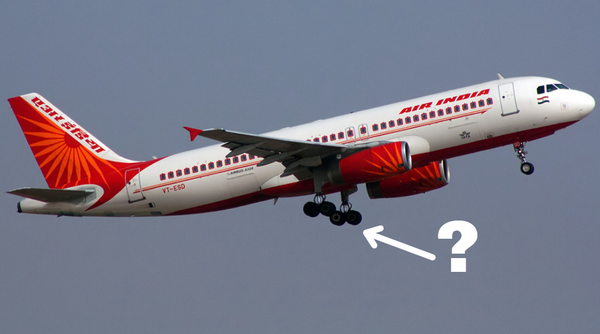 Why Did Some Air India A320s Have Extra Wheels? Bogie Gear Explained
Why Air India operated select Airbus A320s with an unusual bogie landing gear.
INFORMATIONAL
READ MORE »
Why Did Some Air India A320s Have Extra Wheels? Bogie Gear Explained
Why Air India operated select Airbus A320s with an unusual bogie landing gear.
INFORMATIONAL
READ MORE »
More than just headlines.
Get unlimited ad-free access to in-depth aviation news, premium stories, and exclusive insights other sites don't cover.
- Ad-free browsing on AeroXplorer
- Unlimited access to premium and exclusive articles
- Higher photo upload limits & commissions on sales
- Free access to Jetstream Magazine on higher tiers
- Ad-free browsing
- Sell aviation photos with 60% commission
- First week free!
- Everything in Basic+
- Unlimited premium articles
- Sell aviation photos with 70% commission
- Free Digital subscription to Jetstream Magazine
- First week free!
- Everything in Basic+ and Pro
- Sell aviaiton photos with 80% commission
- Early access to exclusive stories
- Free Digital+Print subscription to Jetstream Magazine