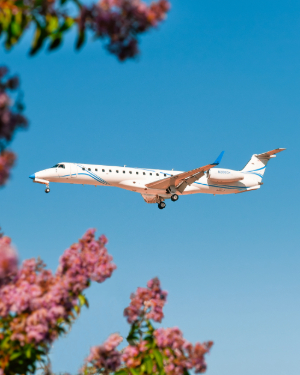
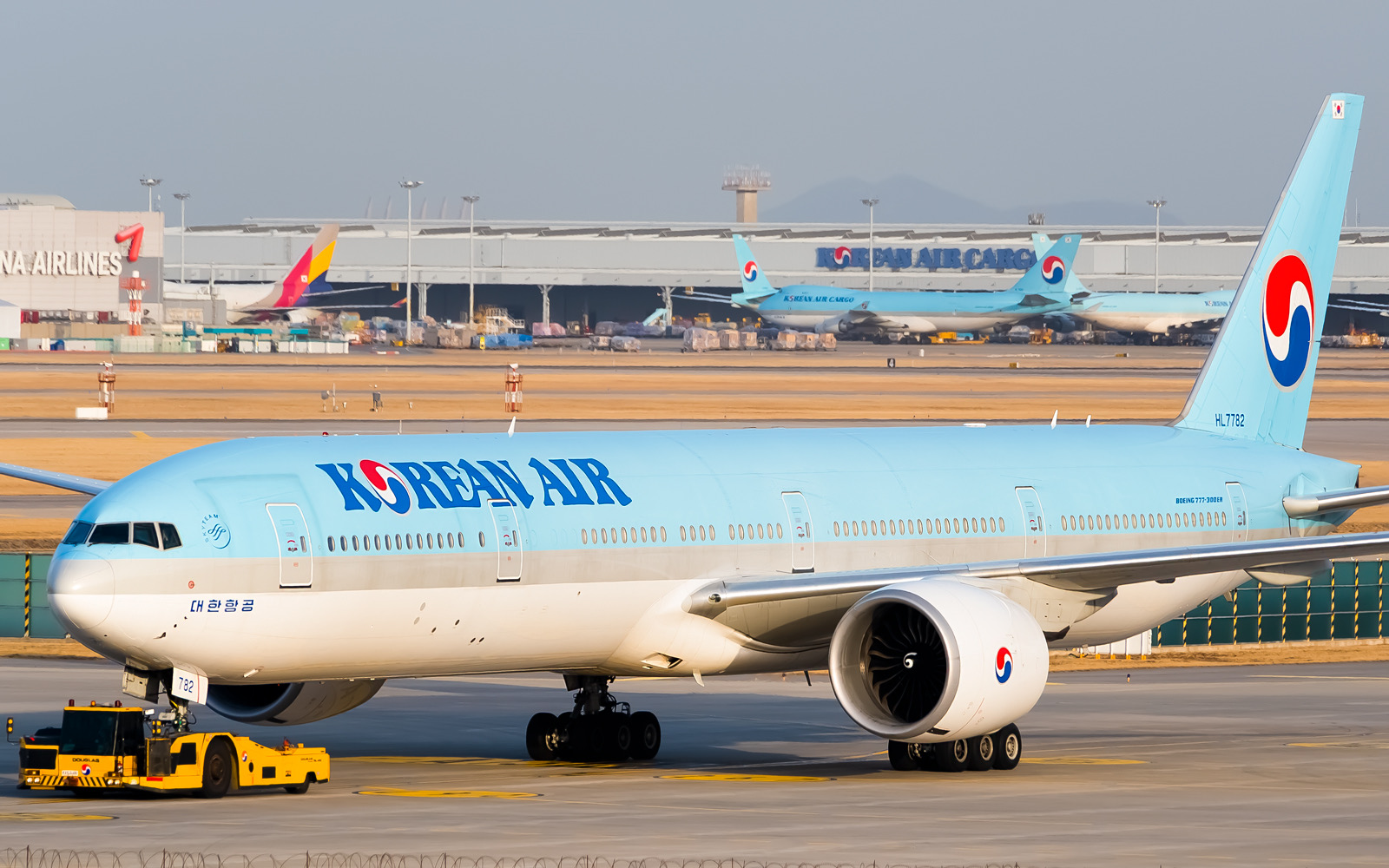

After a three-year hiatus due to the COVID-19 pandemic, Korean Air is set to resume service to destinations in China and Japan from their Seoul Incheon (ICN) mega hub and secondary Busan (PUS) hub.

Flights resuming to three Chinese cities by early October
At the onset of the COVID-19 pandemic in early 2020, Korean Air suspended all service to its Chinese destinations due to the mass lockdown in the nation, as would become the case with the rest of the world. Three years later in a post-COVID world, the carrier has re-instituted most of the routes it had operated pre-pandemic to China from its various hubs, but three destinations were still lacking in the Korean Air network.
These routes are from the Korean air mega-hub of Seoul Incheon (ICN) to Changsha (CSX), Wuhan (WUH), and Weihei (WEH). On July 19, the first of these routes was re-instituted into the Korean Air network, with a Korean Air Boeing 737-900ER operating the Seoul (ICN) to Changsha (CSX) route under flight number KE 819.
The airline's Seoul (ICN) to Wuhan (WUH) route is expected to re-start service on September 24, while Seoul (ICN) to Weihei (WEH) is expected to re-commence on September 27.
None of the resumed China routes talked about in this article will be operated on a daily basis. The Changsha (CSX) route will be operated 5 times weekly, Wuhan (WUH) route 3 times weekly, and the Weihei route will be operated 4 times weekly.

Resumption of service from Busan to two Japanese cities
Currently, the Korean government is actively bidding to hold the 2030 World Expo in the country's south-eastern coastal metropolis of Busan. In aid of the country's bid, Korean Air is going to resume services from its secondary hub at Busan Gimhae Int'l Airport (PUS) to Fukuoka (FUK) and Nagoya (NGO). Both routes are set to resume operations on September 27 and will be operated by Korean Air's Boeing 737-900ER fleet, of which the airline has 15.
Korean Air's Boeing 737-900ERs each have a capacity of 173 passengers, giving the airline a total capacity of 346 passengers round-trip on each respective route. Both flights will be operated on a daily basis.
Passenger traffic is at 82% of pre-pandemic levels with demand rising
Due to the colossal increase in international travel post-pandemic, Korean Air is having trouble coping with the higher-than-expected demand, so the airline will be increasing the frequency of flights on some of its most popular routes.

The increase in frequencies is as follows:
| Route | Frequency Increase |
| Seoul (ICN) - Chicago (ORD) | 5 to 7 flights per week |
| Seoul (ICN) - Dallas (DFW) | 4 to 5 flights per week |
| Seoul (ICN) - San Francisco (SFO) | 7 to 9 flights per week |
| Seoul (ICN) - Frankfurt (FRA) - Already increased frequency earlier in July | 5 to 7 flights per week |
| Seoul (ICN) - Ulaanbaatar (UBN) | 7 to 8 flights per week (July), 10 flights per week (August) |
| Seoul (ICN) - Sapporo (CTS) | 7 to 11 flights per week |
| Seoul (ICN) - Bali (DPS) | 9 to 11 flights per week |
Does Korean Air have enough aircraft to cope with the increase in flights?
As of July 2023, Korean Air is undergoing an albeit slow expansion of its fleet, with the airline due to receive multiple new Boeing and Airbus narrow-body aircraft.
The backbone of Korean Air's narrow-body fleet is the Boeing 737-900ER, with the rest of the airline's narrow-body fleet being composed of 10 A220-300s, 2 Boeing 737-800s, 5 Boeing 737 MAX-8s, and six Airbus A321neo LR's.
This puts the carrier at a disadvantage, considering that the wide-body fleet at the airline is twice as large. The backbone of Korean Air's long-haul fleet is the Boeing 777-300ER, of which the airline has 25.

The rest of the airline's wide-body fleet is as follows: 19 Airbus A330-300s, 10 Airbus A380-800s, 16 Boeing 747-8s, and 14 Boeing 787-9 Dreamliners.
Due to the major lacking of narrow-body aircraft, it is most likely that Korean Air will utilize some of its shorter-range wide-body aircraft on its higher-demand short- to medium-haul routes. A good example of this is the carrier's 1957 kilometer (1216 mile) Seoul Incheon (ICN) to Ulaanbaatar (UBN) route, which is operated daily using the carrier's A330-300 aircraft type.
Southwest Airlines Blames Brief System Outage for Boarding Delays and Checked Bag Disruptions » Aviation Fuel Prices Hit Six-Month High in September » American Airlines Swaps Landline Buses for CRJ-700 Flights on 84-Mile South Bend to Chicago Route »

Comments (0)
Add Your Comment
TAGS
ROUTES Korean Air Airbus Boeing World Expo Busan Seoul ICN PUS Korea Japan China RoutesRECENTLY PUBLISHED
 United 777 Diverts to Dublin After Cockpit Windscreen Cracks Over the Atlantic
A United Airlines Boeing 777 bound for Milan made a steep descent and diverted to Dublin after its cockpit windscreen cracked mid-flight.
NEWS
READ MORE »
United 777 Diverts to Dublin After Cockpit Windscreen Cracks Over the Atlantic
A United Airlines Boeing 777 bound for Milan made a steep descent and diverted to Dublin after its cockpit windscreen cracked mid-flight.
NEWS
READ MORE »
 Boeing's Touchscreen Flight Controls for 737 Draw Sharp Criticism from Pilots
Boeing's plan to introduce Touchscreen Control Display Units on the 737 has sparked backlash from pilots who warn of safety and usability concerns.
NEWS
READ MORE »
Boeing's Touchscreen Flight Controls for 737 Draw Sharp Criticism from Pilots
Boeing's plan to introduce Touchscreen Control Display Units on the 737 has sparked backlash from pilots who warn of safety and usability concerns.
NEWS
READ MORE »
 Southwest Airlines Blames Brief System Outage for Boarding Delays and Checked Bag Disruptions
Southwest Airlines confirms a brief technology outage disrupted boarding and checked bag operations, forcing gate agents to process travelers manually.
NEWS
READ MORE »
Southwest Airlines Blames Brief System Outage for Boarding Delays and Checked Bag Disruptions
Southwest Airlines confirms a brief technology outage disrupted boarding and checked bag operations, forcing gate agents to process travelers manually.
NEWS
READ MORE »
More than just headlines.
Get unlimited ad-free access to in-depth aviation news, premium stories, and exclusive insights other sites don't cover.
- Ad-free browsing on AeroXplorer
- Unlimited access to premium and exclusive articles
- Higher photo upload limits & commissions on sales
- Free access to Jetstream Magazine on higher tiers
- Ad-free browsing
- Sell aviation photos with 60% commission
- First week free!
- Everything in Basic+
- Unlimited premium articles
- Sell aviation photos with 70% commission
- Free Digital subscription to Jetstream Magazine
- First week free!
- Everything in Basic+ and Pro
- Sell aviaiton photos with 80% commission
- Early access to exclusive stories
- Free Digital+Print subscription to Jetstream Magazine