Federal investigators have concluded that a flight crew’s decision to land a HondaJet HA-420 in conditions exceeding its design limitations was the primary cause of a substantial damage-inducing runway excursion. The National Transportation Safety Board (NTSB) released its final report today, April 7, 2026, regarding the January 28, 2024, accident at Orlando International Airport, providing a stark reminder of the thin margins for error in light jet operations.
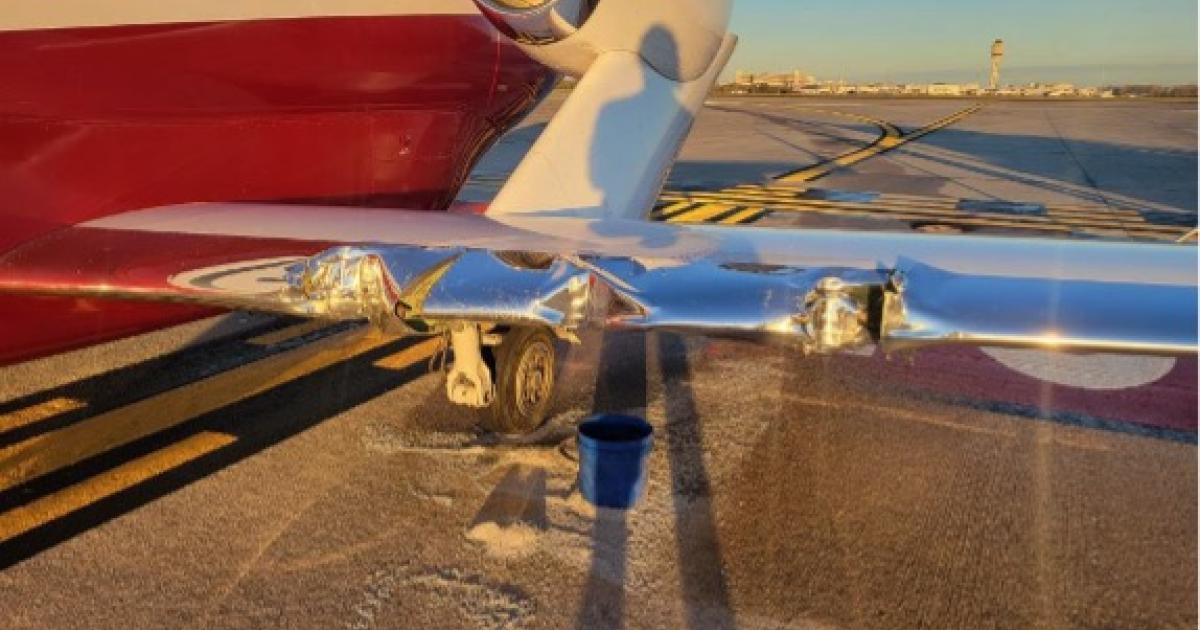
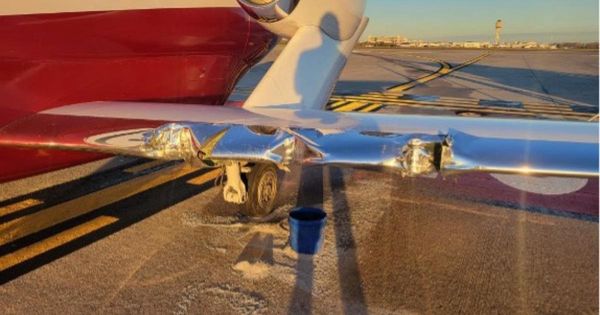
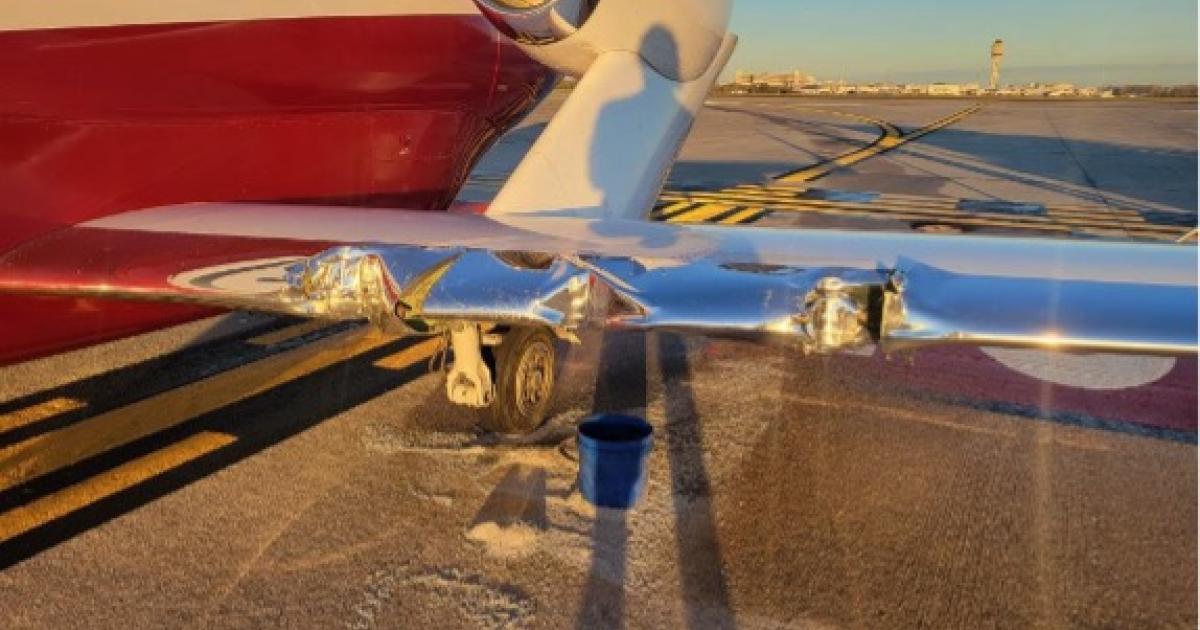
According to the findings, the Part 135 on-demand flight veered off the left side of Runway 36L after the pilots miscalculated wind gusts that were consistently blowing beyond the aircraft's certified crosswind threshold. While the two pilots and two passengers escaped without injury, the aircraft sustained significant structural damage to its left wing forward spar after striking a frangible distance-remaining sign.

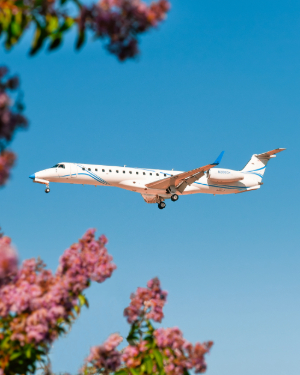
Photo: AeroXplorer/ Jack Jarzynka
Warnings Ignored in the Cockpit
Evidence recovered from the Cockpit Voice Recorder (CVR) paints a picture of a crew that was aware of the deteriorating weather but chose to push through. Nearly 90 minutes before touchdown, the crew reviewed ATIS data indicating winds from 270 degrees at 14 knots, gusting to 24 knots.
As the flight neared Orlando, the CVR recorded the crew actively discussing the crosswind component and company operating procedures. They even briefly considered diverting to an alternate airport with better-aligned runways, such as Orlando Executive (KORL). Despite these red flags, the NTSB noted:
“The pilot flying elected to continue to the planned destination airport.”
Just 1.2 nautical miles from the threshold, the tower controller warned the crew that gusts had increased to 24 knots, four knots above the HondaJet’s published 20-knot limitation. The NTSB's analysis of ASOS data confirmed that these gusts had been "consistently" above the limit for over an hour before the accident.
The Cockpit’s Next Revolution: When the Co-Pilot Is a Computer
Precision and Physics
The investigation focused heavily on the mechanics of the landing. Data indicates that as the aircraft touched down, the pilot attempted to maintain directional control, but the strong lateral force overwhelmed the aircraft's ability to remain centered. The jet drifted left, departing the pavement and sliding into the grass, where it impacted the signage.
In its final determination, the NTSB was clear regarding the chain of events:
“Contributing to the accident were the flight crew's continued approach to the runway despite knowing about the consistent wind gust crosswind component that exceeded the airplane's published crosswind limitation, and their incorrect wind gust crosswind calculation in flight.”
A thorough mechanical inspection of the airframe, braking system, and steering found no pre-impact anomalies. This confirms that the aircraft performed exactly as designed, but was placed in an environment it was never meant to navigate.
The Cost of a Four-Knot Error
The "substantial damage" noted by investigators highlights the vulnerability of high-performance composite wings to ground-level obstacles. The impact of the frangible sign was enough to compromise the integrity of the forward spar, necessitating a complex and costly repair process.
Safety experts suggest this report should catalyze renewed focus on "Go-Around" culture, particularly in the business aviation sector, where "get-there-itis" can often cloud judgment. The NTSB emphasized that the conditions “should have necessitated either an earlier diversion to an alternate airport that was more aligned with the wind or a go-around during short final approach.”
As the industry digests these findings, the message to operators remains clear: aircraft limitations are not suggestions, and the math of a crosswind component is non-negotiable.
Southwest Airlines Considers Boeing 787 Order for Long-Haul International Expansion » This Week in Aviation: The 10 Stories That Mattered Most » Caribbean Airlines Expands Network With New Toronto and Caracas Routes »

Comments (2)
 [hidden]
[hidden]
[hidden]
Add Your Comment
TAGS
NEWS HondaJet NTSB Aviation Safety Business Aviation Pilot Error Orlando Airport AccidentRECENTLY PUBLISHED
 This Week in Aviation: The 10 Stories That Mattered Most
From major airline developments to aircraft updates and industry shifts, this weekly recap highlights the ten most-read aviation stories from the week of October 04.
INFORMATIONAL
READ MORE »
This Week in Aviation: The 10 Stories That Mattered Most
From major airline developments to aircraft updates and industry shifts, this weekly recap highlights the ten most-read aviation stories from the week of October 04.
INFORMATIONAL
READ MORE »
 4th vs 5th Generation Fighter Jets: How Fighter Jets Have Evolved
A look at what separates fourth- and fifth-generation fighter jets, from stealth and sensor fusion to combat capability and cost.
INFORMATIONAL
READ MORE »
4th vs 5th Generation Fighter Jets: How Fighter Jets Have Evolved
A look at what separates fourth- and fifth-generation fighter jets, from stealth and sensor fusion to combat capability and cost.
INFORMATIONAL
READ MORE »
 United 777 Diverts to Dublin After Cockpit Windscreen Cracks Over the Atlantic
A United Airlines Boeing 777 bound for Milan made a steep descent and diverted to Dublin after its cockpit windscreen cracked mid-flight.
NEWS
READ MORE »
United 777 Diverts to Dublin After Cockpit Windscreen Cracks Over the Atlantic
A United Airlines Boeing 777 bound for Milan made a steep descent and diverted to Dublin after its cockpit windscreen cracked mid-flight.
NEWS
READ MORE »
More than just headlines.
Get unlimited ad-free access to in-depth aviation news, premium stories, and exclusive insights other sites don't cover.
- Ad-free browsing on AeroXplorer
- Unlimited access to premium and exclusive articles
- Higher photo upload limits & commissions on sales
- Free access to Jetstream Magazine on higher tiers
- Ad-free browsing
- Sell aviation photos with 60% commission
- First week free!
- Everything in Basic+
- Unlimited premium articles
- Sell aviation photos with 70% commission
- Free Digital subscription to Jetstream Magazine
- First week free!
- Everything in Basic+ and Pro
- Sell aviaiton photos with 80% commission
- Early access to exclusive stories
- Free Digital+Print subscription to Jetstream Magazine