Walk onto any business aviation ramp, and you can spot a Falcon from a distance. The lines give it away. Dassault Aviation has spent decades refining a design language that draws from its fighter jet heritage, and the result is a family of business jets that look fast even when parked. But beauty alone does not sell aircraft to enthusiasts who track tail numbers and compare cabin cross sections. Versatility and space do. On those counts, Dassault has built a case worth examining.
Consider the lineup as it stands today. The Falcon 6X entered service recently, the Falcon 10X remains in development, and the older 2000 and 900 series continue to serve operators who value short field performance and trijet reliability. Each model carries the same family DNA, but each answers a different question about how you want to fly.
The case for cabin space
The Falcon 6X claims the tallest and widest cabin in its class. The numbers matter here. The cabin measures 6 feet 6 inches tall and 8 feet 6 inches wide, which gives passengers room to stand fully upright and move without ducking or sidestepping. For a flight that lasts ten or more hours, those inches translate into something close to comfort.
Space inside a business jet is not just about square footage. It is about how the cabin is divided. Dassault offers three lounge zones on the 6X, plus a galley and a crew rest area. You can configure the aft section as a private suite with a bed, or leave it open as a conference space. The flexibility appeals to operators who fly mixed missions, sometimes carrying executives, sometimes carrying families, sometimes carrying both on the same trip.
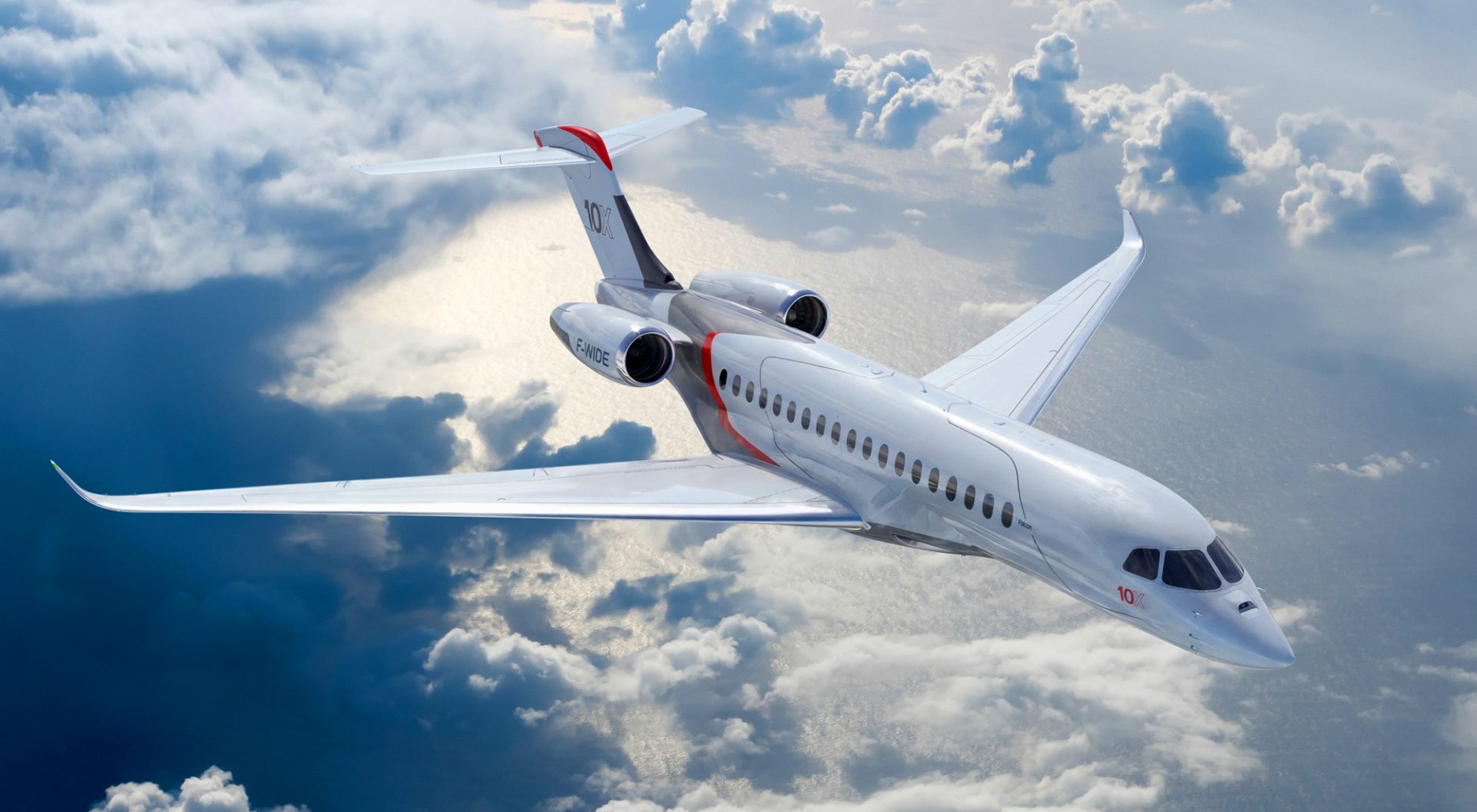
The Falcon 10X, when it enters service, promises to push the envelope further. Dassault has announced a cabin cross-section that will exceed the 6X, with a width of 9 feet 1 inch. That puts it closer to narrowbody airliner dimensions than to traditional business jets. Whether the market needs that much room is a fair question, but Dassault is betting that buyers at the top end will pay for it.

Versatility built into the airframe
Falcons earned their reputation on short runways. The trijet configuration of the 900 and earlier models was not a styling choice. It gave operators the ability to land at airports that twin-engine competitors could not touch, and it provided redundancy on long overwater routes. The 2000 series continued that tradition with a twin-engine layout that still emphasizes field performance over outright cruise speed.
The 6X carries the philosophy forward. It can operate from runways under 5,000 feet at typical weights, which opens up airports that would otherwise require a smaller aircraft. For owners who fly into mountain resorts, island destinations, or city center fields, that capability is not a marketing line. It is the reason they bought the airplane.
Range tells a similar story. The 6X covers roughly 5,500 nautical miles, which connects most city pairs that matter to international travelers. The 8X stretches that figure further. The 10X, on paper, will reach 7,500 nautical miles, putting nonstop Hong Kong to New York within reach.
The Shape of Disaster: The Plane That Kept Falling Apart Mid-Air
Design as engineering
Dassault designs both fighters and business jets in the same building. The Rafale program and the Falcon program share engineers, tools, and digital design methods. You can see the influence in details like the wing planform and the area ruled fuselage of the newer models. These are not cosmetic touches. They reduce drag, improve handling at low speeds, and contribute to the short field numbers that operators rely on.
The cockpit reflects the same approach. The FalconEye combined vision system, which fuses enhanced and synthetic vision into a single display, came from work Dassault did on military head-up displays. Pilots who fly the system describe it as the closest thing to flying in clear weather when the weather is anything but. That is the kind of feature that wins over chief pilots, and chief pilots influence buying decisions more than brochures admit.
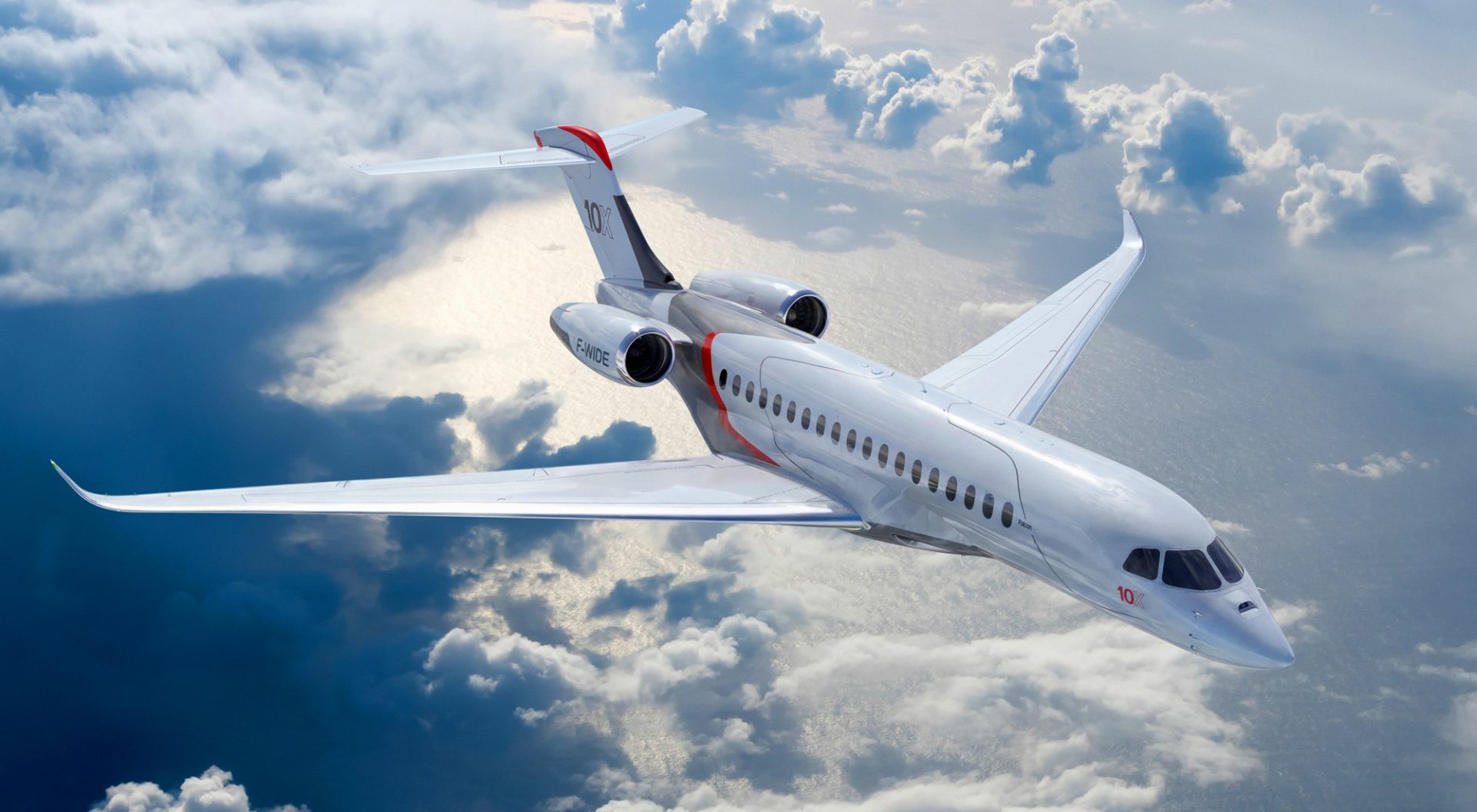
Photo: Dassault Falcon
What enthusiasts should watch
Two questions hang over the Falcon family right now. First, can Dassault deliver the 10X on its current schedule? The program has already absorbed engine changes after Rolls Royce stepped back, with Pratt and Whitney now supplying the powerplant. Aviation enthusiasts know that engine transitions rarely happen without delays.
Second, how will the 6X perform in service over the next several years? Early reports from operators have been positive, but the real test comes when fleets accumulate hours and dispatch reliability data starts to appear. Dassault has historically scored well on this metric, but each new airframe has to earn its reputation independently.
For now, the Falcon family offers something that the business aviation market increasingly demands. You get cabins that feel like rooms instead of tubes. You get airfield access that competitors cannot match. You get airplanes that look like Dassault built them, because they did. Whether that combination justifies the price tags is a question each buyer answers individually. But the case is there, and it is a serious one.
Delta Air Lines Moves to Claim Top Spot at LAX With New Routes and Expanded Schedule » Why Do Pilots Turn Off Cabin Lights During Takeoff and Landing? The Real Safety Reason Explained » Qantas Sets 2028 Launch for First Nonstop Sydney to New York Flights »

Comments (0)
Add Your Comment
TAGS
INFORMATIONAL Dassault Aviation Falcon 10X Falcon Aircraft Family Business Aviation Aircraft Design Cabin Innovation Performance Aircraft Luxury Jets Private Aviation Aerodynamics Flight Performance Falcon 8X Falcon 6X Falcon 5X Business Jet MarketRECENTLY PUBLISHED
 UAE Suspends Iranian Airline Flights to Comply With US Sanctions, Triggering Retaliatory Airspace Ban From Tehran
The UAE has halted all Iranian carrier operations to comply with reimposed US sanctions, prompting Iran to bar Emirati airlines from its airspace.
NEWS
READ MORE »
UAE Suspends Iranian Airline Flights to Comply With US Sanctions, Triggering Retaliatory Airspace Ban From Tehran
The UAE has halted all Iranian carrier operations to comply with reimposed US sanctions, prompting Iran to bar Emirati airlines from its airspace.
NEWS
READ MORE »
 What Are Strakes? The Aerodynamic Fins Attached on an Aircraft's Fuselage
A look at how aircraft strakes quietly shape airflow, improve stability, and enhance aerodynamic performance.
INFORMATIONAL
READ MORE »
What Are Strakes? The Aerodynamic Fins Attached on an Aircraft's Fuselage
A look at how aircraft strakes quietly shape airflow, improve stability, and enhance aerodynamic performance.
INFORMATIONAL
READ MORE »
 BETA Technologies Begins Electric Aircraft Operations in North Carolina to Support Rural Healthcare Access
BETA Technologies launches its ALIA CTOL electric aircraft in North Carolina under a FAA program aimed at improving rural healthcare logistics.
NEWS
READ MORE »
BETA Technologies Begins Electric Aircraft Operations in North Carolina to Support Rural Healthcare Access
BETA Technologies launches its ALIA CTOL electric aircraft in North Carolina under a FAA program aimed at improving rural healthcare logistics.
NEWS
READ MORE »
More than just headlines.
Get unlimited ad-free access to in-depth aviation news, premium stories, and exclusive insights other sites don't cover.
- Ad-free browsing on AeroXplorer
- Unlimited access to premium and exclusive articles
- Higher photo upload limits & commissions on sales
- Free access to Jetstream Magazine on higher tiers
- Ad-free browsing
- Sell aviation photos with 60% commission
- First week free!
- Everything in Basic+
- Unlimited premium articles
- Sell aviation photos with 70% commission
- Free Digital subscription to Jetstream Magazine
- First week free!
- Everything in Basic+ and Pro
- Sell aviaiton photos with 80% commission
- Early access to exclusive stories
- Free Digital+Print subscription to Jetstream Magazine