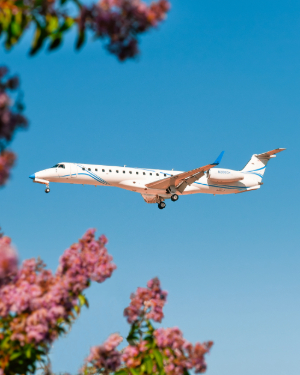
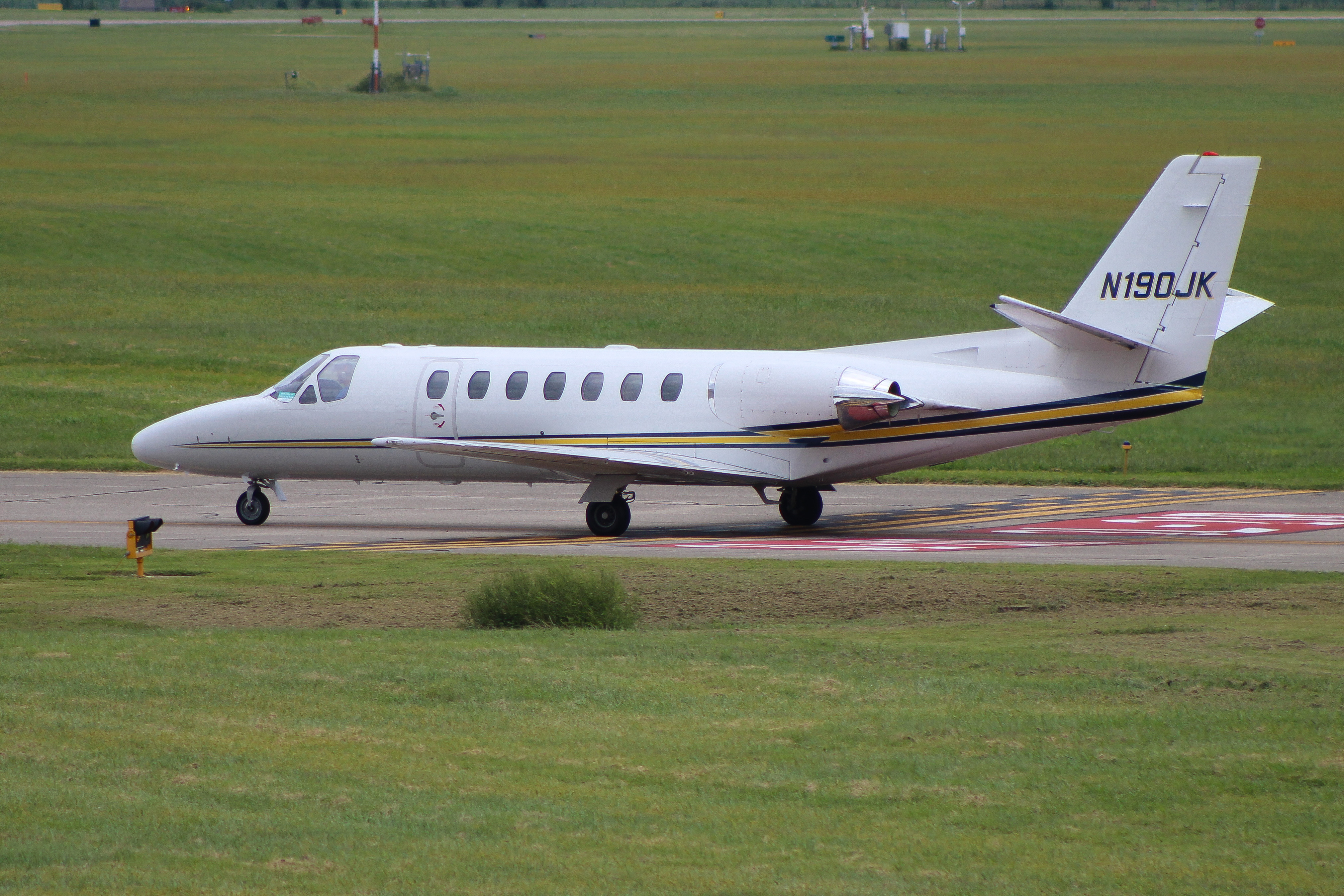

On Sunday, September 4, 2022, a Cessna Citation 551, registered OE-FGR crashed into the Baltic Sea under mysterious circumstances. The private jet was carrying four individuals from Jerez Airport (XRY/LEJR) in Spain to Cologne Bonn Airport (CGN/EDDK) in Germany. At approximately 14:56 local time (12:56 UTC) the aircraft took off from runway 20 at Jerez and proceeded to climb on its filed route as normal.

The Problems Begin
Shortly after takeoff, the crew reported to Spanish Air Traffic Control that there was a problem with cabin pressure. Shortly before the Citation jet entered French airspace, contact with the aircraft was lost. French and Spanish fighter jets were scrambled to intercept the 551 jet to see why it was not responding to calls from Air Traffic Control. None of the fighter jet pilots were able to see anyone inside the cockpit.

Mid-Flight
French fighter jets escorted the Citation until it entered German airspace. It was evident that the aircraft was on autopilot the entire time, as when the jet neared its destination of Cologne, it did not descend. Rather, it continued flying straight over the airport at its cruising altitude of 36,000 feet. German fighter jets escorted the "ghost" plane until it entered Danish airspace. The final fighter jets, F-16s from the Royal Danish Air Force (RDAF) would escort the now doomed aircraft and observe the jet until it began to spin out of control and crash just outside of Latvian airspace.
The Crash
At 17:30 UTC the Cessna Citation 551, which had been presumably flying on autopilot since the aircraft lost contact with ATC, began losing speed and altitude. It was around this time that the aircraft most likely ran out of fuel. About 14 minutes later, at 17:44 UTC, the plane disappeared off the radar and crashed into the sea 15 kilometers off the Latvian coast. Its last position indicated that the aircraft was at 2100 feet and spiraling at -8000 feet per minute.

Aftermath
After the crash, the Swedish Coast Guard was deployed to the area of the crash site. Wreckage and oil stains were found floating in the water. The "chance of finding survivors is minimal" said Lars Antonsson from the Maritime and Air Rescue Centre. A passenger ship belonging to Stena Line, M.F. Urd, which was en route to Sweden when the crash occurred, diverted to the site to help with search and rescue operations.

Approximately 12 hours after the crash, the identities of those onboard were revealed. The pilot of the Citation 551 Jet was 72-year-old German entrepreneur Peter Griesemann. He was flying with his 68-year-old wife, Juliane, along with his 26-year-old daughter and 27-year-old male friend.
Possible Causes
There most likely cause at this time seems to be the depressurization of the aircraft, as the crew of the Citation jet reported having pressurization problems after takeoff. At an altitude of 36,000 feet, just a few minutes of de-pressurization at such high altitudes can cause dizziness, and fainting due to the lack of oxygen and cabin pressure. Only the official investigation will reveal exactly what caused the crash of this jet.
American Airlines Grapples With Faulty Business Class Seats on New Airbus A321XLR Fleet » This Week in Aviation: The 10 Stories That Mattered Most » Congressman Tom Tiffany Survives Emergency Plane Landing in Lake Wausau »

Comments (0)
Add Your Comment
TAGS
NEWS Breaking News Cessna Citation Plane Crash Crash Europe Austria MysteryRECENTLY PUBLISHED
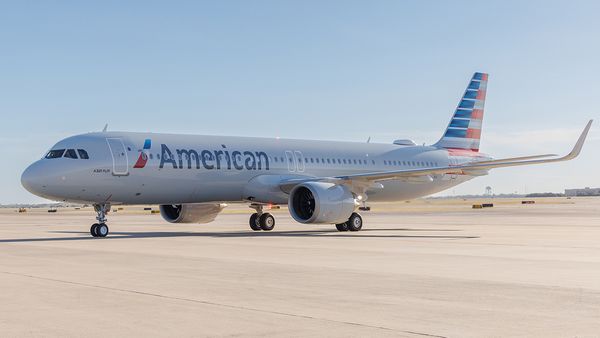 American Airlines Grapples With Faulty Business Class Seats on New Airbus A321XLR Fleet
American Airlines is blocking broken business class suites on its new Airbus A321XLR jets, disrupting premium travelers on transatlantic routes.
NEWS
READ MORE »
American Airlines Grapples With Faulty Business Class Seats on New Airbus A321XLR Fleet
American Airlines is blocking broken business class suites on its new Airbus A321XLR jets, disrupting premium travelers on transatlantic routes.
NEWS
READ MORE »
 NBC NewsChopper 4 Crash in Los Angeles Kills Three, Injures Two While Covering Fatal Bus Collision
An NBC News helicopter crashed in Chatsworth while covering a fatal LA bus collision, killing three and injuring two others in a devastating incident.
NEWS
READ MORE »
NBC NewsChopper 4 Crash in Los Angeles Kills Three, Injures Two While Covering Fatal Bus Collision
An NBC News helicopter crashed in Chatsworth while covering a fatal LA bus collision, killing three and injuring two others in a devastating incident.
NEWS
READ MORE »
 Amazon Suspends Cargo Carrier 21 Air After Deadly Miami Runway Crash
Amazon has halted operations with cargo carrier 21 Air following a Prime Air plane crash near Miami that killed multiple crew members.
NEWS
READ MORE »
Amazon Suspends Cargo Carrier 21 Air After Deadly Miami Runway Crash
Amazon has halted operations with cargo carrier 21 Air following a Prime Air plane crash near Miami that killed multiple crew members.
NEWS
READ MORE »
More than just headlines.
Get unlimited ad-free access to in-depth aviation news, premium stories, and exclusive insights other sites don't cover.
- Ad-free browsing on AeroXplorer
- Unlimited access to premium and exclusive articles
- Higher photo upload limits & commissions on sales
- Free access to Jetstream Magazine on higher tiers
- Ad-free browsing
- Sell aviation photos with 60% commission
- First week free!
- Everything in Basic+
- Unlimited premium articles
- Sell aviation photos with 70% commission
- Free Digital subscription to Jetstream Magazine
- First week free!
- Everything in Basic+ and Pro
- Sell aviaiton photos with 80% commission
- Early access to exclusive stories
- Free Digital+Print subscription to Jetstream Magazine