
Most flyers hate turbulence and for good reason. The bumps can make some sick and can cause disruptions to inflight service. However, most passengers don’t imagine turbulence so severe that it results in injuries.
Sadly, this is exactly what happened on a Hawaiian Airlines flight from Honolulu Daniel K. Inouye Airport (HNL) to Sydney Kingsford Smith Airport (SYD).

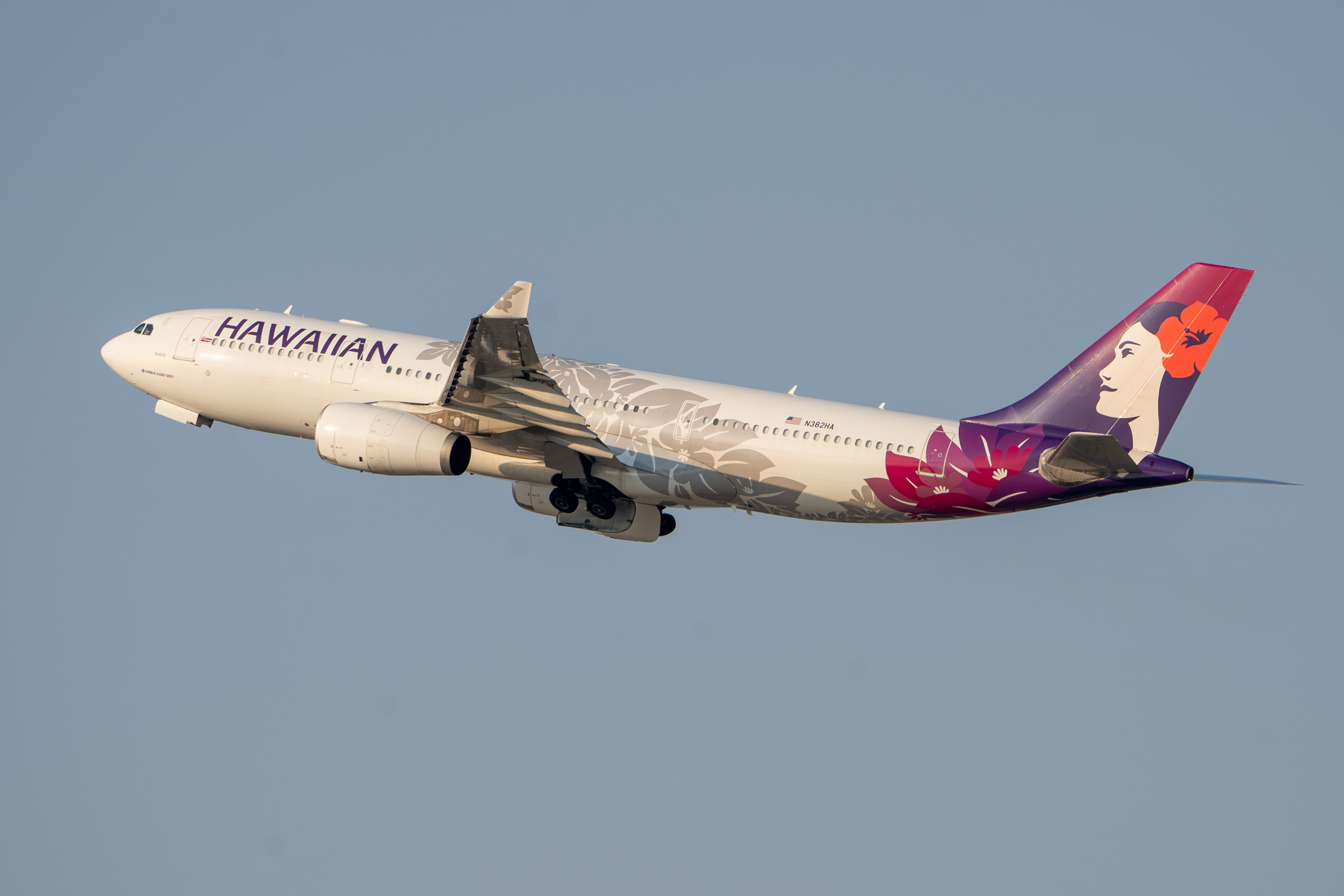
The flight, HA450, operated by an Airbus A330-200, was cruising normally over the Pacific Ocean, approximately 5 hours into the flight of 11 hours when unexpected turbulence occurred.
The turbulence was described as severe and several passengers were unable to stay seated and were projected toward the ceiling of the cabin, causing injury. The reason for this was that the bumps occurred very suddenly and therefore cabin crew members were not able to appropriately prepare the passengers by reminding them to sit down and keep their seat belts fastened.
This is not necessarily the fault of Hawaiian Airlines, moreover, it was simply a challenging situation to face and the sudden nature of the crisis didn’t allow for time to think and brief others. It is not uncommon to encounter unexpected turbulence that has not been forecasted or even reported by preceding aircraft.
Thankfully, only 3 passengers and 4 cabin crew members were harmed during the bout of severe turbulence, which lasted less than 5 minutes in total. The flight then proceeded normally towards Sydney and upon arrival, 3 people were transported by ambulance to hospital with others having some minor scrapes and bruises.

It is important to note that this episode was a direct result of a phenomenon known as CAT, or Clear Air Turbulence, something that is very difficult to predict as it’s not associated with other weather systems or storms - many pilots might not see it coming until entering the area of CAT.
The good news is that none of the injuries were life-threatening and all passengers and crew members are in a completely stable condition.
The aircraft was also exposed to high structural loads and therefore was inspected closely upon arrival in Sydney. However the aircraft mechanics found no damage or problems with the aircraft, and the return flight transpired completely normally.

As common as turbulence is, it rarely causes aircraft incidents or passenger and crew members harm. This can be down to the very careful safety precautions followed in the aviation sector, underpinned by countries’ aviation regulators, and frequent, thorough training.
25 Years After 9/11: How Airline Security Transformed and What Is Changing Once Again » Frontier Airlines Passengers Stranded Overnight After Crew Timeout From Weather Diversion » Emirates Wins Approval for Direct Berlin Flights After 22-Year Push »

Comments (6)
 Dwight
This just reinforces the recommendation that all passengers and crew use seat belts when seated. My wife was a flight attendant on a G-V in 2017. They encountered severe turbulence just at the start of the descent (almost certainly wake turbulence) as there were no PIREPS or forecast of turbulence, convective weather or mountain wave. She recently had here 5th surgery to attempt to address chronic severe pain in here shoulder from injuries from that accident……
Petr
It is the passengers own fault that they were injured. Airline safety advises that passengers have their seat belts on at all times when seated. Don't wear it at your own risk.
Feel sorry for the crew who were trying to do their job.
Joao
why are you being so quick to judge people? Were you on that flight? On a 11 hours flight can't people leave they seats to go to the toilet? How is it the passengers fault? Don't spread hate and judgment. Broaden your mind. Be kind.
Mike Charles
Looking at the AeroXplorer route map of the flight, I am astounded that they were going the long way when the flight directly across the Pacific Ocean is so much shorter (???)
Kent Milani
Surely, one flies from Honolulu to Sydney by heading SW. This AeroXplorer track seems odd. As well, Flightaware tells me HA450 is Kansai International (Japan) to Honolulu.
Raleigh Truitt
It's not that "many pilots might not see it coming"; it's that CAT can't be seen period. That's why it's call CLEAR air turbulence. See my article, "Plain Talk About Plane Claims: An Air Carrier Claims Examiner's Handbook" appearing in the Spring 2015 issue of the JOURNAL OF AIR LAW AND COMMERCE.
Dwight
This just reinforces the recommendation that all passengers and crew use seat belts when seated. My wife was a flight attendant on a G-V in 2017. They encountered severe turbulence just at the start of the descent (almost certainly wake turbulence) as there were no PIREPS or forecast of turbulence, convective weather or mountain wave. She recently had here 5th surgery to attempt to address chronic severe pain in here shoulder from injuries from that accident……
Petr
It is the passengers own fault that they were injured. Airline safety advises that passengers have their seat belts on at all times when seated. Don't wear it at your own risk.
Feel sorry for the crew who were trying to do their job.
Joao
why are you being so quick to judge people? Were you on that flight? On a 11 hours flight can't people leave they seats to go to the toilet? How is it the passengers fault? Don't spread hate and judgment. Broaden your mind. Be kind.
Mike Charles
Looking at the AeroXplorer route map of the flight, I am astounded that they were going the long way when the flight directly across the Pacific Ocean is so much shorter (???)
Kent Milani
Surely, one flies from Honolulu to Sydney by heading SW. This AeroXplorer track seems odd. As well, Flightaware tells me HA450 is Kansai International (Japan) to Honolulu.
Raleigh Truitt
It's not that "many pilots might not see it coming"; it's that CAT can't be seen period. That's why it's call CLEAR air turbulence. See my article, "Plain Talk About Plane Claims: An Air Carrier Claims Examiner's Handbook" appearing in the Spring 2015 issue of the JOURNAL OF AIR LAW AND COMMERCE.
Add Your Comment
TAGS
NEWS Hawaiian Airlines Turbulence Honolulu Sydney Clear Air Turbulence Airbus A330 A330-200 Injuries IncidentRECENTLY PUBLISHED
 British Airways Returns to Tanzania After 15 Years With Direct Flights to Kilimanjaro and Zanzibar
British Airways will launch direct flights from London Gatwick to Kilimanjaro and Zanzibar in summer 2027, marking its return to Tanzania after 15 years.
NEWS
READ MORE »
British Airways Returns to Tanzania After 15 Years With Direct Flights to Kilimanjaro and Zanzibar
British Airways will launch direct flights from London Gatwick to Kilimanjaro and Zanzibar in summer 2027, marking its return to Tanzania after 15 years.
NEWS
READ MORE »
 The Engineering Behind the 777X's Folding Wingtips
The engineering behind the folding wingtips onboard the Boeing 777X
INFORMATIONAL
READ MORE »
The Engineering Behind the 777X's Folding Wingtips
The engineering behind the folding wingtips onboard the Boeing 777X
INFORMATIONAL
READ MORE »
 Frontier Airlines Introduces Cancel For Any Reason Option For Passengers Up To 24 Hours Before Departure
Frontier Airlines now lets passengers cancel any flight up to 24 hours before departure through a new Cancel For Any Reason product powered by Hopper.
NEWS
READ MORE »
Frontier Airlines Introduces Cancel For Any Reason Option For Passengers Up To 24 Hours Before Departure
Frontier Airlines now lets passengers cancel any flight up to 24 hours before departure through a new Cancel For Any Reason product powered by Hopper.
NEWS
READ MORE »
More than just headlines.
Get unlimited ad-free access to in-depth aviation news, premium stories, and exclusive insights other sites don't cover.
- Ad-free browsing on AeroXplorer
- Unlimited access to premium and exclusive articles
- Higher photo upload limits & commissions on sales
- Free access to Jetstream Magazine on higher tiers
- Ad-free browsing
- Sell aviation photos with 60% commission
- First week free!
- Everything in Basic+
- Unlimited premium articles
- Sell aviation photos with 70% commission
- Free Digital subscription to Jetstream Magazine
- First week free!
- Everything in Basic+ and Pro
- Sell aviaiton photos with 80% commission
- Early access to exclusive stories
- Free Digital+Print subscription to Jetstream Magazine