
Join us virtually this week. Free to attend • Seats are limited.

A Uruguay-bound Air Europa flight diverted to Natal, Brazil, after the Boeing 787 hit severe turbulence, injuring at least 30 passengers.
The Air Europa flight departed Madrid (MAD) on Sunday night at 00:26 local time with 325 passengers bound for Montevideo (MVD), Uruguay.
According to Flightradar24, previous flights between Spain and Uruguay’s capitals averaged 11 hours and 47 minutes. However, after about 7 hours of flight, the Boeing Dreamliner began descending into Natal (NAT) after the flight hit severe turbulence off the coast of Brazil.

Passengers onboard the flight recounted the horrific moments as passengers flew into the ceiling and even got stuck in overhead bins.
According to passengers onboard the flight who spoke to Uruguay’s El Observador newspaper, the flight was like a “horror movie.” Passengers described the sensation as “terrifying, feeling like you were falling and that it would never end. And you were aware that you were falling at an incalculable speed. And you felt like it was going to end there, that you were going to die.”
Before the most severe turbulence hit, pilots reportedly warned passengers of turbulence. Passenger Evangelina Saravia told Spanish news channel Telemundo that after about 20 minutes of “minimal” turbulence, passengers began to relax and loosen or even unbuckle seatbelts before the plane “entered an air well.”
After the event, the aircraft landed safely at Natal International Airport in northern Brazil. The 787 was greeted by 15 ambulances and dozens of paramedics who rushed onboard the aircraft to tend to passengers.

The local health agency reported that more than 30 passengers were being treated for injuries. In addition, the team coordinated with the countries of Spain, Uruguay, Israel, Germany, and Bolivia.
Of the injured passengers, many suffered cervical fractures, facial injuries, and chest pain. Few passengers were rushed to the hospital to treat injuries, but most were discharged with only minor injuries.
A Rise in Severe Turbulence Incidents
The Air Europa incident comes only weeks after a Singapore Airlines flight was similarly hit by severe turbulence on May 20, 2024. The flight, SQ321, operated between London Heathrow and Singapore Changi when it experienced severe turbulence over the Bay of Bengal. After diverting to Bangkok, Thailand, it was revealed that one man had died during the event due to a possible heart attack.

Turbulence is often unexpected and is generated by rough jet streams, atmospheric pressure, or weather storms. Although pilots can receive reports from aircraft ahead of them or air traffic control, clear-air turbulence is difficult to detect ahead of time.
According to the FAA, while only 163 people suffered severe injuries from 2009 to 2022 due to turbulence, severe turbulence incidents continue to rise as global climate change increases.
Passengers should take additional precautions should severe turbulence ever impact their flight. Make sure you always wear your seatbelt, even in seemingly calm air. Ensure all your belongings are stored under the seat in front of you or in an overhead bin. If you are out of your seat during turbulence, find an empty seat closest to you and fasten your seat belt to avoid severe injuries.
The Hidden Technology Moving Today’s Aircraft: Inside UMBRAGROUP » Airbus and Boeing Pursue Out-of-Autoclave Composites to Speed Next-Generation Airframe Production » Powerful 7.4-Magnitude Earthquake Disrupts Operations at Several Colombian Airports »

Comments (0)
Add Your Comment
TAGS
NEWS Air europa Brazil Madrid SpainFlight safety EuropaRECENTLY PUBLISHED
 What Aviation Insurance Usually Doesn't Cover and Why It Matters
Learn what aircraft insurance commonly excludes, including wear and tear, mechanical breakdowns, pilot qualifications, and unauthorized aircraft use.
INFORMATIONAL
READ MORE »
What Aviation Insurance Usually Doesn't Cover and Why It Matters
Learn what aircraft insurance commonly excludes, including wear and tear, mechanical breakdowns, pilot qualifications, and unauthorized aircraft use.
INFORMATIONAL
READ MORE »
 British Airways' A380 Turns Back to Johannesburg After Radar Failure on 7-Hour Flight to Nowhere
A British Airways Airbus A380 bound for London Heathrow turned around after nearly seven hours in the air following a weather radar failure.
NEWS
READ MORE »
British Airways' A380 Turns Back to Johannesburg After Radar Failure on 7-Hour Flight to Nowhere
A British Airways Airbus A380 bound for London Heathrow turned around after nearly seven hours in the air following a weather radar failure.
NEWS
READ MORE »
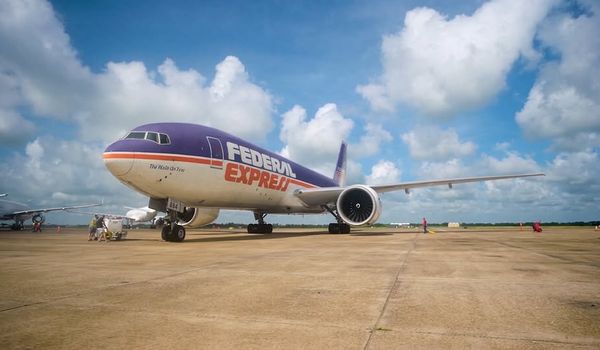 FedEx Reveals Retro-Livery Boeing 777F as Memphis Airport Takes Founder's Name
FedEx honors its history with a heritage-painted Boeing 777F and renames Memphis International Airport after founder Frederick W. Smith.
NEWS
READ MORE »
FedEx Reveals Retro-Livery Boeing 777F as Memphis Airport Takes Founder's Name
FedEx honors its history with a heritage-painted Boeing 777F and renames Memphis International Airport after founder Frederick W. Smith.
NEWS
READ MORE »
More than just headlines.
Get unlimited ad-free access to in-depth aviation news, premium stories, and exclusive insights other sites don't cover.
- Ad-free browsing on AeroXplorer
- Unlimited access to premium and exclusive articles
- Higher photo upload limits & commissions on sales
- Free access to Jetstream Magazine on higher tiers
- Ad-free browsing
- Sell aviation photos with 60% commission
- First week free!
- Everything in Basic+
- Unlimited premium articles
- Sell aviation photos with 70% commission
- Free Digital subscription to Jetstream Magazine
- First week free!
- Everything in Basic+ and Pro
- Sell aviaiton photos with 80% commission
- Early access to exclusive stories
- Free Digital+Print subscription to Jetstream Magazine