
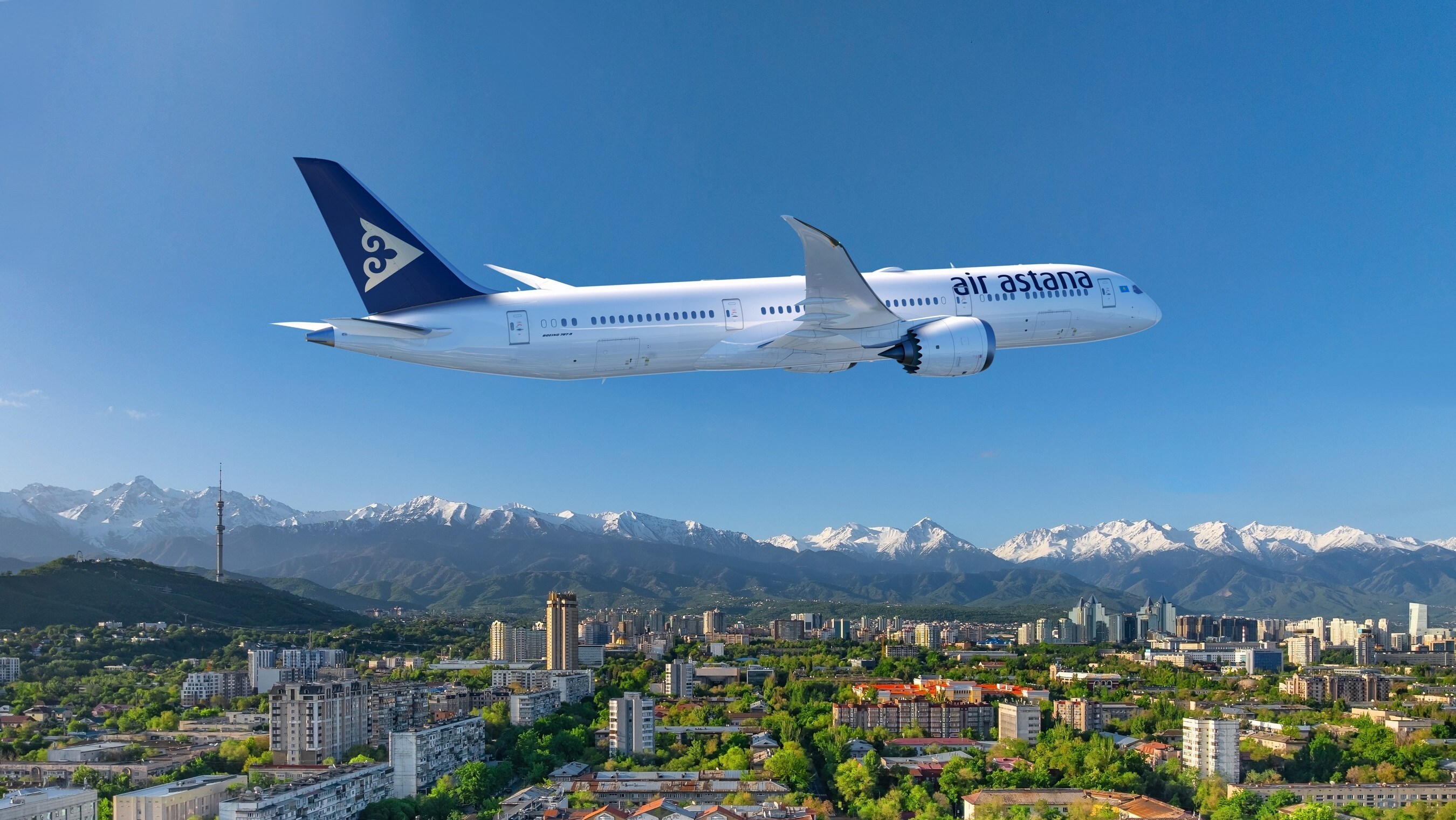
Air Astana, the flag carrier of Kazakhstan, has formally sought financial support from the Kazakh state to help fund the launch of direct flights to the United States, a goal the airline and its government have pursued for nearly a decade, only to see it repeatedly pushed back by aircraft delivery delays, geopolitical turbulence, and an airspace closure that has fundamentally redrawn the geography of long-haul flying from Central Asia.
The state aid request arrives just days after Kazakhstan's Prime Minister Olzhas Bektenov publicly confirmed at a government meeting on May 19 that the country plans to launch direct flights to New York in 2027, as part of a broader push to transform the country into a major regional aviation and transit hub. The proximity of these two developments, a prime ministerial target date and a carrier asking for financial backing, underscores how closely the US route ambition is tied to state policy, not just commercial strategy.
A Long-Delayed Dream Takes on New Urgency
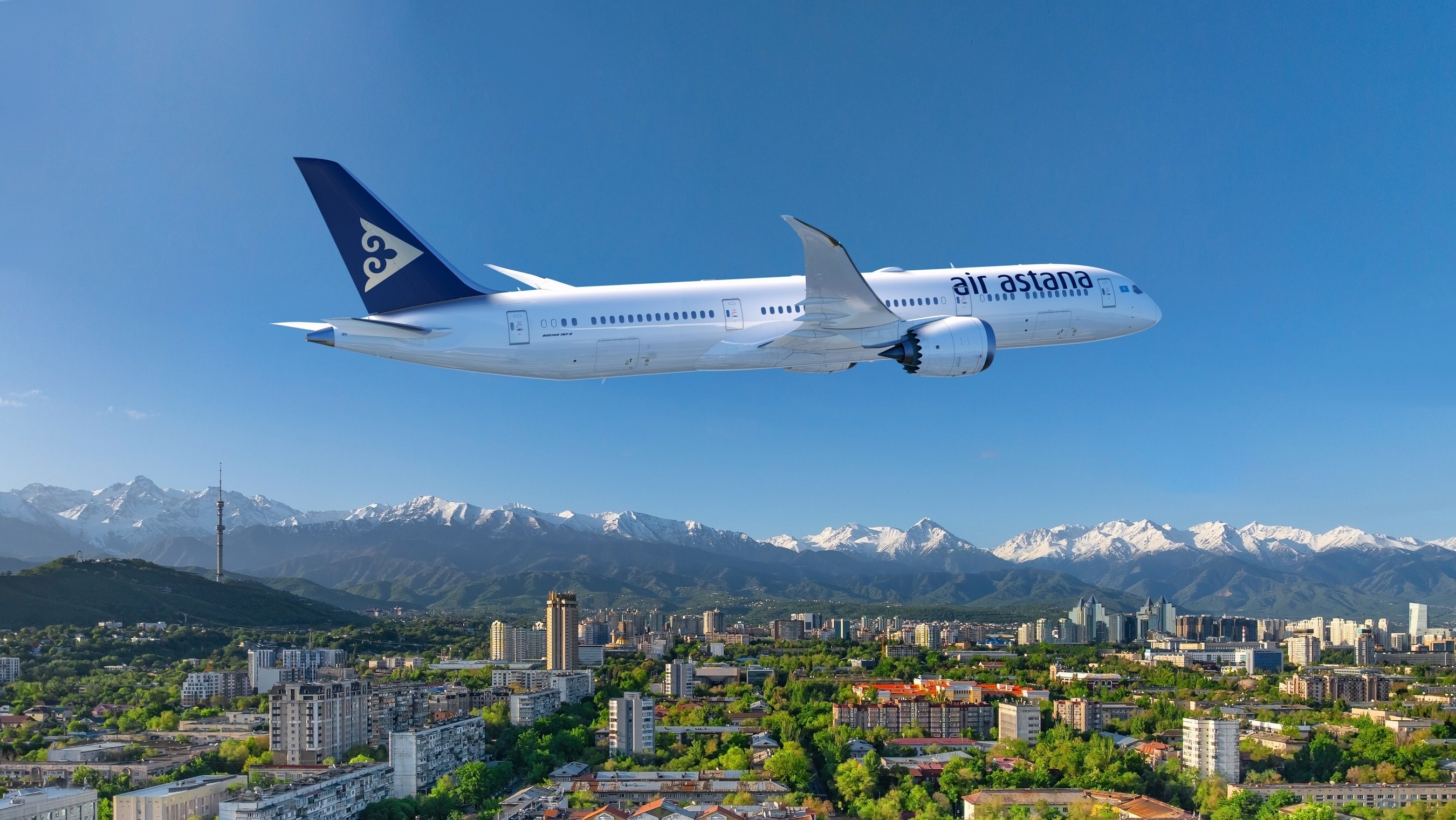
Air Astana, the flag carrier of Kazakhstan, will receive its first Boeing 787-9 Dreamliner in September 2026. Still, direct flights from Almaty to the United States remain off the table due to geopolitical restrictions. The Kazakh carrier cannot overfly Russia due to ongoing sanctions, which block the most efficient routing between Central Asia and North America.
The airline's history with this ambition runs long. As far back as 2012, Air Astana placed an order for Boeing 787-8 aircraft, explicitly citing the range needed for a US route. Those deliveries were delayed repeatedly, three times in total, and the 787 order was ultimately restructured into a 787-9 programme. The order breakdown now includes 5 firm aircraft, 5 options, and 5 purchase rights. In addition, the carrier will receive 3 more 787-9s from aircraft leasing companies, potentially bringing the total Dreamliner fleet to 18 units. This represents a substantial leap from Air Astana's current widebody footprint of just three Boeing 767-300ER jets.
Boeing described the agreement as Air Astana's largest single airplane purchase in its history, and the deal was officially finalised three months later in February 2026.

The Airspace Problem That No Aircraft Can Solve
The primary hurdle preventing Air Astana's Boeing 787 from operating to the US is airspace restrictions related to the ongoing conflict between Russia and Ukraine. Since Kazakhstan shares a border with Russia, much of the polar route between Kazakhstan and the US flies over Russian territory. Due to sanctions and the ongoing conflict, Air Astana is unable to legally or safely overfly Russian airspace, which is critical for operating nonstop services between Kazakhstan and the United States.
Former CEO Peter Foster, who retired at the end of March 2026 after two decades leading the airline, was direct on the matter:
"With Russian airspace closed, nonstop is not an option for us. We'd have to make an intermediate stop unless Russ[ia reopens its airspace]."
Reaching the US nonstop would mean taking a circuitous routing. Flights from Almaty or Astana to the USA would normally take a great circle routing over the pole and across Russian airspace. While the aircraft may be able to reach some near US cities, the proposition becomes far less attractive with the added fuel costs and limited options. Air Astana's leadership has made it clear that nonstop 787 services to the States are out of the question as long as Russian airspace remains closed.
This is precisely why state aid has entered the conversation. Any viable routing around Russian airspace would substantially increase fuel burn, flight time, and operating costs to the point where the route could not realistically sustain itself commercially without financial assistance. The Kazakh government has a precedent for this approach: it has already allocated 6.4 billion tenge (US$12.6 million) to subsidize 24 socially important domestic routes, and authorities are also proposing legislative amendments allowing regional governments to subsidize interregional flights.

Analysis: How Spirit Airlines Changed Airline Pricing, then Paid the Price
A New CEO Steering a Transformed Airline
The state aid request comes early in the tenure of Ibrahim Canliel, who became Air Astana's Chief Executive Officer on April 1, 2026, succeeding Peter Foster. Canliel, a 22-year veteran of the airline who previously served as Chief Financial Officer since 2017, has already signalled that the airline's strategic direction will not waver despite the change in leadership. "I am delighted and feel privileged to take the helm as CEO of the Air Astana Group today. Whilst this is a significant milestone personally, it also provides continuity to all our 7,000 employees and stakeholders," Canliel said upon his appointment.
At Air Astana's Q1 2026 results presentation, Canliel described an airline that is actively benefiting from the same geopolitical disruption that blocks its US plans. Air Astana is reaping the benefits of disrupted airspace as more passengers choose to connect through Kazakhstan. International transit traffic rose 65% in the first quarter, driven largely by a 158% increase in March, as traffic between Asia, Europe, Central Asia and the Caucasus shifted northwards via Kazakhstan. Canliel described the airline as “monetising the new normal”, a candid acknowledgement that the closure of Russian and Middle Eastern airspace, while harmful to its US ambitions, has simultaneously made Kazakhstan a more valuable transit corridor for traffic flowing between Europe and Asia.
Canliel stated that the 787 will need to fly via a routing that the airline currently cannot operate due to sanctions, and this situation must be resolved before direct US service can be considered. On the 787's broader potential, he was enthusiastic, noting that customers are going to love the new product and that the aircraft brings a significant upgrade to the offering compared to the airline's existing widebody fleet.
The Boeing 787-9: What Arrives First, and What Comes After
The airline confirmed it expects delivery of its first Boeing 787-9 in September this year, with a second aircraft following before the end of 2026. Initial operations will focus on flying shorter sectors as the crew becomes familiar with the new aircraft type. This crew familiarisation phase is standard practice when inducting a new widebody type, and means that even if the airspace and commercial obstacles were resolved tomorrow, Air Astana would need additional months before placing its Dreamliners on a route as demanding as Almaty or Astana to New York.
Canliel noted that the 787 will place Air Astana's competitiveness at an even stronger level and said, “It's not only the range that will identify our operations and the network”, a remark that points to the aircraft's broader role across Asia, the Middle East, and eventually, if conditions allow, the Atlantic and Pacific.
Kazakhstan's Broader Aviation Surge
The US route ambition sits within a rapidly expanding national aviation story. Air Astana CEO Ibrahim Canliel said the airline increased capacity by 14% in 2025, mainly on long-haul international routes, while passenger traffic rose by 8%. The airline's fleet grew from 57 to 62 aircraft in 2025 and is expected to reach 67 aircraft next year. After launching 25 new routes in 2025, the airline plans to open 16 additional destinations this year.
Group frequencies to China are expected to reach up to 50 flights a week in the summer, up from just 23 in summer 2025. Air Astana CEO Canliel confirmed:
"We see strong and accelerating demand across both business and leisure segments, supported by visa-free travel."
The FAA has already dispatched representatives to Kazakhstan to conduct a safety audit in preparation for direct flights between Kazakhstan and the United States, a prerequisite for any new operator seeking to launch services into US airspace. That audit process, combined with the state aid request and the prime ministerial commitment to a 2027 New York launch, suggests the project is being pushed with a level of coordination rarely seen in earlier phases of this long-running ambition.
Current Widebody Operations and Proposed US Route
| Flight No. | Route | Departure Time | Arrival Time | Duration | Operating Days |
|---|---|---|---|---|---|
| KC 931 | Almaty (ALA) → Dubai (DXB) | 23:55 (ALMT) | 02:55+1 (GST) | ~5h 00m | Daily |
| KC 932 | Dubai (DXB) → Almaty (ALA) | 04:10 (GST) | 10:55 (ALMT) | ~5h 45m | Daily |
| KC 079 | Almaty (ALA) → Seoul Incheon (ICN) | 23:55 (ALMT) | 12:40+1 (KST) | ~6h 45m | Selected days |
| KC 080 | Seoul Incheon (ICN) → Almaty (ALA) | 13:50 (KST) | 18:15 (ALMT) | ~6h 25m | Selected days |
| Planned | Astana (NQZ) or Almaty (ALA) → New York (JFK) | TBC | TBC | ~16–18h+ (via reroute) | TBC — 2027 target |
Current widebody operations (KC931/932, KC079/080) are flown by Boeing 767-300ER aircraft. The planned New York service is subject to state subsidy approval, Kazakh government support, FAA audit clearance, Boeing 787-9 crew familiarisation, and resolution of Russian airspace restrictions. Duration estimate for the US route reflects a southerly or easterly reroute avoiding Russian airspace, which would add significantly to flight time versus the direct polar routing. The first Boeing 787-9 is due for delivery in September 2026, with a second to follow before year-end. The New York target launch date is 2027, per Prime Minister Bektenov's May 19, 2026, statement.
Thousands of Flights Delayed or Canceled as Travel Disruptions Sweep Across the U.S. » Congressman Tom Tiffany Survives Emergency Plane Landing in Lake Wausau » Frontier Airlines Introduces Cancel For Any Reason Option For Passengers Up To 24 Hours Before Departure »

Comments (0)
Add Your Comment
TAGS
ROUTES Air Astana Kazakhstan Boeing 787-9 US Flights New York Route State Aid Russian Airspace Almaty Airport Astana Airport Central Asia Aviation Kazakh Government Boeing Dreamliner Long-Haul Expansion FlyArystan Aviation Subsidy Polar Route FAA Audit Kazakhstan travel flights routesRECENTLY PUBLISHED
 British Airways Returns to Tanzania After 15 Years With Direct Flights to Kilimanjaro and Zanzibar
British Airways will launch direct flights from London Gatwick to Kilimanjaro and Zanzibar in summer 2027, marking its return to Tanzania after 15 years.
NEWS
READ MORE »
British Airways Returns to Tanzania After 15 Years With Direct Flights to Kilimanjaro and Zanzibar
British Airways will launch direct flights from London Gatwick to Kilimanjaro and Zanzibar in summer 2027, marking its return to Tanzania after 15 years.
NEWS
READ MORE »
 The Engineering Behind the 777X's Folding Wingtips
The engineering behind the folding wingtips onboard the Boeing 777X
INFORMATIONAL
READ MORE »
The Engineering Behind the 777X's Folding Wingtips
The engineering behind the folding wingtips onboard the Boeing 777X
INFORMATIONAL
READ MORE »
 Frontier Airlines Introduces Cancel For Any Reason Option For Passengers Up To 24 Hours Before Departure
Frontier Airlines now lets passengers cancel any flight up to 24 hours before departure through a new Cancel For Any Reason product powered by Hopper.
NEWS
READ MORE »
Frontier Airlines Introduces Cancel For Any Reason Option For Passengers Up To 24 Hours Before Departure
Frontier Airlines now lets passengers cancel any flight up to 24 hours before departure through a new Cancel For Any Reason product powered by Hopper.
NEWS
READ MORE »
More than just headlines.
Get unlimited ad-free access to in-depth aviation news, premium stories, and exclusive insights other sites don't cover.
- Ad-free browsing on AeroXplorer
- Unlimited access to premium and exclusive articles
- Higher photo upload limits & commissions on sales
- Free access to Jetstream Magazine on higher tiers
- Ad-free browsing
- Sell aviation photos with 60% commission
- First week free!
- Everything in Basic+
- Unlimited premium articles
- Sell aviation photos with 70% commission
- Free Digital subscription to Jetstream Magazine
- First week free!
- Everything in Basic+ and Pro
- Sell aviaiton photos with 80% commission
- Early access to exclusive stories
- Free Digital+Print subscription to Jetstream Magazine