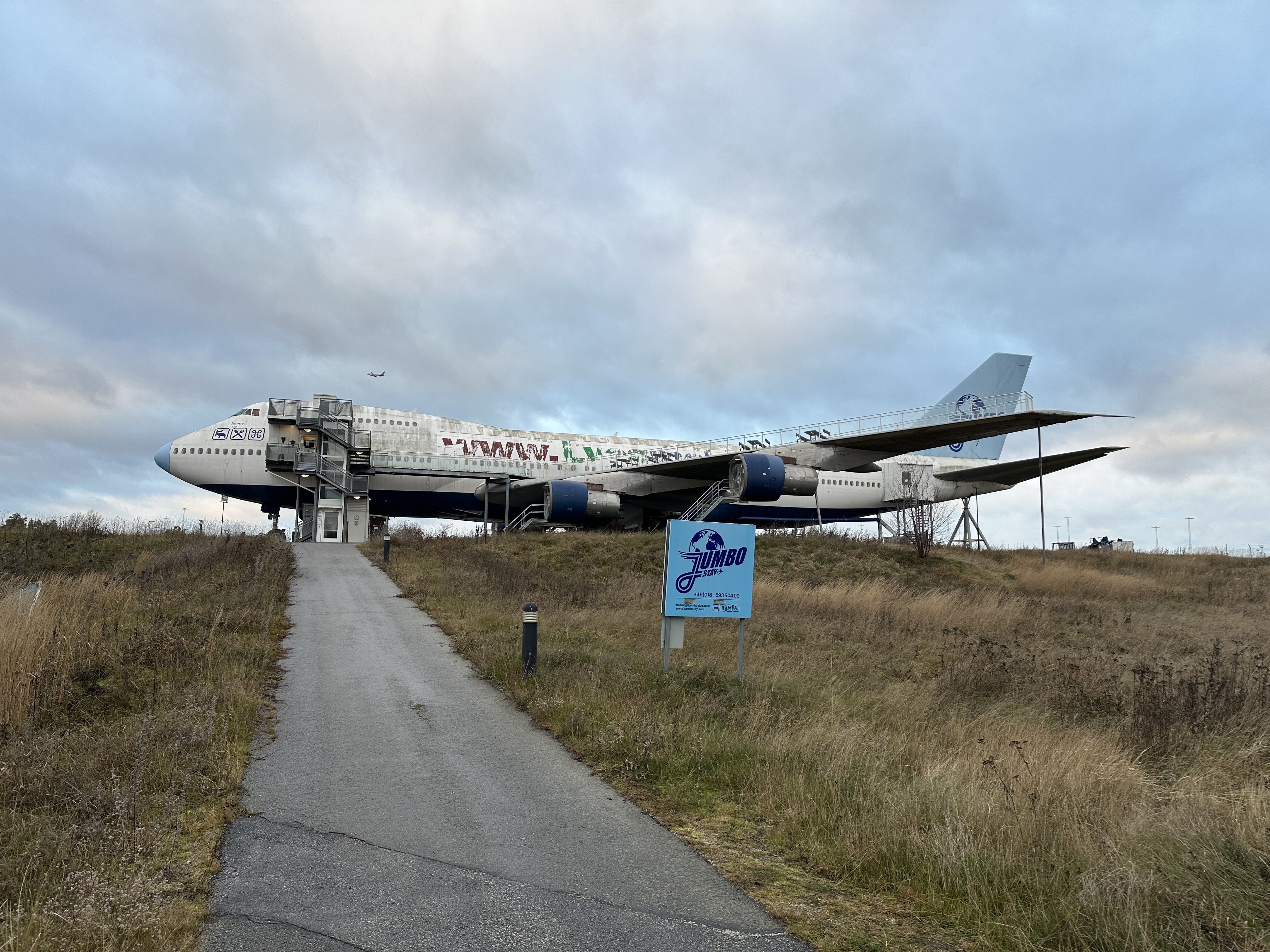
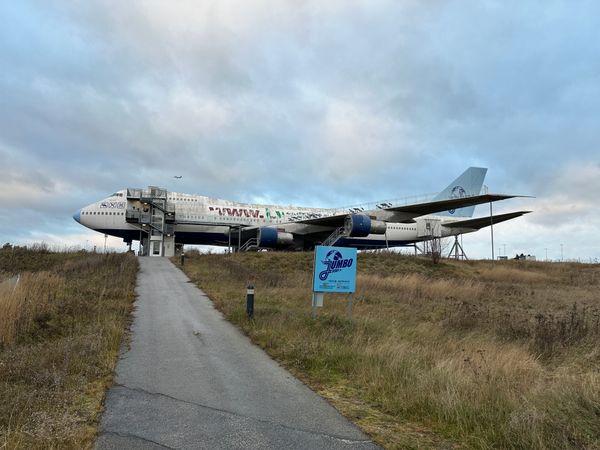
On a stretch of land just outside Stockholm Arlanda Airport, a Boeing 747 stands frozen in time. Airliners taxi past only a few hundred feet away, with engines echoing across the Swedish landscape.
But this Queen of the Skies will never fly again. Weathered by years of wind, snow, and neglect, the aircraft now rests on a concrete foundation, with its gear locked into steel support cradles.
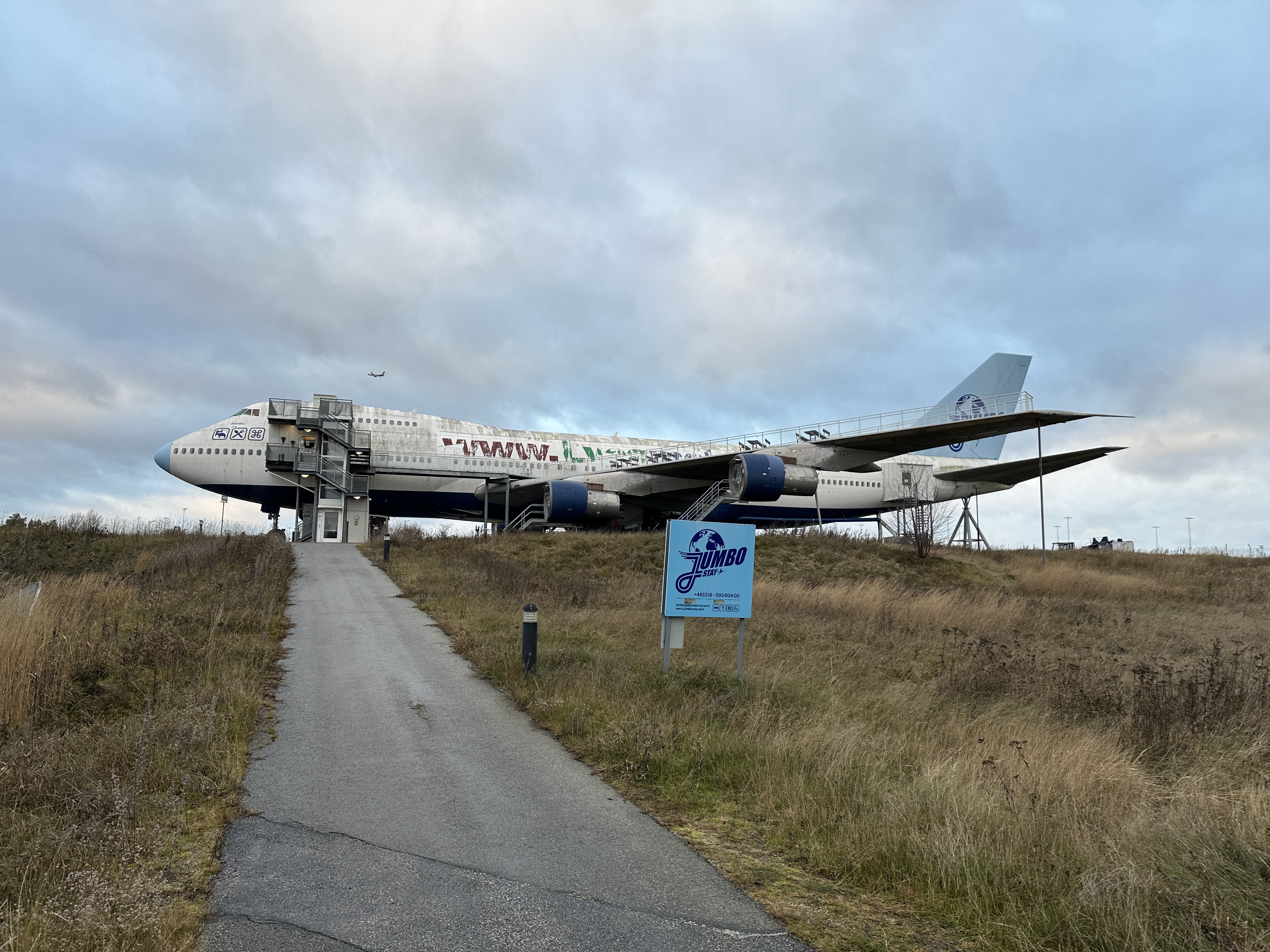
For more than a decade, however, this aircraft has had a second career. Instead of transporting passengers between continents, it welcomed them as overnight guests. Travelers from around the world could climb its stairs, sleep in its fuselage, and watch aircraft taxiing nearby from its wings.
It was called Jumbo Stay, operated as the world's only 747 hostel, and one of aviation's most imaginative reinventions. This is the story of how a retired jumbo jet found a new life as a hostel, and why that life ultimately came to an end.
Jumbo Stay Takes Off
In 1976, a brand-new Boeing 747-200 took off from its birthplace in Everett, Washington, bound for Singapore to begin its career with Singapore Airlines. The aircraft, registered 9V-SQE, was the 283rd 747 ever built, and would be one of 27 747-200s flown by Singapore Airlines.
9V-SQE served Singapore Airlines for eight years before being sold to Pan American Airlines in 1984. It was re-registered to N727PA and named “Clipper Belle of the Sky”, flying with Pan Am for another seven years until the global giant’s bankruptcy in 1991. The jumbo stood parked in Miami for over a year until being picked up by Nationair Canada who re-registered it to C-FNXP.
During its short stint with Nationair, the 747 was sub-leased to Kuwait Airways, Garuda Indonesia, and Cathay Pacific. Later on, it was picked up by American carrier Tower Air, re-registered to N620FF, and flew with it for another four years until Tower Air’s bankruptcy in 2000. The jet again sat idle in New York until January 2002, when it was acquired by Transjet, a Swedish charter airline. The aircraft, then registered SE-RBN, did not last long flying in Sweden as Transjet went bankrupt later that year. Its final flight was Dublin to Stockholm and the jet was withdrawn from service in July.
Following Transjet’s demise, many of its aircraft were put up for sale which caught the interest of a man named Oscar Diös. Diös, an experienced businessman within the hospitality industry, previously ran a youth hostel in the nearby Swedish city of Uppsala. At the time, Diös was mulling the concept of adaptive reuse, developing hostels inside otherwise obsolete objects. Seeing that a decommissioned 747 was up for grabs, he decided to purchase it and convert the aircraft into an airport hostel. This was a great business opportunity at the time (around 2007) as there were no hostels or budget hotels near Arlanda Airport.
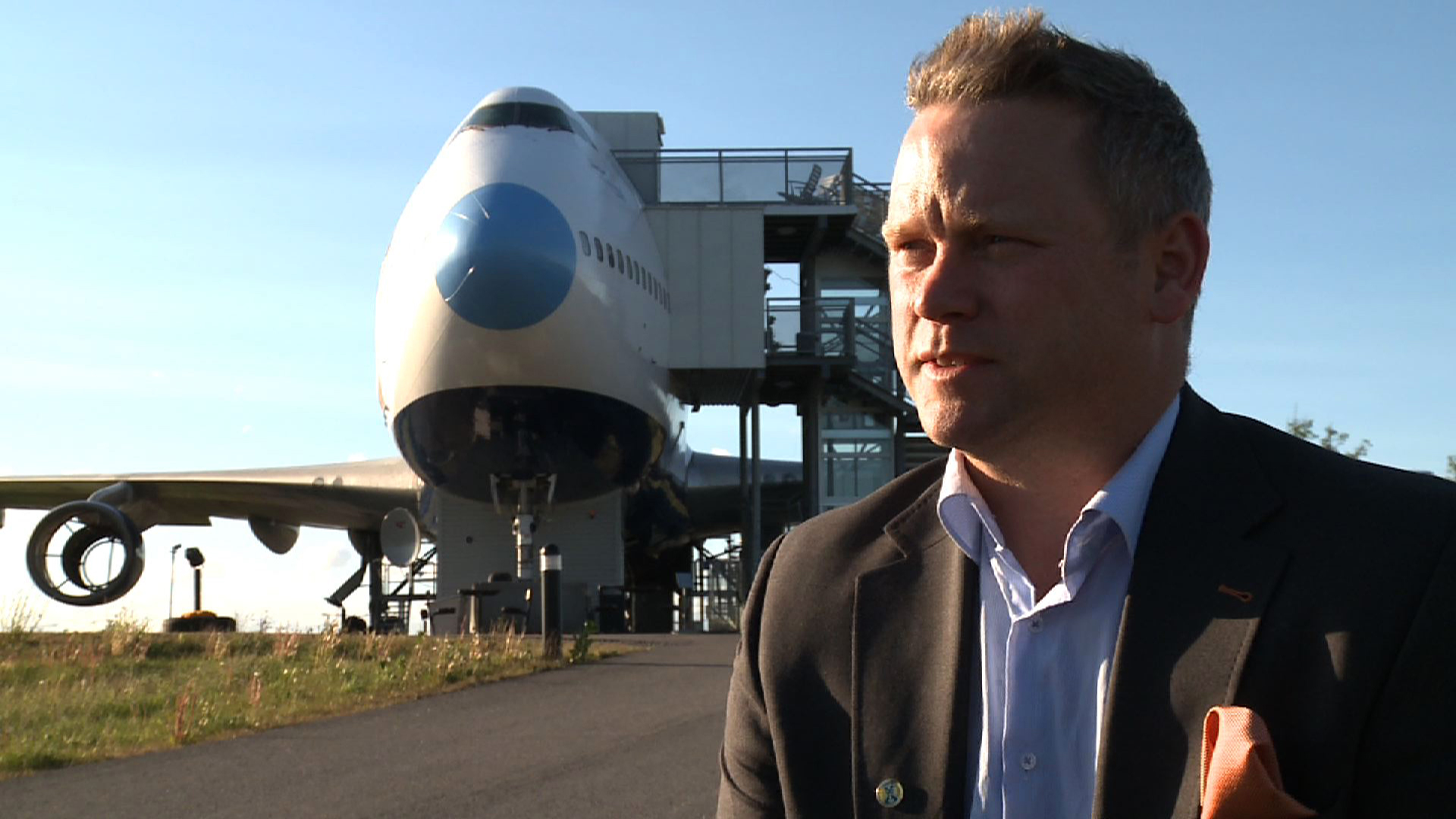
In December 2007, the Swedish locality of Sigtuna granted Diös a building permit to establish a hostel within the former 747. The renovation process began the following month, January 2008, and cost more than $3,000,000 USD. The cabin’s 3,800 square feet of space was utilized to its full potential, being transformed into new bedrooms, lounges, and a cafe.
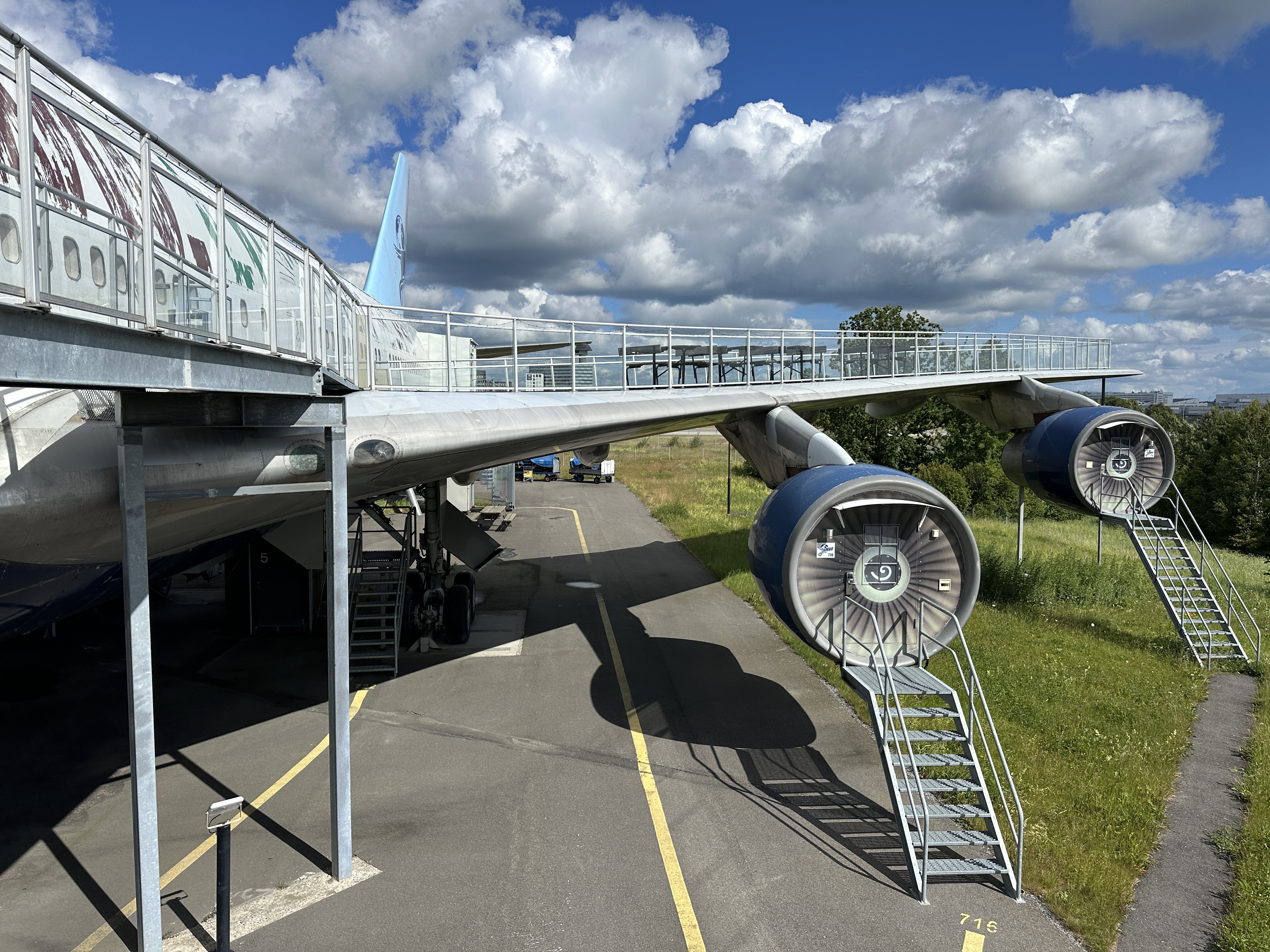
Renovation crews completed the project that summer and towed the aircraft to its permanent location just outside Arlanda Airport in August 2008. Workers mounted the 747 on a concrete foundation and secured its landing gear in steel cradles. To ensure future guests could “board” the aircraft with ease, the developers installed a set of stairs and even an elevator at the hostel’s main entrance. The unique hostel officially opened on January 15th, 2009, as the “Jumbo Hostel,” though it later became known as “Jumbo Stay”.
The “Inflight” Experience
During the renovation process, designers almost completely transformed the 747’s interior. Crews removed almost 500 seats as they converted the cabin into hostel rooms and common areas. Despite the extensive changes, they retained some of the aircraft’s original features, including the cockpit, which was transformed into a special private suite. The “The Cockpit Suite,” as it was dubbed, featured two beds, an ensuite shower, and a toilet.
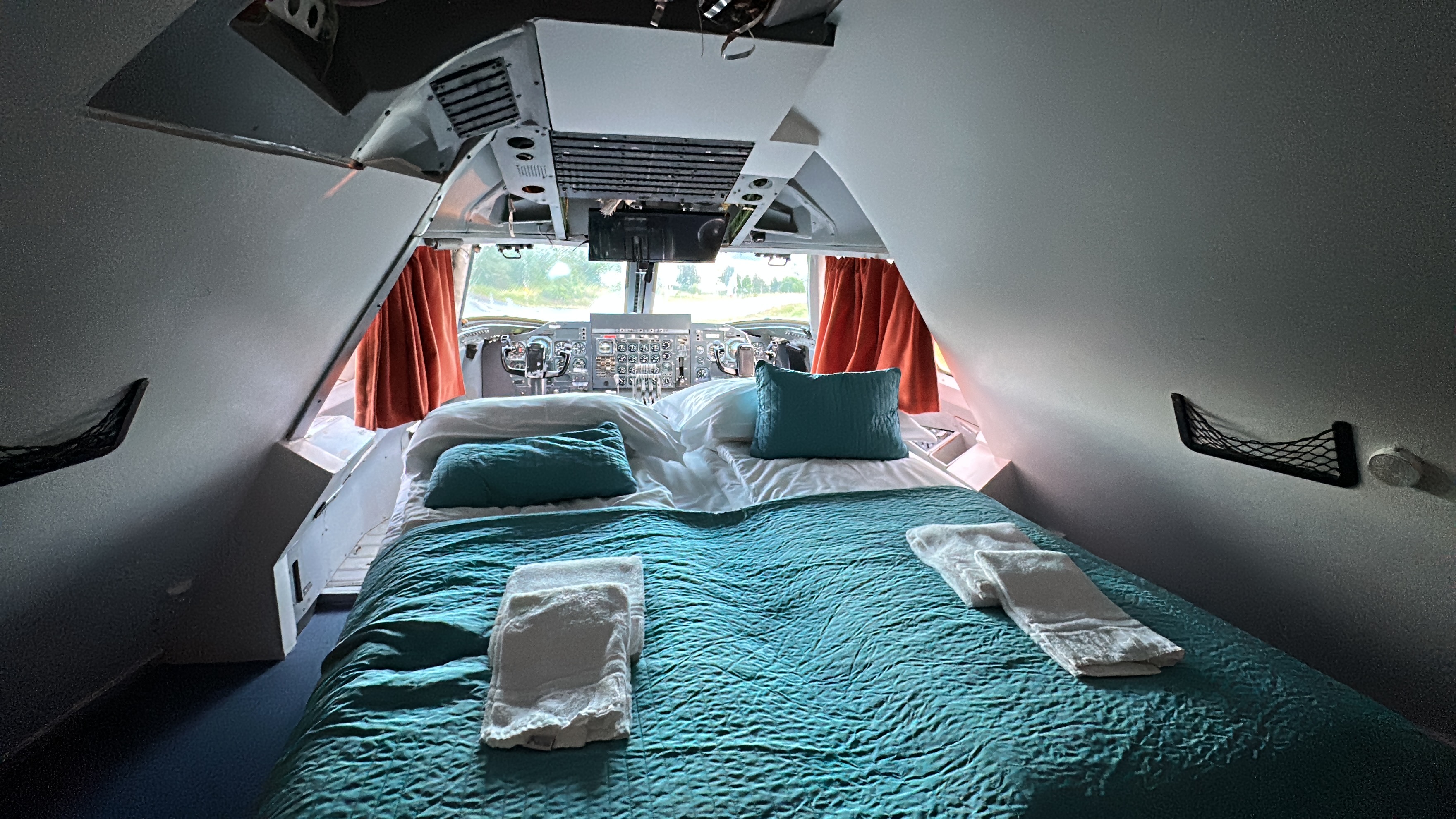
The hostel also offered another suite, the “Black Box Suite,” located in the rear of the aircraft with similar amenities. To support these facilities, workers connected the aircraft to local plumbing lines, ensuring a constant water supply, particularly for the bathrooms.
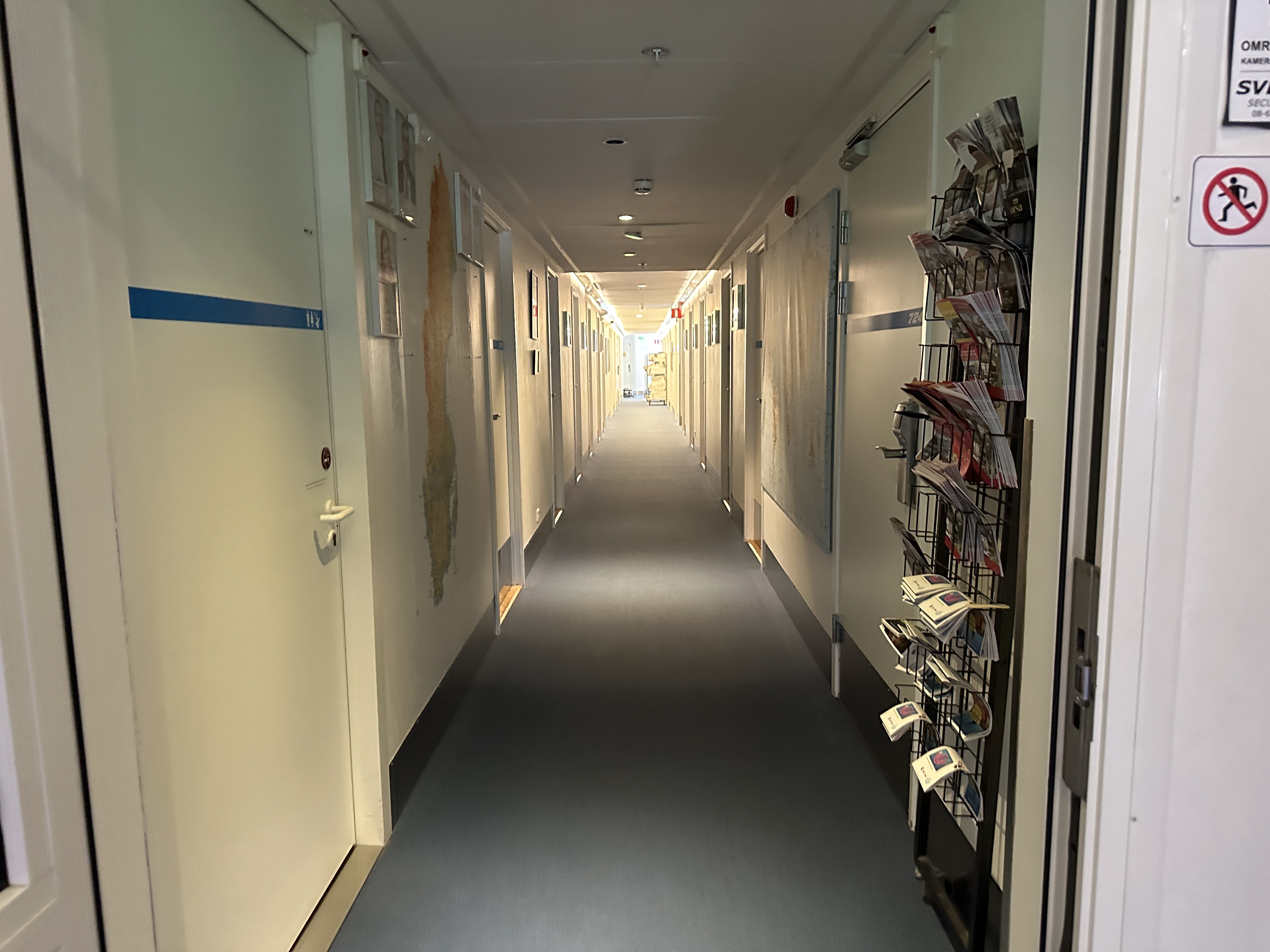
In total, Jumbo Stay offered 33 rooms, each accommodating up to four beds. Standard rooms measured roughly 65 square feet and gave guests access to shared bathrooms. While most standard rooms occupied the fuselage, the designers placed others in the engine nacelles and wheel wells.
Guests accessed these rooms by checking in inside the main fuselage and then stepping back outside to reach them. As a small but thoughtful touch, the team painted specially drawn taxiway lines on the concrete, complete with room numbers, to guide guests staying in the engine or wheel well rooms.
The nose of the Jumbo Stay 747 — an area typically reserved for First or Business Class — was converted into a café. Here, guests could enjoy breakfast, snacks, and light beverages. The breakfast offering was a simple spread of bread, cheese, cold cuts, cereals, and juice. The café also included microwave ovens for guests who preferred to self-cater.
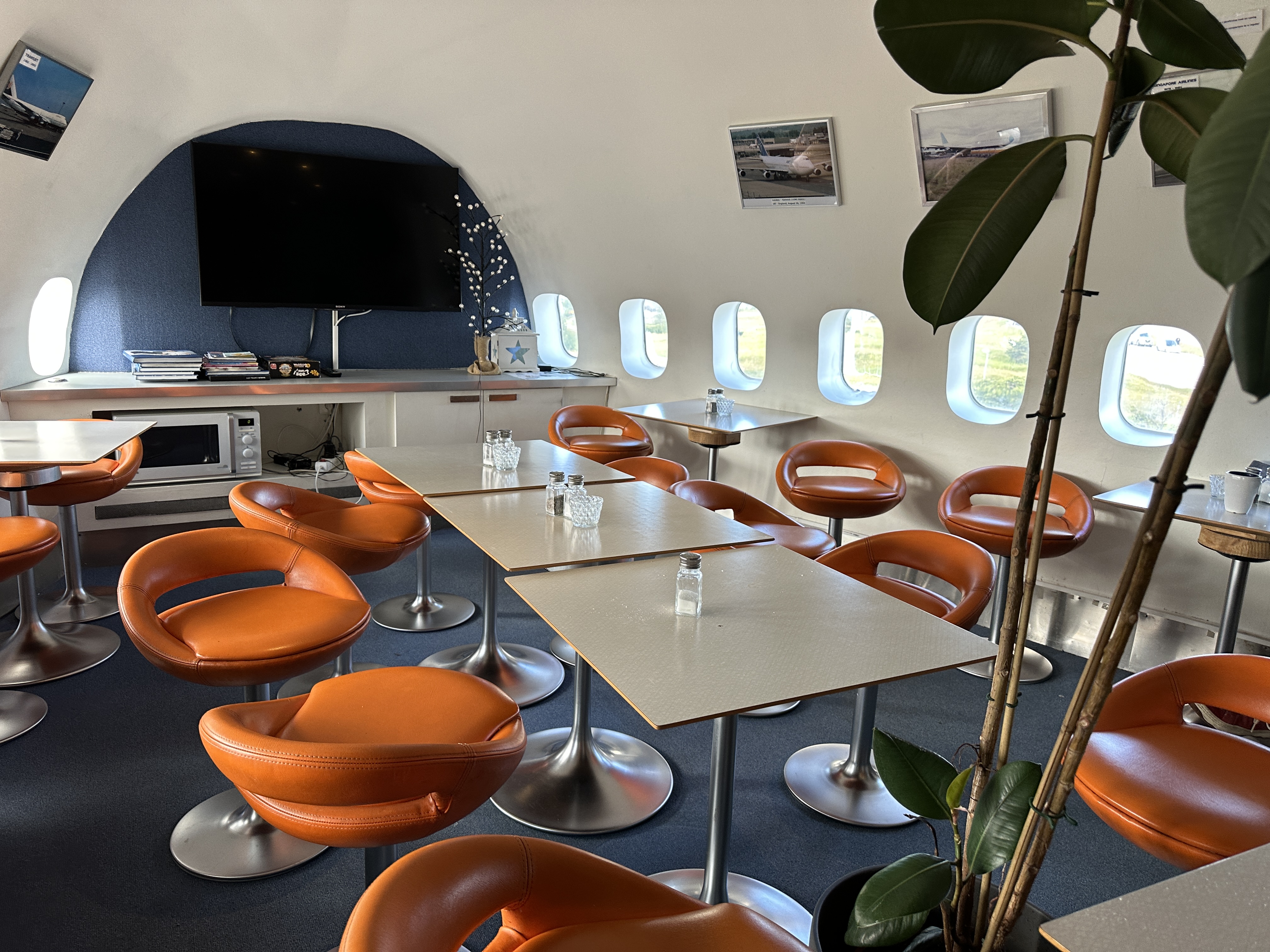
On the upper deck behind the cockpit suite, the aircraft featured a conference lounge with eight former First Class seats. The team also converted the left-side wing into a patio, allowing guests to step outside, sit at tables, and watch airplanes taxi past nearby. Jumbo Stay could also be reserved for private events such as weddings.
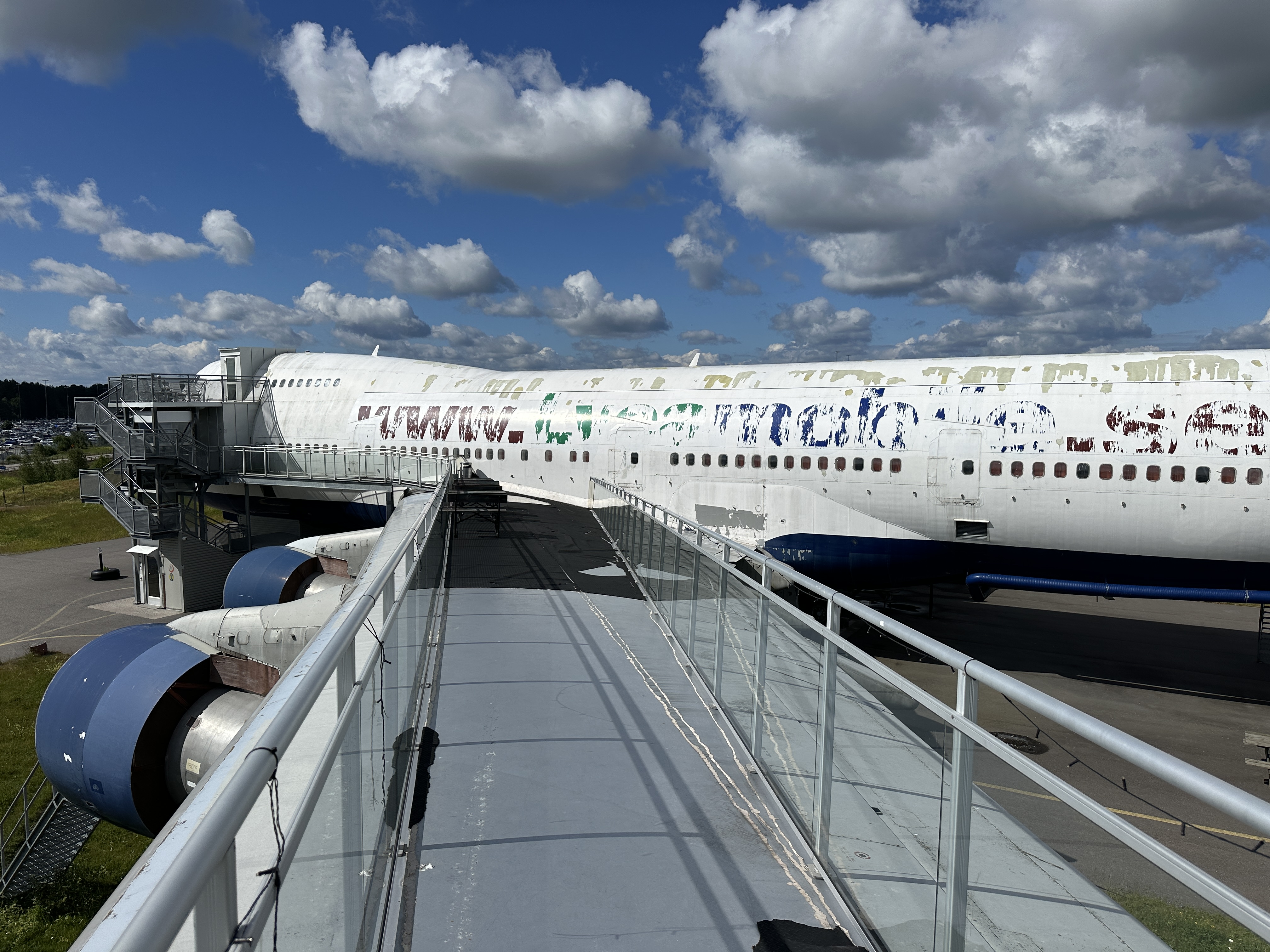
Couples could hold main ceremonies on the wingtop balcony, while wedding receptions would take place inside the aircraft.
Grounded for Good
In the years following Jumbo Stay’s establishment in 2009, multiple brick-and-mortar airport hotels began popping up around Arlanda Airport, resulting in Jumbo Stay’s revenue decreasing considerably. This was especially true in the years surrounding the COVID-19 pandemic. In 2023, Jumbo Stay reported an annual revenue figure of four million Swedish Krona (~$396,000), a steep dip from its pre-COVID report of eight million krona (~$793,000).
Hotel competition was not the only factor behind declining revenues, as Jumbo Stay also lost its advertising rights. Speaking with the Swedish newspaper Uppsala Nya Tidning, Diös explained that the hostel had previously sold advertising space at the site where the 747 stood, which led to the prominent LycaMobile branding displayed on the aircraft. In 2020, however, Swedavia — the company operating Sweden’s airports — took over advertising sales at the location, eliminating a significant source of income.
After more than 15 years in operation, Mr. Diös’ Jumbo Stay declared bankruptcy and closed in March 2025. The world’s only Boeing 747 hostel became part of history, forcing the cancellation of more than 800 upcoming reservations.
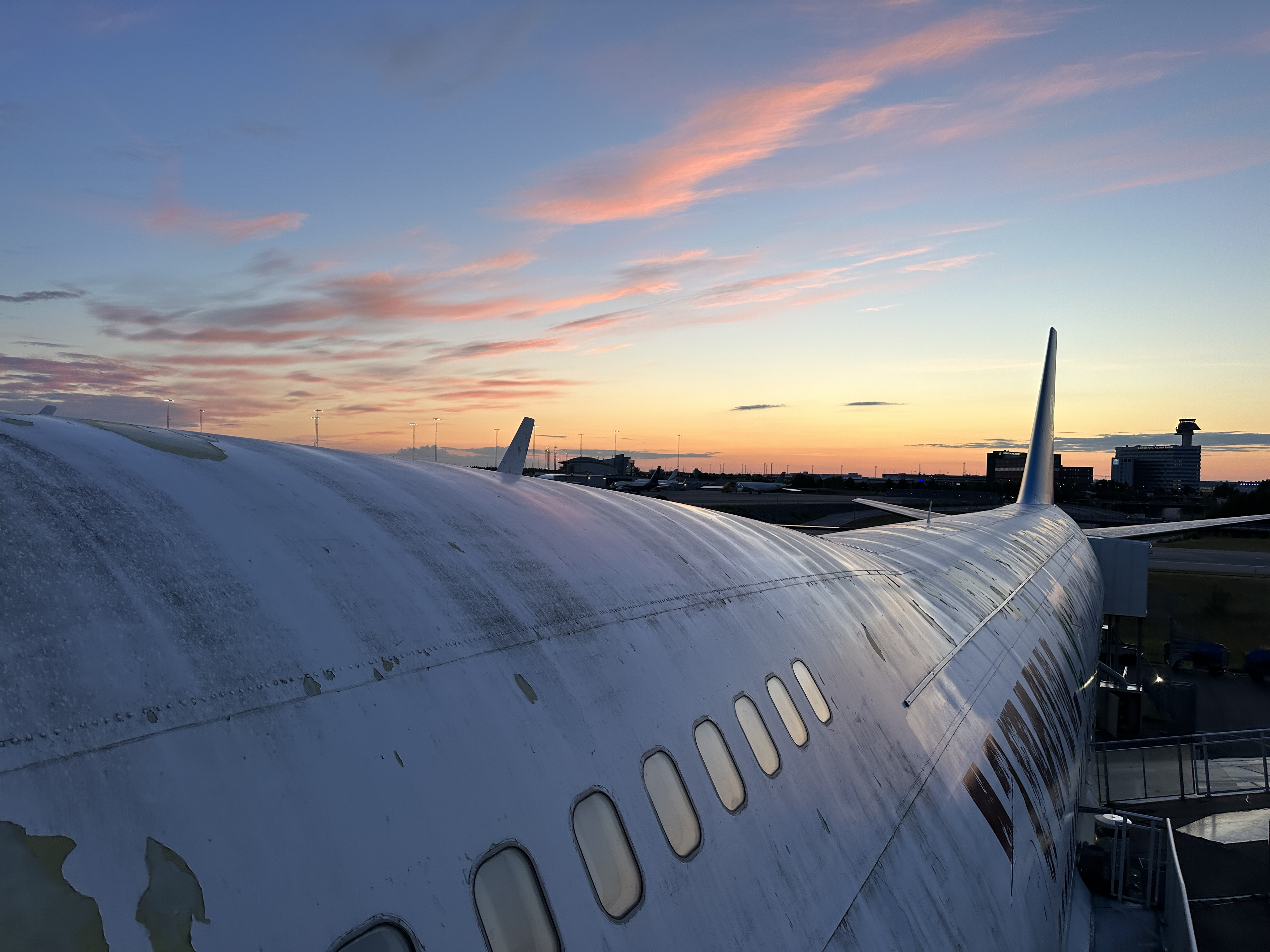
At the time of writing, the 747 is still parked in the same location it has occupied for the past 17 years, awaiting its fate. Interested parties attempted to purchase the aircraft, but negotiations failed, and no agreements materialized. Swedavia owns the land on which Jumbo Stay stands and has stated that it will not lease the property to another operator, effectively ruling out any future reopening of the hostel. With the abandoned 747 now under Swedavia’s responsibility, the company must decide how to dispose of the aircraft. The most likely outcome is dismantling the 747 and selling it for parts.
Many examples exist of retired aircraft finding new life in the hospitality industry. However, being the only 747 in this category made the Jumbo Stay unique. While Amsterdam’s Corendon Hotel features a former KLM 747-400 on its grounds, the aircraft is just for display, and visitors are unable to step inside.
Visit While You Can!
I visited Stockholm in November 2025 solely to write this story. As of now, no one has disclosed any official plans to scrap Jumbo Stay, and the aircraft still stands in the same spot where crews first towed it in 2008. Jumbo Stay marketed itself as “a 15-minute walk” from Arlanda Airport’s terminals, and visiting the site remains surprisingly easy. Both the SL 589 and UL 880 bus lines stop directly outside Jumbo Stay, primarily serving nearby businesses like the Hertz and Avis car rental facilities and the Radisson Blu Arlandia Hotel.
On a beautiful afternoon, I walked from my hotel — the Comfort Hotel located next to Arlanda’s terminal complex — over to Jumbo Stay. A running trail begins beside the hotel and leads under busy roadways, past airport authority offices, through a small forest, and beneath one of Arlanda’s taxiways before emerging beside the abandoned 747. Despite closing eight months before my visit, I could still walk freely around the old Queen.
I marveled at how engineers once transformed such a massive aircraft into a functioning hostel. Such vital spaces of the aircraft – the engines and wheel wells, for example – had been perfectly converted into rooms, optimizing the limited space to their full advantage. Roaming around the property not only grew my appreciation for those who worked tirelessly to get Jumbo Stay off the ground, but it also put into perspective the sheer scale of the individual aircraft parts.
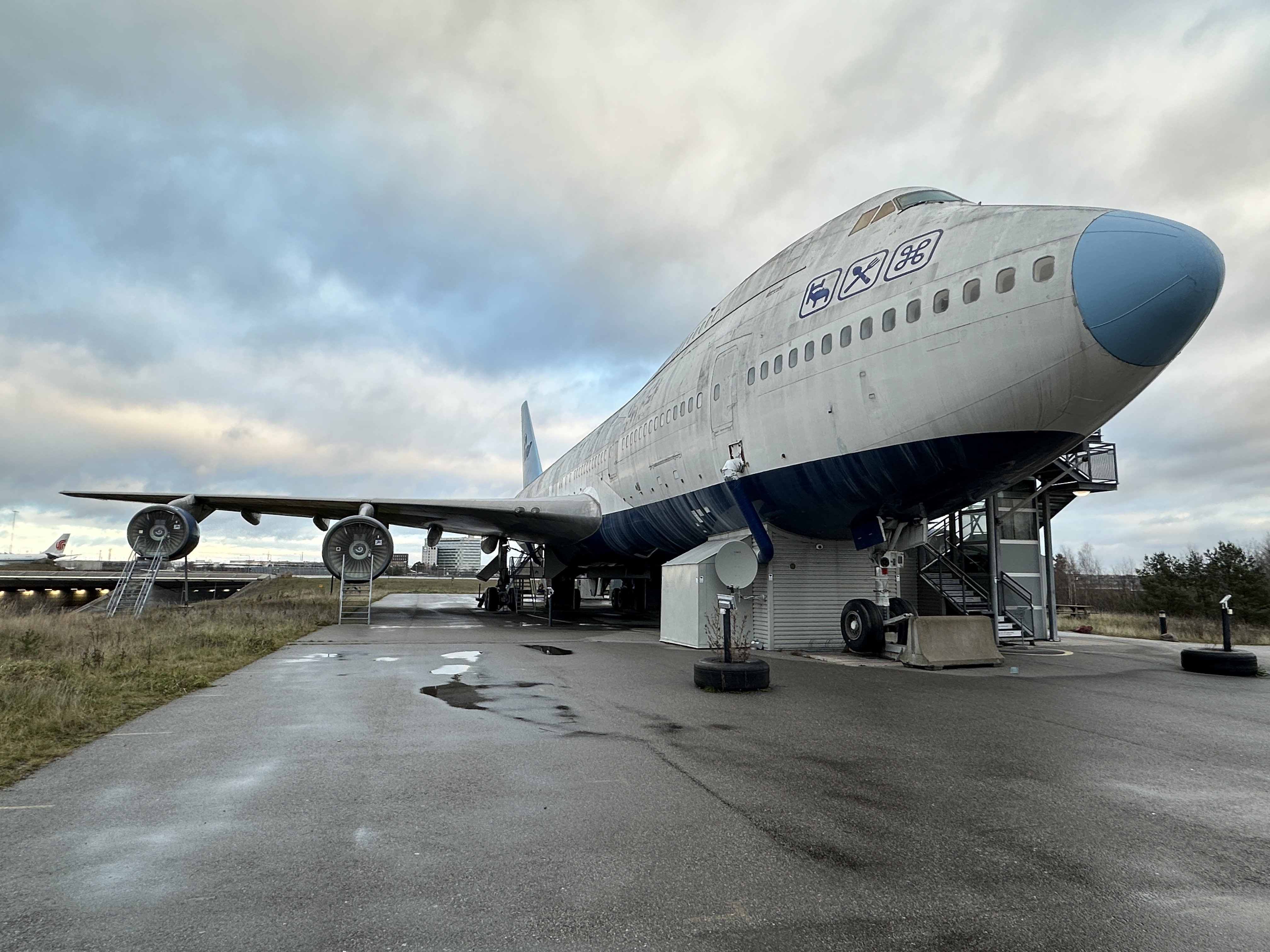
After Swedavia revoked Jumbo Stay’s advertising rights, the former “LycaMobile” titles on the fuselage had faded significantly. Overall, the aircraft showed clear signs of neglect and felt deeply somber after months of abandonment. Still, the 747’s elegance endured, and I took in as much of the site as I could before leaving.
While Swedavia has hinted at plans to dismantle the 747 on site, the company has not announced when it will carry them out. Until then, the aircraft remains visible for drivers on the Arlandaleden and Nordanleden roadways that pass just behind it. In most cases, airlines convert retired passenger 747s into freighters and fly them for another two decades. Jumbo Stay, however, gave this aircraft a rare and imaginative second life.
One that never required it to leave the ground.
United Airlines Takes Delivery of First Aircraft Powered by Pratt & Whitney's GTF Advantage Engine » How Jet Access Is Building a New Model for Private Aircraft Maintenance » Major US Airlines Push Back Against Air China's Request for Additional US Flights »

Comments (0)
Add Your Comment
TAGS
STORIES Boeing 747 Sweden Stockholm Arlanda JumboStay Travel Hotel HostelRECENTLY PUBLISHED
 UAE Suspends Iranian Airline Flights to Comply With US Sanctions, Triggering Retaliatory Airspace Ban From Tehran
The UAE has halted all Iranian carrier operations to comply with reimposed US sanctions, prompting Iran to bar Emirati airlines from its airspace.
NEWS
READ MORE »
UAE Suspends Iranian Airline Flights to Comply With US Sanctions, Triggering Retaliatory Airspace Ban From Tehran
The UAE has halted all Iranian carrier operations to comply with reimposed US sanctions, prompting Iran to bar Emirati airlines from its airspace.
NEWS
READ MORE »
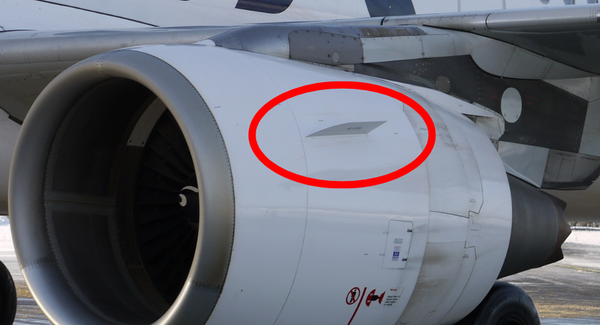 What Are Strakes? The Aerodynamic Fins Attached on an Aircraft's Fuselage
A look at how aircraft strakes quietly shape airflow, improve stability, and enhance aerodynamic performance.
INFORMATIONAL
READ MORE »
What Are Strakes? The Aerodynamic Fins Attached on an Aircraft's Fuselage
A look at how aircraft strakes quietly shape airflow, improve stability, and enhance aerodynamic performance.
INFORMATIONAL
READ MORE »
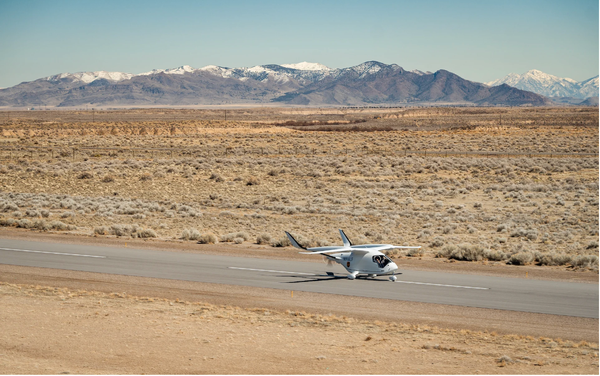 BETA Technologies Begins Electric Aircraft Operations in North Carolina to Support Rural Healthcare Access
BETA Technologies launches its ALIA CTOL electric aircraft in North Carolina under a FAA program aimed at improving rural healthcare logistics.
NEWS
READ MORE »
BETA Technologies Begins Electric Aircraft Operations in North Carolina to Support Rural Healthcare Access
BETA Technologies launches its ALIA CTOL electric aircraft in North Carolina under a FAA program aimed at improving rural healthcare logistics.
NEWS
READ MORE »
More than just headlines.
Get unlimited ad-free access to in-depth aviation news, premium stories, and exclusive insights other sites don't cover.
- Ad-free browsing on AeroXplorer
- Unlimited access to premium and exclusive articles
- Higher photo upload limits & commissions on sales
- Free access to Jetstream Magazine on higher tiers
- Ad-free browsing
- Sell aviation photos with 60% commission
- First week free!
- Everything in Basic+
- Unlimited premium articles
- Sell aviation photos with 70% commission
- Free Digital subscription to Jetstream Magazine
- First week free!
- Everything in Basic+ and Pro
- Sell aviaiton photos with 80% commission
- Early access to exclusive stories
- Free Digital+Print subscription to Jetstream Magazine