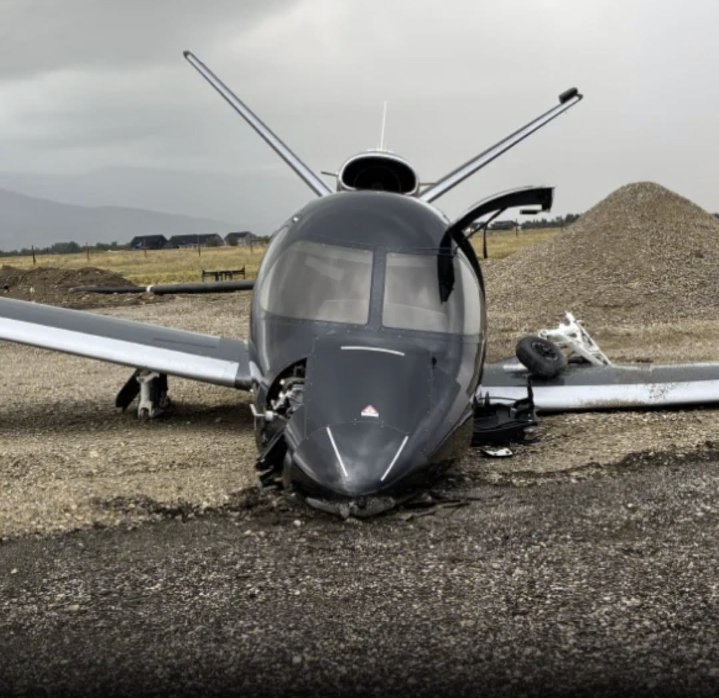
A Cirrus Vision Jet collided with construction equipment during a takeoff attempt at an Idaho airport, according to reports from aviation news outlets. The incident has prompted fresh scrutiny of runway safety procedures at airports undergoing active construction work.
What Happened
The single-engine personal jet, identified as N71KD, struck construction equipment positioned near the runway environment as the pilot attempted to depart. The collision damaged the aircraft, though initial reports indicate the outcome could have been considerably worse given the nature of the obstacle involved.
The Cirrus Vision Jet, known formally as the SF50, is one of the most popular light personal jets in the United States. It carries a single pilot and can accommodate several passengers, making it a favored choice among owner-operators who fly themselves rather than rely on professional crews.
Details regarding injuries, the exact number of people on board, and the specific airport involved remain under review by investigators. Federal authorities typically respond to incidents of this nature within hours, and both the Federal Aviation Administration and the National Transportation Safety Board are expected to examine the circumstances that led to the collision.
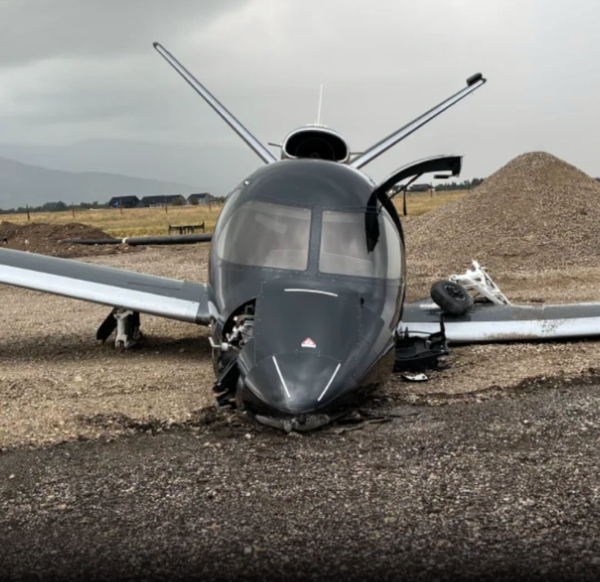
Driggs City Administrator Doug Self issued a statement clarifying the circumstances surrounding the incident. "At approximately 6:30 a.m. [MDT] on Friday, August 14, 2026, a Cirrus Vision Jet airplane entered a closed section of runway at Driggs Reed-Memorial Airport and attempted takeoff through a portion of runway that was under construction," the statement read. “The pilot was able to slow the plane upon approaching the construction site but could not avert a collision with construction material.”
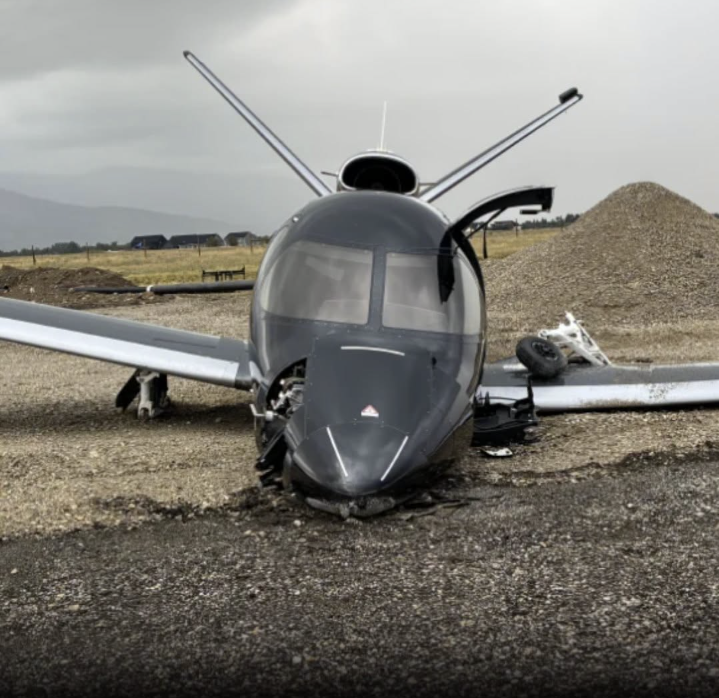
Photo: Facebook/ Aviation 24/7
The Aircraft Involved
The Cirrus Vision Jet holds a distinctive place in general aviation. It became the first single-engine civilian jet certified by the FAA when it entered service in 2016. The aircraft features a V-tail design, a top-mounted engine, and a whole-airframe parachute system called the Cirrus Airframe Parachute System, or CAPS, which can lower the entire jet to the ground in an emergency.
The Vision Jet cruises at speeds around 311 knots and has a range that allows it to connect regional destinations across the country. Its relatively low operating costs compared to twin-engine jets have made it attractive to private owners, corporate operators, and charter services.
Cirrus Aircraft, based in Duluth, Minnesota, has delivered hundreds of Vision Jets since the model entered production. The manufacturer has built its reputation on safety features aimed at owner-pilots, including the parachute system that has been credited with saving lives in numerous incidents involving its piston-powered SR-series aircraft.
Construction and Runway Safety
Airports across the country routinely undertake construction projects during periods of reduced traffic, including runway repaving, taxiway extensions, and lighting upgrades. When such work occurs at active airfields, controllers and airport managers coordinate closely with pilots to keep equipment and workers clear of aircraft movement areas.
Notices to Air Missions, commonly known as NOTAMs, alert pilots to construction activity, closed runway sections, displaced thresholds, and any equipment that might be present near operational surfaces. Pilots are expected to review these notices before every flight, and failure to account for construction hazards can lead to serious consequences.
Incidents involving construction equipment on or near runways are rare but not unheard of. Investigators typically examine whether NOTAMs were properly issued, whether the pilot reviewed them, whether construction equipment was positioned correctly, and whether any communication breakdown occurred between air traffic control, airport operations, and the flight crew.
When Aerospace Needs Something That Doesn’t Exist, MSL Builds It
Questions for Investigators
The circumstances of this collision raise several questions that federal investigators will likely pursue in the coming weeks. Chief among them is how the aircraft came into contact with the equipment during a takeoff attempt, when pilots are typically focused on the runway ahead and any obstructions should be clearly visible or communicated in advance.
Investigators will examine weather conditions at the time of the incident, visibility, the pilot's experience level, and any communications between the pilot and air traffic control. They will also look at whether the construction equipment was inside a designated safety area or had encroached on the active runway environment.
The physical evidence, including damage patterns on both the aircraft and the equipment, will help reconstruct exactly what occurred. Flight data recovered from the aircraft's avionics systems will provide precise information about speed, heading, and configuration at the moment of impact.

Impact on Operations
Airports that experience incidents of this nature typically face temporary closures while emergency response teams secure the scene, investigators document evidence, and crews remove damaged aircraft and equipment. The disruption can ripple through the general aviation community and affect scheduled operations for hours or even days depending on the severity of the damage.
Local emergency services responded to the scene, and airport authorities coordinated with federal investigators to preserve the site for examination. The aircraft's registration and ownership details will become part of the public record as the investigation progresses.
What Comes Next
The NTSB will likely release a preliminary report within about two weeks, providing initial facts about the incident without drawing conclusions about probable cause. A final report, which includes findings on what caused the collision and any contributing factors, typically takes 12 to 24 months to complete.
Aviation safety advocates will watch this incident closely. Any lessons learned about runway construction protocols, NOTAM effectiveness, or pilot decision-making could inform future guidance for airports and operators nationwide.
For now, the aviation community is left with more questions than answers. The Cirrus Vision Jet, designed with numerous safety features to protect its occupants, faced a scenario that no engineer can fully design against: a collision with a stationary object during ground operations.
Updates will follow as more information becomes available from federal investigators and airport authorities. Anyone who witnessed the incident or has relevant information may be contacted by NTSB investigators as they build a complete picture of what happened on that Idaho runway.
Helicopter Crash Near Greek Island of Sifnos Kills Three Passengers » Baggage Cart Bursts Into Flames at Milan's Malpensa Airport » Vietnam Airlines Boeing 787 Overruns Munich Runway During Takeoff, Suffers Tail Strike »

Comments (0)
Add Your Comment
TAGS
NEWS Cirrus Vision Jet SF50 Driggs-Reed Memorial Airport KDIJ Runway Incursion NTSB Investigation Idaho Aviation General Aviation Accident NOTAMRECENTLY PUBLISHED
 Merlin Labs Wins New Zealand Approval for AI Flight System Certification Path
New Zealand's aviation regulator has accepted Merlin Labs' certification plan for its AI-based flight automation system on Cessna Caravan aircraft.
NEWS
READ MORE »
Merlin Labs Wins New Zealand Approval for AI Flight System Certification Path
New Zealand's aviation regulator has accepted Merlin Labs' certification plan for its AI-based flight automation system on Cessna Caravan aircraft.
NEWS
READ MORE »
 Helicopter Crash Near Greek Island of Sifnos Kills Three Passengers
A private helicopter crashed into the sea near the Greek island of Sifnos, killing three people on board, according to Greek authorities.
NEWS
READ MORE »
Helicopter Crash Near Greek Island of Sifnos Kills Three Passengers
A private helicopter crashed into the sea near the Greek island of Sifnos, killing three people on board, according to Greek authorities.
NEWS
READ MORE »
 Runway Incursion at São Paulo Guarulhos: American and Delta Jets Cross Path of LATAM A320 Beginning Takeoff Roll
A serious runway incursion at São Paulo Guarulhos Airport involved a LATAM A320 starting takeoff without clearance as American and Delta jets crossed.
NEWS
READ MORE »
Runway Incursion at São Paulo Guarulhos: American and Delta Jets Cross Path of LATAM A320 Beginning Takeoff Roll
A serious runway incursion at São Paulo Guarulhos Airport involved a LATAM A320 starting takeoff without clearance as American and Delta jets crossed.
NEWS
READ MORE »
More than just headlines.
Get unlimited ad-free access to in-depth aviation news, premium stories, and exclusive insights other sites don't cover.
- Ad-free browsing on AeroXplorer
- Unlimited access to premium and exclusive articles
- Higher photo upload limits & commissions on sales
- Free access to Jetstream Magazine on higher tiers
- Ad-free browsing
- Sell aviation photos with 60% commission
- First week free!
- Everything in Basic+
- Unlimited premium articles
- Sell aviation photos with 70% commission
- Free Digital subscription to Jetstream Magazine
- First week free!
- Everything in Basic+ and Pro
- Sell aviaiton photos with 80% commission
- Early access to exclusive stories
- Free Digital+Print subscription to Jetstream Magazine