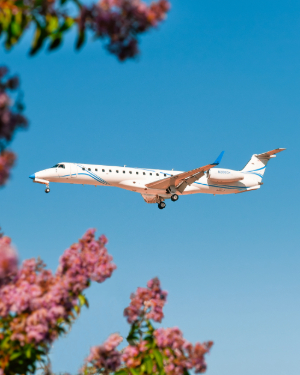


JetBlue Airways has formally petitioned the Federal Aviation Administration for a 12-month exemption from a federal mandate requiring anti-terror secondary cockpit barriers to be installed on its fleet of Airbus A220 aircraft, after Airbus confirmed in writing that it will not achieve the necessary certification in time to meet the July 31, 2026, deadline. The disclosure, contained in a letter from Airbus to A220 operators dated April 22, 2026, has set off a regulatory scramble that affects not only JetBlue but every US airline that operates the A220, and has reignited a sharp debate about who bears responsibility for a security mandate that traces its origins to the September 11, 2001, terrorist attacks.
The Mandate and Its Long Road to Existence
The requirement to install IPSBs (Installed Physical Secondary Barriers) on commercial passenger aircraft is not a new idea. The campaign to mandate IPSBs can be traced back to the aftermath of the 9/11 terror atrocities, although it wasn't until 2018 that the law was approved as part of that year's FAA Authorization Act. Even then, the necessary rulemaking to make IPSBs a reality was kicked into the long grass.
In 2023, however, the FAA finally got around to ordering airlines to start installing IPSBs on all new aircraft within two years. From August 25, 2025, all new passenger planes delivered to US commercial airlines were meant to have IPSBs installed, but following appeals from airlines and powerful aviation lobby groups, the FAA gave an 11-month extension. Although all new planes that have been delivered since August 25, 2025, will need to have an IPSB installed, this doesn't actually have to be achieved until July 31, 2026.
The IPSB itself is a relatively straightforward device. The IPSB sits between the forward galley and the primary bulletproof cockpit door, and is deployed whenever the primary cockpit door has to be opened in-flight, such as when the pilots need to use the lavatory. In the absence of IPSBs, airlines normally just use beverage carts to block access to the cockpit. Beverage carts have been the de facto secondary barrier throughout commercial aviation since reinforced cockpit doors were mandated after 9/11, an improvised solution that was always understood to be temporary.

What Airbus Has Now Admitted
"Certification of the A220 [secondary barriers] has extended beyond original projections, pushing closer to the July 31st deadline," Airbus says in its letter dated April 22 to A220 operators. “The installed physical secondary barrier supplier's production capacity is deemed insufficient to meet the deadline”.
Airbus says it has faced "unforeseen delays" in the certification of the IPSB designed for its A220 model, which has prevented airlines from designing training materials for pilots and flight attendants on how to use the barricades. "Additionally, significant supply chain issues are being faced for the IPSB components for both production and in-service aircraft," an advisory from Airbus continues.
Airbus now expects certification to be completed only in the third quarter of 2026, well beyond the deadline. The manufacturer also noted that once certification is finalized, airlines will require approximately 210 days to complete crew training and operational adjustments before the systems can be fully implemented.
The arithmetic of those two timelines places full compliance somewhere in early to mid 2027 at the earliest, effectively ruling out any possibility of meeting the July 31, 2026 regulatory requirement through the normal process.
JetBlue's Specific Exposure
JetBlue, like every other US-based commercial passenger airline, is meant to have the barricades fitted to its aircraft by July 31, 2026. JetBlue says that aircraft manufacturer Airbus has faced several challenges creating the IPSB for its smaller A220 range of jets, of which around 62 are currently owned and operated by the airline.
Without an exemption, JetBlue would be forced to ground its aircraft affected by the mandate, stripping the beleaguered carrier of vital capacity at a time when the US aviation industry is still reeling from the collapse of Spirit.
In its exemption request, JetBlue addressed the safety question directly:
"JetBlue will continue using approved flightdeck security and secondary barrier procedures to deter flightdeck intrusion and protect the flightdeck to the extent practicable."
JetBlue has formally petitioned the FAA to extend the compliance deadline to July 31, 2027, citing Airbus's inability to deliver certified systems on time.

How Much US A220 Flying Is at Stake
The scale of A220 operations that could be technically affected by non-compliance gives context to the urgency of the exemption request. According to current scheduling data from Cirium, May 2026 will see a total of 23,576 departures from US airports using A220-family jets. Of these, Delta accounts for 8,872, followed by 6,996 with JetBlue's A220-300s and 6,561 with Breeze's A220-300s. Air Canada is the only non-US operator flying the A220 from the US, with 1,147 services.
JetBlue is requesting the exemption just for itself, but the problem is industry-wide. JetBlue is requesting the exemption just for itself, but it isn't the only operator of the A220 in the United States. The aircraft is the primary model used by Breeze Airways and is also in operation at Delta Air Lines.

How AI Quietly Became the Backbone of Today’s Aviation Industry
The Precedent That Helps JetBlue's Case
JetBlue's exemption request is strengthened by a precedent the FAA has already set. The FAA weeks ago approved a similar exemption, also through end-July 2027, for E175S operated by Horizon Air, a subsidiary of Alaska Air Group. That carrier requested the extension after Embraer said it needed more time to finalize cockpit barriers for Horizon's jets.
Due to the current delays, Airbus Canada doesn't believe it will have achieved the necessary certification for the A220 IPSB until some point between July and September 2026. If that timeline holds, IPSBs could then be installed in factory-fresh A220s from September 2026 and retrofits expected in early 2027.
The Pilots' Association Is Not Pleased
The Horizon Air exemption was not granted without opposition, and the same objection is likely to be raised for JetBlue's request. The Air Line Pilots Association opposed Horizon's extension, noting that manufacturers have had years to prepare for the cockpit-barrier rule, which originated as a response to the terrorist attacks of 2001.
ALPA President Capt. Jason Ambrosi had made the pilots' position on the broader pattern of delays unambiguous when the earlier extension was announced:
"The FAA's decision to grant airlines yet another delay on the secondary barrier rule is deeply disappointing and undermines our nation's aviation security." He added, "While we acknowledge this ruling falls short of the unacceptable delay requested by Airlines for America, this extension still compromises the safety and security of our skies."
Southwest's Contrasting Approach
Against the backdrop of delays and exemption requests, one US carrier stands apart. Southwest Airlines was the first US-based carrier to install IPSBs on its aircraft. Southwest Airlines has set itself apart as the first US airline to use IPSBs in service on newly delivered Boeing 737 MAX aircraft, demonstrating a stronger commitment to cockpit security through immediate deployment. The bi-fold IPSB design fitted to Southwest's 737 MAX fleet was deployed ahead of the regulatory deadline, a decision the airline made unilaterally and without waiting for the broader industry to comply.
For JetBlue, a carrier simultaneously navigating Spirit Airlines' collapse, surveillance pricing litigation, an active federal lawsuit from Frontier Airlines over a 2024 ground collision, and now a security mandate it cannot meet due to a supplier's production failures, the exemption request is one more urgent demand on a leadership team managing an exceptionally crowded crisis agenda. The FAA has not yet formally responded to the filing.
Ryanair CEO Rejects Report That Passenger Was Partially Sucked Through Broken 737 Window » This Startup Wants to Put a Doctor on Every Aircraft » GA-ASI Introduces Purpose-Built Wildfire UAS for Aerial Firefighting Missions »

Comments (0)
Add Your Comment
TAGS
NEWS JetBlue Airways Airbus A220 IPSB Cockpit Barrier FAA Security Mandate Cockpit Security Secondary Barrier Aviation Security Horizon Air Exemption Breeze Airways Delta Air Lines A220 FAA ComplianceRECENTLY PUBLISHED
 Amazon Suspends Cargo Carrier 21 Air After Deadly Miami Runway Crash
Amazon has halted operations with cargo carrier 21 Air following a Prime Air plane crash near Miami that killed multiple crew members.
NEWS
READ MORE »
Amazon Suspends Cargo Carrier 21 Air After Deadly Miami Runway Crash
Amazon has halted operations with cargo carrier 21 Air following a Prime Air plane crash near Miami that killed multiple crew members.
NEWS
READ MORE »
 Congressman Tom Tiffany Survives Emergency Plane Landing in Lake Wausau
Wisconsin Rep. Tom Tiffany walked away unharmed after his small plane made an emergency landing in Lake Wausau. The FAA has opened an investigation.
NEWS
READ MORE »
Congressman Tom Tiffany Survives Emergency Plane Landing in Lake Wausau
Wisconsin Rep. Tom Tiffany walked away unharmed after his small plane made an emergency landing in Lake Wausau. The FAA has opened an investigation.
NEWS
READ MORE »
Congressman Tom Tiffany Survives Emergency Plane Landing in Lake Wausau
Wisconsin Rep. Tom Tiffany walked away unharmed after his small plane made an emergency landing in Lake Wausau. The FAA has opened an investigation.
NEWS
READ MORE »
Congressman Tom Tiffany Survives Emergency Plane Landing in Lake Wausau
Wisconsin Rep. Tom Tiffany walked away unharmed after his small plane made an emergency landing in Lake Wausau. The FAA has opened an investigation.
NEWS
READ MORE »
More than just headlines.
Get unlimited ad-free access to in-depth aviation news, premium stories, and exclusive insights other sites don't cover.
- Ad-free browsing on AeroXplorer
- Unlimited access to premium and exclusive articles
- Higher photo upload limits & commissions on sales
- Free access to Jetstream Magazine on higher tiers
- Ad-free browsing
- Sell aviation photos with 60% commission
- First week free!
- Everything in Basic+
- Unlimited premium articles
- Sell aviation photos with 70% commission
- Free Digital subscription to Jetstream Magazine
- First week free!
- Everything in Basic+ and Pro
- Sell aviaiton photos with 80% commission
- Early access to exclusive stories
- Free Digital+Print subscription to Jetstream Magazine