
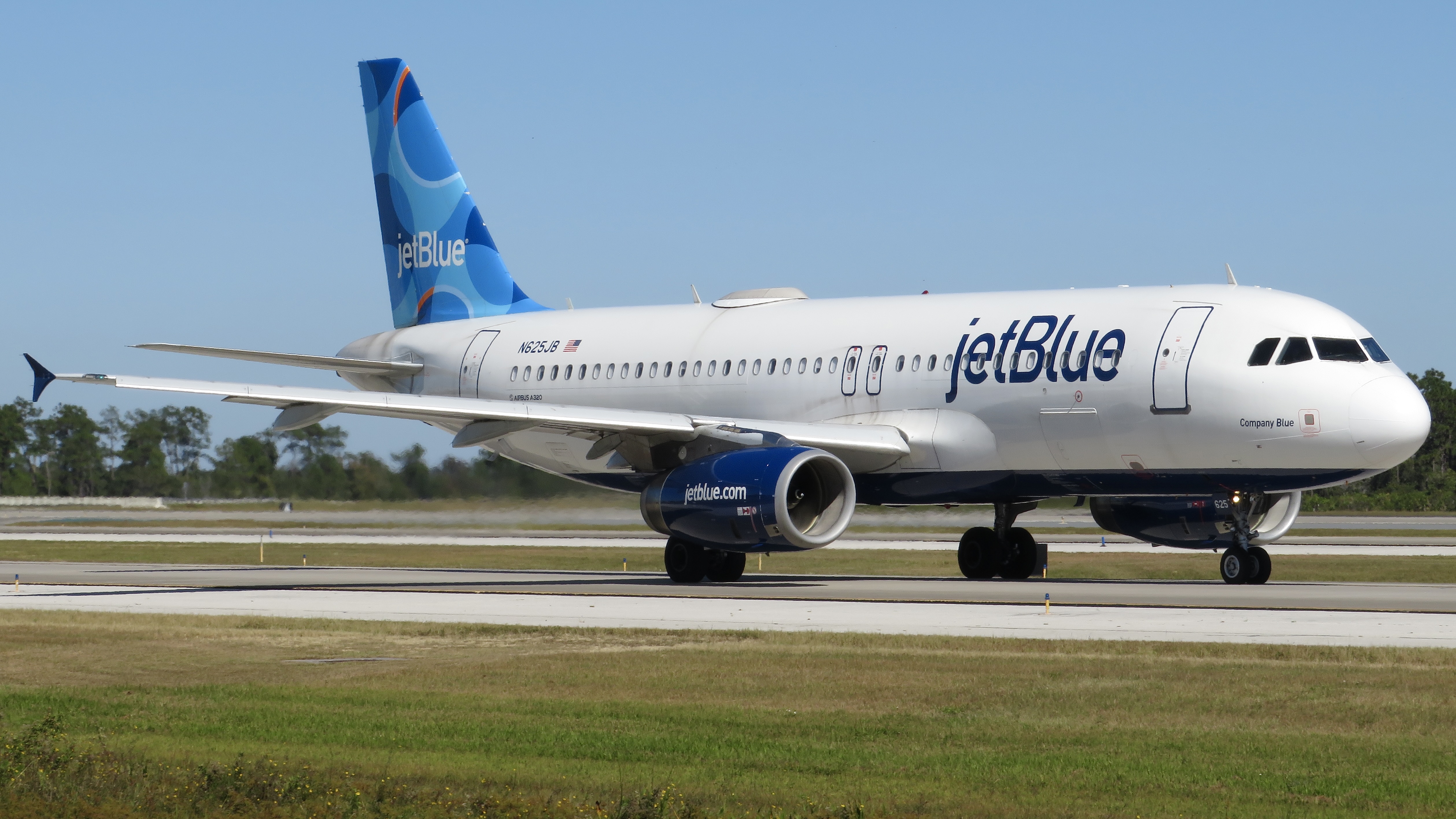

What began as a customer complaint about a $230 airfare increase on the social media platform X has escalated rapidly into a federal class action lawsuit, congressional scrutiny, and a nationwide conversation about one of the most contentious emerging practices in consumer commerce, surveillance pricing. JetBlue Airways, already navigating a difficult financial period, now finds itself at the centre of a legal and political controversy that strikes at the heart of how American airlines price their tickets and what they know about the passengers buying them.
The Post That Started It All
The lawsuit followed an April 18 exchange on X where a passenger praised JetBlue but said "a $230 increase on a ticket after one day is crazy. I'm just trying to make it to a funeral." JetBlue's response said the passenger should try "clearing your cache and cookies or booking with an incognito window. We're sorry for your loss."
That reply, intended as routine customer service guidance, immediately drew attention from passengers and consumer advocates who interpreted it as an implicit admission that clearing browsing data or using a private browser window would affect the prices a customer was shown. The airline ultimately deleted its response.
JetBlue attempted to walk the comment back. In its statement to CBS News, JetBlue said its “social media reply was simply a mistake from an individual customer service crewmember. The steps the crewmember suggested would not have changed the airfares available for purchase.” The airline added on Monday that "fares can change at any moment as seats are purchased or as inventory is adjusted based on demand."
The clarification was not enough to contain the fallout.

The Federal Lawsuit
The lawsuit, which was filed in a Brooklyn, New York, federal court on Wednesday, claimed JetBlue secretly uses "trackers" to conduct "surveillance pricing." Surveillance pricing uses AI to determine how much a customer is willing to pay for an item.
According to a complaint filed late Wednesday in Brooklyn federal court, JetBlue conceals its use of "trackers" to set prices dynamically, and shares data with third parties whose programs help it decide when to raise fares.
The plaintiff, New York resident Andrew Phillips, filed the proposed class action in the Eastern District of New York. The proposed class action accuses JetBlue of tracking his information as he was booking airfare on the carrier's website for the "purpose of setting pricing." Such tactics can be used to offer different fares to customers based on their individual internet history, demographic and other factors, according to the suit.
Phillips stated his position in the complaint with clarity:
"Consumers should not have to have their privacy rights violated to participate in [JetBlue's] digital rat race for airline tickets, which should cost the same for each similarly seated passenger."
The suit also alleged:
"It allows defendant to manipulate prices in real time in order to make as much money as they can on fares for airline tickets, which are priced differently for consumers based on their private information, which they did not consent to surrender for this purpose."
Phillips is seeking damages from JetBlue for allegedly violating the Electronic Communications Privacy Act, a federal anti-wiretapping law, and two New York consumer protection laws, New York's Deceptive Trade Practices Act and New York's Unlawful Selling Practices Act.
JetBlue's Denial
JetBlue declined to comment on the lawsuit on Thursday. It also said it does not use personal data or artificial intelligence to set ticket prices.
JetBlue added:
"We do not use AI or personal data to set individual pricing. All customers have access to the same fares."
The airline's position is unambiguous, but the lawsuit will now require it to substantiate that denial through the formal discovery process, potentially exposing internal pricing system documentation, third-party data contracts, and technical infrastructure details to legal scrutiny.
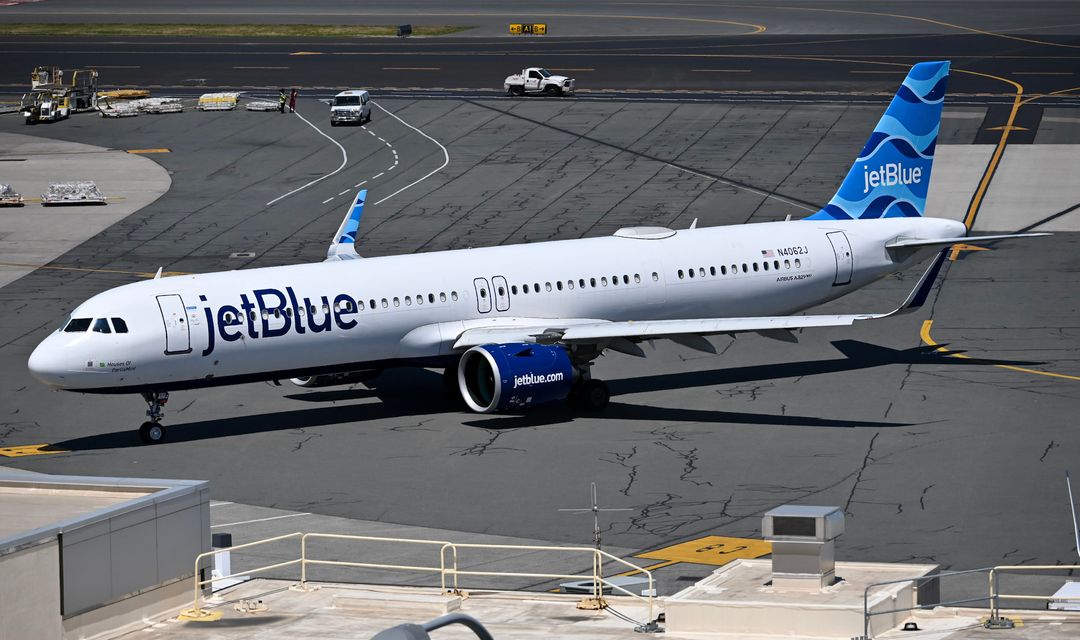
Congress Steps In
Democratic lawmakers Rep. Greg Casar and Sen. Ruben Gallego sent a letter to JetBlue CEO Joanna Geraghty on Wednesday questioning the airline's suspected use of surveillance pricing.
The letter stated:
“While JetBlue claimed in the wake of this post that fares are not 'determined' by cached data or other personal information, this exchange still raises questions about how JetBlue sets prices, specifically, how JetBlue is defining personal data and whether personal data is used in any capacity to inform prices.”
The lawmakers were direct about their core concern:
"We are especially concerned that customers could be charged different prices for the same flight based on their need for travel, such as attending a funeral."
The lawmakers have asked for a response by April 30. Both Casar and Gallego have previously introduced legislation aimed at curbing surveillance pricing practices across industries, making JetBlue's situation a convenient legislative proving ground for their broader consumer protection agenda.
The Cockpit’s Next Revolution: When the Co-Pilot Is a Computer
What Surveillance Pricing Actually Is
In January, the FTC investigated "surveillance pricing" and found retailers were quietly using extensive personal data to set individualised prices that can change quickly based on factors like timing, shopper profile, or device, often with consumers being none the wiser.
The practice exploits a fundamental asymmetry of information. When a consumer visits an airline website multiple times, that browsing behaviour, the routes searched, the dates selected, and the number of times a page is revisited, can be interpreted by an algorithm as a signal of urgency or price insensitivity. If the system determines that a user is likely to purchase regardless of a fare increase, the theory is that it will show a higher price. The consumer has no visibility into this process and no way to know whether the fare they are being shown is the same one being shown to a different user at the same moment.

Delta's Parallel Experience
JetBlue is not the first major US carrier to face this line of scrutiny. Last year, when it was reported that Delta Air Lines was using AI to set ticket prices, the SkyTeam founding member faced considerable criticism. This criticism came right from the very top, with American Airlines CEO Robert Isom calling out Delta Air Lines for its use of AI in this regard, saying it could impact customer trust and raise serious data privacy concerns. However, Delta soon hit back at this criticism, accusing its naysayers of ‘misinformation.’
Delta Air Lines faced criticism last summer when it was accused of using surveillance pricing after reports that it tested AI-powered personalised pricing on about 3% of its flights. Delta Air Lines said at the time that it had never used, tested or planned to use any fare product that “targets customers with individualized offers based on personal information or otherwise.”
The Delta episode demonstrates that denials, however categorical, do not necessarily satisfy either congressional questioners or the travelling public once suspicion has been raised.
The Broader Industry Reckoning
The JetBlue lawsuit and the congressional letter together signal a significant escalation in political and legal pressure on airline pricing practices. The legal action represents an escalating challenge to the airline industry's widespread adoption of dynamic pricing algorithms that adjust ticket costs in real-time based on consumer behaviour and personal information.
For travellers, the implications are pointed. Dynamic pricing, fares that change with demand and inventory, has been an accepted feature of airline commerce for decades. Surveillance pricing, if proven, represents something categorically different: not prices that vary with market conditions, but prices that vary with what the algorithm believes about the specific individual sitting at the keyboard. The distinction matters legally, ethically, and commercially, and whether JetBlue crossed that line is now a question for the federal courts.
A loss could require airlines to implement transparent pricing, restrict data usage, or compensate affected customers, potentially reducing airline profit margins and reshaping how the industry operates. With congressional deadlines now set and a formal class action advancing through the federal system, JetBlue faces one of the most consequential legal tests of its pricing practices in its history, triggered, ultimately, by a single deleted tweet.
United Express Flight Returns to Houston After Cockpit Windshield Shatters Mid-Flight » Pilot Tried to Crash Flight Bound for Israel After Stabbing Co-Pilot » Are Ultra-Long-Haul Routes Actually Profitable, or Just Good PR? »

Comments (1)
 The Usual Suspect
First of all, this practice isn't "emerging". It's been going on since automated revenue management systems were introduced at the airlines in conjunction with computerized reservation systems. It may have accelerated during the rise of the Internet and self-booking but it is most certainly not new.
Second, it's not just the airline industry. Most retail outlets with any kind of reasonable web presence employ similar practices. If you don't think Amazon doesn't know exactly how much you are willing to pay for that widget you've clicked-on seventeen times you're crazy.
Actually, the JetBlue agent's advice is sound and can be applied to most sites you visit. On the bright side, there are an abundance of applications available to the average consumer that can shift the odds to your favor.
The Usual Suspect
First of all, this practice isn't "emerging". It's been going on since automated revenue management systems were introduced at the airlines in conjunction with computerized reservation systems. It may have accelerated during the rise of the Internet and self-booking but it is most certainly not new.
Second, it's not just the airline industry. Most retail outlets with any kind of reasonable web presence employ similar practices. If you don't think Amazon doesn't know exactly how much you are willing to pay for that widget you've clicked-on seventeen times you're crazy.
Actually, the JetBlue agent's advice is sound and can be applied to most sites you visit. On the bright side, there are an abundance of applications available to the average consumer that can shift the odds to your favor.
Add Your Comment
TAGS
NEWS JetBlue Airways Surveillance Pricing Federal Lawsuit Airline Pricing Data Privacy Dynamic Pricing Electronic Communications Privacy Act FTC Investigation Delta Air Lines AI Pricing Consumer Rights Flights TravelRECENTLY PUBLISHED
 IATA's New Passenger Data Shows Global Air Travel Demand Shrinking for the First Time This Year
Global air travel just hit a reverse that has not been seen in months -- the numbers point to something more interesting than a simple slowdown.
INFORMATIONAL
READ MORE »
IATA's New Passenger Data Shows Global Air Travel Demand Shrinking for the First Time This Year
Global air travel just hit a reverse that has not been seen in months -- the numbers point to something more interesting than a simple slowdown.
INFORMATIONAL
READ MORE »
 The $30 Billion Question: Why America's Air Traffic Control Overhaul Keeps Getting More Expensive
The U.S. government is seeking $30 billion more to modernize America’s aging air traffic control system. Explore the rising $42.5 billion price tag, GAO oversight concerns, and where the new funding would go.
INFORMATIONAL
READ MORE »
The $30 Billion Question: Why America's Air Traffic Control Overhaul Keeps Getting More Expensive
The U.S. government is seeking $30 billion more to modernize America’s aging air traffic control system. Explore the rising $42.5 billion price tag, GAO oversight concerns, and where the new funding would go.
INFORMATIONAL
READ MORE »
 Embraer Posts Record 66 Aircraft Deliveries in Q3 2026 as Commercial Jets Climb 10%
Embraer delivered 66 aircraft in Q3 2026, its strongest third quarter on record, with commercial jets up 10% and business jets rising 41%.
NEWS
READ MORE »
Embraer Posts Record 66 Aircraft Deliveries in Q3 2026 as Commercial Jets Climb 10%
Embraer delivered 66 aircraft in Q3 2026, its strongest third quarter on record, with commercial jets up 10% and business jets rising 41%.
NEWS
READ MORE »
More than just headlines.
Get unlimited ad-free access to in-depth aviation news, premium stories, and exclusive insights other sites don't cover.
- Ad-free browsing on AeroXplorer
- Unlimited access to premium and exclusive articles
- Higher photo upload limits & commissions on sales
- Free access to Jetstream Magazine on higher tiers
- Ad-free browsing
- Sell aviation photos with 60% commission
- First week free!
- Everything in Basic+
- Unlimited premium articles
- Sell aviation photos with 70% commission
- Free Digital subscription to Jetstream Magazine
- First week free!
- Everything in Basic+ and Pro
- Sell aviaiton photos with 80% commission
- Early access to exclusive stories
- Free Digital+Print subscription to Jetstream Magazine