
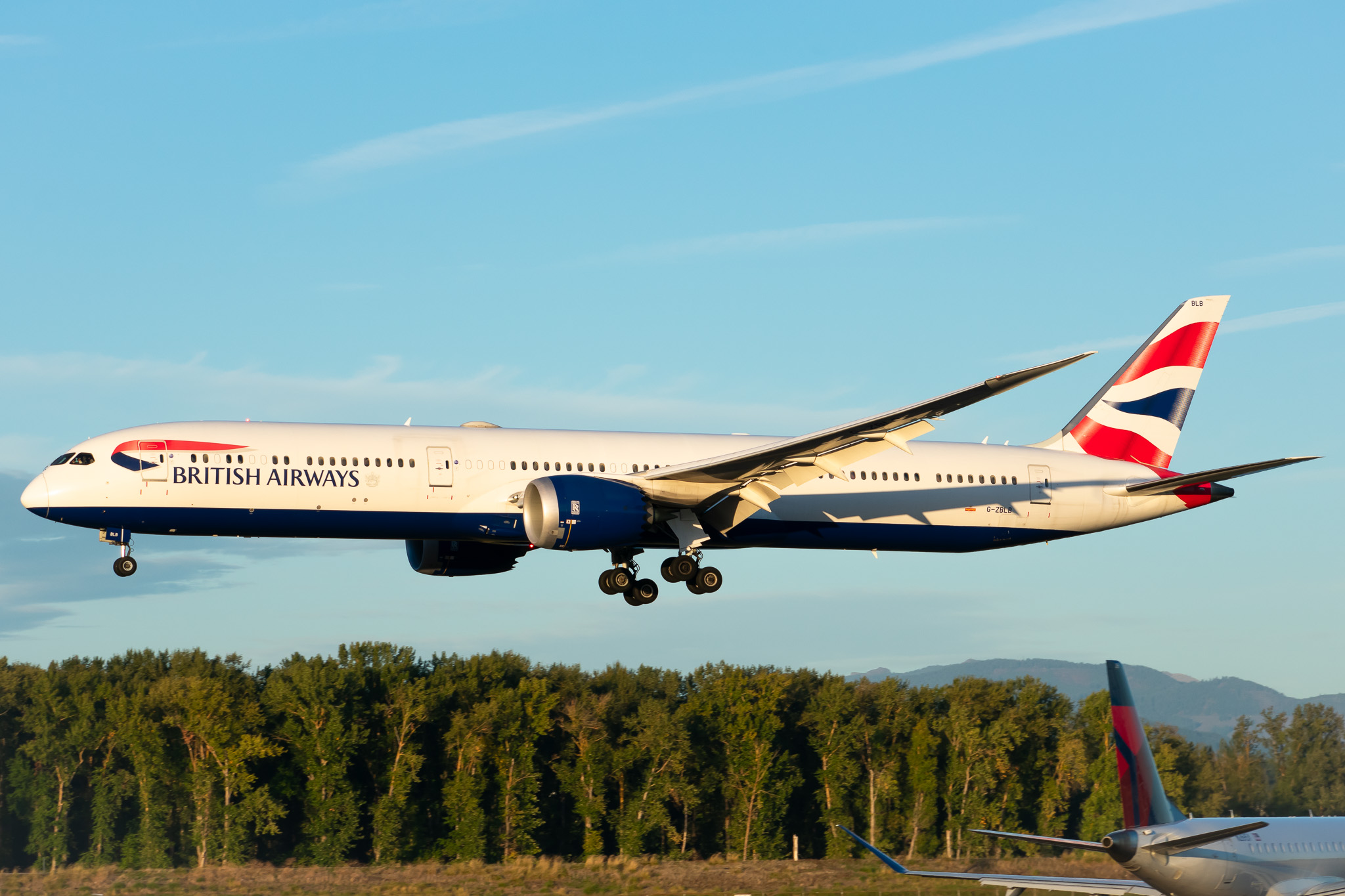
A British Airways Boeing 787-10 Dreamliner has been grounded at London Heathrow Airport following a ground handling incident that is as costly as it is avoidable, an engineering mishap driven by one of the most fundamental properties of a fully loaded commercial aircraft. The aircraft, registered G-ZBLJ and valued at approximately $355 million, was scheduled to operate flight BA299 from Heathrow to Chicago O'Hare on Sunday, May 3, when engineering steps that had been placed beneath its fuselage became firmly lodged inside an open maintenance hatch, a direct consequence of the aircraft being fuelled and loaded while the steps were still in position below.
What Happened and Why
The aircraft needed to have some oxygen cylinders replaced ahead of its flight to Chicago, and engineers had accessed a hatch underneath the fuselage where the cylinders are located. Some steps were positioned underneath the fuselage, but unbeknownst to the unlucky engineer who put the steps in place, the aircraft hadn't been refuelled at the point that the work started to take place.
The Boeing 787 sits higher when it is unloaded, so when fuel and cargo were loaded on the airplane, the height of the plane dropped, essentially impaling the fuselage on the engineering steps. As refuelling progressed and the aircraft's weight increased, the fuselage lowered onto the steps, effectively impaling itself on the equipment.
The physical behaviour of the 787 under load is a well-documented and well-understood characteristic of the aircraft type. The landing gear struts compress as fuel and cargo are added, causing the fuselage to settle progressively lower toward the ground. Any equipment positioned beneath the aircraft before fuelling must either be removed or carefully monitored as loading progresses. In this case, neither happened.
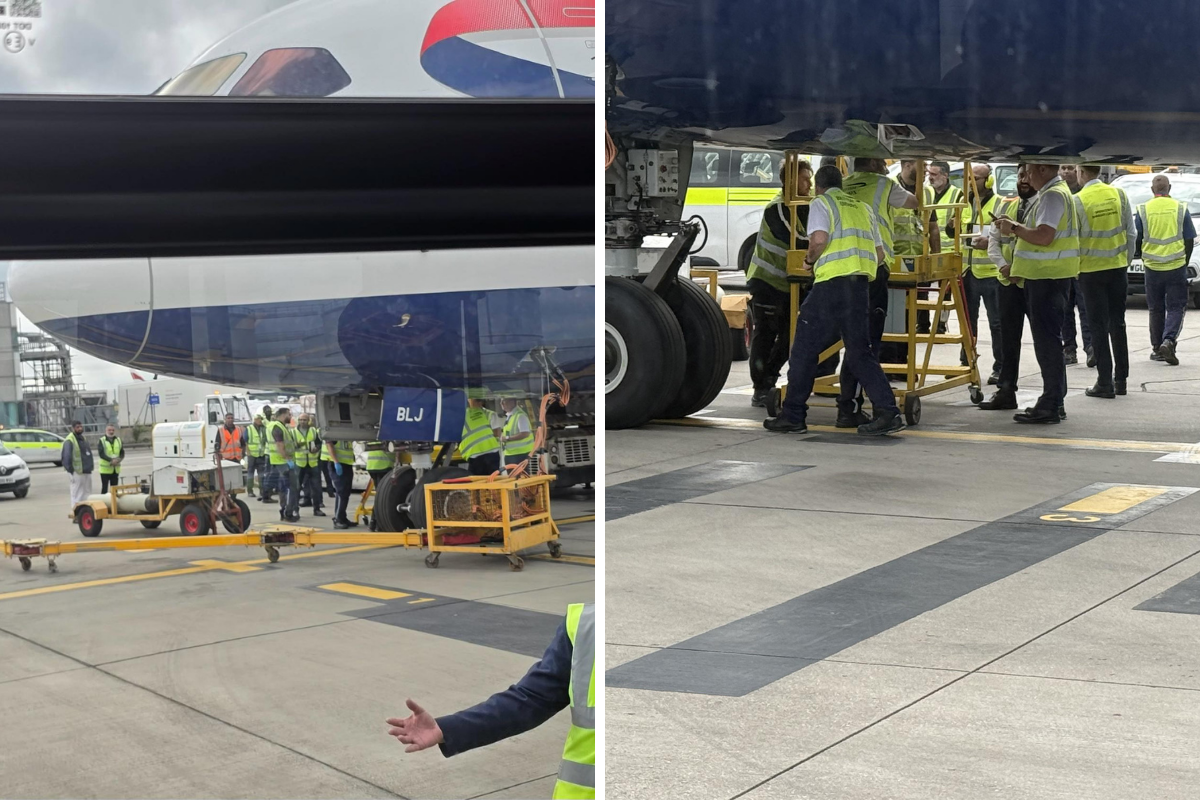
Photo: paddleyourownkanoo.com
Passengers Left on Buses for Hours
The scene that unfolded on the remote stand at Heathrow was an uncomfortable and prolonged one for the passengers aboard the waiting buses. "The yellow steps are STUCK inside a hatch on this Boeing 787," wrote a passenger who had been hoping to fly on British Airways flight BA-299 to Chicago O'Hare on May 3 in a post on Reddit. "There has been probably 15-20 people come and look at it. Take photos. Stare… shrug and walk away."
"The passengers have all been bused to this plane on a remote stand, and people are losing their minds with the lack of communication," the passenger continued. "Even the police have come to take photos (and probably laugh)." The passenger summed up the situation in just one word: "Shambles!"
The crowd that gathered around the stricken aircraft reportedly included engineers, police officers, and airport personnel, a gathering that witnesses described as conveying more bewilderment than urgency. The captain told passengers there were minor internal dents requiring inspection before the aircraft could be released. The flight was eventually cancelled, and the aircraft remains on the ground.

Only Way Out: Private Aviation in a Region at War
The Financial Exposure for British Airways
The plane, registered G-ZBLJ, is less than two years old. Beyond the cost of inspecting and repairing any structural damage to the fuselage, the full extent of which has not yet been disclosed, British Airways faces a significant passenger compensation liability.
UK261 passenger delay compensation for flights over 2,175 miles, where the delay is four hours or more, is $704.31 per passenger. A BA 787-10 holds 256 passengers. The plane was reportedly full. The return from Chicago couldn't operate as scheduled because the aircraft couldn't be sent. That's 500 inconvenienced customers. That's total owed compensation to customers of $352,000 plus 'duty of care', which would involve hotels and meals.
The duty of care obligation is in addition to the statutory compensation figure and covers meals, accommodation, and transport for stranded passengers while they wait for rearranged travel. With a full outbound aircraft and a cancelled return service, the operational and financial fallout from a single misplaced set of engineering steps has reached a scale that illustrates just how consequential a ground handling error of this type can be.

Not the First 787 Incident at Heathrow
This is not the first time a British Airways Boeing 787 has suffered significant ground damage at Heathrow. In June 2021, a British Airways Boeing 787-8 Dreamliner was badly damaged at Heathrow Airport when the nose wheel collapsed during a turnaround on a particularly wet day in London. The embarrassing incident happened after engineers were carrying out maintenance on the nose gear, and a nose pin that locks the front wheels in place was accidentally removed by an engineer who was unfamiliar with the setup. At the time, the aircraft was being used as a freighter aircraft, transporting medical supplies from China to the UK during the COVID-19 pandemic. The aircraft was grounded for some time but is now back in service.
The 2021 incident resulted in a full Air Accidents Investigation Branch inquiry that found documented evidence of procedural failures in how the maintenance team had assessed and applied the relevant airworthiness directive. The 2026 steps incident is categorically different, a fuelling coordination failure rather than a maintenance procedure error, but the cumulative pattern of ground damage events involving British Airways 787s at its home hub will inevitably attract scrutiny from both regulators and the public.
British Airways' Ongoing 787 Challenges
The grounding adds a new chapter to British Airways' already difficult relationship with its 787 fleet in recent years. The airline has long been battling groundings for its 787 series, with reliability issues stemming from the ongoing supply chain crisis affecting Rolls-Royce engines. The airline's fleet data indicates that aircraft have remained out of service, and while individual groundings cause enough disruption, adjustments to the network have been forced to be made.
The May 3 incident is an entirely different category of problem, a preventable ground handling failure rather than an engine or airworthiness issue, but it arrives at a moment when British Airways can least afford additional capacity disruption. The latest incident raises fresh questions about ground handling procedures and coordination between maintenance and refuelling teams at one of the world's busiest airports.
British Airways has not issued a public statement on the incident or disclosed the extent of any structural damage to the aircraft. The airline has not confirmed when G-ZBLJ will return to service. The investigation into the precise sequence of events, specifically, who authorised the commencement of fuelling while engineering steps remained positioned beneath the fuselage, is ongoing.
For the passengers who spent hours on crowded airport buses watching engineers stare at a trapped set of steps in silence, the investigation's eventual findings will offer little consolation. Their Chicago flights were cancelled. Their return services were disrupted. And a $355 million aircraft is sitting on the ground because someone forgot that a 787 gets heavier and lower when you fill it with fuel.
Southwest Airlines Blames Brief System Outage for Boarding Delays and Checked Bag Disruptions » AirBaltic to Cut Up to 700 Jobs in Restructuring » Southwest Airlines Becomes First US Carrier to Integrate Flight Booking Into ChatGPT »

Comments (0)
Add Your Comment
TAGS
NEWS British Airways Boeing 787-10 London Heathrow Ground Handling Incident 787 Dreamliner Chicago O'Hare Engineering Steps Aviation Maintenance Aircraft Ground Damage Heathrow Airport BA Ground Incident Flights SafetyRECENTLY PUBLISHED
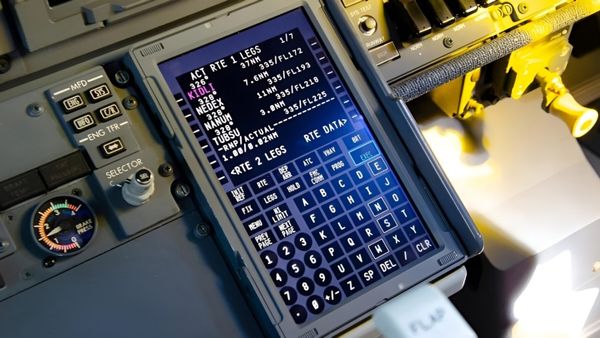 Boeing's Touchscreen Flight Controls for 737 Draw Sharp Criticism from Pilots
Boeing's plan to introduce Touchscreen Control Display Units on the 737 has sparked backlash from pilots who warn of safety and usability concerns.
NEWS
READ MORE »
Boeing's Touchscreen Flight Controls for 737 Draw Sharp Criticism from Pilots
Boeing's plan to introduce Touchscreen Control Display Units on the 737 has sparked backlash from pilots who warn of safety and usability concerns.
NEWS
READ MORE »
 Southwest Airlines Blames Brief System Outage for Boarding Delays and Checked Bag Disruptions
Southwest Airlines confirms a brief technology outage disrupted boarding and checked bag operations, forcing gate agents to process travelers manually.
NEWS
READ MORE »
Southwest Airlines Blames Brief System Outage for Boarding Delays and Checked Bag Disruptions
Southwest Airlines confirms a brief technology outage disrupted boarding and checked bag operations, forcing gate agents to process travelers manually.
NEWS
READ MORE »
 Southwest Airlines Considers Boeing 787 Order for Long-Haul International Expansion
Southwest Airlines is evaluating the Boeing 787 Dreamliner as it explores a shift into long-haul international flying, sources tell Reuters.
NEWS
READ MORE »
Southwest Airlines Considers Boeing 787 Order for Long-Haul International Expansion
Southwest Airlines is evaluating the Boeing 787 Dreamliner as it explores a shift into long-haul international flying, sources tell Reuters.
NEWS
READ MORE »
More than just headlines.
Get unlimited ad-free access to in-depth aviation news, premium stories, and exclusive insights other sites don't cover.
- Ad-free browsing on AeroXplorer
- Unlimited access to premium and exclusive articles
- Higher photo upload limits & commissions on sales
- Free access to Jetstream Magazine on higher tiers
- Ad-free browsing
- Sell aviation photos with 60% commission
- First week free!
- Everything in Basic+
- Unlimited premium articles
- Sell aviation photos with 70% commission
- Free Digital subscription to Jetstream Magazine
- First week free!
- Everything in Basic+ and Pro
- Sell aviaiton photos with 80% commission
- Early access to exclusive stories
- Free Digital+Print subscription to Jetstream Magazine