
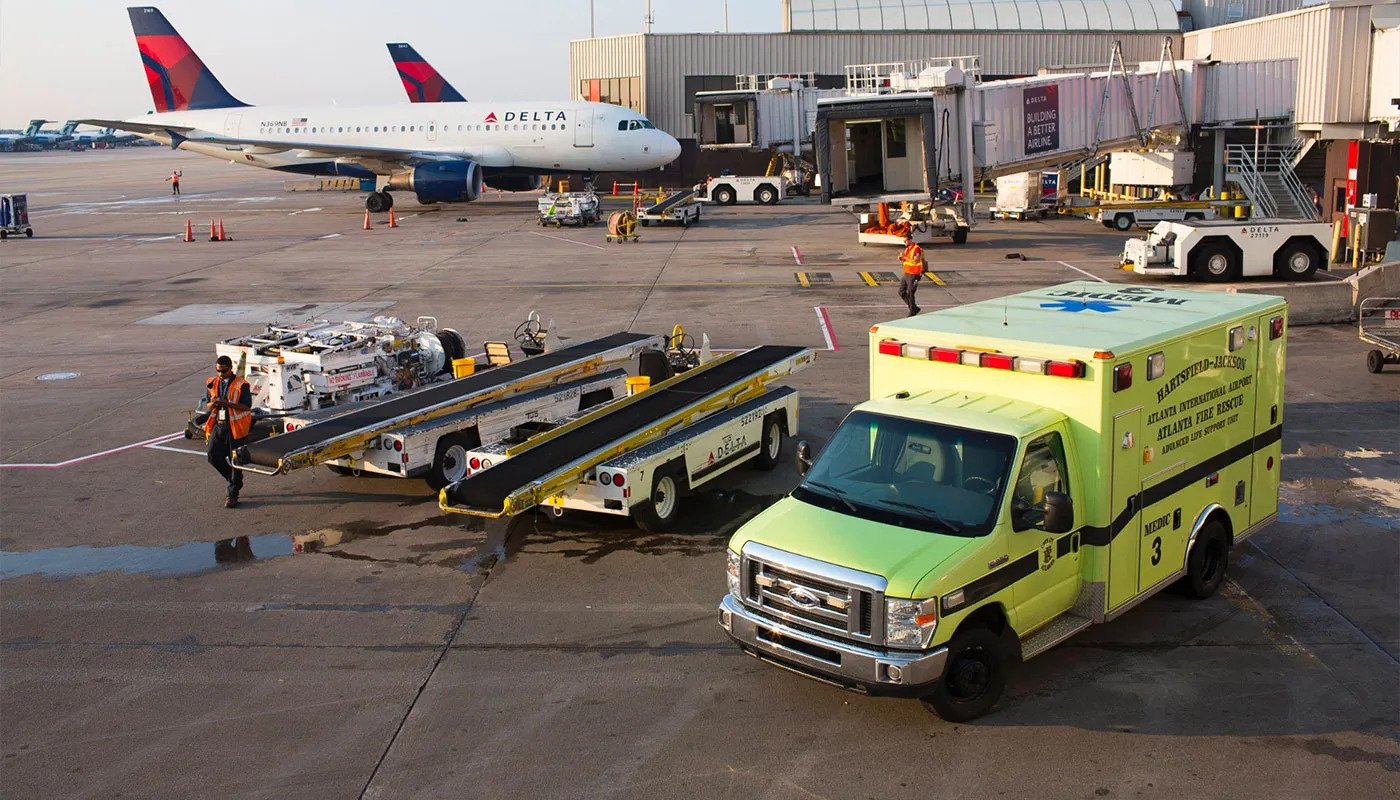

While such incidents are extremely rare, we can't be unprepared for it. Things can happen at ground level or 35,000 feet in the air. That's why the Federal Aviation Administration (FAA) and the International Air Transport Association (IATA) have set procedures in case such an incident does occur.

Recognizing and Responding to the Emergency
The first step is recognizing and assessing the situation. Trained medical professionals, including doctors and nurses, are often available on board, especially on long-haul flights. However, flight attendants will act according to FAA training and procedures if a passenger shows signs of distress. Many people don't know this, but flight attendants undergo rigorous training in basic first aid and CPR, prepared to support the medical professionals until proper medical attention is available as outlined by the Aircraft Owners and Pilots Association (AOPA).

Confirmation of Death
In the unfortunate event that a passenger does not respond to medical treatment and is pronounced deceased by a qualified medical professional, the IATA's Death on Board guidelines will kick in.
These guidelines will ensure immediate priority to secure the deceased and ensure all privacy and dignity of the situation is controlled. The dead person will be discreetly moved to a designated area of the airplane, usually an empty row or a dedicated area at the back of the cabin. However, this can differ based on each airline's specific procedures. The primary priority is to ensure proper hygiene and sanitation are in place.
Notification of Authorities
The aircraft's captain will assume responsibility for informing the appropriate authorities about the death onboard, complying with FAA's regulations and IATA recommendations.
The plane's location will greatly influence the policies that must be followed. This could involve contacting air traffic control, ground medical teams, or the authorities at the destination airport. The airline will coordinate with the deceased's next of kin to notify them of the situation and arrange to repatriate the remains, often collaborating with organizations like the National Air Disaster Alliance (NADA) to support the family through this difficult time.

Comfort and Security
While the death of a passenger board is a sensitive and upsetting event, the safety and comfort of all remaining passengers are just as important. Flight attendants are trained to handle such situations with discretion and sensitivity, ensuring that the deceased's family and other passengers are treated respectfully and supported. The captain will typically announce to inform passengers of the situation and address any concerns they may have.

Post-Flight
The aircraft will land at its originally designated airport unless unusual circumstances necessitate an emergency landing. Upon arrival, medical personnel will meet the plane to transport the deceased to a local morgue or hospital. The airline will assist the deceased's family with the necessary paperwork and arrangements for the repatriation of the remains.
While such events are highly unlikely, these events need to be planned for and carefully coordinated by both the pilots and flight attendants to maintain safety and comfort for both the living and the deceased.
United Airlines Passenger Says Carrier Forced Her to Sit Beside Man Who Masturbated During Flight » This Week in Aviation: The 10 Stories That Mattered Most » How Jet Access Is Building a New Model for Private Aircraft Maintenance »

Comments (0)
Add Your Comment
TAGS
INFORMATIONAL Death Emergency IATA FAA MedicalRECENTLY PUBLISHED
 United Airlines Passenger Says Carrier Forced Her to Sit Beside Man Who Masturbated During Flight
A woman claims United Airlines kept her seated next to a passenger who exposed himself mid-flight, then allowed him to walk free upon landing.
NEWS
READ MORE »
United Airlines Passenger Says Carrier Forced Her to Sit Beside Man Who Masturbated During Flight
A woman claims United Airlines kept her seated next to a passenger who exposed himself mid-flight, then allowed him to walk free upon landing.
NEWS
READ MORE »
 Airbus Calls A321neo Manufacturing Defect a Quality Problem, Not a Safety Risk
Airbus says a newly disclosed A321neo defect affecting hundreds of jets is a quality issue, not a safety concern, as airlines await fixes.
NEWS
READ MORE »
Airbus Calls A321neo Manufacturing Defect a Quality Problem, Not a Safety Risk
Airbus says a newly disclosed A321neo defect affecting hundreds of jets is a quality issue, not a safety concern, as airlines await fixes.
NEWS
READ MORE »
 Mystery Odor Sickens Seven Flight Attendants on Hawaiian Airlines Flight to Honolulu
Seven flight attendants fell ill after a mysterious odor filled the cabin of a Hawaiian Airlines flight from Los Angeles to Honolulu.
NEWS
READ MORE »
Mystery Odor Sickens Seven Flight Attendants on Hawaiian Airlines Flight to Honolulu
Seven flight attendants fell ill after a mysterious odor filled the cabin of a Hawaiian Airlines flight from Los Angeles to Honolulu.
NEWS
READ MORE »
More than just headlines.
Get unlimited ad-free access to in-depth aviation news, premium stories, and exclusive insights other sites don't cover.
- Ad-free browsing on AeroXplorer
- Unlimited access to premium and exclusive articles
- Higher photo upload limits & commissions on sales
- Free access to Jetstream Magazine on higher tiers
- Ad-free browsing
- Sell aviation photos with 60% commission
- First week free!
- Everything in Basic+
- Unlimited premium articles
- Sell aviation photos with 70% commission
- Free Digital subscription to Jetstream Magazine
- First week free!
- Everything in Basic+ and Pro
- Sell aviaiton photos with 80% commission
- Early access to exclusive stories
- Free Digital+Print subscription to Jetstream Magazine