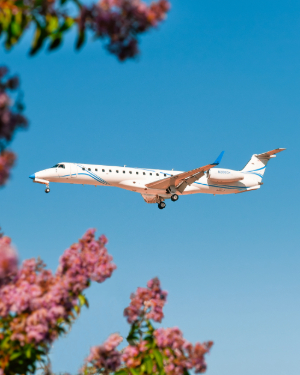


On June 10th, United Airlines announced their intent to create "United Airlines Ventures", a corporate venture fund meant to deliver on their sustainability goals. The fund will make it significantly easier for United to invest in up-and-coming sustainable travel companies, such as electric aircraft manufactures and biofuel producers. All investments must fall under preset sustainability principles that allow them to reach net-zero emissions in 2050. They will allocate an initial $200 million dollars towards the venture with Mike Leskinen, Vice President of Corporate Development and Investor Relations, as president of the project.
This news came on the same day as American's announcement of investment in electric air taxis produced by Vertical Aerospace. Other airlines like Southwest have taken similar actions, United is the only major American airline to create its own venture fund.

Many airlines have opted to offset emissions, which is considered by many climate activists as an excuse to continue polluting. Contrary to this, United's venture fund will allow the airline to reach its climate goals without needing to offset emissions while also expanding its customer base and flight experience with new technology. This move comes after two exciting partnerships with United. United agreed to purchase aircraft from the electric aircraft manufacturer Archer Aviation while also offering technical support to produce the aircraft. It is expected that United will purchase 200 of the small electric aircraft to serve routes operated by Mesa Airlines and other subsidiary carriers. More exciting, however, is United's interest in supersonic flight and their partnership with Boom, where they are expected to purchase "net-zero carbon" aircraft. While it is unclear what "net-zero carbon" means in this case, Boom seems to understand that the Concorde had terrible effects on the environment and they pledge to be different.

Whatever the outcome, United is taking visible steps to approach the climate crisis in a consumer-friendly way; they don't have to raise prices to cover the costs of biofuels, and the expectation is that electric aircraft will be relatively cheap to the consumer once in the skies. It may only be a matter of time before other airlines follow suit.
Caribbean Airlines Expands Network With New Toronto and Caracas Routes » Halon Was Supposed to Disappear. This Company Kept It Flying. » KLM Brings Starlink Internet to Long-Haul Flights »

Comments (0)
Add Your Comment
TAGS
NEWS United Venture Sustainability Venture Capital Environment SustainabilityRECENTLY PUBLISHED
 Boeing's Touchscreen Flight Controls for 737 Draw Sharp Criticism from Pilots
Boeing's plan to introduce Touchscreen Control Display Units on the 737 has sparked backlash from pilots who warn of safety and usability concerns.
NEWS
READ MORE »
Boeing's Touchscreen Flight Controls for 737 Draw Sharp Criticism from Pilots
Boeing's plan to introduce Touchscreen Control Display Units on the 737 has sparked backlash from pilots who warn of safety and usability concerns.
NEWS
READ MORE »
 Southwest Airlines Blames Brief System Outage for Boarding Delays and Checked Bag Disruptions
Southwest Airlines confirms a brief technology outage disrupted boarding and checked bag operations, forcing gate agents to process travelers manually.
NEWS
READ MORE »
Southwest Airlines Blames Brief System Outage for Boarding Delays and Checked Bag Disruptions
Southwest Airlines confirms a brief technology outage disrupted boarding and checked bag operations, forcing gate agents to process travelers manually.
NEWS
READ MORE »
 Southwest Airlines Considers Boeing 787 Order for Long-Haul International Expansion
Southwest Airlines is evaluating the Boeing 787 Dreamliner as it explores a shift into long-haul international flying, sources tell Reuters.
NEWS
READ MORE »
Southwest Airlines Considers Boeing 787 Order for Long-Haul International Expansion
Southwest Airlines is evaluating the Boeing 787 Dreamliner as it explores a shift into long-haul international flying, sources tell Reuters.
NEWS
READ MORE »
More than just headlines.
Get unlimited ad-free access to in-depth aviation news, premium stories, and exclusive insights other sites don't cover.
- Ad-free browsing on AeroXplorer
- Unlimited access to premium and exclusive articles
- Higher photo upload limits & commissions on sales
- Free access to Jetstream Magazine on higher tiers
- Ad-free browsing
- Sell aviation photos with 60% commission
- First week free!
- Everything in Basic+
- Unlimited premium articles
- Sell aviation photos with 70% commission
- Free Digital subscription to Jetstream Magazine
- First week free!
- Everything in Basic+ and Pro
- Sell aviaiton photos with 80% commission
- Early access to exclusive stories
- Free Digital+Print subscription to Jetstream Magazine