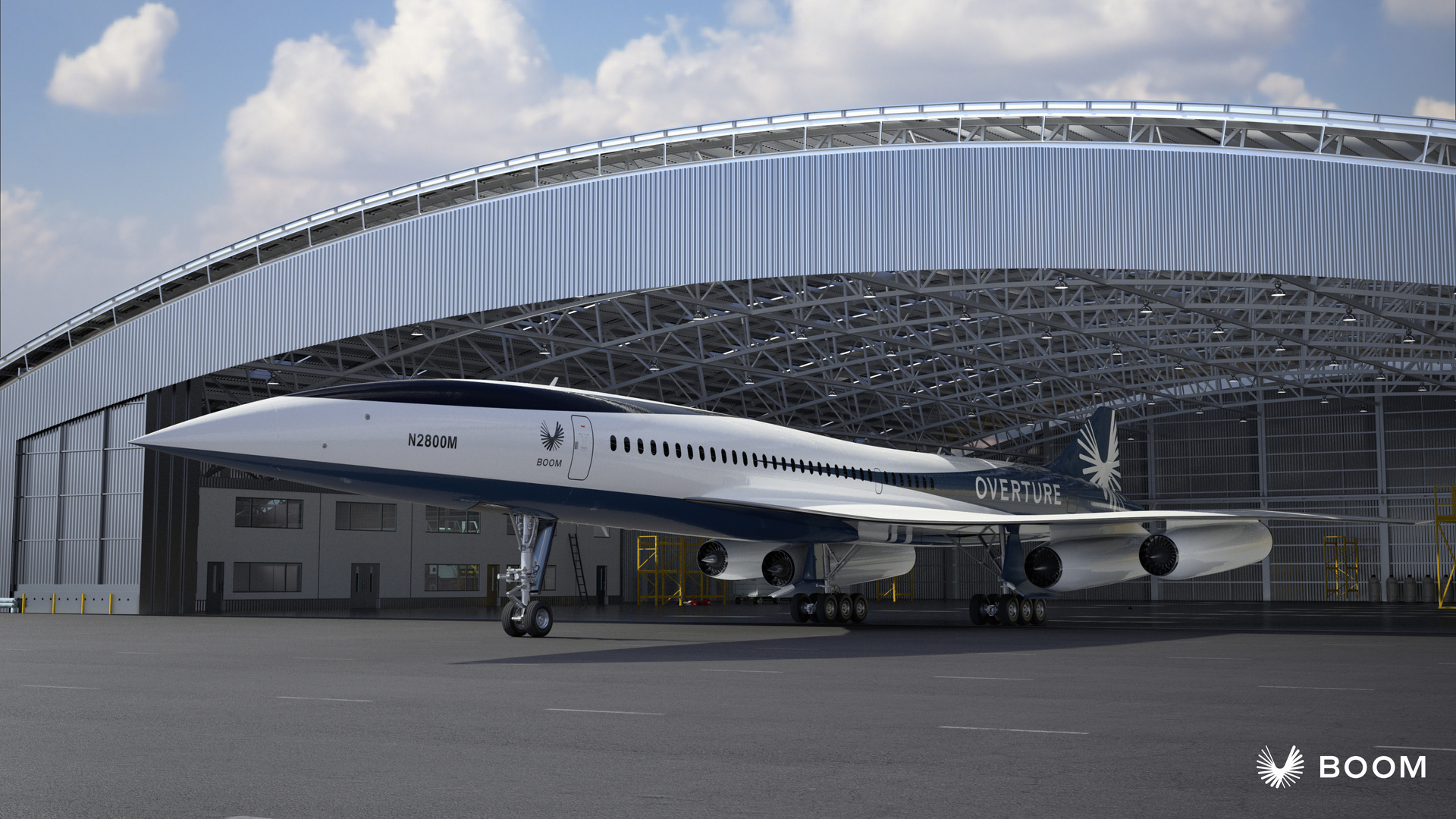
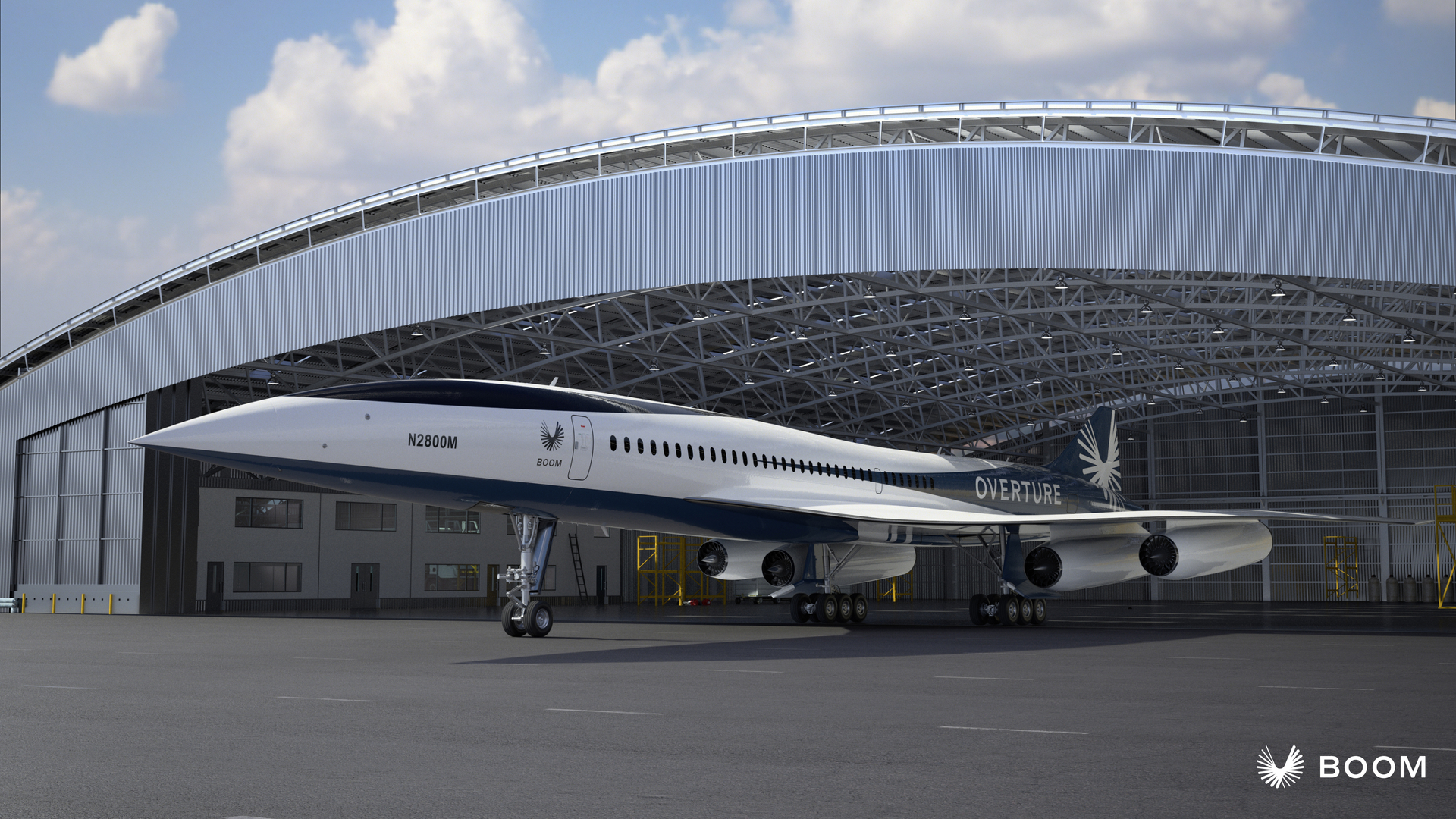
When Boom's Overture enters service, it will mark the return to commercial supersonic flight in more than 25 years. However, it will also mark the first time in more than 25 years that a pilot will have to think supersonically.
In the months leading up to its rollout, one of Boom's most complex challenges might not be in the wind tunnel, but in the cockpit.
The Challenge of Certification
Unlike any existing airliner, Overture will cruise near Mach 1.7 over water, twice the speed of the Boeing 787s and Airbus A350s widely flown today. This leap creates a unique certification challenge: no modern civilian type rating exists for supersonic flight. This means that Boom must work with the government to adapt frameworks originally written for subsonic transport aircraft to apply to its supersonically-capable fleet.
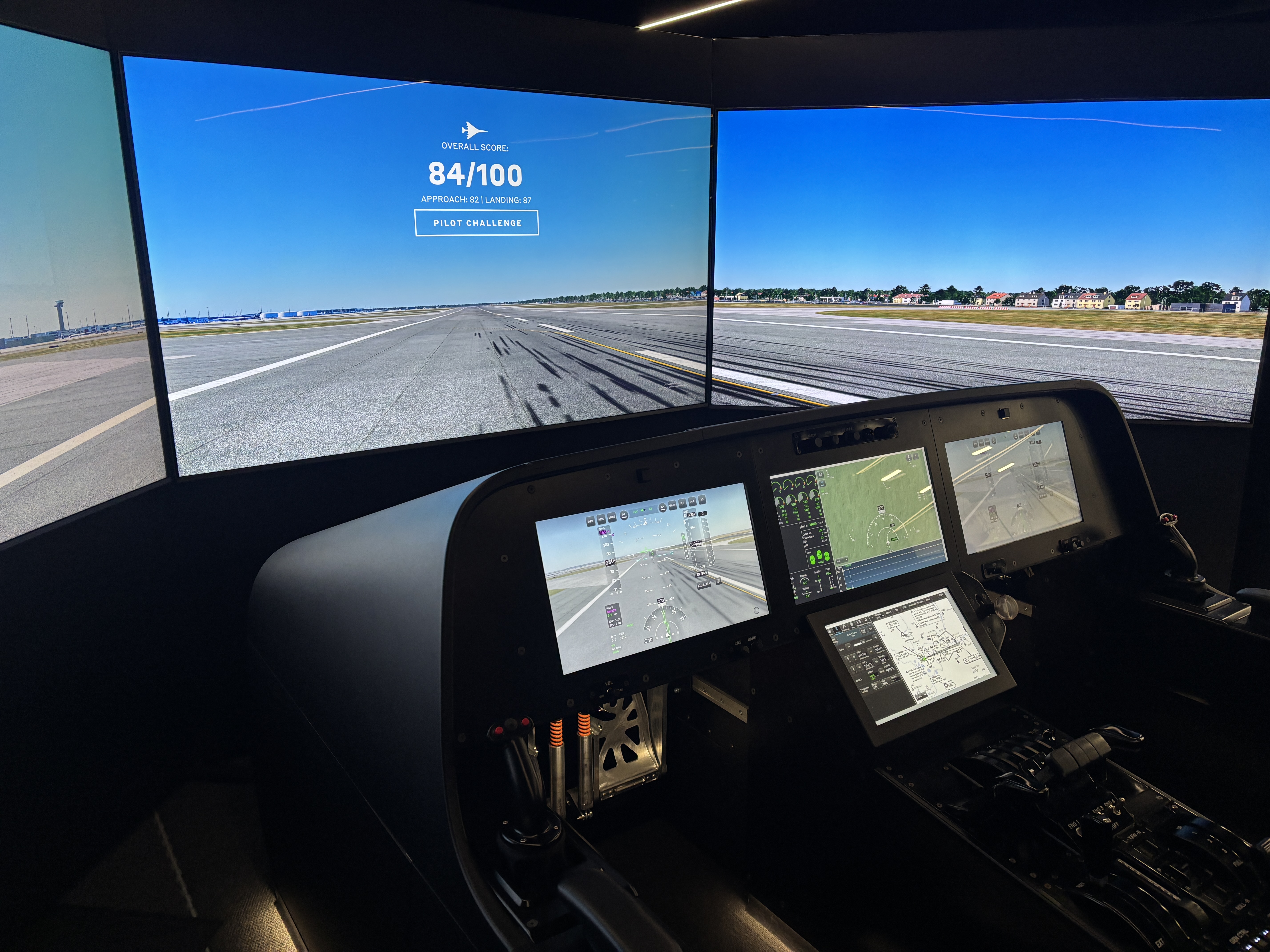
Creating this type rating means designing a full curriculum — ranging from ground school to simulator profiles — to flight training sequences that prepare pilots for the unexpected.
AeroXplorer recently sat down with Tristan "Geppetto" Brandenburg, Chief Test Pilot at Boom Supersonic, to learn more about Boom's plan for pilot training ahead of the Overture's entry into service.
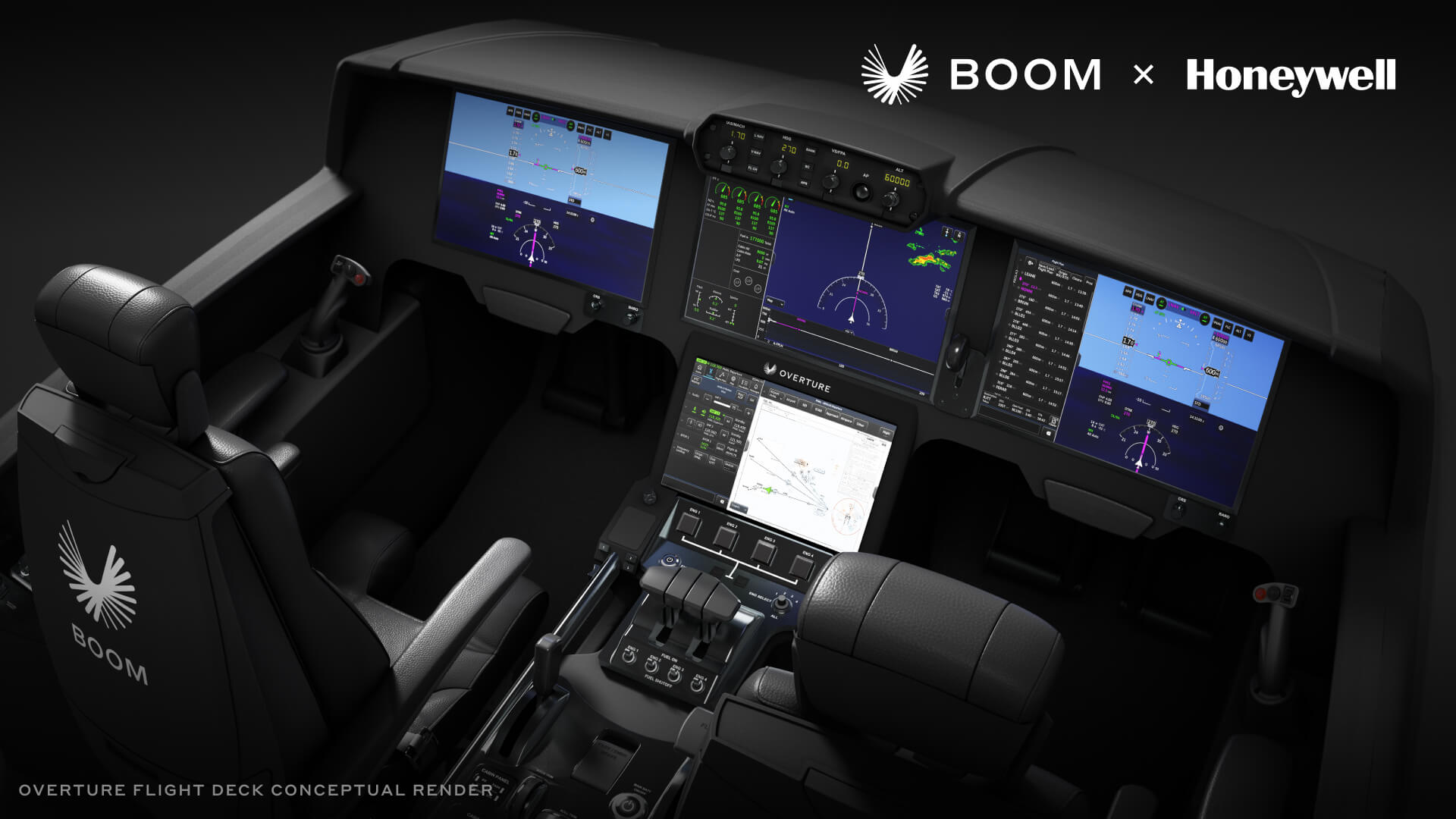
From a cockpit layout perspective, Boom seeks to make the transition from flying widebody commercial aircraft to Overture as seamless as possible. However, the mental shift from flying subsonic to supersonic could prove to be difficult at first for some pilots.
"When you think about the pilots who are going to be flying this airplane, […] they're going to be primarily senior widebody captains. They're used to flying the 777 and 787 at Mach 0.85, and the Overture will be flying twice as fast," Brandenburg shared. "One of the most difficult things will be to start thinking at Mach 1.7 rather than at Mach 0.85."
Thinking supersonically presents its own difficulties. Reduced reaction windows mean pilots will have less time to act in the case of an emergency, emphasizing the need for comprehensive training protocols.
However, Brandenburg seems hopeful that the transition will be fairly smooth for pilots. He recounted his own experience transitioning from the T-34 to the T-45, where his new aircraft flew at almost twice the speed. Although it took some time to become accustomed to this new flight profile, it was just a matter of reframing his approach to flying. In his words, "it was just learning to think farther ahead of the airplane."
"Most pilots have made this transition before in the past. So, while I'd say it's a difficult thing to do and a little bit painful at first, it's something that all of these pilots have done before, and I think they'd be capable of doing it again."
In fact, according to Brandenburg, Overture's digital infrastructure relies heavily on technology that is already largely proven: medium bypass turbofan engines, advanced external vision systems to replace cockpit windows, and automation layers are similar to those currently used on today's 787s and A350s. Boom's philosophy isn't to reinvent aviation, but instead to apply existing, certifiable technologies in new configurations that make supersonic flight more accessible.
Overture also builds on established fly-by-wire control philosophies and automation layers found in current commercial aircraft. Its flight control laws are derived from frameworks already certified for large transport aircraft, simply adapted for its supersonic flight profile. Thus, the integration of these already-certified systems not only reduces the hurdles surrounding certification but also ensures that pilots are encountering technology that behaves both predictably and intuitively.
The Future of Commercial Flight
As Boom moves towards flight testing and eventual commercial service, the pilots who command Overture will represent the bridge between the eras of conventional flight and supersonic air travel. Their training will blend the familiar architecture of modern widebody operations with the unique nuances of high-speed flight.
If successful, this new approach to pilot certification could form a baseline for a new generation of supersonic aircraft. As Boom continues to develop its aircraft, one thing is becoming more obvious: preparing pilots to think supersonically again may be just as important as building the aircraft itself.
This content is only available with an AeroXplorer+ subscription.
US State Department Warns of Threats to Airlines and Airports in Saudi Arabia Following Deadly Houthi Attacks » 4th vs 5th Generation Fighter Jets: How Fighter Jets Have Evolved » Southwest Airlines Considers Boeing 787 Order for Long-Haul International Expansion »
Comments (0)
Add Your Comment
TAGS
STORIES Startups Boom Boom Supersonic Pilots InterviewRECENTLY PUBLISHED
 NetJets Expands US Footprint With Three New Private Terminals and Larger Palm Beach Facility
NetJets announces exclusive-use terminals in Dallas, Washington, and Palm Beach, expanding private aviation infrastructure across key US markets.
NEWS
READ MORE »
NetJets Expands US Footprint With Three New Private Terminals and Larger Palm Beach Facility
NetJets announces exclusive-use terminals in Dallas, Washington, and Palm Beach, expanding private aviation infrastructure across key US markets.
NEWS
READ MORE »
 Army Report Points to Systemic Failures in Deadly Black Hawk Collision Near Reagan National
A new Army report identifies systemic failures behind the January collision between a UH-60L Black Hawk and American Airlines Flight 5342 near Washington.
NEWS
READ MORE »
Army Report Points to Systemic Failures in Deadly Black Hawk Collision Near Reagan National
A new Army report identifies systemic failures behind the January collision between a UH-60L Black Hawk and American Airlines Flight 5342 near Washington.
NEWS
READ MORE »
 Why Did Some Air India A320s Have Extra Wheels? Bogie Gear Explained
Why Air India operated select Airbus A320s with an unusual bogie landing gear.
INFORMATIONAL
READ MORE »
Why Did Some Air India A320s Have Extra Wheels? Bogie Gear Explained
Why Air India operated select Airbus A320s with an unusual bogie landing gear.
INFORMATIONAL
READ MORE »
More than just headlines.
Get unlimited ad-free access to in-depth aviation news, premium stories, and exclusive insights other sites don't cover.
- Ad-free browsing on AeroXplorer
- Unlimited access to premium and exclusive articles
- Higher photo upload limits & commissions on sales
- Free access to Jetstream Magazine on higher tiers
- Ad-free browsing
- Sell aviation photos with 60% commission
- First week free!
- Everything in Basic+
- Unlimited premium articles
- Sell aviation photos with 70% commission
- Free Digital subscription to Jetstream Magazine
- First week free!
- Everything in Basic+ and Pro
- Sell aviaiton photos with 80% commission
- Early access to exclusive stories
- Free Digital+Print subscription to Jetstream Magazine