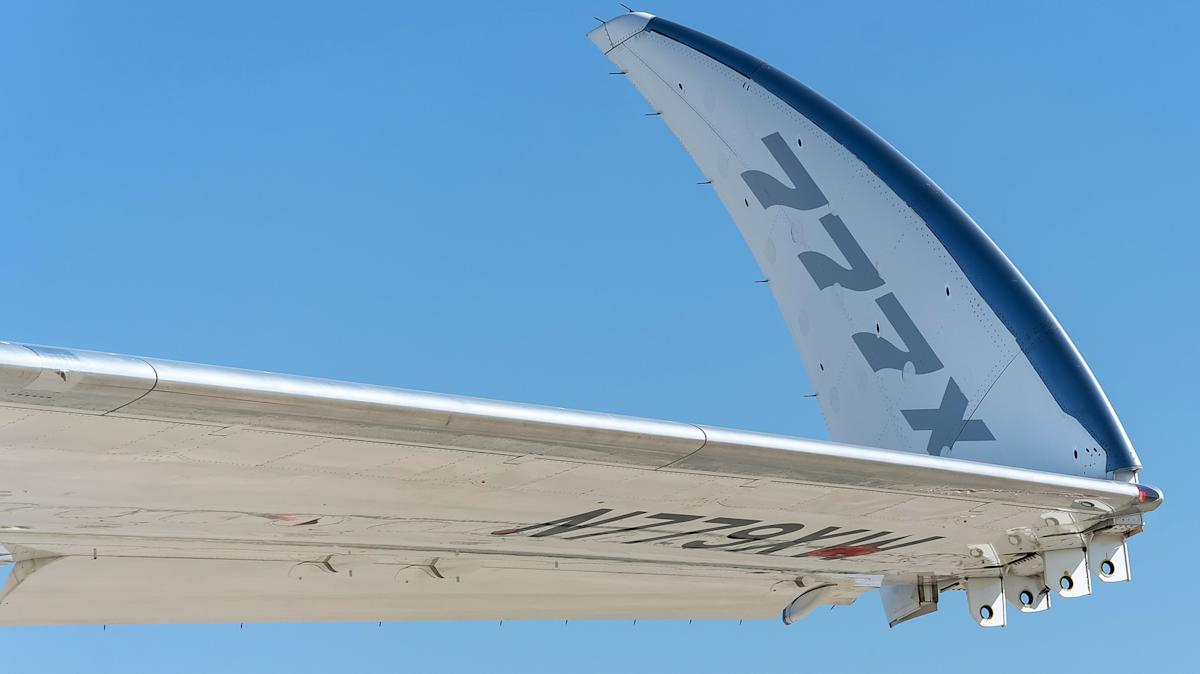
Boeing wanted a bigger, more efficient wing for the 777X, and it got one. The catch is that a wing built for maximum efficiency doesn't necessarily fit anywhere an airport has already built a gate. So, Boeing built a wing that can shrink itself on command, and that decision turned out to be one of the more genuinely novel pieces of engineering in modern commercial aviation.
A Wing Too Big for Its Own Airports
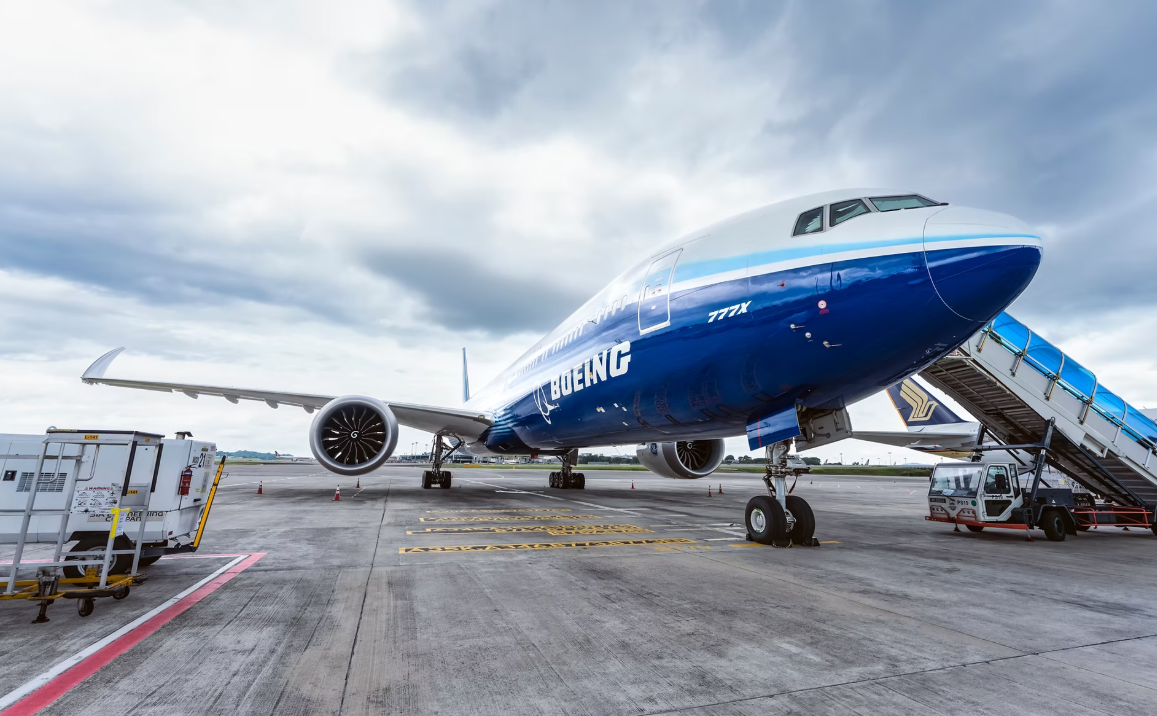
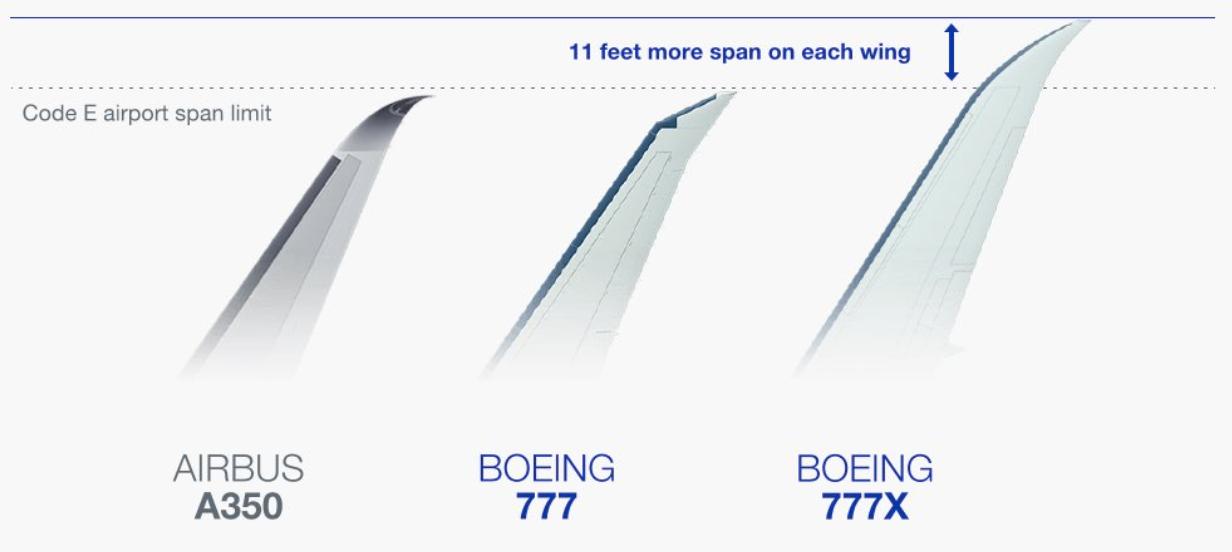
The 777X's wing isn't just bigger than the one on the 777-300ER, it's a different breed. Built from lightweight carbon-fiber composites with a higher aspect ratio, the new wing adds roughly 15 percent more surface area, which is a big part of what drives Boeing's claimed 20 percent cut in fuel burn and emissions over the outgoing 777. That extra span comes at a cost. Fully extended, the wingtips stretch to 235 feet 5 inches, or 71.75 meters, pushing the aircraft into ICAO's Code F classification. Most major airports weren't built for Code F, they were built for Code E, which caps out around 65 meters, the same category the 777-300ER and A350 already fit into.
Folding the Outer 3.5 Meters
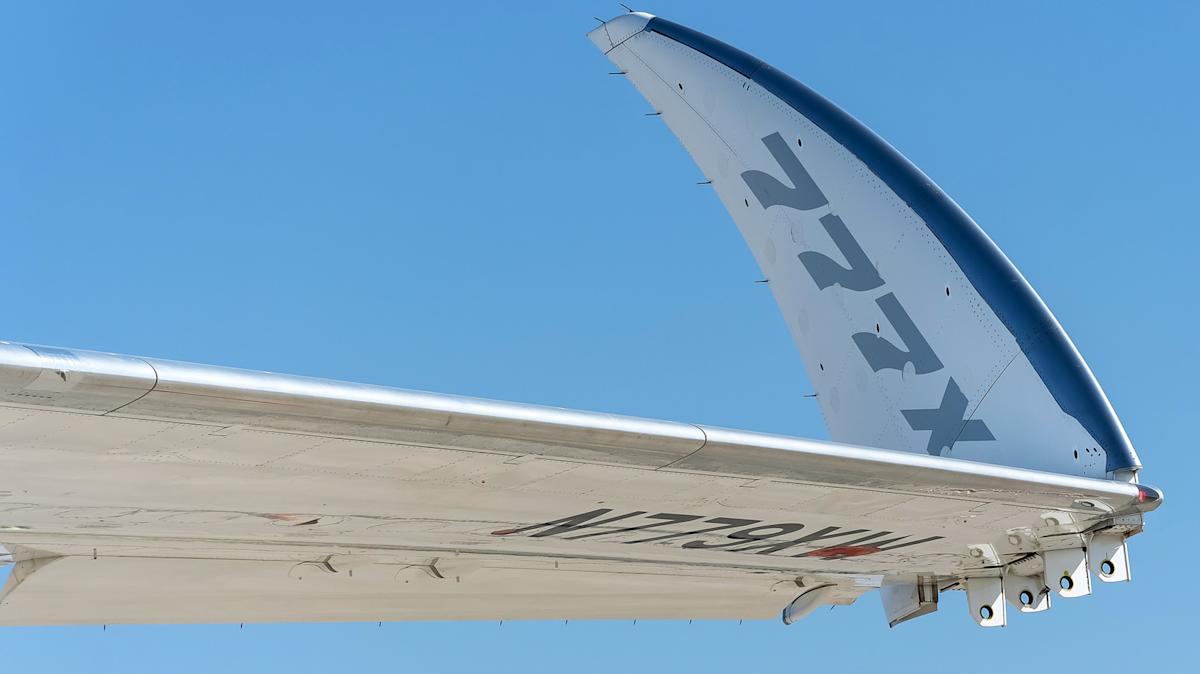
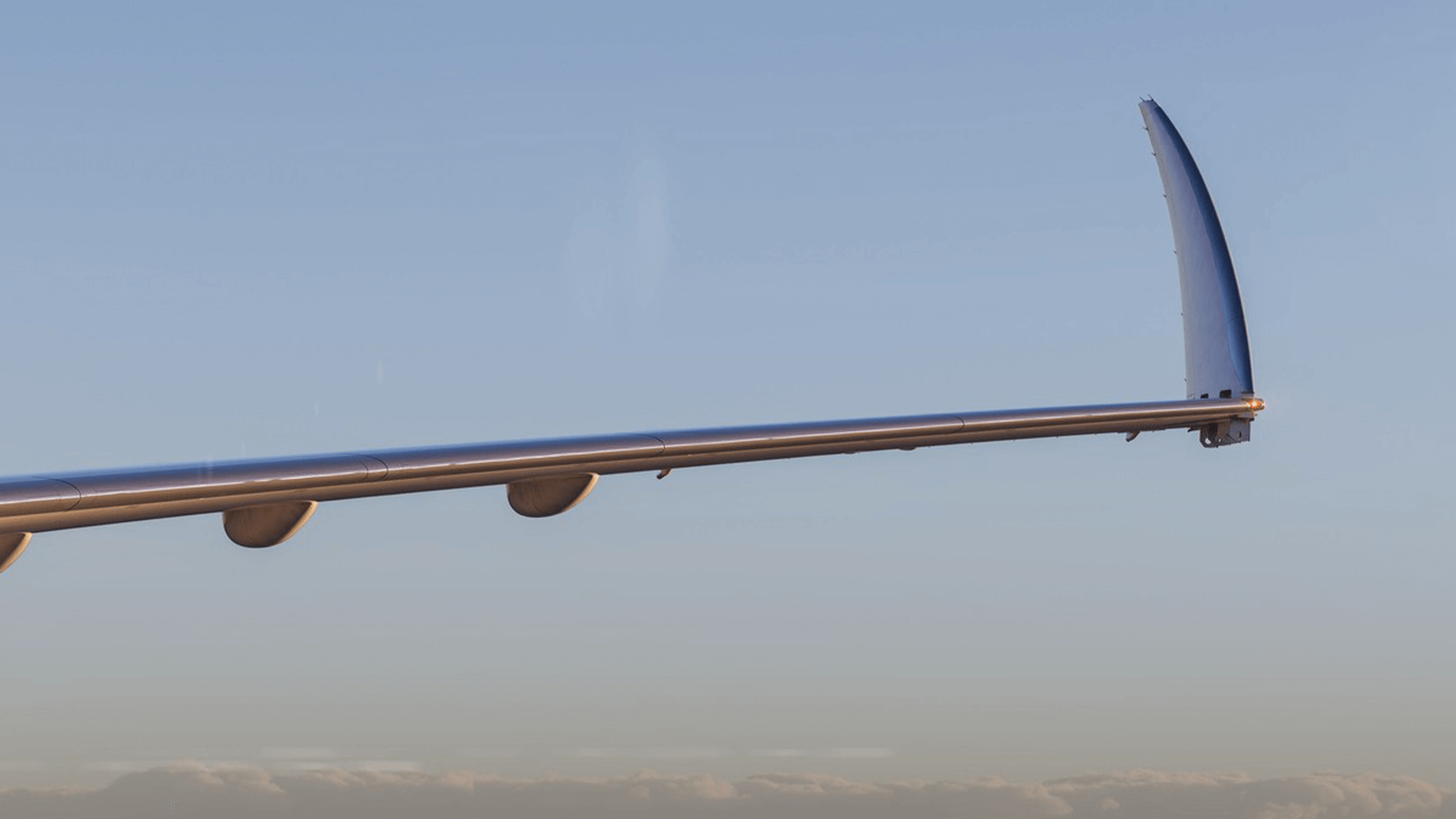
Rather than shrink the whole aircraft down to fit existing infrastructure, Boeing decided to fold just the part that didn't need to be there on the ground. The outer 11.5 feet, or 3.5 meters, of each wingtip hinges upward once the aircraft is on the taxiway, bringing the ground-configuration span down to 212 feet 9 inches, or 64.85 meters, comfortably back inside Code E limits. It's a strange thing to watch. Nobody expects an airliner's wing to change shape by seven meters between the gate and the runway, but that's exactly what it does, every single flight.
Built by Liebherr, Run from the Cockpit
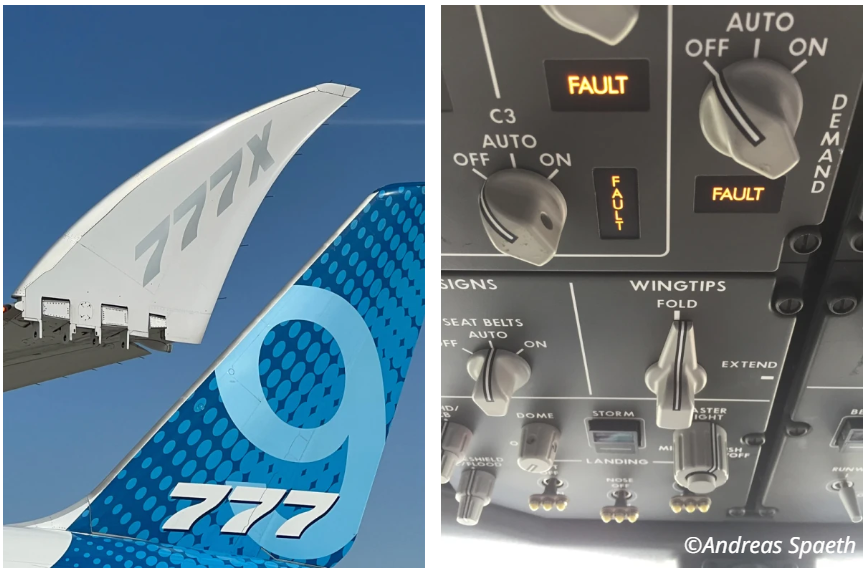
The mechanism itself is built by Liebherr, which developed it as the first wing-folding system ever used in commercial aviation. It's not a simple hinge and a motor. The system runs on an angle gearbox, a power drive unit, and a set of hydraulic-driven rotary actuators, all of which have to survive repeated folding cycles and the punishing aerodynamic loads a wing sees in cruise. Pilots control the whole thing from a single dedicated switch on the overhead panel, shaped and oriented to match the direction the wingtips actually travel, tucked between the seatbelt sign controls and the lighting panel.
Twenty Seconds, Every Flight
The sequence is almost mundane once you know it. Before takeoff, the crew flips the switch, hydraulic actuators rotate the tips into flight position, and electrical locks engage, locks that only disengage when powered, so the tips stay put even through a total power failure. Start to finish, it takes about 20 seconds. A dedicated checklist item confirms the tips are unfolded before the aircraft crosses the hold line, and if something goes wrong, the system doesn't stay quiet: a failed extension throws an alert and can stop the takeoff outright. After landing, nobody touches the switch again. Once ground speed drops to around 50 knots, the wingtips fold themselves back up automatically.
Worth the Weight and Complexity
None of this comes free. The wing box needed extra titanium reinforcement to handle the added structure, and the folding mechanism itself adds weight and inspection overhead that a fixed wingtip never would. Boeing's own numbers say it's worth it anyway, the folding design delivers roughly 3 percent better block fuel compared to a fixed, blended winglet trimmed down to fit Code E dimensions, and the tips are engineered to sit safely through winds up to 82 knots, Category 1 hurricane strength, without needing to be manually locked down.

Analysis: How Spirit Airlines Changed Airline Pricing, then Paid the Price
The Alternative Was the A380's Problem
Skip the folding tips entirely, and the 777X runs straight into the same wall that helped kill commercial demand for the A380, a wingspan too wide for the airports airlines already fly into. Instead, airlines get the aerodynamic upside of a genuinely bigger wing without a single taxiway or gate needing to change. It's an unusually elegant fix for a problem that has quietly limited aircraft design for decades, sometimes the best wing isn't the one that fits everywhere, it's the one that knows when to fold itself away.
FAA Orders Fuel Hose Inspections on Airbus A220 Fleet Operated by Breeze Airways and Delta Air Lines » Thousands of Flights Delayed or Canceled as Travel Disruptions Sweep Across the U.S. » Etihad Airways Reveals New Cabin Designs for A330neo and A321LR Fleets »

Comments (0)
Add Your Comment
TAGS
INFORMATIONAL Boeing 777X 777 777-9 Boeing 777 wingtips wing folding wingtip aerodynamics engineeringRECENTLY PUBLISHED
 British Airways Returns to Tanzania After 15 Years With Direct Flights to Kilimanjaro and Zanzibar
British Airways will launch direct flights from London Gatwick to Kilimanjaro and Zanzibar in summer 2027, marking its return to Tanzania after 15 years.
NEWS
READ MORE »
British Airways Returns to Tanzania After 15 Years With Direct Flights to Kilimanjaro and Zanzibar
British Airways will launch direct flights from London Gatwick to Kilimanjaro and Zanzibar in summer 2027, marking its return to Tanzania after 15 years.
NEWS
READ MORE »
 Frontier Airlines Introduces Cancel For Any Reason Option For Passengers Up To 24 Hours Before Departure
Frontier Airlines now lets passengers cancel any flight up to 24 hours before departure through a new Cancel For Any Reason product powered by Hopper.
NEWS
READ MORE »
Frontier Airlines Introduces Cancel For Any Reason Option For Passengers Up To 24 Hours Before Departure
Frontier Airlines now lets passengers cancel any flight up to 24 hours before departure through a new Cancel For Any Reason product powered by Hopper.
NEWS
READ MORE »
 How Aging Aircraft Fleets Are Reshaping the Way Airlines Operate
The global fleet is older than ever. Here's how aging aircraft are changing the way airlines handle maintenance, scheduling, and daily operations.
INFORMATIONAL
READ MORE »
How Aging Aircraft Fleets Are Reshaping the Way Airlines Operate
The global fleet is older than ever. Here's how aging aircraft are changing the way airlines handle maintenance, scheduling, and daily operations.
INFORMATIONAL
READ MORE »
More than just headlines.
Get unlimited ad-free access to in-depth aviation news, premium stories, and exclusive insights other sites don't cover.
- Ad-free browsing on AeroXplorer
- Unlimited access to premium and exclusive articles
- Higher photo upload limits & commissions on sales
- Free access to Jetstream Magazine on higher tiers
- Ad-free browsing
- Sell aviation photos with 60% commission
- First week free!
- Everything in Basic+
- Unlimited premium articles
- Sell aviation photos with 70% commission
- Free Digital subscription to Jetstream Magazine
- First week free!
- Everything in Basic+ and Pro
- Sell aviaiton photos with 80% commission
- Early access to exclusive stories
- Free Digital+Print subscription to Jetstream Magazine