
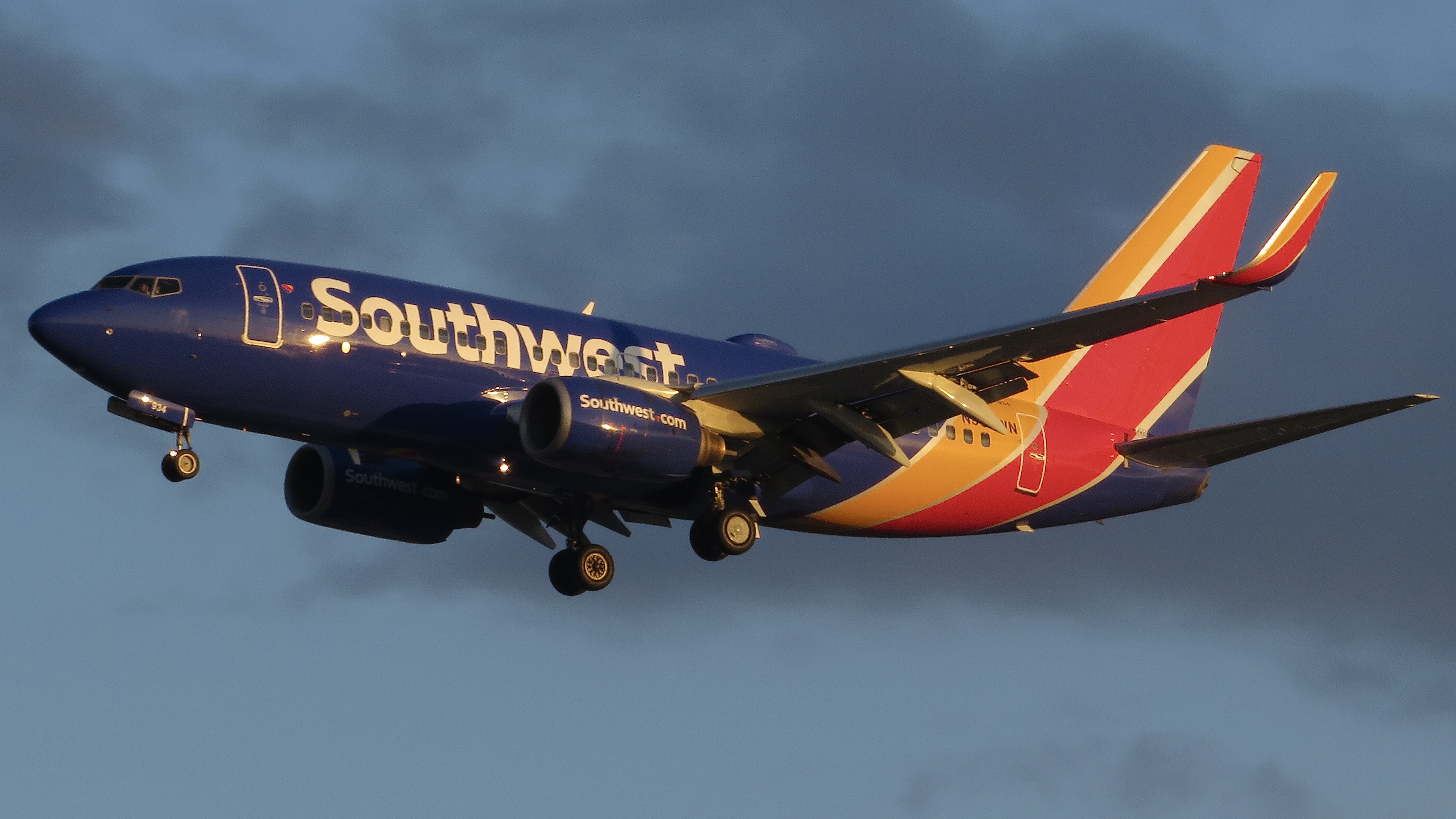

A viral Reddit post that has been circulating across aviation and travel communities in recent days has put Southwest Airlines under renewed scrutiny, after one of its passengers described how approximately ten travellers, including elderly passengers and a pregnant woman, were nearly left behind at Harry Reid International Airport in Las Vegas due to a delay that Southwest itself caused. The incident, which unfolded last month, illustrates one of the most persistent and frustrating tensions in domestic air travel: an airline that delays its own inbound flight and then refuses to hold the connecting departure for the same passengers it has already inconvenienced.
What Happened at Harry Reid International Airport
Reddit user @lindslinds27 was traveling home from a wedding in Texas with Southwest Airlines to an unnamed small airport that the carrier "just started serving with one or two flights a day to about six destinations in total." This required them to change flights en route, with the transit location in question being Harry Reid International Airport. The user explains that they had an hour-long layover, but the "first plane was about 20 minutes late, so the next plane began boarding as we were still slowly getting off the first plane."
As they were among the last off the plane, they were reassured that the connection would be held as Southwest knew they were on their way. However, when reaching the gate, they were told they couldn't board.
The group involved was not a collection of mobile, young travellers capable of sprinting across a terminal at short notice. Southwest Airlines came perilously close to abandoning ten passengers at the gate, including elderly travelers and a pregnant woman, after the carrier's own inbound flight delay left connecting customers scrambling across a sprawling airport terminal with minimal time to make their next departure.
The composition of this particular connecting group compounded the vulnerability. Elderly passengers and a pregnant traveler couldn't physically manage the sprint that younger, more mobile flyers might attempt, creating a humanitarian dimension to what could have been a logistical failure with serious consequences.

Southwest's Gate Closure Policy
Southwest Airlines' official position on gate closures explains the mechanism that put these passengers in jeopardy. A Southwest spokesperson confirmed the policy to Simple Flying:
"In general, we close the doors 10 minutes before departure to allow for final safety checks and closing out required documentation."
That ten-minute rule is standard across the industry and has a clear operational rationale. Final headcounts, door arming, weight and balance confirmation, and paperwork cannot be rushed. But applied rigidly to a group of connecting passengers who are running late because of a Southwest-operated inbound delay, the same rule becomes a mechanism through which an airline's own operational failure directly results in passenger abandonment. The passengers concerned had done nothing wrong. They were on their assigned Southwest flight. It arrived late. Their next Southwest flight was departing on time, and they refused to wait.
A Mechanical Issue That Saved the Day
The resolution of the incident was accidental rather than intentional, and that fact has been the detail that has driven the greatest frustration among the travelling public following the post's circulation.
In the end, however, the remaining passengers were allowed to board their connecting flight, thanks to a reported mechanical issue holding up its planned departure for just long enough. As luck would have it, by the time the flight had made its journey to the poster's hometown, it actually arrived some 15 minutes early.
The timing of the mechanical issue, combined with the fact that the flight arrived early despite accommodating the delayed connecting group, prompted the passenger to make a pointed observation about the entire episode. The flight had not needed to wait in the first place. The passenger highlighted the fact that "however many minutes or so that they did end up waiting was inconsequential."
That observation crystallises the frustration at the heart of the story: the flight had enough margin in its schedule to accommodate the connecting passengers without any meaningful impact on its arrival time, yet the gate agent had initially refused to allow them on board. The passengers were saved not by Southwest's customer service protocols but by a coincidental mechanical delay on the departing aircraft.
The Cockpit’s Next Revolution: When the Co-Pilot Is a Computer
Southwest Airlines Flights Involved in Las Vegas Connecting Incident
| Flight No. | Route | Departure Time | Arrival Time | Duration | Operating Days |
|---|---|---|---|---|---|
| WN (Texas origin) | Texas hub city → Las Vegas (LAS) | Scheduled (arrived ~20 min late) | Las Vegas | ~2–3h (est.) | Daily Southwest service |
| WN (LAS connection) | Las Vegas (LAS) → Small home airport | 10-min early gate closure applied | Arrived ~15 min early | Short domestic sector | 1–2x Daily at destination |
Note: Southwest Airlines has not publicly identified the specific flight numbers, origin city, or destination airport involved in this incident. The connecting group of approximately ten passengers, including elderly travellers and a pregnant woman, was permitted to board after a coincidental mechanical issue delayed the connecting flight's departure. All schedule details above are indicative. Passengers should build a minimum 90-minute connection buffer when transiting through Las Vegas Harry Reid International Airport on Southwest services.
A System Under Structural Pressure
The Las Vegas incident is a product of how modern domestic airline scheduling works rather than a random failure at one gate. Airlines have engineered operational models predicated on razor-thin connection buffers to maximise aircraft utilisation and reduce costs. While economically efficient, this approach leaves minimal margin for error when primary flight segments experience delays, whether due to weather, mechanical issues, or ground handling bottlenecks.
Southwest's network design adds a specific dimension to this challenge. Unlike hub-and-spoke carriers, Southwest operates a point-to-point model in which any individual aircraft delay can cascade rapidly through the schedule as the same jet operates multiple legs in sequence. A 20-minute late arrival at Las Vegas on the inbound flight is, in network terms, a relatively minor disruption. For the ten passengers who needed to make a connection to a small airport served by one or two flights a day to six destinations, a 20-minute late arrival was the difference between boarding their connection and waiting potentially until the following day for the next available service.
With gate-to-gate connection windows often compressed to under 45 minutes on major hubs, delayed arrivals automatically jeopardise downstream flights.

Southwest's Broader Operational Pattern in 2026
The Las Vegas connecting incident has emerged at a moment when Southwest's operational reliability has been under broader scrutiny. Rolling disruptions across the US aviation system in early 2026 have left Southwest Airlines facing a wave of regional delays at key hubs, stranding thousands of travelers and underscoring how quickly routine weather and congestion can cascade into large-scale gridlock.
Southwest Airlines has become one of the hardest-hit carriers in the 2026 disruption wave, with nearly 1,000 flight delays at key airports such as Chicago Midway, New York's LaGuardia, and Los Angeles International, and at least 16 cancellations during the peak April 3 disruption event.
The financial headwinds compounding these operational pressures are significant. Market coverage in early April notes that the carrier's share price has fallen by more than 20% over the past month, as jet fuel costs have spiked sharply following disruptions to global energy supplies. Analysts have warned that Southwest's previously stated earnings targets for 2026, which were based on far lower fuel price assumptions, are increasingly under threat.
What Passengers Can Do
For travelers booking connecting flights, the incident serves as a cautionary reminder about the fragility of tight itineraries and the limited recourse available when airlines' own delays cascade into passenger abandonment scenarios.
Industry standard recommendations suggest 90 minutes for domestic connections in major hubs and two to three hours for international transfers, though this varies by airport layout and complexity.
Southwest's own flexibility advantage is one genuine protection available to its customers. Unlike legacy carriers, Southwest charges no change fee, allowing passengers to shift to an alternative departure if the booked connection looks threatened, though that option is of limited use when the service frequency at the destination is as low as one or two daily departures, as was the case in the Las Vegas incident.
The ten passengers who nearly missed their connection in Las Vegas boarded their flight because a mechanical fault bought them the minutes their airline had decided were not available to give. It is not a customer service standard that Southwest, or any airline, should feel comfortable relying on.
Super Puma Firefighting Helicopter Crashes at Yosemite, Killing Both Pilots » United Airlines Takes Delivery of First Aircraft Powered by Pratt & Whitney's GTF Advantage Engine » FAA Equipment Outage Grounds Flights at Newark, JFK and Philadelphia Airports »

Comments (0)
Add Your Comment
TAGS
NEWS Southwest Airlines Las Vegas Airport Connecting Flights Gate Closure Policy Harry Reid Airport Passenger Rights Reddit Flight Delay Southwest Connections Airline Operations Airline Accountability Flights TravelRECENTLY PUBLISHED
 UAE Suspends Iranian Airline Flights to Comply With US Sanctions, Triggering Retaliatory Airspace Ban From Tehran
The UAE has halted all Iranian carrier operations to comply with reimposed US sanctions, prompting Iran to bar Emirati airlines from its airspace.
NEWS
READ MORE »
UAE Suspends Iranian Airline Flights to Comply With US Sanctions, Triggering Retaliatory Airspace Ban From Tehran
The UAE has halted all Iranian carrier operations to comply with reimposed US sanctions, prompting Iran to bar Emirati airlines from its airspace.
NEWS
READ MORE »
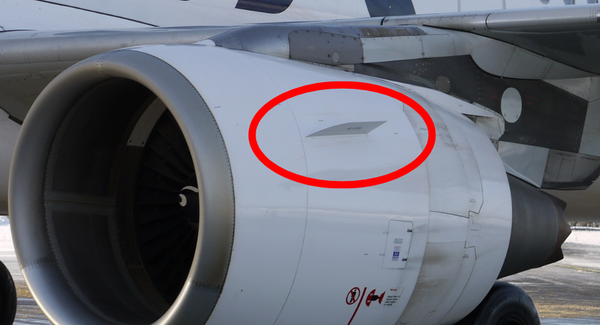 What Are Strakes? The Aerodynamic Fins Attached on an Aircraft's Fuselage
A look at how aircraft strakes quietly shape airflow, improve stability, and enhance aerodynamic performance.
INFORMATIONAL
READ MORE »
What Are Strakes? The Aerodynamic Fins Attached on an Aircraft's Fuselage
A look at how aircraft strakes quietly shape airflow, improve stability, and enhance aerodynamic performance.
INFORMATIONAL
READ MORE »
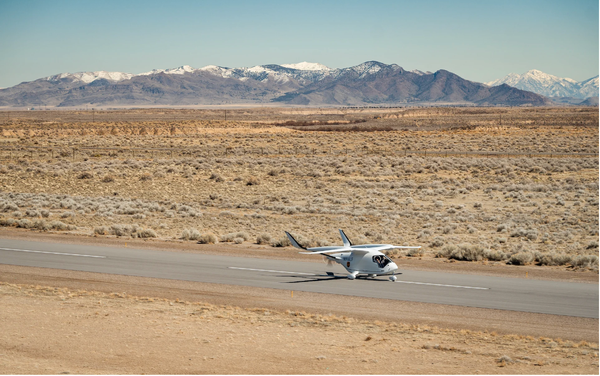 BETA Technologies Begins Electric Aircraft Operations in North Carolina to Support Rural Healthcare Access
BETA Technologies launches its ALIA CTOL electric aircraft in North Carolina under a FAA program aimed at improving rural healthcare logistics.
NEWS
READ MORE »
BETA Technologies Begins Electric Aircraft Operations in North Carolina to Support Rural Healthcare Access
BETA Technologies launches its ALIA CTOL electric aircraft in North Carolina under a FAA program aimed at improving rural healthcare logistics.
NEWS
READ MORE »
More than just headlines.
Get unlimited ad-free access to in-depth aviation news, premium stories, and exclusive insights other sites don't cover.
- Ad-free browsing on AeroXplorer
- Unlimited access to premium and exclusive articles
- Higher photo upload limits & commissions on sales
- Free access to Jetstream Magazine on higher tiers
- Ad-free browsing
- Sell aviation photos with 60% commission
- First week free!
- Everything in Basic+
- Unlimited premium articles
- Sell aviation photos with 70% commission
- Free Digital subscription to Jetstream Magazine
- First week free!
- Everything in Basic+ and Pro
- Sell aviaiton photos with 80% commission
- Early access to exclusive stories
- Free Digital+Print subscription to Jetstream Magazine