


It may sound like something out of science fiction, but navigation using the principles of Quantum Physics (Quantum Technology) is fast becoming a reality. Positioning, Navigation, and Timing (PNT) can increase accuracy by orders of magnitude, revolutionizing navigation across the board. Self-contained Quantum Inertial Navigation Systems (Q-INS) are also impervious to jamming or spoofing by hostile actors.
Quantum Physics 101
The universe is made up of objects. There are classical objects and quantum objects. Quantum objects make up classical objects. Quantum objects are the tiniest things: atoms, ions of atoms, and subatomic particles such as electrons and photons. Quantum physics is the scientific study of these quantum objects and their mechanisms in Quantum Technology.
Quantum objects exist along something called the waveform or wave function waveform. The wave function is the bedrock of quantum mechanics, which describes the behavior of a quantum particle. The quantum particle’s ability to exist in multiple places along the waveform is known as “superposition.”

The wave function is the math that tells us the probability that a quantum object will be in one place or another along its waveform. When a quantum object is located and observed, its precise location is known, and it can no longer be in any of its other possible places along the waveform, which is called the collapse of the wave function. The measurement of changes in this tiny waveform provides the astonishingly accurate measurement of time and distance that makes Q-INS such a ground-breaking development.
The UK Participants
The UK subsidiary Quantum technology firm Infleqtion collaborates with aerospace company BAE Systems and defense tech contractor QinetiQ to create the quantum navigation system.
Infleqtion’s Tiqker optical atomic clock uses the frequency of light emitted or absorbed by atoms as they change energy levels to measure time with incredible precision. The ultra-cold-atom-based quantum system can calculate position based on measurements of inertial forces acting on atoms held in quantum superposition states.

The clocks provide the timing needed for high accuracy and reliability. The accelerometers and gyroscopes of the quantum positioning systems offer independent verification of position and motion. Together, they are the Quantum Inertial Navigation System, or Q-INS.
In-Flight Trials
In concert with the UK Ministry of Defence, the consortium of advanced researchers and industry participants completed commercial flight trials this month. The final test flight occurred on Thursday, May 9, at Boscombe Down, Wiltshire, in QinetiQ’s Airborne Technology Demonstrator, a modified RJ100. Science Minister Andrew Griffith flew aboard the final flight.
These were the first test of flights ever of the ground-breaking technology to have been publicly acknowledged. They result from a £8 million investment from the British government, part of the £2.5 billion National Quantum Strategy and the National Quantum Technologies Program. The ultimate goal is to deploy Q-INS in aircraft by 2030.
“The fact that this technology has flown for the first time in British skies is further proof of the UK as one of the world leaders on quantum,” declared Science Minister Griffith.

Defense Advantage
When INS was developed and implemented in the late 60s and 70s, a key feature was its ability to function without needing external communication. INS relies entirely on onboard components to sense any movement of the airplane - its inertia - from the first movement on the ground. It calculates the aircraft’s position at any point on its journey relative to that starting point. Since INS is entirely independent of anything outside the airplane, the system is resilient in the face of communication disruptions caused by potential disasters below, such as weather, earthquakes, or war destruction.
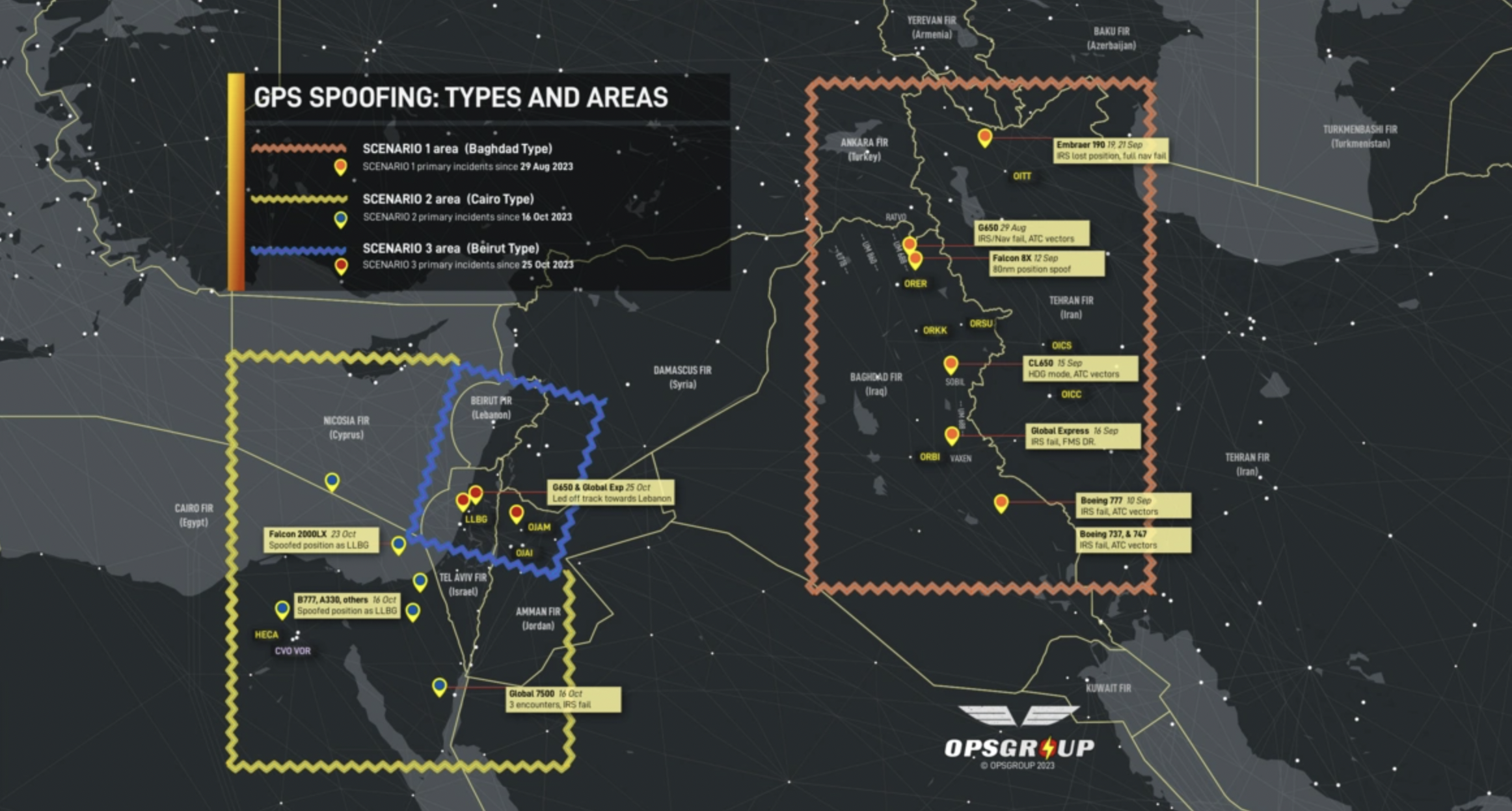
Though still rare, GPS jamming or interference is a growing concern. The recent solar storms raised concerns over the potential degradation of GPS satellite signals.
More ominously, the alleged recent launch of Russian anti-satellite (ASAT) weaponry makes it a defensive imperative to reduce reliance on a newly vulnerable GPS constellation.

New Frontiers
Q-INS makes ultra-precise navigation available to places where GNSS and GPS cannot reach. Submersible vehicles can employ Q-INS, for example. Underground applications include research and exploration, such as locating water, oil, or mineral deposits. Space navigation can also be enhanced by quantum-based dead reckoning where GNSS and GPS do not function. The fantastic precision of PNT systems will also contribute to much more accurate pathways for self-driving vehicles.
One significant additional advantage for military or civil applications is the longevity of such quantum systems. Whereas classical INS requires recalibration every few months, Q-INS may be able to go years between corrections.
Etihad Airways Reveals New Cabin Designs for A330neo and A321LR Fleets » How Aging Aircraft Fleets Are Reshaping the Way Airlines Operate » Delta Air Lines Moves to Claim Top Spot at LAX With New Routes and Expanded Schedule »

Comments (1)
 john kornblee
We shouldn't be pushing to get rid of the VOR system yet. GPS interference is concerning.
john kornblee
We shouldn't be pushing to get rid of the VOR system yet. GPS interference is concerning.
Add Your Comment
TAGS
NEWS GPS Q-INS PNT navigation GNSS Quantum INS Quantum Technology Quantum Computing Global Positioning System Navigation system GPS navigation Satellite Navigation GNSS GPS Quantum Mechanics Quantum PhysicsRECENTLY PUBLISHED
 One-Millisecond Software Defect Identified as Cause of UK Air Traffic Control Collapse That Grounded Thousands of Flights
A new NATS report reveals a one-millisecond software defect triggered the UK air traffic control failure, causing thousands of cancellations.
NEWS
READ MORE »
One-Millisecond Software Defect Identified as Cause of UK Air Traffic Control Collapse That Grounded Thousands of Flights
A new NATS report reveals a one-millisecond software defect triggered the UK air traffic control failure, causing thousands of cancellations.
NEWS
READ MORE »
 AirAsia Pushes Back on Collapse Rumors as Fuel Costs Squeeze Budget Airline
AirAsia CEO Tony Fernandes denies the airline faces collapse, saying travel demand stays strong despite rising jet fuel prices pressuring margins.
NEWS
READ MORE »
AirAsia Pushes Back on Collapse Rumors as Fuel Costs Squeeze Budget Airline
AirAsia CEO Tony Fernandes denies the airline faces collapse, saying travel demand stays strong despite rising jet fuel prices pressuring margins.
NEWS
READ MORE »
 Delta Air Lines Moves to Claim Top Spot at LAX With New Routes and Expanded Schedule
Delta Air Lines plans its largest-ever schedule at Los Angeles International Airport, adding routes and premium seating to overtake rivals.
NEWS
READ MORE »
Delta Air Lines Moves to Claim Top Spot at LAX With New Routes and Expanded Schedule
Delta Air Lines plans its largest-ever schedule at Los Angeles International Airport, adding routes and premium seating to overtake rivals.
NEWS
READ MORE »
More than just headlines.
Get unlimited ad-free access to in-depth aviation news, premium stories, and exclusive insights other sites don't cover.
- Ad-free browsing on AeroXplorer
- Unlimited access to premium and exclusive articles
- Higher photo upload limits & commissions on sales
- Free access to Jetstream Magazine on higher tiers
- Ad-free browsing
- Sell aviation photos with 60% commission
- First week free!
- Everything in Basic+
- Unlimited premium articles
- Sell aviation photos with 70% commission
- Free Digital subscription to Jetstream Magazine
- First week free!
- Everything in Basic+ and Pro
- Sell aviaiton photos with 80% commission
- Early access to exclusive stories
- Free Digital+Print subscription to Jetstream Magazine