

Join us virtually next week. Free to attend • Seats are limited.
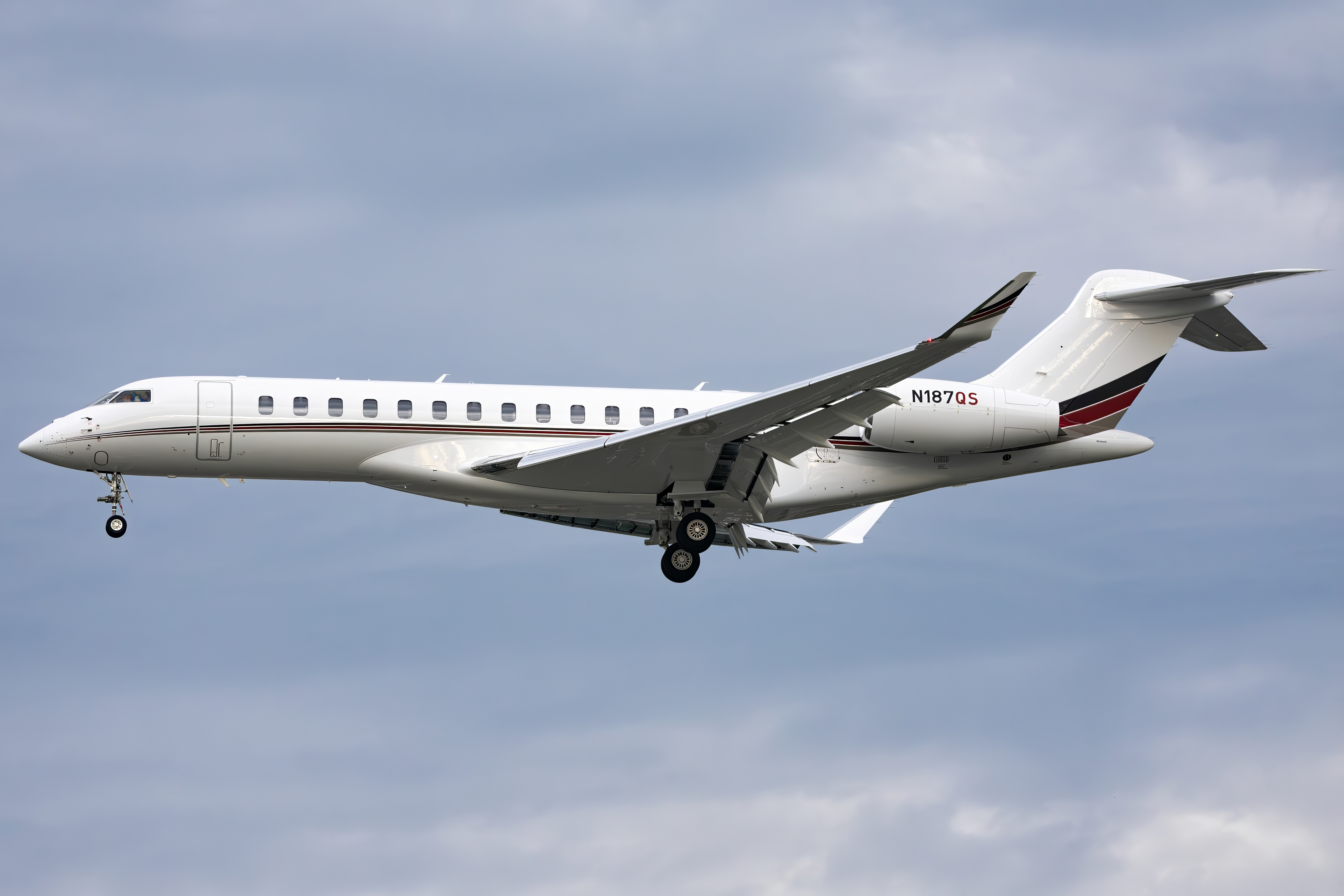
NetJets has filed a petition with the US Federal Aviation Administration (FAA) requesting an exemption from standard flight and duty time rules for operations aboard its Bombardier Global 7500 and forthcoming Global 8000 aircraft. The fractional ownership operator wants to push the boundaries of how long its crews can work on ultra-long-haul missions, citing the cabin rest facilities built into both jets.
According to a report by ch-aviation, the Columbus, Ohio-based operator is seeking relief from specific provisions of 14 CFR Part 91 Subpart K, the regulation governing fractional ownership programs. If granted, the exemption would allow NetJets to schedule longer flight duty periods on missions operated by these two Bombardier types, provided augmented crews and qualified rest facilities are available on board.
What NetJets Wants
The petition centers on extending the maximum flight duty period for augmented crews. Current rules under Part 91K cap how long pilots can remain on duty during a single assignment, with allowances for additional rest when a third or fourth pilot joins the flight deck rotation. NetJets argues that the Global 7500 and Global 8000 offer onboard crew rest accommodations that meet or exceed the standards used to justify extended duty periods in Part 121 airline operations.
The Global 7500, which entered service in 2018, has a published range of 7,700 nautical miles. The Global 8000, Bombardier's stretch in capability rather than fuselage, is expected to enter service with a range of 8,000 nautical miles and a top speed approaching Mach 0.94. Both aircraft are designed to fly missions exceeding 16 hours, routes that comfortably push beyond the duty limits set for unaugmented two-pilot crews.
For NetJets, which operates the world's largest fleet of Global 7500s, the math is straightforward. Without an exemption, certain city pairs that the aircraft can physically fly become operationally impractical because the crew cannot legally remain on duty long enough to complete them in a single leg.

Photo: AeroXplorer/ Rafi G
Why It Matters to the Fractional Market
Fractional operators sit in a regulatory space distinct from Part 135 charter and Part 121 scheduled airlines. Part 91K was created to address that middle ground, but it borrows elements from both neighbors. When NetJets sells fractional shares in an aircraft like the Global 7500, owners expect transcontinental and transoceanic capability. A New York to Hong Kong or Sydney to Los Angeles flight is exactly the kind of mission these aircraft were built for, and those are the routes where duty limits start to bite.
If the FAA grants the exemption, NetJets gains the ability to advertise and schedule true ultra-long-range city pairs without planning crew swaps or technical stops. That changes the competitive picture against full charter operators flying under different rule sets and against private flight departments operating under Part 91 with fewer duty restrictions.

How AI Quietly Became the Backbone of Today’s Aviation Industry
The Safety Argument
Exemption petitions of this kind live or die on the safety case. NetJets is expected to argue that the rest facilities aboard the Global 7500 and Global 8000, combined with augmented crew complements, provide an equivalent or better level of safety than the standard duty limits intend to deliver. The Global 7500 cabin includes a dedicated crew rest area separate from the main passenger cabin, which is the key feature regulators look for when evaluating extended duty proposals.
The FAA has previously granted similar exemptions to other operators flying ultra-long-range business jets, so there is precedent. Each petition is evaluated on its own merits, however, and the agency examines crew training, fatigue management programs, scheduling controls, and the specific rest facility configuration aboard the aircraft.
Public comment periods typically follow the docketing of these petitions, allowing pilot unions, industry groups, and other stakeholders to weigh in. The National Air Transportation Association and similar organizations often submit comments on fractional rule changes given the relatively small number of operators affected.

Photo: Bombardier
Fleet Context
NetJets has been steadily building out its Global 7500 fleet over the past several years and has firm commitments for additional units. The Global 8000, announced by Bombardier in May 2022, is positioned as the new flagship and is expected to enter service in 2025. NetJets has not publicly disclosed the size of its Global 8000 order, but the operator is widely expected to be among the launch customers given its existing relationship with Bombardier and its appetite for the Global series.
The exemption request signals that NetJets is planning its long-haul network around the assumption that these aircraft will fly their full design range in commercial service, not just on demonstration flights. That has implications for everything from crew hiring and training to maintenance planning at international destinations.
What Happens Next
The FAA will review the petition, publish it for public comment, and then issue a decision. The timeline can run from several months to more than a year depending on the complexity of the request and the volume of comments received. If approved, expect conditions attached to the exemption covering crew composition, rest facility certification, fatigue reporting, and periodic reviews.
For enthusiasts tracking the ultra-long-range business jet segment, the petition is a useful data point on how operators are translating aircraft capability into actual operational reach. The Global 7500 and Global 8000 were designed to compete with the Gulfstream G700 and G800 on range and cabin comfort. Duty time relief is the regulatory piece that lets that hardware capability turn into real revenue flights.
Solairus Moves to Acquire Clay Lacy Charter Business, Forming a 500-Aircraft Management Powerhouse » Hyderabad Man Charged With Forgery After Using ChatGPT to Generate Fraudulent IndiGo Boarding Pass » Security Breach at Fort Lauderdale Airport: Intruder Found Sleeping on JetBlue A320 in Maintenance Hangar »

Comments (0)
Add Your Comment
TAGS
NEWS NetJets FAA Relief Bombardier Global 7500 Bombardier Global 8000 Flight Operations Regulatory Relief Crew Rest Requirements Flight Duty Time Business Aviation Fractional Ownership Long-Range Aircraft Operational Flexibility Regulatory Compliance Flight Regulations Extended Operations Crew Scheduling Aviation RegulationsRECENTLY PUBLISHED
 Trump Reportedly Hid in a Catering Truck During Secret Plane Swap Amid Credible Iran Threat
President Trump was reportedly smuggled off his aircraft in a catering container and flown out of a NATO summit amid an alleged Iranian threat.
NEWS
READ MORE »
Trump Reportedly Hid in a Catering Truck During Secret Plane Swap Amid Credible Iran Threat
President Trump was reportedly smuggled off his aircraft in a catering container and flown out of a NATO summit amid an alleged Iranian threat.
NEWS
READ MORE »
 Powerful 7.4-Magnitude Earthquake Disrupts Operations at Several Colombian Airports
A 7.4-magnitude earthquake struck Colombia, forcing temporary shutdowns and evacuations at multiple airports across the country.
NEWS
READ MORE »
Powerful 7.4-Magnitude Earthquake Disrupts Operations at Several Colombian Airports
A 7.4-magnitude earthquake struck Colombia, forcing temporary shutdowns and evacuations at multiple airports across the country.
NEWS
READ MORE »
 Fiat Panda vs. Private Jet: Ground Vehicle Collision Rattles Milan's Linate Airport
A ground service vehicle struck a private jet at Milan Linate Airport, prompting an investigation into how the car reached the active runway.
NEWS
READ MORE »
Fiat Panda vs. Private Jet: Ground Vehicle Collision Rattles Milan's Linate Airport
A ground service vehicle struck a private jet at Milan Linate Airport, prompting an investigation into how the car reached the active runway.
NEWS
READ MORE »
More than just headlines.
Get unlimited ad-free access to in-depth aviation news, premium stories, and exclusive insights other sites don't cover.
- Ad-free browsing on AeroXplorer
- Unlimited access to premium and exclusive articles
- Higher photo upload limits & commissions on sales
- Free access to Jetstream Magazine on higher tiers
- Ad-free browsing
- Sell aviation photos with 60% commission
- First week free!
- Everything in Basic+
- Unlimited premium articles
- Sell aviation photos with 70% commission
- Free Digital subscription to Jetstream Magazine
- First week free!
- Everything in Basic+ and Pro
- Sell aviaiton photos with 80% commission
- Early access to exclusive stories
- Free Digital+Print subscription to Jetstream Magazine