


Aviation safety experts and legal analysts are closely monitoring a high-profile lawsuit filed against JetBlue Airways. The case highlights a critical and potentially life-altering lapse in in-flight medical protocols. Patricia Matzenbacher, a passenger on a transatlantic crossing, is seeking significant damages after cabin crew allegedly provided her with dry ice to treat a swollen leg, an action that resulted in severe cryogenic burns and permanent tissue damage.
The Physics of a Subzero Mistake
While standard water ice melts at 0°C (32°F), dry ice is the solid form of carbon dioxide (CO2) and exists at a staggering -78.5°C (-109.3°F). In the aerospace industry, this substance is used almost exclusively in galley carts to maintain the "cold chain" for catering supplies during long-haul transit. Because it undergoes sublimation, meaning it turns directly from a solid into a gas, it does not leave behind liquid residue, making it ideal for food storage but catastrophic for human skin.
The lawsuit alleges that during JetBlue flight B6 1908 from New York JFK to Paris CDG, the passenger requested a cold compress for leg inflammation. According to the legal complaint, the flight attendants provided the plaintiff with a plastic bag containing dry ice to place on her leg. Believing the nondescript package was a standard chemical cold pack or regular ice, the passenger applied it directly to her skin. The result was near-instantaneous frostbite and deep-tissue destruction.


The Cockpit’s Next Revolution: When the Co-Pilot Is a Computer
Legal Turbulence and the Montreal Convention
This case is being argued under Article 17 of the Montreal Convention, a treaty that governs airline liability on international routes. Under standard conditions, airline liability for "accidental" injury is capped at approximately 151,880 Special Drawing Rights (SDRs), which currently converts to about $215,800 USD. However, the plaintiff is pursuing an uncapped claim, asserting that the crew’s actions constituted "negligent acts and omissions" that bypass standard liability limits.
The FAA and IATA classify dry ice as a Class 9 Dangerous Good (UN1845). Aviation engineering standards require specific venting in containers to prevent CO2 gas buildup, which can lead to structural pressure or oxygen displacement. Crucially, airline training manuals strictly prohibit the use of cooling agents from the galley for medical purposes. Most modern aircraft are equipped with dedicated first-aid kits containing chemical instant-cold packs that utilize endothermic reactions, reaching safe temperatures of around 0.5°C, rather than the cryogenic levels of solid CO2.

Top Safety Tip - Never Apply Galley Cooling Agents to Skin
The "Top Tip" for travelers and crew alike is absolute. Never use materials found in a galley cart for personal first aid without verifying the contents. Dry ice is a powerful refrigerant, but is fundamentally incompatible with biological tissue. A dry ice burn is essentially a "cold thermal burn" that kills cells upon contact. If you suspect an ice pack provided on a flight is actually dry ice, often identifiable by a "smoking" or foggy appearance and its extreme hardness, do not touch it with your bare hands.
JetBlue has not released a formal statement regarding the ongoing litigation, but is expected to investigate whether the incident represents a breakdown in crew training or a catering equipment labeling error. As the case moves through the Eastern District of New York, it serves as a sobering reminder of the hazards hidden within the standard tools of airline hospitality.
Delta Passenger Arrested After Allegedly Stealing Airport Tug » United 777 Diverts to Dublin After Cockpit Windscreen Cracks Over the Atlantic » American Airlines Swaps Landline Buses for CRJ-700 Flights on 84-Mile South Bend to Chicago Route »

Comments (0)
Add Your Comment
TAGS
NEWS Aviation Safety JetBlue Lawsuit Dry Ice Danger Montreal Convention Passenger Rights Inflight MedicalRECENTLY PUBLISHED
 This Week in Aviation: The 10 Stories That Mattered Most
From major airline developments to aircraft updates and industry shifts, this weekly recap highlights the ten most-read aviation stories from the week of October 04.
INFORMATIONAL
READ MORE »
This Week in Aviation: The 10 Stories That Mattered Most
From major airline developments to aircraft updates and industry shifts, this weekly recap highlights the ten most-read aviation stories from the week of October 04.
INFORMATIONAL
READ MORE »
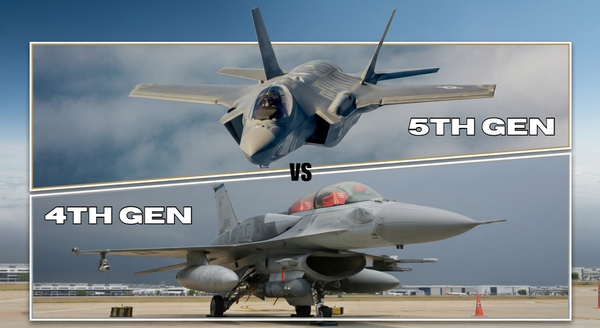 4th vs 5th Generation Fighter Jets: How Fighter Jets Have Evolved
A look at what separates fourth- and fifth-generation fighter jets, from stealth and sensor fusion to combat capability and cost.
INFORMATIONAL
READ MORE »
4th vs 5th Generation Fighter Jets: How Fighter Jets Have Evolved
A look at what separates fourth- and fifth-generation fighter jets, from stealth and sensor fusion to combat capability and cost.
INFORMATIONAL
READ MORE »
 United 777 Diverts to Dublin After Cockpit Windscreen Cracks Over the Atlantic
A United Airlines Boeing 777 bound for Milan made a steep descent and diverted to Dublin after its cockpit windscreen cracked mid-flight.
NEWS
READ MORE »
United 777 Diverts to Dublin After Cockpit Windscreen Cracks Over the Atlantic
A United Airlines Boeing 777 bound for Milan made a steep descent and diverted to Dublin after its cockpit windscreen cracked mid-flight.
NEWS
READ MORE »
More than just headlines.
Get unlimited ad-free access to in-depth aviation news, premium stories, and exclusive insights other sites don't cover.
- Ad-free browsing on AeroXplorer
- Unlimited access to premium and exclusive articles
- Higher photo upload limits & commissions on sales
- Free access to Jetstream Magazine on higher tiers
- Ad-free browsing
- Sell aviation photos with 60% commission
- First week free!
- Everything in Basic+
- Unlimited premium articles
- Sell aviation photos with 70% commission
- Free Digital subscription to Jetstream Magazine
- First week free!
- Everything in Basic+ and Pro
- Sell aviaiton photos with 80% commission
- Early access to exclusive stories
- Free Digital+Print subscription to Jetstream Magazine