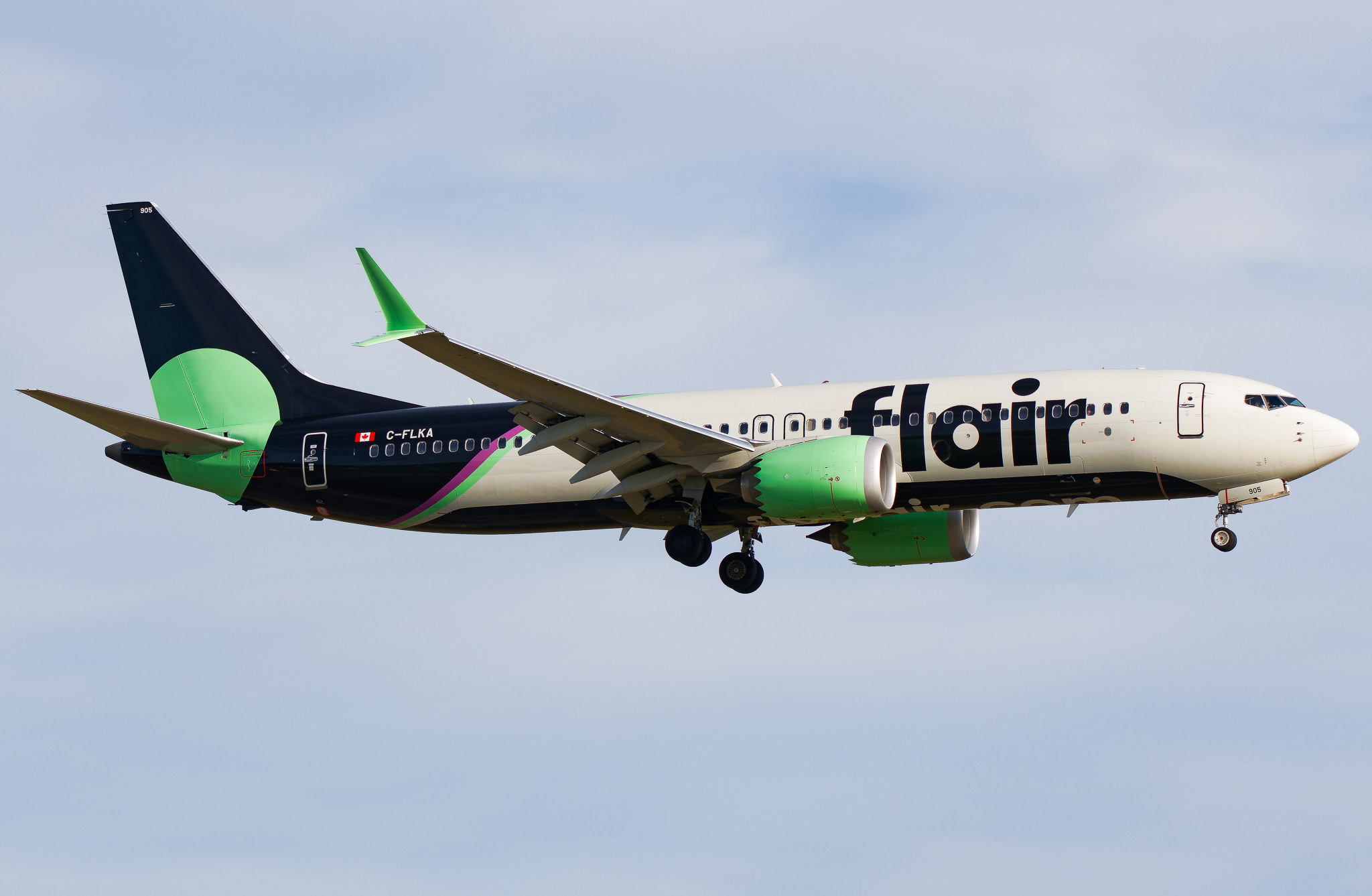

Canada's budget aviation sector took a notable step forward on April 8, 2026, when the Canadian Transportation Agency formally authorised Flair Airlines to operate scheduled international flights to Cuba, a decision that sets the Edmonton-based low-cost carrier apart from its larger rivals, most of whom are still suspended or retreating from the island entirely. Yet the approval arrives at one of the most turbulent moments in Cuba's modern history, with an energy collapse of historic proportions, leaving the island's airports, hotels, and tourism economy in a state of profound fragility.
The CTA Decision
The Canadian Transportation Agency has given Flair Airlines the green light to operate scheduled international flights to Cuba. The update was shared on the agency's website on April 8, 2026.
In its decision, the agency notes that it is satisfied that Flair meets all applicable requirements to operate the flights. The licence is subject to the conditions set out in the Air Transport Regulations.
Critically, the CTA's approval does not come with a firm commitment to a start date. No launch dates or flight schedules were included in the decision. That deliberate omission reflects the broader uncertainty surrounding Cuba's readiness to receive regular commercial operations, a question that remains unanswered even as the regulatory pathway is now formally open.
While Sunwing Vacations and WestJet Vacations are extending cancellations, Flair Airlines has been given the green light by the Canadian Transportation Agency to operate scheduled international flights to Cuba. The CTA was satisfied that the budget airline meets the applicable requirements to operate the flights, and that the licence is subject to conditions set out in the Air Transport Regulations. That approval does not erase the wider crisis. It does, however, place Flair Airlines in a different category from the operators choosing to suspend service.

Flair's Fleet and Expanding Footprint
Flair Airlines, headquartered in Edmonton, Alberta, has recently expanded its Caribbean routes, including to destinations in Mexico and the Dominican Republic. The airline operates a fleet of Boeing 737 MAX 8 aircraft, known for their fuel efficiency and comfort. The MAX 8's operational efficiency is particularly relevant in the current environment of elevated fuel costs driven by the Iran conflict, a factor that simultaneously pressures operating margins industry-wide and makes every route economics calculation more demanding.
How Cuba's Fuel Crisis Unfolded
To understand the context in which Flair's approval has been granted, the severity of Cuba's energy collapse must be understood in full. The authorisation comes amidst an unprecedented air crisis for Cuba, triggered by the disruption of Venezuelan oil supplies, which accounted for two-thirds of Cuba's imports, and the halt of shipments from Pemex in the context of sanctions imposed by the Trump administration.
On February 10, 2026, Cuba woke up to a stark reality: all nine of its international airports were closed for refuelling. A NOTAM alert confirmed by the United States FAA verified what the Cuban regime had been reluctant to admit for weeks: there was not a drop of Jet A-1 fuel left on the island.
The geopolitical backdrop that triggered the crisis is equally significant. The fuel crisis worsened following the capture of Nicolás Maduro in Venezuela and the suspension of Venezuelan oil shipments to the island, compounded by the tariffs imposed by President Donald Trump on countries that trade oil with Cuba, which further restricted the regime's access to energy supplies.
The United Nations weighed in on the human cost. UN Secretary-General António Guterres stated that he is "extremely concerned" about the humanitarian situation in Cuba, "which will worsen, or even collapse," if the country's oil needs are not met. According to the United Nations Human Rights Office, the blockade and ensuing fuel shortage have threatened Cuba's food supply and disrupted the country's water systems and hospitals.

Analysis: How Spirit Airlines Changed Airline Pricing, then Paid the Price
The Tourism Toll
The aviation shutdown has inflicted devastating damage on an economy that is almost entirely dependent on tourism for its supply of hard currency. Cuba registered 112,000 fewer visitors in January and February 2026 compared to the same period in 2025, with hotel occupancy dropping to 18.9%.
The hotel sector has not merely underperformed; it has begun physically closing. Hotels in Cayo Coco, Varadero, and Holguín have suspended operations, leading to guest relocations and contract reviews with foreign tour operators.
Cuba closed 2025 with only 1.8 million international visitors and an average hotel occupancy of 21.5% in the first half of the year, figures well below official targets. The 2026 figures, against that already weakened baseline, represent an accelerating deterioration rather than a cyclical dip.
The repatriation effort that Canadian carriers were forced to undertake in early February underscores just how sudden the collapse was. Since February 10, Cuban airports have been without commercially available Jet A-1 aviation fuel, which forced major Canadian airlines to suspend their operations and repatriate nearly 27,900 tourists.

Where Canada's Airlines Now Stand
The landscape of Canadian airline positions on Cuba in April 2026 is fragmented and cautious, and Flair's approval makes it something of an outlier.
Air Canada has gone further and postponed the resumption of its flights to Cuba until November 1, 2026, citing "persistent operational issues, such as power outages and the closure of hotels on the island."
Sunwing Vacations and WestJet Vacances Quebec, operating through WestJet, plan to resume flights on June 20 with packages to Varadero and Cayo Coco from Toronto, Montreal, and Quebec. Air Transat, in a memo sent to travel advisors, revealed that it too will postpone its return to Cuba until at least June 20.
The Canadian government's own guidance creates an additional layer of caution for any traveller considering the destination. The Canadian government's travel advisory level for Cuba remains at orange, advising against non-essential travel to the island nation.
The Unresolved Infrastructure Question
Beyond fuel availability at airports, the broader island infrastructure remains deeply compromised. Cuba has suffered a series of large-scale power failures in March 2026, including multiple nationwide blackouts that left virtually the entire island without electricity for hours at a time. Large hotels in key destinations such as Havana, Varadero, and Cayo Coco tend to rely on their own generators, which can maintain basic services during outages, but guests are still encountering dim corridors, reduced air conditioning, intermittent Wi-Fi, and limited elevator operation.
Even travellers who still reach Cuba often face last-minute changes, longer layovers, and truncated itineraries, undermining the country's appeal relative to regional competitors enjoying a post-pandemic boom. For a budget carrier like Flair, whose competitive proposition rests on low fares to attractive sun destinations, operating in an environment where the on-ground experience remains this unpredictable presents a meaningful commercial risk alongside the regulatory opportunity.
What the Approval Actually Means
Flair's CTA approval is a regulatory achievement, one that required demonstrating full compliance with Canadian Air Transport Regulations and satisfying the agency of its operational credentials for international service. It is not, in itself, a flight schedule. The airline has not announced routes, frequencies, departure cities, or a launch date, and the ongoing orange travel advisory from the Canadian government creates a challenging marketing environment for any airline trying to sell Cuba to leisure travellers.
What the approval does establish is commercial optionality. When Cuba's fuel crisis eventually stabilises, and indications from multiple carriers suggest a partial recovery is being targeted around June 2026, Flair will be positioned to enter the market without any further regulatory delay. For a carrier expanding aggressively in the Caribbean and competing against far larger operators, having that licence in place ahead of a potential recovery window is a meaningful competitive advantage.
Proposed Cuba Operations
Note: No official routes, flight numbers, or departure times have been published by Flair Airlines as of April 22, 2026. The table below reflects the likely operational structure based on Flair's existing network, Canadian departure hubs, and Cuba's principal tourist airports, and is indicative only. All details are subject to official confirmation.
| Flight No. | Route | Departure Time | Arrival Time | Duration | Operating Days |
|---|---|---|---|---|---|
| F8 TBC | Toronto Pearson (YYZ) → Varadero (VRA) | TBC | TBC | ~3h 45m (est.) | TBC: Pending launch |
| F8 TBC | Varadero (VRA) → Toronto Pearson (YYZ) | TBC | TBC | ~4h 00m (est.) | TBC: Pending launch |
| F8 TBC | Montreal Trudeau (YUL) → Varadero (VRA) | TBC | TBC | ~3h 30m (est.) | TBC: Pending launch |
| F8 TBC | Varadero (VRA) → Montreal Trudeau (YUL) | TBC | TBC | ~3h 45m (est.) | TBC: Pending launch |
| F8 TBC | Toronto Pearson (YYZ) → Cayo Coco (CCC) | TBC | TBC | ~3h 55m (est.) | TBC: Pending launch |
| F8 TBC | Cayo Coco (CCC) → Toronto Pearson (YYZ) | TBC | TBC | ~4h 10m (est.) | TBC: Pending launch |
Aircraft: All routes expected to operate on Flair Airlines' Boeing 737 MAX 8 fleet. Passengers should monitor Flair Airlines' official channels for confirmed schedules and booking information.
Looking Ahead
Flair Airlines' CTA approval for Cuba operations is a story about positioning as much as it is about aviation. The airline has secured its regulatory licence during the worst possible moment for the destination, when its airports have been out of fuel, its hotels have been closing, its tourist arrivals are in historic decline, and the Canadian government is advising its citizens to avoid non-essential travel there altogether. Whether that timing proves prescient or premature will depend almost entirely on how quickly Cuba's energy infrastructure can recover once oil supply chains are meaningfully restored.
For the Cuban tourism economy, the prospect of a new budget carrier entering the market when conditions allow represents a potential incremental boost to arrivals from Canada, the island's single largest source of visitors. For Flair, it represents the next chapter in a Caribbean expansion strategy that is gathering pace regardless of the turbulence surrounding its newest approved destination.
How Jet Access Is Building a New Model for Private Aircraft Maintenance » Ryanair Demands NATS Chief Resign After Second Air Traffic Control Failure in Two Weeks » Ryanair Pilot Sent Hijack Code Before Turning Flight FR7073 Back to Porto »

Comments (0)
Add Your Comment
TAGS
ROUTES Flair Airlines Cuba Flights Canadian Transportation Agency Cuba Fuel Crisis Boeing 737 MAX 8 Flights Routes TravelRECENTLY PUBLISHED
 What Are Strakes? The Aerodynamic Fins Attached on an Aircraft's Fuselage
A look at how aircraft strakes quietly shape airflow, improve stability, and enhance aerodynamic performance.
INFORMATIONAL
READ MORE »
What Are Strakes? The Aerodynamic Fins Attached on an Aircraft's Fuselage
A look at how aircraft strakes quietly shape airflow, improve stability, and enhance aerodynamic performance.
INFORMATIONAL
READ MORE »
 BETA Technologies Begins Electric Aircraft Operations in North Carolina to Support Rural Healthcare Access
BETA Technologies launches its ALIA CTOL electric aircraft in North Carolina under a FAA program aimed at improving rural healthcare logistics.
NEWS
READ MORE »
BETA Technologies Begins Electric Aircraft Operations in North Carolina to Support Rural Healthcare Access
BETA Technologies launches its ALIA CTOL electric aircraft in North Carolina under a FAA program aimed at improving rural healthcare logistics.
NEWS
READ MORE »
 Ryanair Pilot Sent Hijack Code Before Turning Flight FR7073 Back to Porto
A Ryanair captain transmitted the 7500 hijack squawk code before diverting flight FR7073 back to Porto, prompting an emergency response.
NEWS
READ MORE »
Ryanair Pilot Sent Hijack Code Before Turning Flight FR7073 Back to Porto
A Ryanair captain transmitted the 7500 hijack squawk code before diverting flight FR7073 back to Porto, prompting an emergency response.
NEWS
READ MORE »
More than just headlines.
Get unlimited ad-free access to in-depth aviation news, premium stories, and exclusive insights other sites don't cover.
- Ad-free browsing on AeroXplorer
- Unlimited access to premium and exclusive articles
- Higher photo upload limits & commissions on sales
- Free access to Jetstream Magazine on higher tiers
- Ad-free browsing
- Sell aviation photos with 60% commission
- First week free!
- Everything in Basic+
- Unlimited premium articles
- Sell aviation photos with 70% commission
- Free Digital subscription to Jetstream Magazine
- First week free!
- Everything in Basic+ and Pro
- Sell aviaiton photos with 80% commission
- Early access to exclusive stories
- Free Digital+Print subscription to Jetstream Magazine