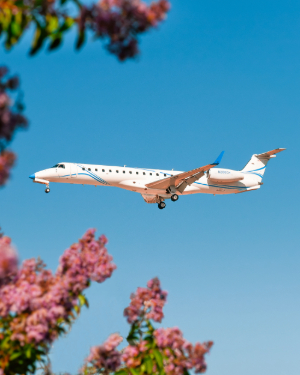


A larger narrowbody plane doesn’t necessarily mean a larger market in business aviation.
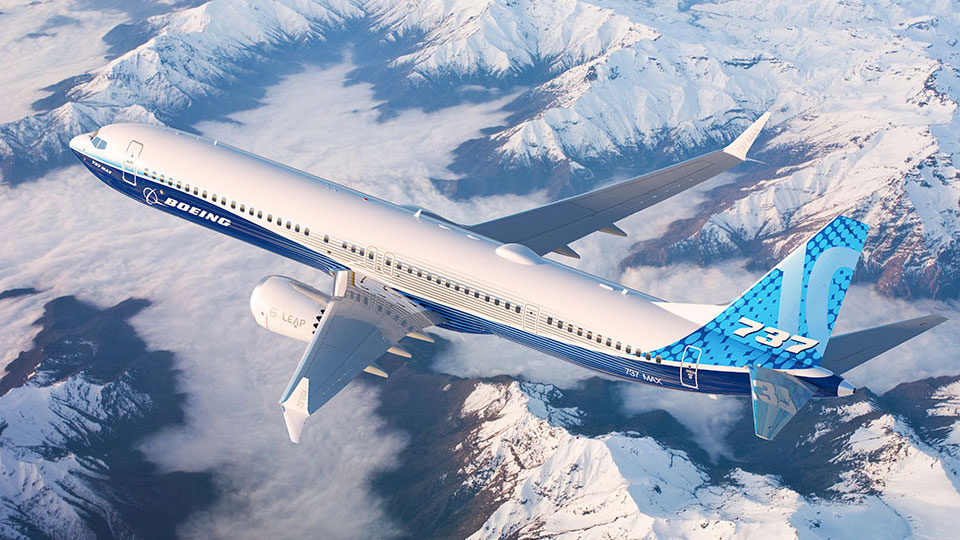
On October 20, 2026, the FAA announced certification of the Boeing 737-10. At a length of nearly 143.7 feet — 5.5 feet longer than the 737-9 — the 737-10 is now Boeing’s largest 737 MAX variant.
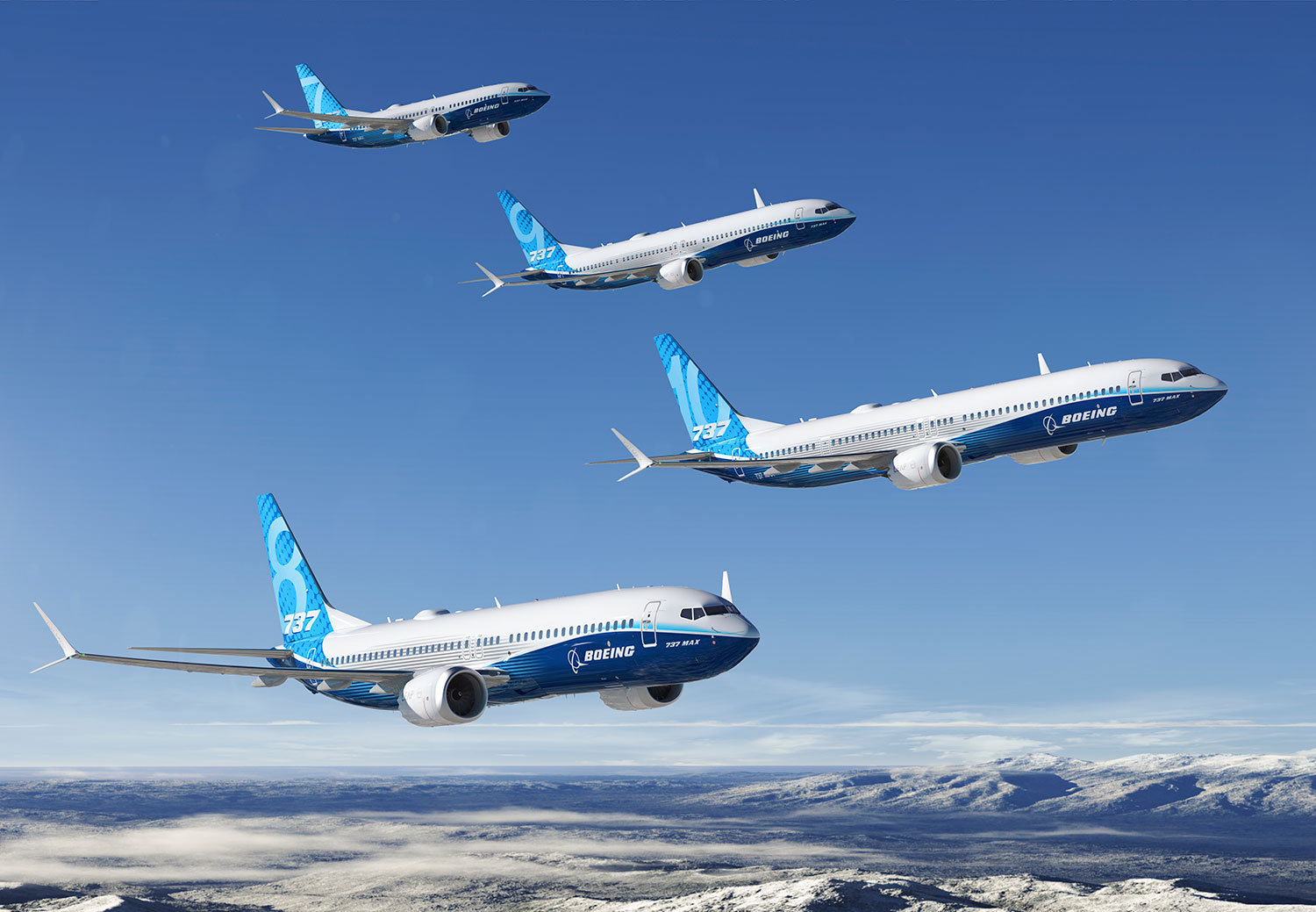
737-7 | 737-8 | 737-9 | 737-10 |
|---|---|---|---|
| Maximum Seats | 172 | 210 | 220 |
| Maximum takeoff weight | 80,280 kg (177,000 lbs) | 82,640 kg (182,200 lbs) | 88,310 kg (194,700 lbs) |
| Range | Up to 3,800 nmi (7,040 km) | Up to 3,500 nmi (6,480 km) | Up to 3,300 nmi (6,110 km) |
| Length | 35.6 m (116 ft 8 in) | 39.5 m (129 ft 6 in) | 42.1 m (138 ft 2 in) |
| Wingspan | 35.9 m (117 ft 10 in) | 35.9 m (117 ft 10 in) | 35.9 m (117 ft 10 in) |
| Height | 12.3 m (40 ft 4 in) | 12.3 m (40 ft 4 in) | 12.3 m (40 ft 4 in) |
| Engine | LEAP-1B by CFM International | LEAP-1B by CFM International | LEAP-1B by CFM International |
Source: Boeing
Boeing has 1,555 737-10 orders from more than 30 customers, representing more than 30% of the outstanding 737 MAX order book. With seating for up to 230 passengers, the largest 737 MAX has a clear role in airline fleets.
But the priorities that make an aircraft demanded by commercial operators do not necessarily translate into demand among private and head-of-state owners.
In an interview with AeroXplorer, Stephanie Werner, Boeing Business Jets Regional Director of Marketing, said current customer interest had not warranted a BBJ version of the 737-10 — at least not yet.
Buyers seeking an aircraft to fit this type of mission profile, she explained, would generally opt for the manufacturer’s widebody lineup.
“We haven't had any significant interest to warrant doing that study because usually if a principal wants something of that size, they would go to a widebody like a 787-8 BBJ,” Werner said.
This is not to say that a 737-10 BBJ is not possible, however. It depends on demand.

Airline Demand Does Not Establish a VIP Market
For an airline, the added length means more seats in a frame with the same width and height, allowing the variant to integrate seamlessly into existing operations.
But a private buyer may not need to consider this. For them, the aircraft may need to carry family, an executive team, or a government delegation. Space may be allocated to bedrooms, offices, dining areas, and staff seating rather than rows of revenue-generating seats.
That changes the value of a longer aircraft. Additional cabin length matters only if it supports the buyer’s intended use and justifies the associated operating requirements.

But Werner was careful not to characterize the absence of a 737-10 BBJ thus far as permanent.
“I wouldn't say no one wants them,” she said.
Simply put, Boeing would consider examining the opportunity if customer interest supported it.
“If there is a lot of interest, that's something that we would study to see what the viability is to be certified as a BBJ,” Werner said.
The Widebody Alternative
We can look at Boeing’s published cabin figures to further support the position Werner described.
Its BBJ 737 MAX specification sheet lists cabin areas of 884 square feet for the 737-7, 1,025 square feet for the 737-8, and 1,120 square feet for the 737-9. Boeing’s BBJ 787 specification sheet lists 2,340 square feet for the 787-8.

The 787-8 therefore offers approximately 2.1 times the cabin area of the BBJ 737-9, based on those published figures.
While this comparison does not establish the dimensions of a hypothetical BBJ 737-10, it illustrates the substantial increase in space available to customers considering a widebody. The difference also provides some context for Werner’s demand observation. A buyer looking beyond the existing narrowbody lineup may be considering a much larger change in onboard capability than another increment of cabin length.

Hindenburg: The Disaster That Ended the Airship Age
Range Could Also Be a Factor
Interior space would only represent one aspect of the decision. Range could be another.
Boeing currently advertises a maximum range of 9,960 nautical miles for the BBJ 787 family and up to 6,600 nautical miles for the BBJ 737 MAX family. That’s quite the difference, and it’s only exacerbated when the published range of the commercial 737-10 is compared to the commercial 737-7, 737-8, and 737-9.


For the BBJ calculations, however, these numbers assume 25 passengers and 8 passengers for the 787 and 737 MAX BBJs, respectively. The exact specifications are determined based on the needs of the customer, and can vary dramatically depending on the aircraft’s standard mission profile.
Werner provided some insight into these widely varying requirements.
“If [the principal] is wanting to fly from Point A in one continent to Point B on another continent, we need to make sure that the airplane has enough range to get there. We do a lot of calculations — myself and my teammates — for example, looking at: how many people will they regularly fly with? Do they want to have eight passengers, or do they want to have 60 passengers?”
Boeing then evaluates performance and discusses the customer’s budget, often working with the flight department or another team representing the principal.
“That mission profile helps us work with them to help them find the right fit for what their needs are,” Werner said. And, as it seems, most of the time, this mission profile doesn’t lead to the need for an aircraft like the 737-10.

What Would Bring a BBJ 737-10 Closer?
Werner’s comments suggest that customer demand, rather than commercial certification alone, will determine whether Boeing examines a BBJ 737-10. For now, she said, interest has not been significant, with buyers seeking that much space typically considering the 787-8 BBJ.
A future BBJ 737-10 would need a clear place between Boeing’s existing narrowbody offerings and the widebody aircraft some customers already prefer. Its prospects depend on buyers whose missions make that place worth pursuing.
American Airlines Plans Tel Aviv Return in 2027, Signs Partnership With Israir » JetBlue Airbus A321neo Remains Grounded at LAX Following Late-Night Tail Strike » JSX Acquires New Pacific Airlines and Weighs Restarting Flight Operations »

Comments (4)
 FlyingSeagull
Have to believe that any corporation wanting a jet like this will want it to have far greater range than the M10 allows.
Peter Fuller
Existing BBJ versions of 737 MAX have much longer range than the airliner versions, since they’re equipped with larger fuel tanks. If offered, so would a 737 MAX 10 BBJ.
New Nooge
Go Boeing !!
Buy American American Carriers !!
CherokeePAX
Why has Boeing gone back to the split winglets? They make the plane immediately look old and outdated, IMHO.
Add Your Comment
TAGS
STORIES Boeing Boeing 737 MAX Boeing 737 MAX 8 Boeing 737 MAX 9 Boeing 737 MAX 10 BBJ Boeing Business Jets NBAA26 NBAA-BACERECENTLY PUBLISHED
 British Airways Expands Larger Overhead Bins to More Aircraft, Easing the Battle for Cabin Space
British Airways will retrofit 22 A320 family aircraft with larger overhead bins, giving passengers more room for carry-on bags starting in 2026.
NEWS
READ MORE »
 Western Global Boeing 747 Stuck In Soft Ground Closes Runway For 14 Hours
A Western Global Airlines Boeing 747 freighter got stuck in soft ground at Yokota Air Base in Tokyo, shutting down operations for 14 hours.
NEWS
READ MORE »
 Embraer Warns New US Tariffs Will Raise Air Travel Costs and Hurt Air Travel
Brazil's Embraer says new US tariffs on aircraft will drive up air travel costs, hurt regional carriers, and disrupt aerospace supply chains.
NEWS
READ MORE »
More than just headlines.
Get unlimited ad-free access to in-depth aviation news, premium stories, and exclusive insights other sites don't cover.
- Ad-free browsing on AeroXplorer
- Unlimited access to premium and exclusive articles
- Higher photo upload limits & commissions on sales
- Free access to Jetstream Magazine on higher tiers
- Ad-free browsing
- Sell aviation photos with 60% commission
- First week free!
- Everything in Basic+
- Unlimited premium articles
- Sell aviation photos with 70% commission
- Free Digital subscription to Jetstream Magazine
- First week free!
- Everything in Basic+ and Pro
- Sell aviaiton photos with 80% commission
- Early access to exclusive stories
- Free Digital+Print subscription to Jetstream Magazine