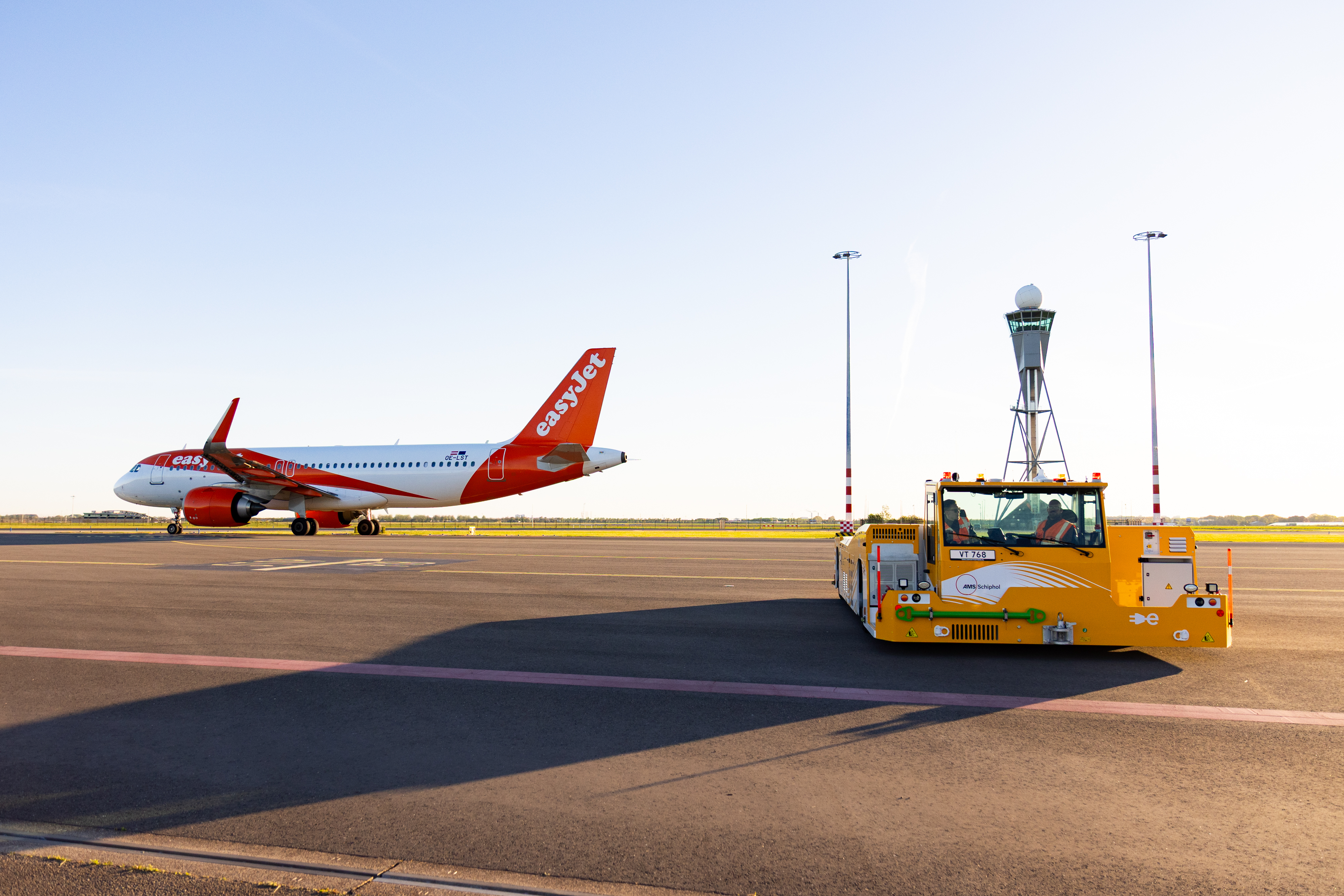
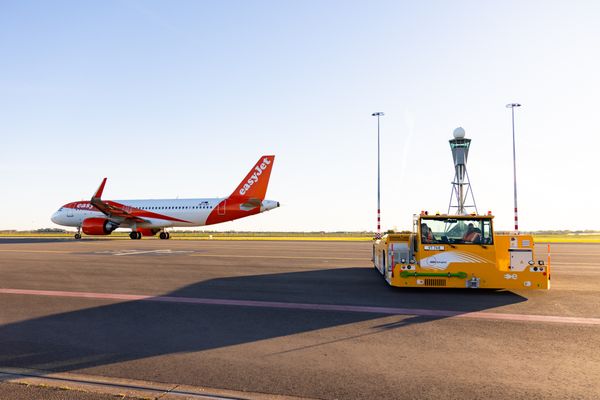
Every time a commercial aircraft taxis to the runway with its main engines running, it burns through thousands of pounds of jet fuel before it has carried a single passenger a single metre into the sky. At Amsterdam Airport Schiphol, one of Europe's busiest and most spread-out airports, that invisible cost has long accounted for a significant share of each flight's total emissions. As of today, easyJet and Schiphol have taken a concrete step to address it.
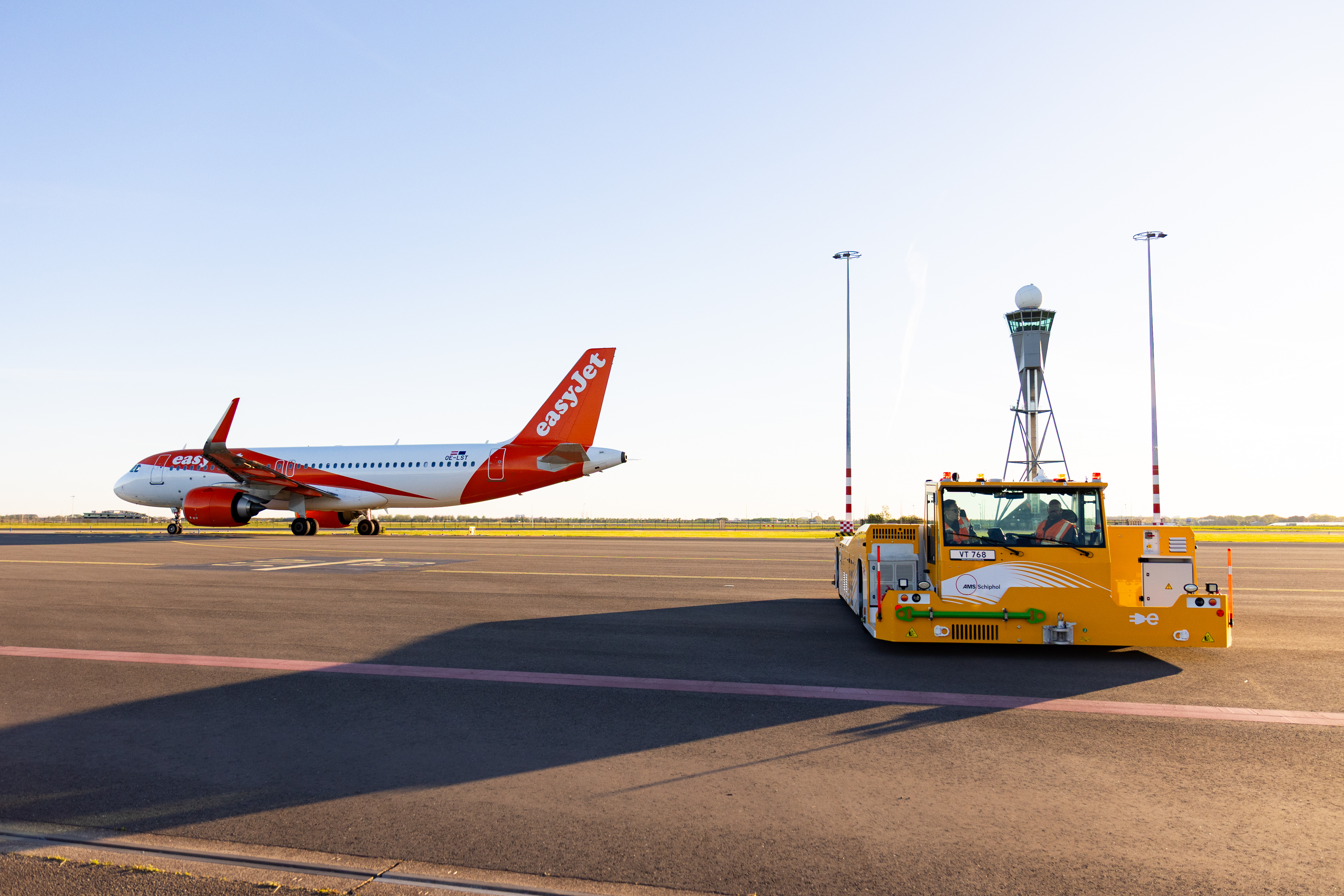
easyJet and Amsterdam Schiphol Airport are today announcing the rollout of electronic TaxiBot technology for Airbus aircraft operations at Schiphol, following a successful trial earlier this year. The introduction marks another step in easyJet's ongoing strategy to improve operational efficiency and reduce emissions both in the air and on the ground. Schiphol has stated that it is the first airport in Europe to deploy electric TaxiBot technology specifically for Airbus passenger aircraft operations, positioning the airport as a testbed for future low-emission taxiing systems.
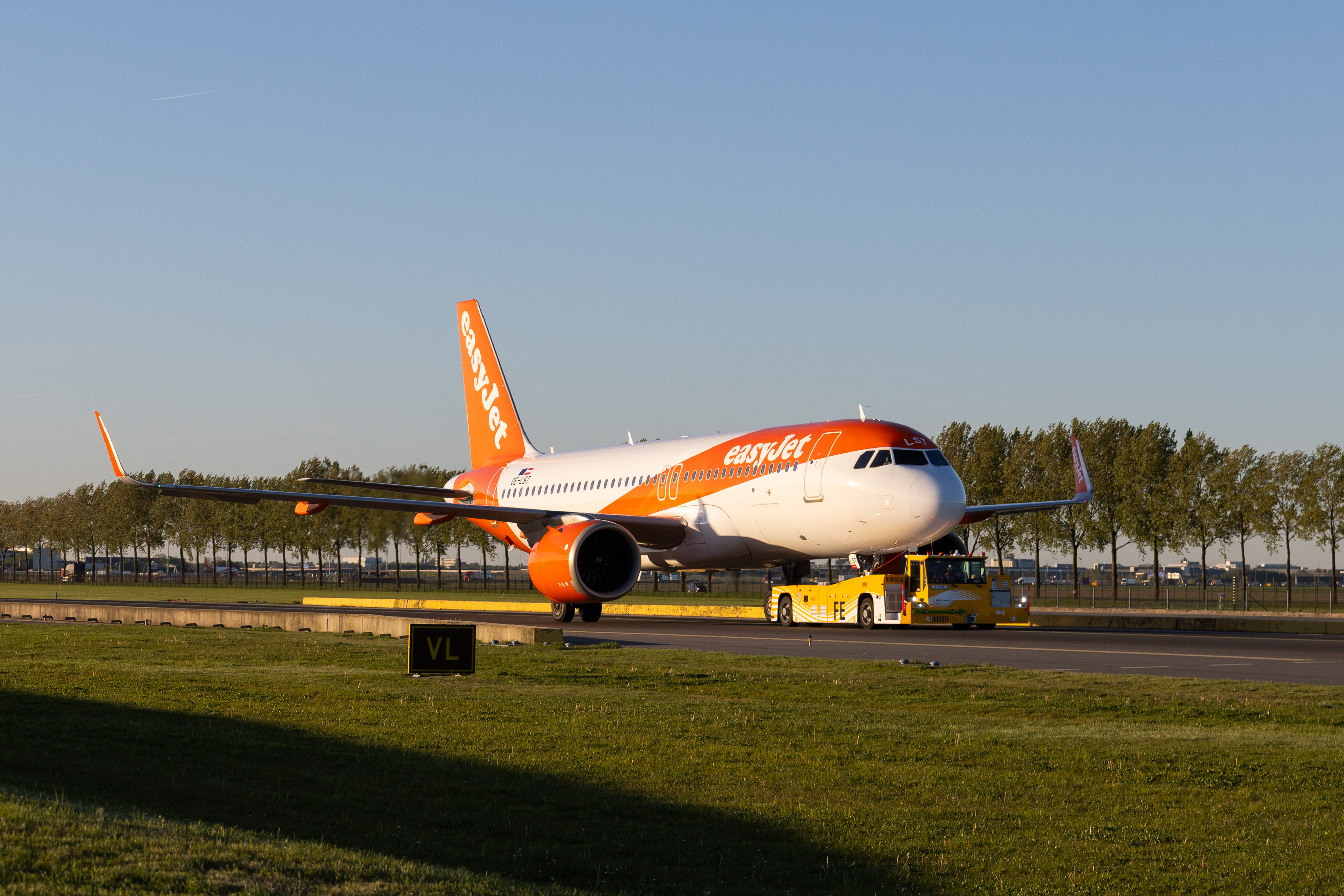
Photo: easyjet
How TaxiBot Works
TaxiBot is not a standard tug but a semi-robotic, pilot-controlled towing vehicle that lifts the aircraft's nose wheel onto a rotating platform, allowing pilots to steer from the cockpit as if using their own engines. The hybrid-electric tug provides the traction while the aircraft's main engines remain off, with only the auxiliary power unit running to supply onboard systems until start-up at the runway holding point. Unlike conventional pushback tractors that disconnect just beyond the stand, TaxiBot stays attached all the way to the threshold, at which point pilots start the engines and prepare for an almost immediate take-off.
Unlike conventional pushback vehicles that disconnect shortly after leaving the gate, TaxiBot stays attached until the aircraft reaches the runway holding point. Only then are the main engines started in preparation for take-off. The distinction matters operationally: it is precisely the extended period of low-power engine running during long taxi routes, wasteful in both fuel and emissions terms, that TaxiBot eliminates entirely.
The Emissions Numbers Behind the Announcement
Taxiing is one of the least visible but most fuel-intensive stages of many short-haul flights, especially at hub airports where aircraft can spend 20–30 minutes inching towards far-flung runways with engines running at inefficient low power. Schiphol's own sustainable taxiing factsheet indicates that conventional engines can burn 6–8 kg of fuel per minute on the ground, and that using TaxiBot can reduce fuel consumption associated with taxiing by 50–85%, depending on distance and configuration. The environmental gains extend beyond CO₂. Schiphol highlights that reduced engine use means lower nitrogen oxide emissions and less noise on and around the apron.
For easyJet specifically, the figures are tangible. easyJet estimates the technology will save around 95 kg of fuel and 299 kg of CO₂ per flight. Across the volume of departures, a carrier of easyJet's scale operates from Schiphol over a full year; those per-flight savings accumulate quickly into numbers that matter at a network level.
Schiphol deploys the TaxiBot on the Polderbaan Runway because this is the runway with the longest taxi time. As a result, potential fuel savings can reach up to 65%. Lower kerosene consumption means reduced emissions of CO₂, nitrogen oxides (NOx) and (ultra)fine particles.

Analysis: How Spirit Airlines Changed Airline Pricing, then Paid the Price
From Trial to Full Rollout
The announcement formalises a programme that has been building quietly since early 2026. Following initial testing in March, easyJet operated its first passenger flight using TaxiBot on April 30. Three more easyJet Airbus A320neo aircraft are now being fitted with TaxiBot systems permanently as part of the programme, delivered in collaboration with Amsterdam Airport Schiphol, Menzies Aviation, Airbus and SAS.
The project represents years of collaboration between easyJet, Schiphol, Airbus, Menzies Aviation, and Israeli company Smart Airport Systems, the creators of TaxiBot. Earlier hybrid versions were trialed at the airport as far back as 2020, but today's rollout marks the arrival of the fully electric GEN 2 model: silent, zero-local-emission, and aligned with Schiphol's ambitious target of becoming an emissions-free airport by 2030.
Schiphol's own history with the technology predates today's easyJet rollout. The electric TaxiBot is an addition to the two hybrid TaxiBots that have been transporting KLM Boeing 737s to the Polderbaan since 2022. Today's deployment extends the model to Airbus narrowbody operations for the first time in Europe, expanding its reach to a new aircraft family and a new airline partner.
The European Research Programme Behind It
The funding and technical framework for the initiative traces back to a significant piece of European aviation research infrastructure. The purchase of the first electric TaxiBot was made possible in part by the European Climate, Infrastructure and Environment Executive Agency under the Connecting Europe Facility, in collaboration with the SESAR 3 Joint Undertaking as part of the HERON project.
The project involves 24 partners, including Airbus, Aéroports de Paris, Air France, Brussels Airport Company, easyJet, EUROCONTROL, Leonardo, Lufthansa, and Schiphol Airport. Schiphol Airport targets emissions-free operations by 2030, with the TaxiBot supporting ground emissions reduction alongside other sustainable aviation initiatives.
Benjamin Tessier, HERON coordinator and vehicle systems architect at Airbus, has been direct about the programme's relevance:
"Airports are actively pursuing solutions to reduce CO2 emissions from ground operations, which is in line with the broader initiatives of HERON."
What the Partners Said
David Morgan, Chief Operating Officer at easyJet, framed the rollout in terms of the airline's wider operational efficiency drive:
"TaxiBot is another important step in our mission to operate as efficiently as possible. This technology delivers immediate reductions in fuel consumption, carbon emissions and noise, while supporting more efficient ground operations at one of Europe's busiest airports."
Esmé Valk, Chief People and Transformation Officer at Amsterdam Airport Schiphol, focused on the workplace and environmental dimensions of the change:
"By deploying the TaxiBot, we're taking another practical step towards reduced emissions and noise on the apron. This is how we're creating a healthier and cleaner workplace, and an ever more sustainable and modern airport that is ready for the future."
Miguel Gomez Sjunnesson, EVP Europe at Menzies Aviation, highlighted the collaborative nature of the work:
"The introduction of TaxiBot at Schiphol shows what can be achieved when technology and collaboration come together. At Menzies, we're focused on using solutions that improve efficiency and cut emissions. We're working closely with Amsterdam Schiphol Airport and easyJet to make these changes part of everyday operations, while creating a cleaner, healthier environment on the ramp."
A Practical Step, Not a Distant Promise
The TaxiBot rollout is part of easyJet's roadmap to net zero by 2050. The airline has set an interim target of a 35% reduction in carbon emissions intensity by 2035, validated by the Science-based Targets initiative.
The significance of today's announcement is that it delivers measurable emission reductions using technology available right now, rather than depending on future breakthroughs in hydrogen propulsion or electric aircraft that remain years from commercial deployment at scale. For easyJet's largely short-haul customer base passing through Amsterdam Schiphol, the move to autonomous taxiing is positioned as a concrete, near-term change rather than a distant promise of hydrogen jets or all-electric aircraft. For an industry under intense regulatory and public scrutiny over its environmental record, that distinction carries considerable weight.
Why Is Turbulence Getting Worse, and Is It Actually Dangerous? » Ryanair Pilot Sent Hijack Code Before Turning Flight FR7073 Back to Porto » UAE Suspends Iranian Airline Flights to Comply With US Sanctions, Triggering Retaliatory Airspace Ban From Tehran »

Comments (0)
Add Your Comment
TAGS
NEWS easyJet Amsterdam Airport Schiphol TaxiBot Sustainable Aviation Ground Emissions Airbus A320neo Menzies Aviation Smart Airport Systems SESAR HERON Project Net Zero Aviation Carbon Reduction Airport Sustainability APU Fuel Efficiency Electric Ground Equipment Schiphol Polderbaan Aviation Technology 2026RECENTLY PUBLISHED
 UAE Suspends Iranian Airline Flights to Comply With US Sanctions, Triggering Retaliatory Airspace Ban From Tehran
The UAE has halted all Iranian carrier operations to comply with reimposed US sanctions, prompting Iran to bar Emirati airlines from its airspace.
NEWS
READ MORE »
UAE Suspends Iranian Airline Flights to Comply With US Sanctions, Triggering Retaliatory Airspace Ban From Tehran
The UAE has halted all Iranian carrier operations to comply with reimposed US sanctions, prompting Iran to bar Emirati airlines from its airspace.
NEWS
READ MORE »
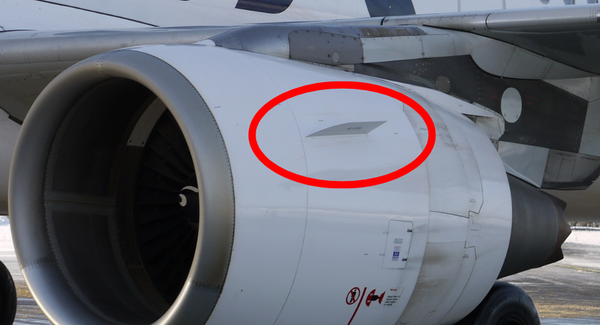 What Are Strakes? The Aerodynamic Fins Attached on an Aircraft's Fuselage
A look at how aircraft strakes quietly shape airflow, improve stability, and enhance aerodynamic performance.
INFORMATIONAL
READ MORE »
What Are Strakes? The Aerodynamic Fins Attached on an Aircraft's Fuselage
A look at how aircraft strakes quietly shape airflow, improve stability, and enhance aerodynamic performance.
INFORMATIONAL
READ MORE »
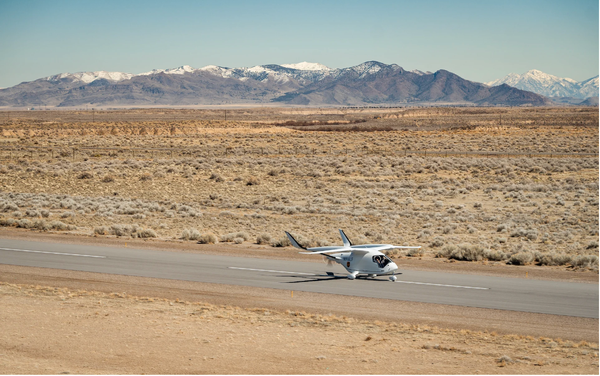 BETA Technologies Begins Electric Aircraft Operations in North Carolina to Support Rural Healthcare Access
BETA Technologies launches its ALIA CTOL electric aircraft in North Carolina under a FAA program aimed at improving rural healthcare logistics.
NEWS
READ MORE »
BETA Technologies Begins Electric Aircraft Operations in North Carolina to Support Rural Healthcare Access
BETA Technologies launches its ALIA CTOL electric aircraft in North Carolina under a FAA program aimed at improving rural healthcare logistics.
NEWS
READ MORE »
More than just headlines.
Get unlimited ad-free access to in-depth aviation news, premium stories, and exclusive insights other sites don't cover.
- Ad-free browsing on AeroXplorer
- Unlimited access to premium and exclusive articles
- Higher photo upload limits & commissions on sales
- Free access to Jetstream Magazine on higher tiers
- Ad-free browsing
- Sell aviation photos with 60% commission
- First week free!
- Everything in Basic+
- Unlimited premium articles
- Sell aviation photos with 70% commission
- Free Digital subscription to Jetstream Magazine
- First week free!
- Everything in Basic+ and Pro
- Sell aviaiton photos with 80% commission
- Early access to exclusive stories
- Free Digital+Print subscription to Jetstream Magazine